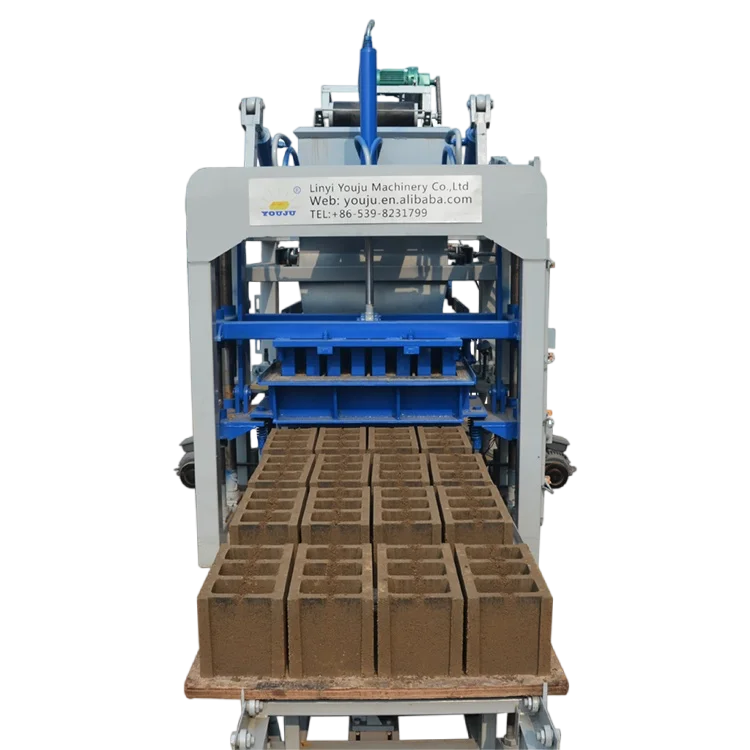
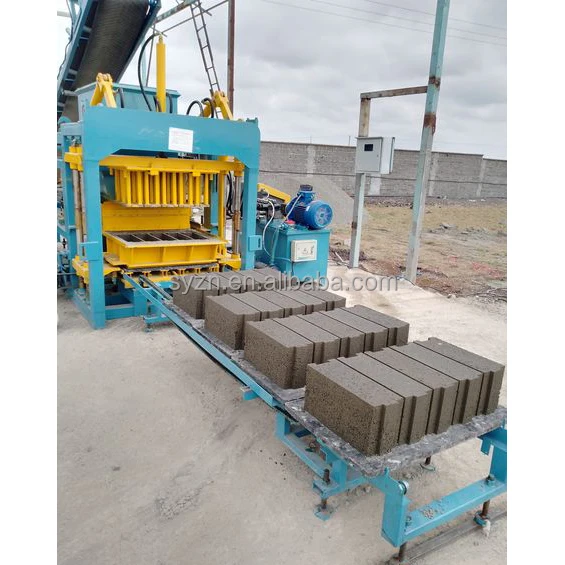
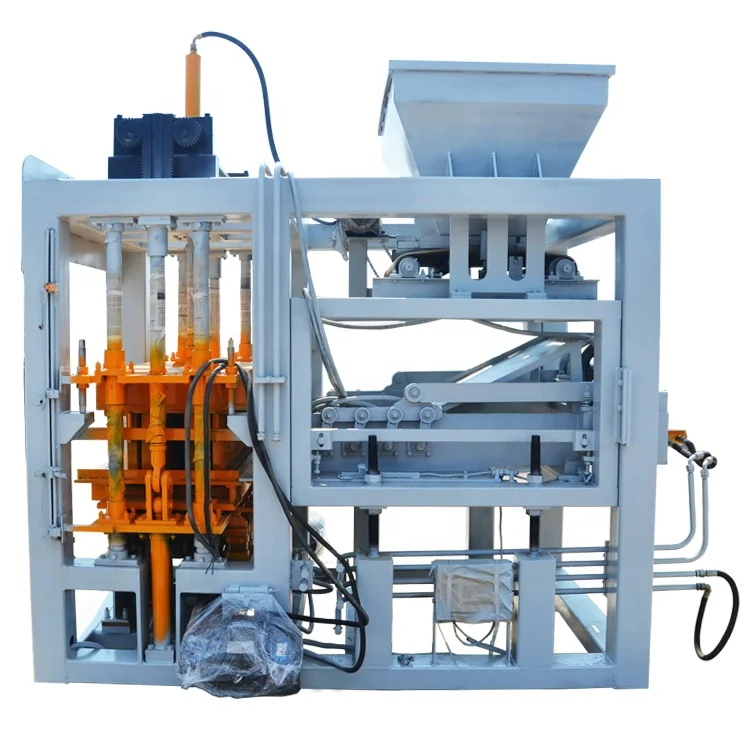
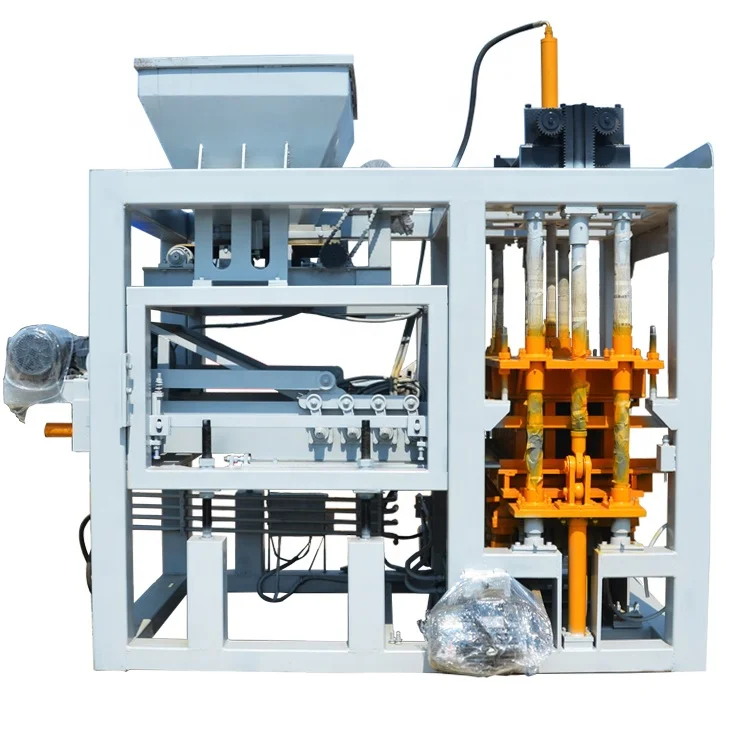
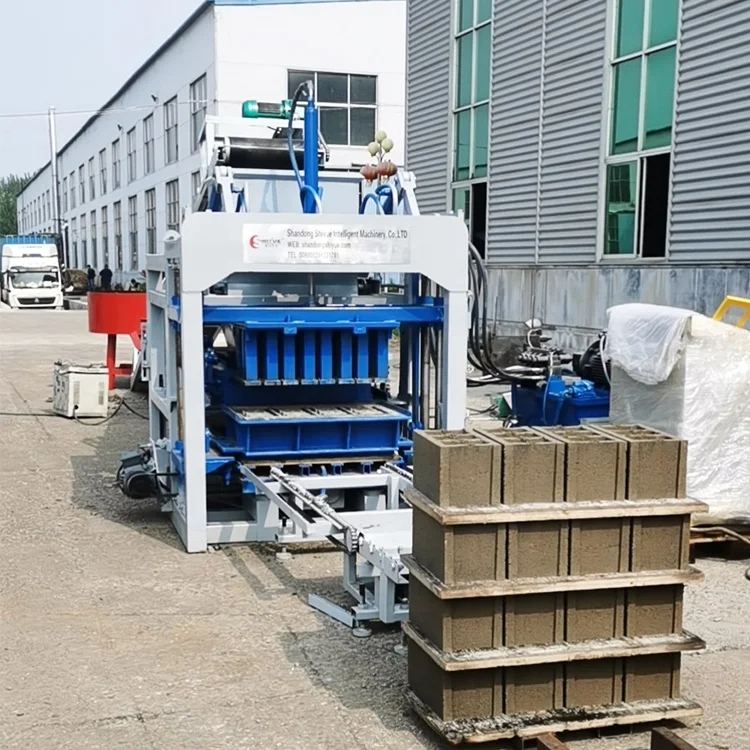
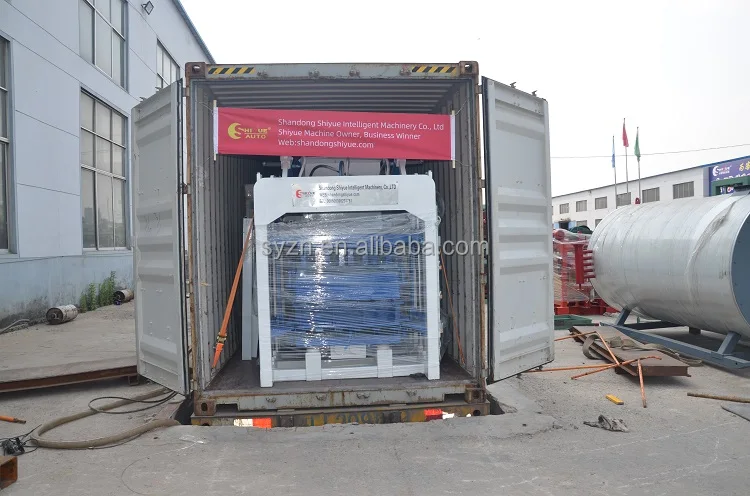
Description
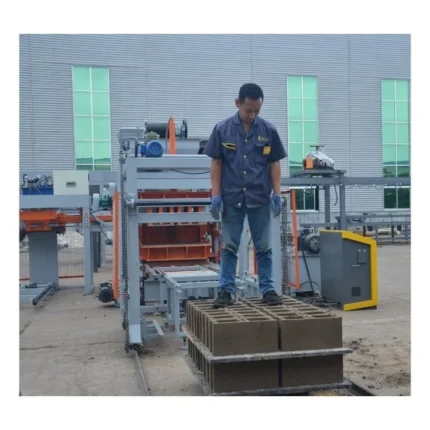
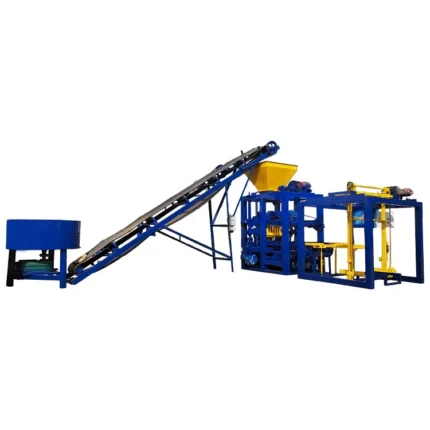
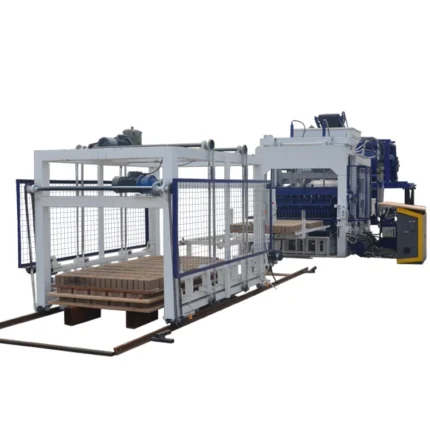
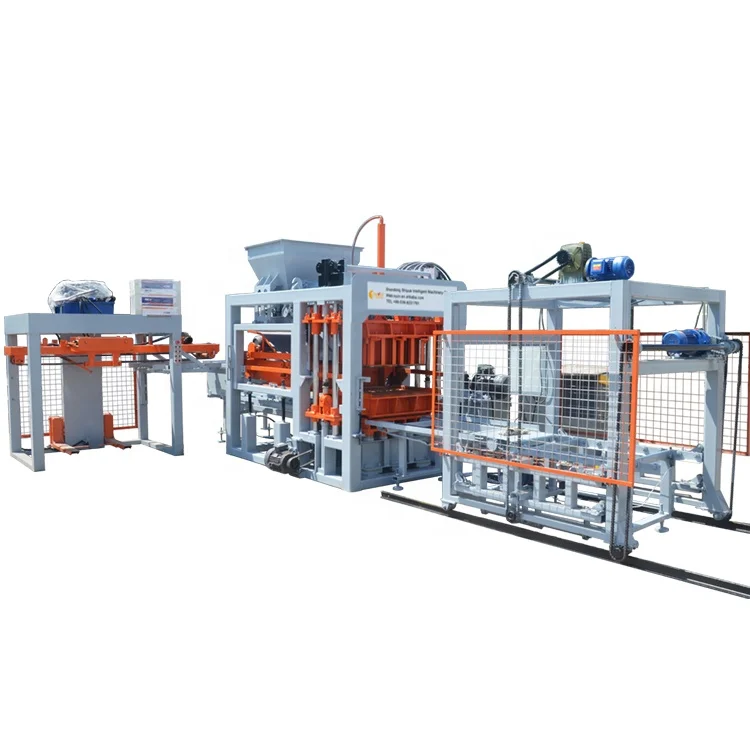
Matched System Integration — Every automation station from the QT415 press to the stacker is specified as one coordinated line, not a collection of standalone machines from different suppliers.
Technical Specifications
| Parameter | Value |
|---|---|
| Model | QT415 |
| Product Type | Full Automatic Concrete Block Making Machine |
| Overall Dimensions (L×W×H) | 4100×1600×2600 mm |
| Total Mass | 4 T |
| Rated Pressure | 16–21 MPa |
| Vibration Form | Platform Vibration |
| Vibration Frequency | 4200 r/min |
| Vibration Force | 55 kN |
| Pallet Size | 880×550 mm |
| Molding Cycle | 25–30 s (basis not stated in source — confirm block format and material) |
| Overall Power | 18.45 kW |
| Demolding Method | Hydraulic |
| Factory Area Required | 300 m² |
| Control System | PLC (brand and language options to be confirmed) |
| Automation Level | Full Automatic |
| Voltage & Frequency | To be confirmed before order |
| Warranty | 1 year (whole machine, excluding spare parts) |
| Key Features | Hydraulic demolding, platform vibration, PLC-controlled automatic cycle |
Application Suitability
| Application | Material or Output |
|---|---|
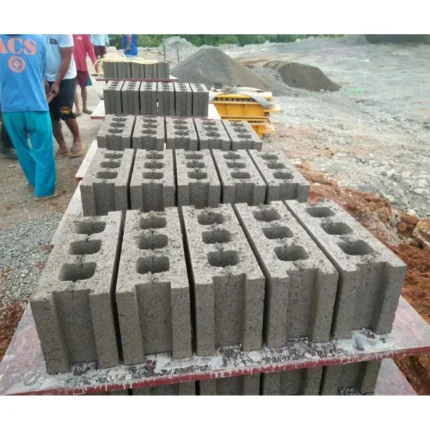
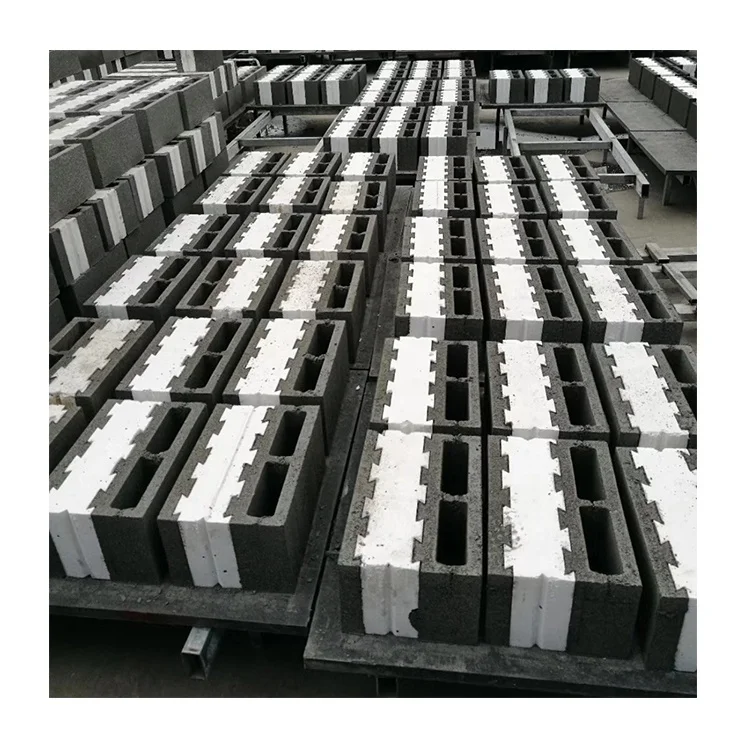
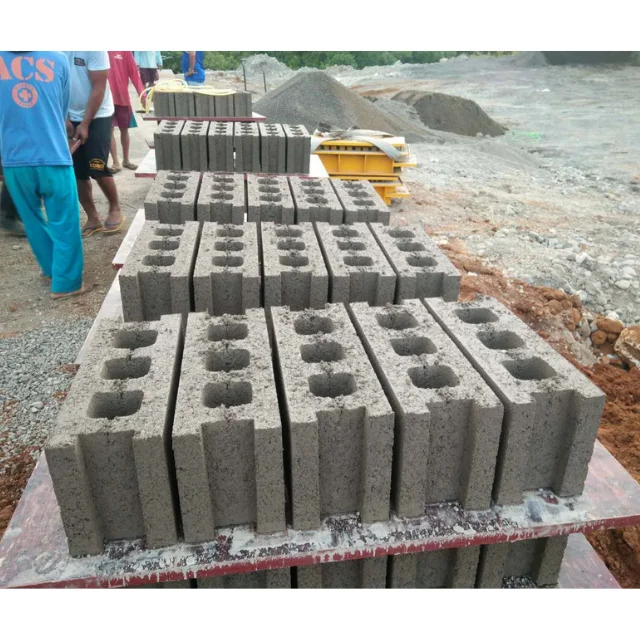
| Hollow block production | Crushed stone, sand, cement, fly ash |
| Solid block manufacturing | Gravel, sand, cement, slag |
| Paving block and colored paver runs | Fine aggregate, cement, pigment |
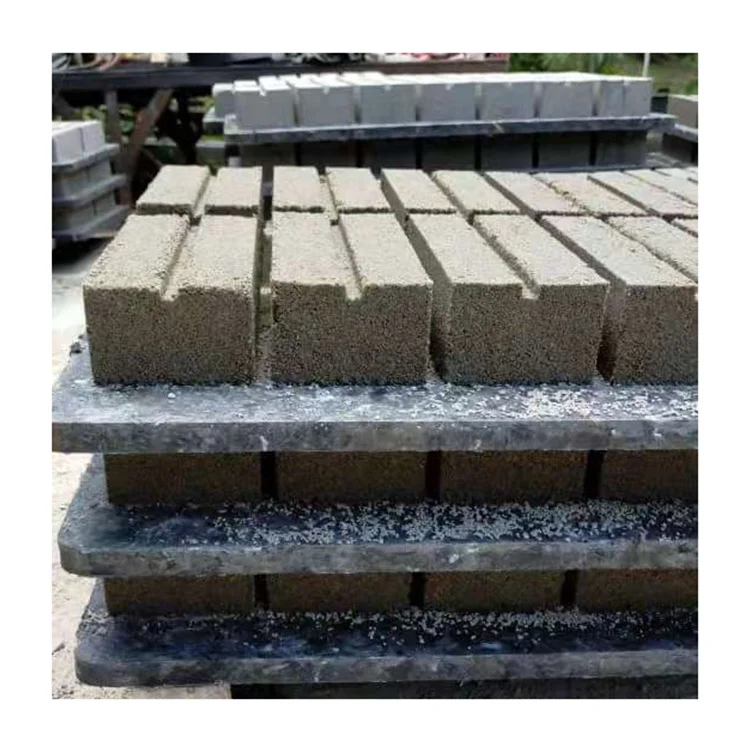
| Interlocking brick production | Crushed stone, sand, cement |
| Kerbstone and curb production | Coarse aggregate, cement, gravel |
Why the PLC Language Must Be Settled Before the Machine Ships
Confirming the operator’s display language before production avoids days of idle commissioning.
I spent two days in Tanzania trying to walk a local crew through an automatic block machine startup because the PLC panel was entirely in English — a language none of the operators read. The machine was fine; the interface was not. That delay cost the buyer real production time on a project with deadlines. [NEED_CITE: operator interface language requirements in industrial machinery exports]
When you source an automatic QT415 block machine PLC controlled system, the conversation must go beyond whether the press runs automatically. It must cover what language appears on the screen, what alarm codes look like to a first-time operator, and whether the voltage and frequency match the grid at the destination. Those details get locked in after the price is agreed and before the control cabinet is wired — never after the container is opened.
Removing the Operator from the Cycle Equation
On a manual or semi-automatic press, block density varies with how quickly an operator feeds material or clears a pallet. The automatic QT415 block machine PLC controlled setup removes that variable. The PLC times each stage — feed, vibrate, press, demold, eject — to the same interval every cycle, so block-to-block dimensional tolerance stays repeatable whether it is the first hour of a shift or the last.
Where Automation Stops and Manual Work Begins
A common misunderstanding is that "full automatic" covers the entire line from raw material to cured pallet stack. In practice, the scope depends on which stations are included in the quotation. Automatic pallet feeding, stacking, and cubing are separate modules. Confirming which of these the PLC governs — and which still rely on manual handling — is essential before the line layout is finalized. [NEED_CITE: automation scope definitions in concrete block production lines]
What the Numbers on the Spec Sheet Actually Mean in Production
The 55 kN vibration force and 16–21 MPa hydraulic pressure work together during compaction. Vibration settles the aggregate into the mould cavity; hydraulic pressure compresses it from above. If either value is mismatched to your local aggregate gradation or cement ratio, the resulting block may crack during demolding or fail a compressive strength test weeks later. The 880×550 mm pallet size determines how many blocks fit per cycle and must align with the curing rack spacing and the forklift already in your yard. The 4200 r/min vibration frequency is tuned for dense concrete mixes — lighter aggregate blends may require a different frequency range to avoid segregation. The 4 T machine mass provides the inertial stability needed so the platform vibration transfers into the mould rather than shaking the frame.
When a Missing Station Doubles Your Labour Cost
Buyers who assume stacking is included, then discover pallets must be moved by hand, end up assigning two or three workers to a task the line was supposed to eliminate. The same applies to pallet feeding: if the automatic feeder is not in the scope, someone loads every pallet manually, and the press sits idle between cycles. These gaps are not equipment failures — they are quotation gaps, and they only surface after installation. [NEED_CITE: common scope gaps in block machine quotations]
Why Buyers Source This Machine Through Our Configuration Process
The QT415 is configured against your actual mix design and local aggregate, not pulled from a default catalogue setting. Voltage and frequency are confirmed against your site’s grid before the electrical cabinet is built. PLC display language is set to your operator’s preference before the panel is programmed. The mould is selected or designed for the block format your market actually buys, with cycle time and output calculated per that specific format. Pallet size is chosen to match your curing area dimensions and existing forklift capacity, not picked from a standard list.
Documentation & Verification
- Line layout with capacity stated per your target block format
- Machine specification sheet with confirmed voltage and frequency
- PLC program backup with operator language verified before dispatch
- Hydraulic and electrical schematic matching as-built configuration
- Factory test record on your selected mould format before shipment
- Operation manual translated to the confirmed display language
Installation, Commissioning & Support
- Foundation plan sized for the 4100×1600 mm footprint and 4 T operating mass
- Electrical connection matched to confirmed voltage and dedicated circuit for the 18.45 kW load
- PLC panel verified in operator language on first power-up during commissioning
- Mould installation and cycle timing set to your mix and block format
- Operator training covering alarm codes, mould change procedure, and daily maintenance
- Wear parts and hydraulic seal list provided with recommended replacement intervals
What to Prepare Before Requesting a Quotation
Share your target block format with dimensions, the daily output you need in that format, and the raw materials available locally. Confirm your site voltage, frequency, and the language your operators read. If you have existing curing racks or forklifts, send their dimensions so the pallet and stacking configuration can be matched from the start.
Frequently Asked Questions
Q: How is real daily output calculated for the QT415, and what format is assumed?
A: The 25–30 second molding cycle applies to a specific block format and mix — output changes when you switch moulds. A capacity calculation should name the exact block size assumed, such as a 400×200×200 mm hollow block, along with pallets per hour and operating hours. Without that, the cycle time alone does not translate into a meaningful daily figure.
Q: Which automation stations does the PLC actually control on this line?
A: The PLC governs the press cycle — feeding, vibration, pressing, and hydraulic demolding. Pallet feeding, stacking, and cubing are separate stations that may or may not be included. Confirm the quotation scope explicitly so you know which stages are automated and which still require operator involvement.
Q: Can the PLC display language be changed to match my operators?
A: Yes, the display language should be confirmed before the control cabinet is programmed. This must be settled during the configuration stage, not after shipment. Specify the language your crew reads during the inquiry so the panel arrives ready for first-day operation.
Q: What voltage options exist, and when is this confirmed?
A: Voltage and frequency must match your site grid and are confirmed before production begins. Sharing your local standard during the inquiry stage ensures the motor, control cabinet, and PLC power supply are all built to the correct specification, avoiding rewiring delays at commissioning.
Q: Can I start semi-automatic and add stacking later?
A: The line can be configured with manual pallet handling initially, leaving space and interface connections for an automatic stacker to be added later. Discuss this upgrade path during the initial layout planning so the PLC program and physical space accommodate future expansion without requiring a full line redesign.