Description
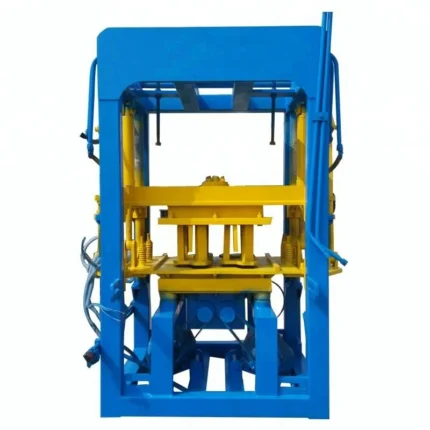
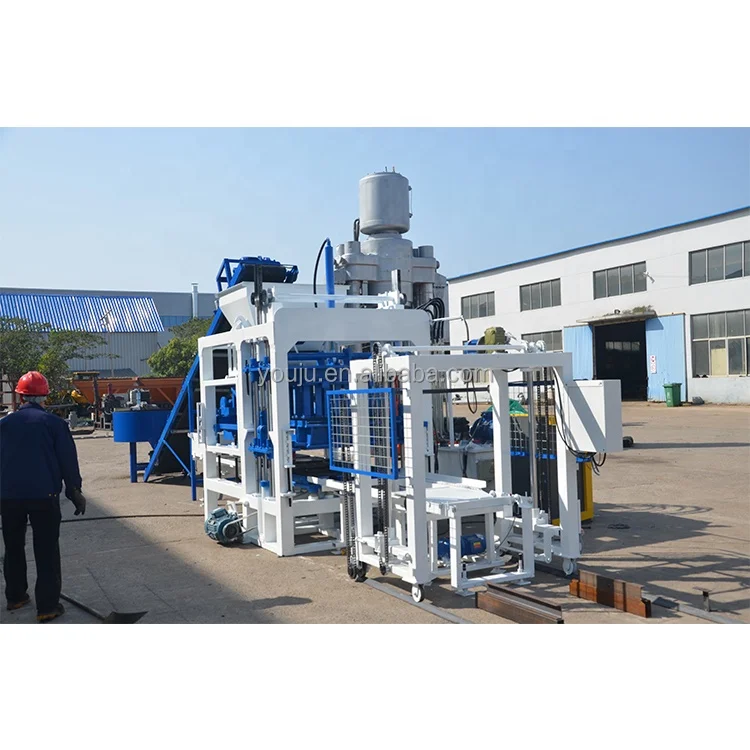
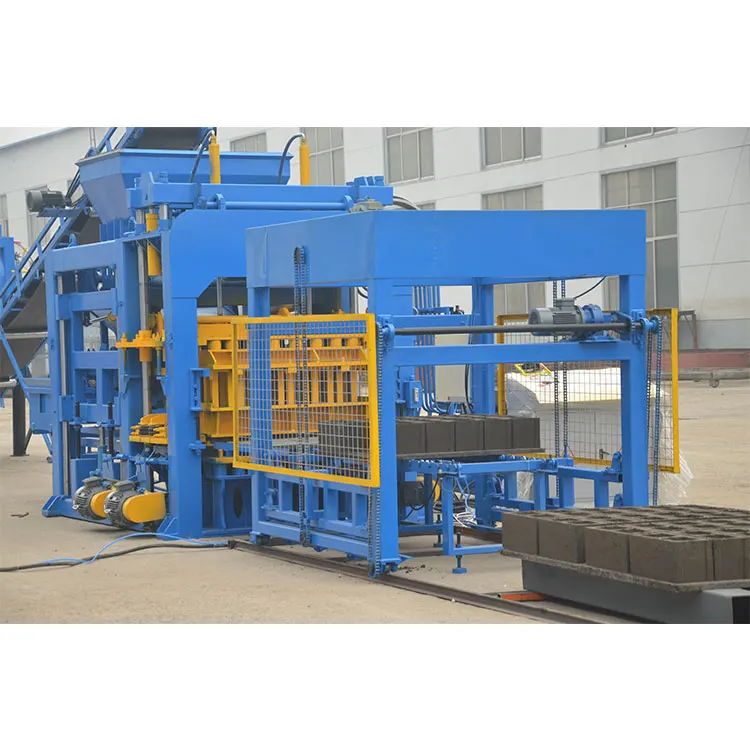
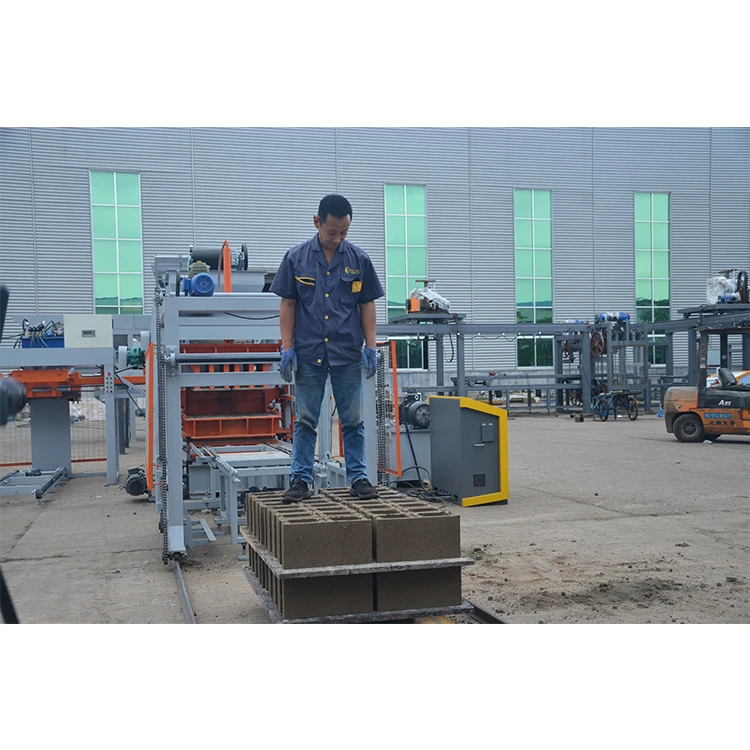
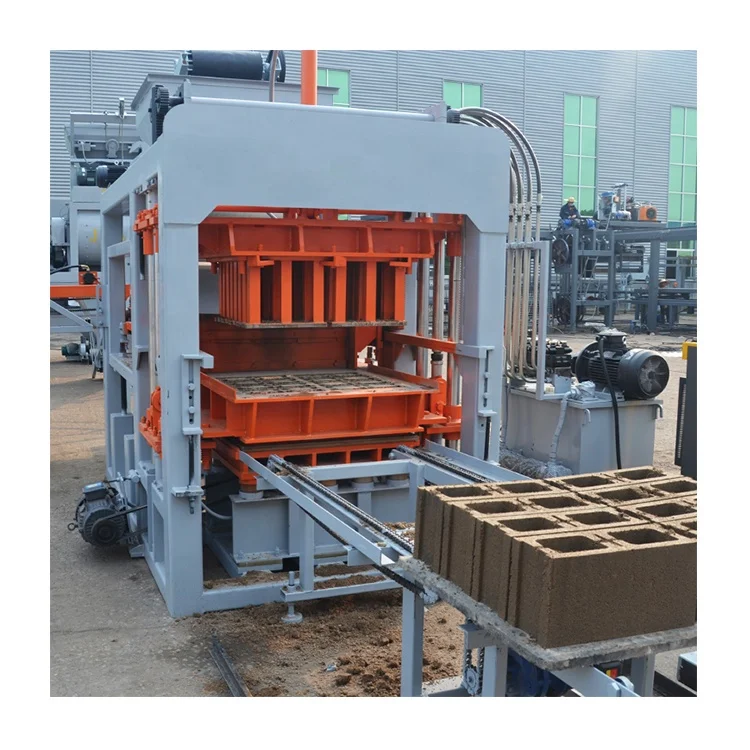
QT6-15 Block Making Machine — PLC-controlled vibration and hydraulic pressing configured as one matched system, with automation level selectable from simple line to full pallet handling and stacking.
Technical Specifications
| Parameter | Value |
|---|---|
| Model | QT6-15 |
| Product Type | Automatic Concrete Block Making Machine |
| Molding Method | Vibration and hydraulic pressing |
| Rated Pressure | 21 MPa |
| Pallet Size | 900 × 700 mm |
| Main Machine Weight | 6000 kg |
| Control System | PLC (language configurable to destination) |
| Voltage & Frequency | Customizable to local site supply |
| Raw Materials | Cement, sand, fly ash, stone powder, slag |
| Mould Compatibility | Hollow block, paving brick, solid brick, kerbstone, interlocking brick |
| Output — Hollow Block 400×200×200 mm | 6 pcs/pallet, 1440 pcs/h, 11520 pcs per 8 h (basis not stated in source) |
| Output — Paving Brick 200×100×60 mm | 21 pcs/pallet, 5040 pcs/h, 40320 pcs per 8 h (basis not stated in source) |
| Output — Solid Brick 240×115×53 mm | 32 pcs/pallet, 7680 pcs/h, 61440 pcs per 8 h (basis not stated in source) |
| Automation Level | Available from simple line to fully automatic stacking |
| Warranty | 1 year (excluding wearing parts) |
Application Suitability
| Application | Material or Output |
|---|---|
| Hollow block production for building walls | Cement, sand, fly ash, stone powder, slag mix |
| Paving brick for walkways and yards | High-density concrete with fine aggregate |
| Solid brick for load-bearing masonry | Cement and crushed stone or sand blend |
| Kerbstone and interlocking brick | Coarse aggregate concrete with hydraulic compaction |
| On-site block production for housing projects | Local aggregate with site-adjusted mix proportions |
What "Cycles per Hour" Leaves Out About Your Daily Output
Every capacity figure on this page is tied to a specific block size — no single headline number hides the assumption.
When a block machine quotation states a production rate without naming the format it was measured on, the daily output you see after commissioning often falls well short of what was budgeted. I have watched operators on QT6-15 class machines spend the first two weeks chasing cycle times that simply never materialised, because the original capacity claim was based on a small solid brick while the plant was set up to run 400 mm hollow blocks. The automatic QT6-15 block making machine PLC controlled cycle removes operator timing variance, but the PLC cannot change physics — a larger, thicker block needs longer vibration and pressing to reach target strength. [NEED_CITE: concrete block compressive strength testing standards by format]
How PLC Control Removes Operator Variance from the Cycle
On a manually timed press, the operator decides when vibration stops and pressing begins. That decision varies with fatigue, shift changes, and experience level, producing blocks with inconsistent density across a single batch. The PLC on the QT6-15 stores the vibration duration, pressure hold time, and feed sequence for each mould, so the automatic QT6-15 block making machine PLC controlled logic repeats the same cycle whether it is the first pallet of the morning or the last of a double shift.
The Automation Upgrade Path from a Simple Line
Many first-time plant owners begin with a simple configuration — mixer, conveyor belt, and manual stacker — to keep initial investment manageable. The QT6-15 is designed so that a cement silo, screw conveyor, cement scale, batching machine, pallet loader, and block-pallet separator can be added later without replacing the press itself. This upgrade path matters because a block plant that starts on a project basis often grows into continuous production, and swapping the entire line at that point means writing off equipment that still has years of service life. [NEED_CITE: concrete block plant expansion planning considerations]
Reading the Specs That Actually Affect Block Quality
The 21 MPa rated pressure works together with vibration force to compact the mix into the mould cavity. Pressure alone pushes the material together, while vibration settles fine particles into voids — if either is too low for a given mix design, the resulting block will have weak spots or surface pitting. The 900 × 700 mm pallet size determines how many blocks fit per cycle, but it also dictates the curing rack dimensions and forklift capacity you need in the yard; ordering a pallet size that does not match your existing handling equipment creates a bottleneck that no amount of press speed can solve. Mould change time between formats directly affects how many different products you can realistically produce in a single shift — if a changeover takes most of a morning, the format flexibility you paid for stays on paper.
The Hidden Cost of Skipping Voltage and Language Confirmation
Arriving at the site to find that the control panel display is in a language your operators cannot read, or that the motor winding does not match the local three-phase supply, delays commissioning by weeks while replacement components ship. Voltage and frequency confirmation should happen at the quotation stage, not after the container is loaded. I have seen QT6-15 class machines sit idle for an entire rainy season because the 50 Hz motor was sent to a 60 Hz market. [NEED_CITE: voltage and frequency standards by export market]
Why Sourcing the Press and the Line Together Matters
Block machinery is the single focus here, which means the press, mould, pallet, and handling equipment are specified as one matched system rather than assembled from separate suppliers who will each blame the other when cycle times do not add up. The configuration is set against your actual mix design and local aggregate, not a catalogue default — I once spent half a month re-tuning vibration parameters on a machine that had been configured for a limestone mix the buyer could not source locally. Mould design covers the formats your market actually sells, including custom drawings when standard cavity layouts do not fit. Automation level is selectable so you can start semi-automatic and add pallet loading and stacking as volume grows. Installation includes operator training on the specific PLC interface your machine ships with.
Documentation & Verification
- Line layout showing capacity per block format with pallet count and cycle time stated
- Hydraulic and electrical schematic matching your confirmed voltage and frequency
- Mould drawing and format list before production begins
- Factory test record on your target block size before dispatch
- PLC display language confirmation signed off at order stage
- Operation and maintenance manual with wearing parts list
Installation, Commissioning & Support
- Foundation plan accounts for the 6000 kg main machine weight and vibration isolation
- Power supply matched to your confirmed voltage with dedicated circuit for the hydraulic pump
- Top cylinder removed for container loading and reassembled on site during commissioning
- PLC parameters loaded for your specific block format and mix during first run
- Operator training covers mould change procedure and daily maintenance checkpoints
- Wearing parts list provided so spares can be ordered before first replacement is due
What to Include with Your Enquiry
Tell me the block formats you need to produce, the daily output target for each format, and the raw materials available locally — I will send back a capacity calculation that names the block size behind every number. Confirm your site voltage, frequency, and the language you want on the PLC display so the automatic QT6-15 block making machine PLC controlled system arrives ready to run. If you have existing curing racks or forklifts, share the dimensions so the 900 × 700 mm pallet specification can be verified against your handling equipment.
Frequently Asked Questions
Q: How is output capacity verified for each block format on the QT6-15?
A: Every capacity figure is tied to a specific block dimension — hollow block at 400×200×200 mm, paving brick at 200×100×60 mm, or solid brick at 240×115×53 mm. The cycle time and pallet count differ for each format, so the line layout you receive will state which block size each hourly and daily number assumes. Ask for this breakdown before placing an order.
Q: What automation level does the QT6-15 ship with, and can it be expanded later?
A: The QT6-15 is available from a simple line with mixer, conveyor belt, and stacker through to a full configuration with cement silo, batching machine, pallet loader, and block-pallet separator. The press itself does not need replacing when you add stations — the PLC accommodates additional I/O as the line grows.
Q: How are PLC language and voltage confirmed before the machine ships?
A: Voltage, frequency, and PLC display language are confirmed in writing during the quotation stage and verified again before production. The factory test record shows the motor running at your specified supply, and the control panel is photographed with your chosen language active before the container is sealed.
Q: What is involved in changing moulds between block formats?
A: Moulds are interchangeable across hollow block, paving brick, solid brick, and kerbstone formats on the same pallet size. The changeover procedure is covered during operator training, and the time required depends on whether your line includes a quick-change mould clamping system or manual bolt fixing.
Q: Which parts are covered under warranty and how are spares handled?
A: The warranty covers the machine for one year excluding wearing parts such as mould liners, vibration springs, and hydraulic seals. A wearing parts list with part numbers is included in the documentation so you can order replacements before the first change is due, avoiding unplanned downtime.