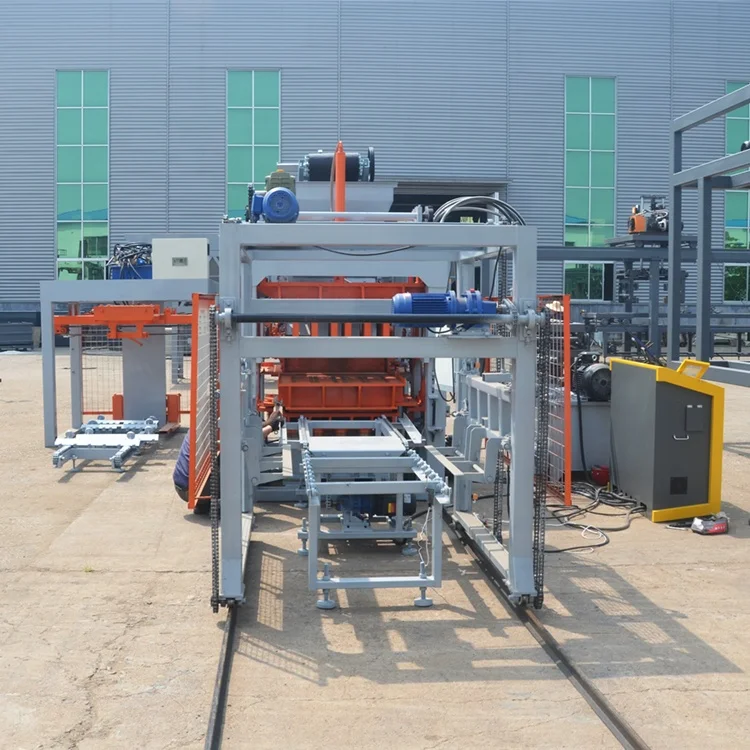
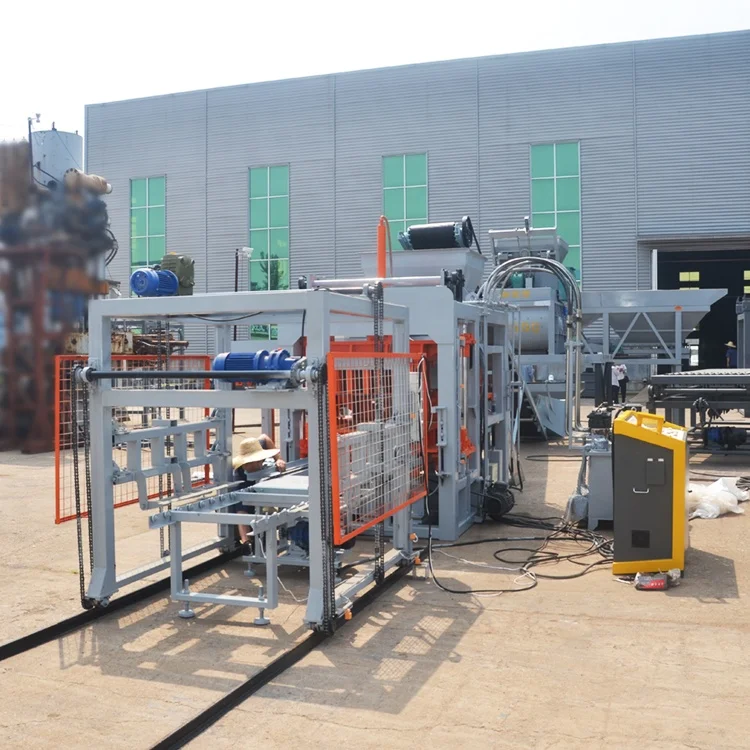
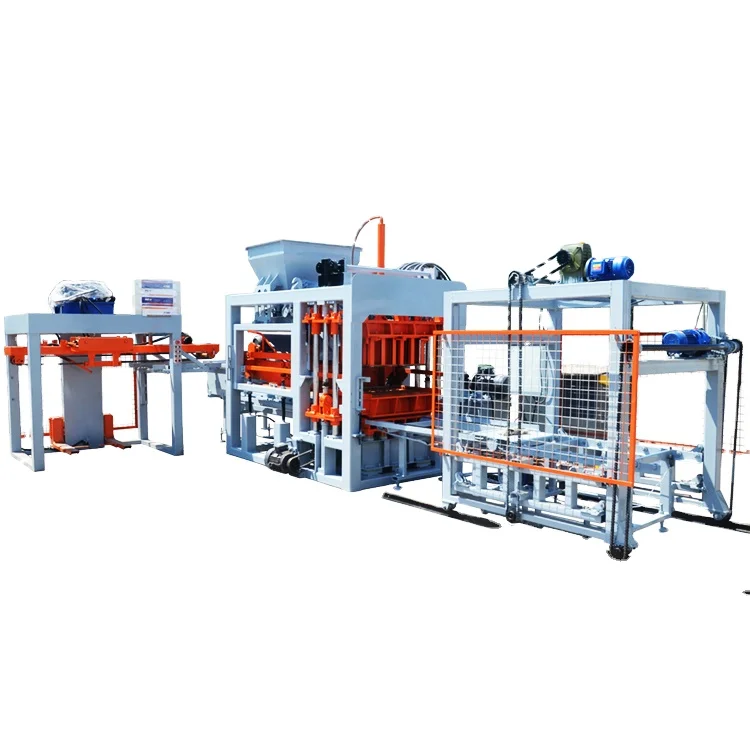
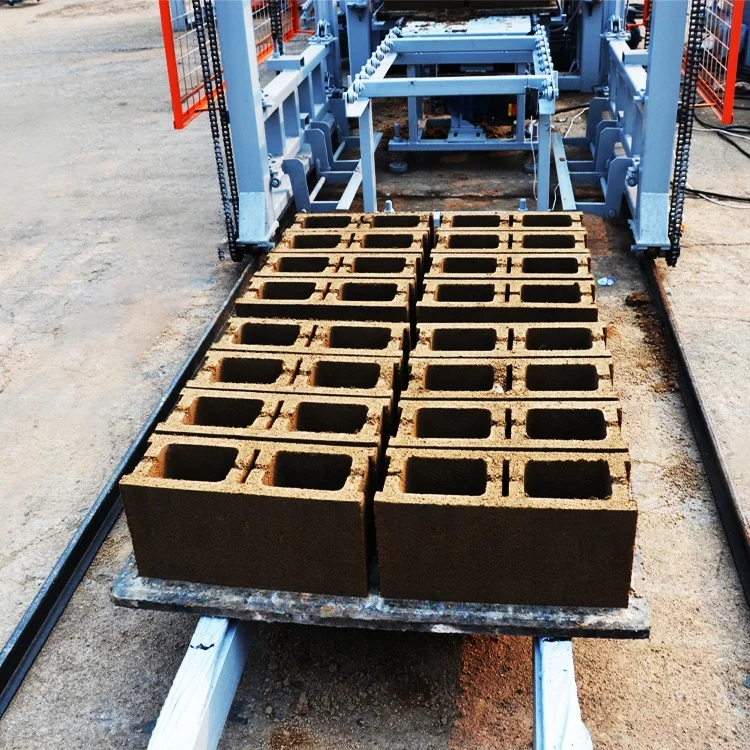


Description
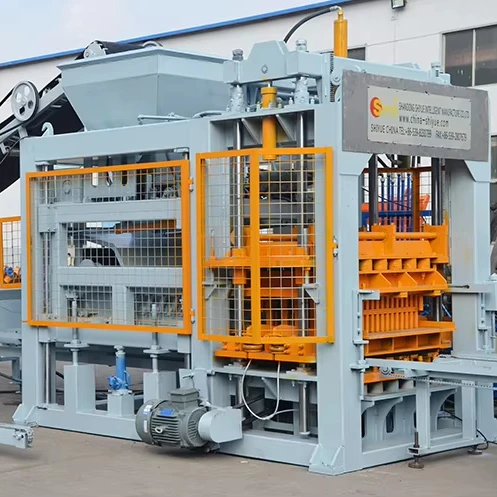
Programmable Control Architecture — The QT6-15 stores block-specific vibration, pressure and timing profiles in its PLC so that every cycle repeats the exact parameters your mix design requires, removing operator guesswork from the press station.
Technical Specifications
| Parameter | Value |
|---|---|
| Model | QT6-15 |
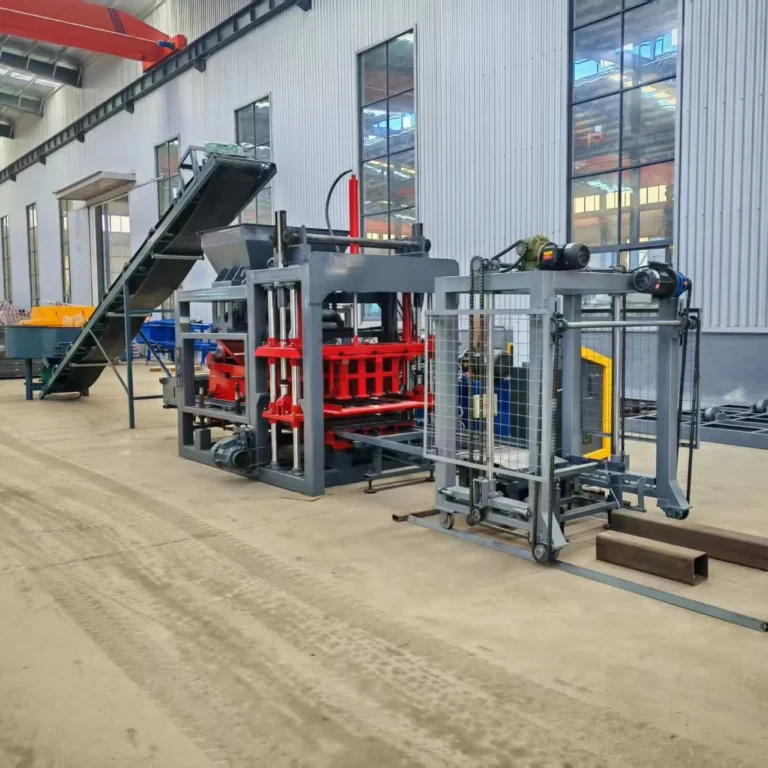
| Product Type | Hydraulic Automatic Block Making Machine |
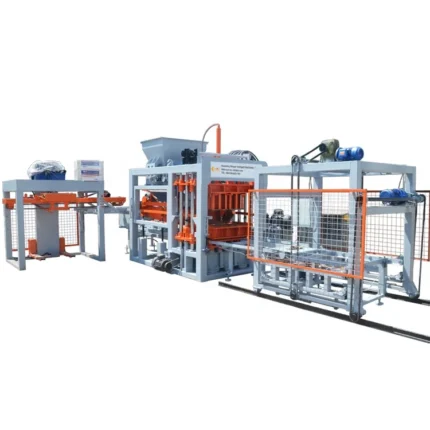
| Overall Dimensions | 8200 × 1700 × 2950 mm |
| Total Mass | 7 T |
| Overall Power | 37 kW |
| Vibration Frequency Range | 0–60 Hz |
| Vibration Force | 45 kN |
| Vibration Form | Platform Vibration |
| Moulding Mode | Automatic loading, vibration moulding |
| Demolding Method | Hydraulic |
| Pallet Size | 880 × 850 mm |
| Molding Cycle | 15–20 s (basis to be confirmed) |
| Control System | PLC with touch screen HMI |
| Fault Diagnosis | Built-in fault diagnosis with action interlock logic |
| Hydraulic System | Independent integrated hydraulic station |
| Factory Area Required | 1200 m² |
| Standards | CE declaration where applicable |
Application Suitability
| Application | Material or Output |
|---|---|
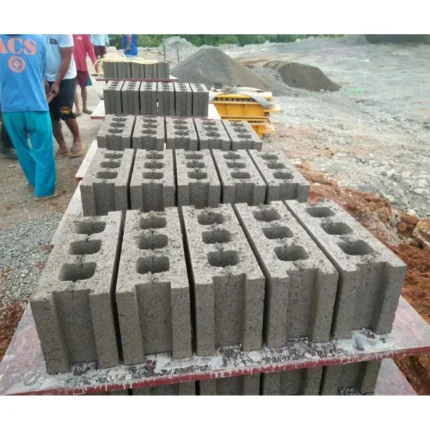
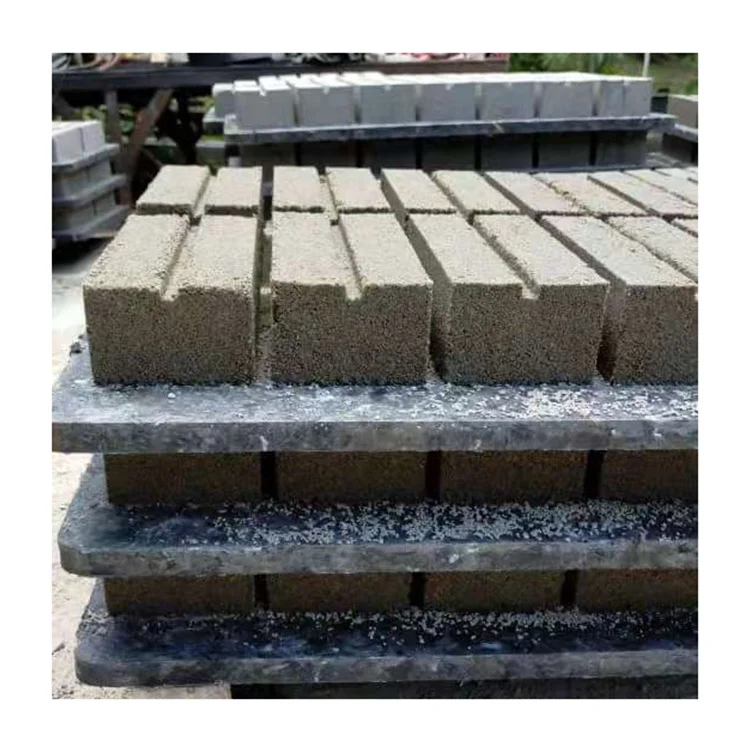
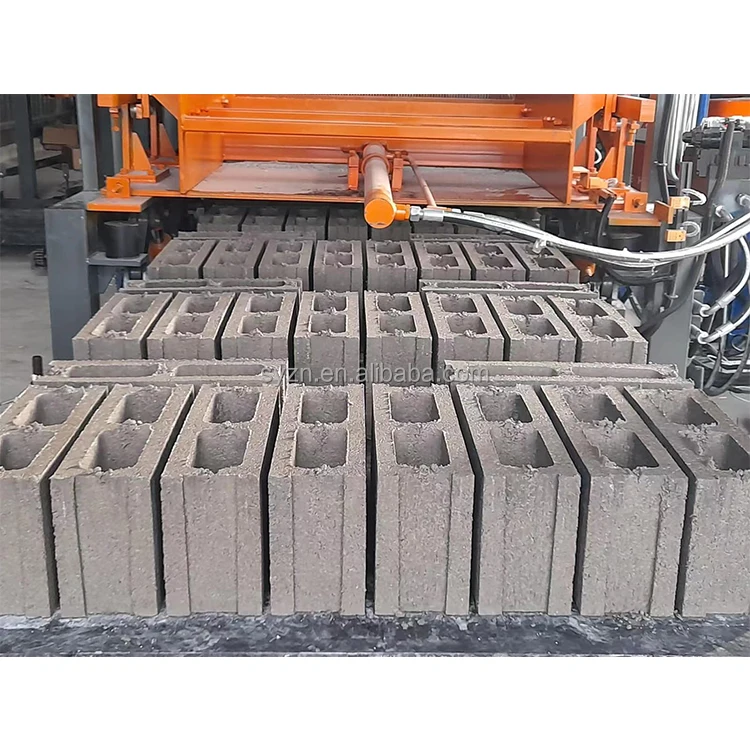
| Hollow block production | Standard concrete aggregate, crushed stone, cement |
| Solid brick production | Sand, fly ash, cement blends |
| Rectangular paving brick | Dense aggregate with cementitious binder |
| Zigzag interlocking brick | Waste ash, slag, standard concrete mix |
| Kerbstone and large-format paver | Coarse aggregate with adjusted vibration profile |
Why PLC Logic Decides What You Actually Get Out of the Press
A press that cannot remember its settings between shifts is a manual machine with an expensive label.
I have stood in plants where the morning crew ran hollow blocks at one vibration frequency and the afternoon crew guessed a different number because the panel had no stored recipes. The automatic hydraulic block making machine PLC controlled logic on the QT6-15 removes that variable. Each block format gets its own parameter set — vibration frequency, hydraulic demoulding pressure, loading dwell — locked in the touch screen HMI and recalled at a touch. What the operator supervises is consistency, not cycle-by-cycle adjustment. [NEED_CITE: PLC programming standards for industrial machinery control systems]
How Stored Recipes Remove Shift-to-Shift Drift
When a plant runs three block formats across two shifts, the number of manual adjustments multiplies quickly. The QT6-15 PLC retains cycle data per format, so switching from a 400 × 200 × 200 mm hollow block to a 200 × 100 × 60 mm rectangular paver means selecting a recipe, not re-entering vibration force and dwell times from memory. The interlock logic also prevents the press from cycling if a safety condition is unmet, which matters when you are running an automatic hydraulic block making machine PLC controlled sequence without an engineer on the floor.
Independent Hydraulic Station and Vibration Isolation
Vibration destroys hydraulics over time if the two systems share a frame path. The QT6-15 addresses this with an independent integrated hydraulic station physically separated from the main vibration zone. Dust and shock from the platform vibration do not reach the valve block or pump, which extends seal life and keeps demoulding pressure stable across long production runs. [NEED_CITE: hydraulic system isolation practices in vibrating industrial equipment]
Reading the Specs That Actually Shape Your Line
The 45 kN vibration force paired with adjustable 0–60 Hz frequency means the QT6-15 can adapt to different aggregate densities — lower frequency for coarse slag mixes, higher frequency for fine sand and fly ash blends. The 880 × 850 mm pallet size must match your curing rack spacing and forklift tine width before you order, not after arrival. At 37 kW overall power, the machine requires a dedicated circuit with correct voltage and frequency confirmation — a detail that delays commissioning on many overseas sites when it is left to the last minute. The built-in fault diagnosis system reports issues on the HMI in the language configured at the factory, which is why specifying display language during the order stage is essential. Molding cycle figures of 15–20 seconds are format-dependent and should be confirmed against your target block dimensions and mix.
The Hidden Cost of Skipping Control Language and Voltage Confirmation
I once spent two full days on an African job site because the HMI arrived in English and the operators spoke only French. No cycles ran until I rewrote the interface labels overnight. Voltage mismatch causes similar delays — a machine wired for 380 V / 50 Hz landing on a 440 V / 60 Hz supply will trip breakers or burn contactors before the first block is pressed. These are not engineering problems; they are paperwork problems that surface on the factory floor. [NEED_CITE: electrical supply standards and compatibility for exported industrial machinery]
Why Procurement Through This Channel Matters
Block machinery is the single focus here, which means the QT6-15 press, moulds, pallets and handling equipment are specified as one matched system rather than assembled from separate vendors. Configuration is set against your actual mix design and local aggregate, not a catalogue default. Mould design covers the formats your market sells, with custom drawings available. The automation level is selectable — you can start with the QT6-15 as a stand-alone press and add pallet feeding, stacking and cubing stations later. Installation support includes operator training on the PLC interface and fault diagnosis responses.
Documentation & Verification
- Machine specification sheet with pallet size, vibration force and power ratings confirmed
- PLC logic overview showing stored recipe structure and interlock conditions
- Voltage, frequency and HMI display language confirmation record before dispatch
- Factory test record run on your target block format and pallet
- Hydraulic and electrical schematic for on-site maintenance reference
- Operation and maintenance manual with wear parts and mould list
Installation, Commissioning & Support
- Factory area of 1200 m² required with level concrete foundation for the 7 T machine mass
- Dedicated power circuit matching confirmed voltage and the 37 kW overall draw
- PLC touch screen configured in your specified language before the machine leaves the factory
- On-site commissioning covers parameter tuning for your local aggregate and mix design
- Operator training on recipe selection, fault diagnosis reading and daily maintenance points
- Wear parts list and mould drawing provided for first replacement planning
What to Include in Your Inquiry
Share the block formats you intend to produce with target dimensions, your local aggregate type and any waste material you plan to incorporate, and the curing space and forklift you already have on site. Confirm your plant voltage, frequency and the language your operators need on the HMI. State whether you are planning a stand-alone press or a line with pallet feeding and stacking so the automation path is clear from the start.
Frequently Asked Questions
Q: What does the PLC actually control on the QT6-15, and what remains manual?
A: The PLC manages automatic loading, vibration cycle timing, frequency adjustment and hydraulic demoulding sequence. It stores per-format recipes and enforces interlock safety logic. The operator supervises through the touch screen, selects recipes and responds to fault diagnosis alerts. Pallet placement at the press station depends on the automation level you specify — manual pallet handling is standard unless you add automatic pallet feeding.
Q: How are process parameters stored and recalled between block formats?
A: Each block format — hollow, solid, paving or interlocking — has a named recipe in the PLC memory containing vibration frequency, cycle dwell and hydraulic pressure values. Switching formats means selecting the recipe on the touch screen. The system recalls all stored parameters automatically, so the operator does not re-enter values or rely on written notes.
Q: Can the machine start semi-automatic and upgrade to full automatic stacking later?
A: Yes. The QT6-15 can be configured as a stand-alone press with manual or semi-automatic pallet handling. Pallet feeding, automatic stacking and cubing stations can be added as separate modules when your production volume and budget allow. The PLC architecture supports these additions without replacing the main controller.
Q: How does the fault diagnosis system report issues on the HMI?
A: The built-in fault diagnosis system monitors action interlock logic and displays alerts on the touch screen in the language confirmed at order. Each alert identifies the affected station and suggested check. This means the operator can respond to common issues without waiting for an engineer, reducing unplanned downtime during shifts.
Q: How does adjustable platform vibration match different mix designs?
A: The 0–60 Hz frequency range lets you dial vibration to your aggregate. Coarse slag or crushed stone mixes respond better at lower frequencies with longer dwell, while fine sand and fly ash blends consolidate faster at higher frequencies. The PLC stores the optimal setting per recipe so each batch receives consistent compaction energy.