

Description
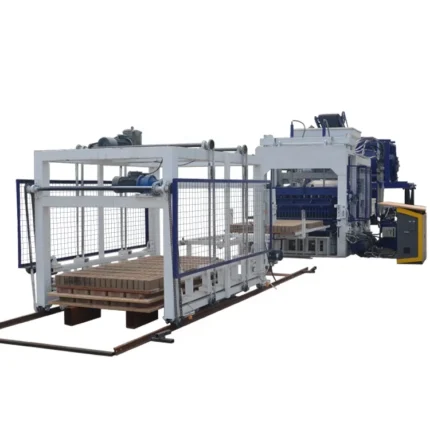
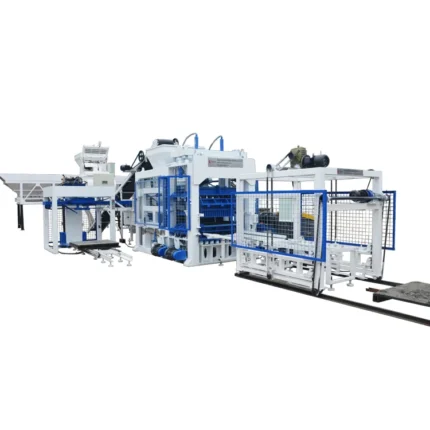
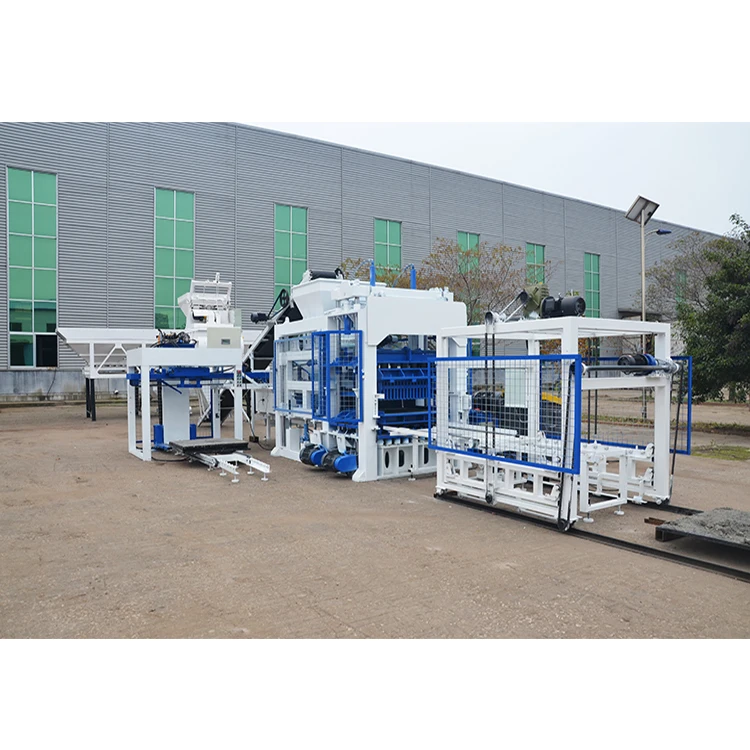
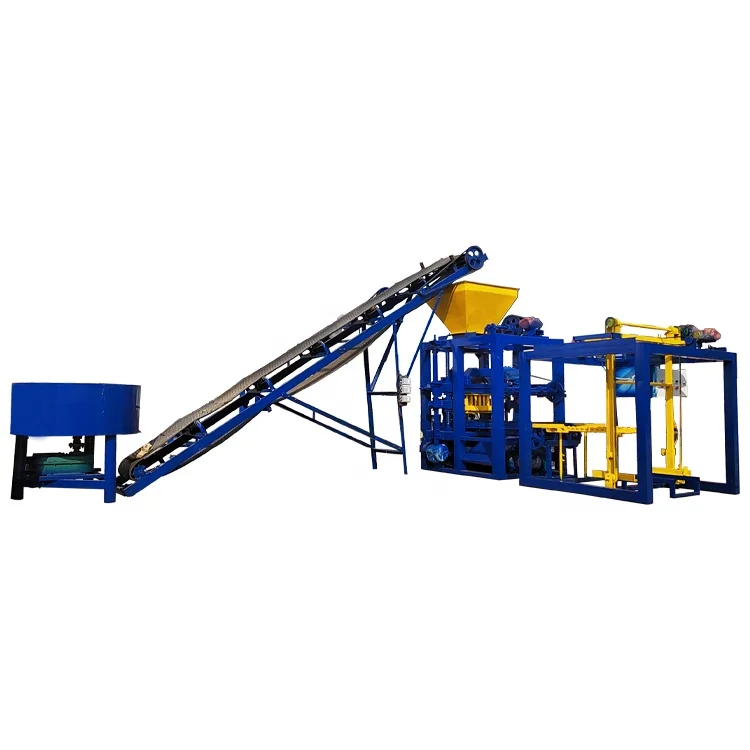
Matched System Configuration — The QT612 is supplied as a complete, PLC-controlled press with pallet, mould set and handling stations specified against the buyer’s actual block format and local aggregate, not pulled from a generic catalogue.
Technical Specifications
| Parameter | Value |
|---|---|
| Model | QT612 |
| Product Type | Hydraulic Block Making Machine |
| Overall Dimensions (L×W×H) | 7350×1780×2950 mm |
| Rated Pressure | 16 MPa |
| Main Vibration | Platform |
| Vibration Frequency | 4600 r/min |
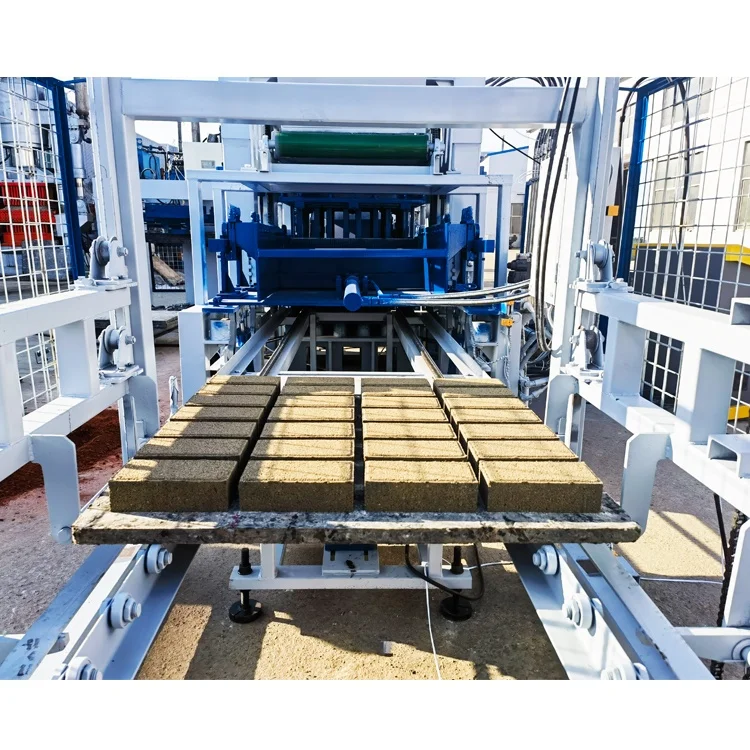
| Pallet Size | 880×700 mm |
| Cycle Time (400×200×200 mm hollow block) | 12–15 s |
| Cycle Time (240×115×90 mm porous brick) | 15–18 s |
| Cycle Time (240×115×53 mm standard brick) | 14–17 s |
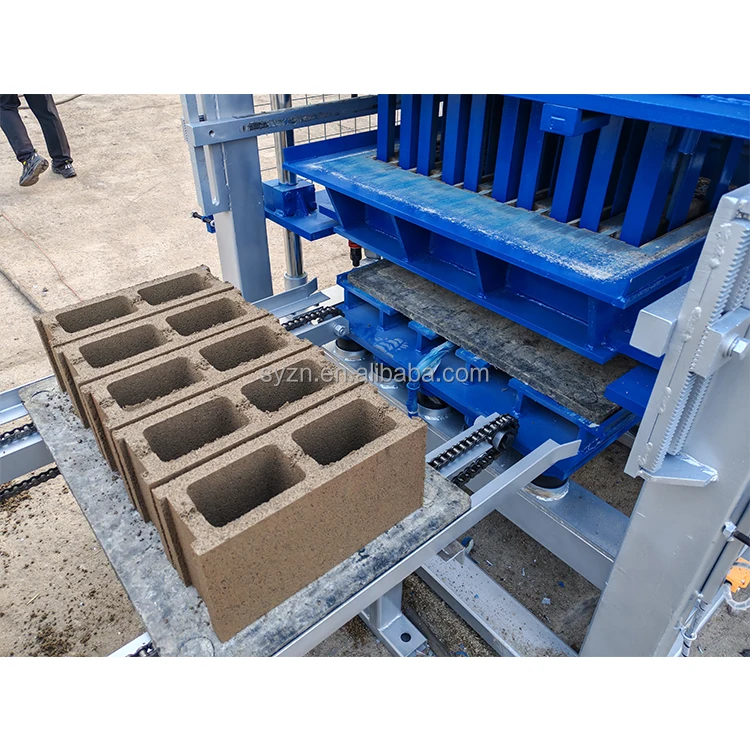
| Output Capacity (400×200×200 mm hollow block, 6 pcs/mould) | 1080 pcs/h |
| Output Capacity (240×115×90 mm porous brick, 14 pcs/mould) | 2800 pcs/h |
| Output Capacity (240×115×53 mm standard brick, 30 pcs/mould) | 6800 pcs/h |
| Daily Output (8-hour shift, hollow block) | 8640 pcs/day |
| Daily Output (8-hour shift, porous brick) | 22400 pcs/day |
| Daily Output (8-hour shift, standard brick) | 54400 pcs/day |
| Overall Power | 30.5 kW |
| Control System | PLC (language options to be confirmed) |
| Automation Level | Automatic (stacking and pallet handling to be confirmed) |
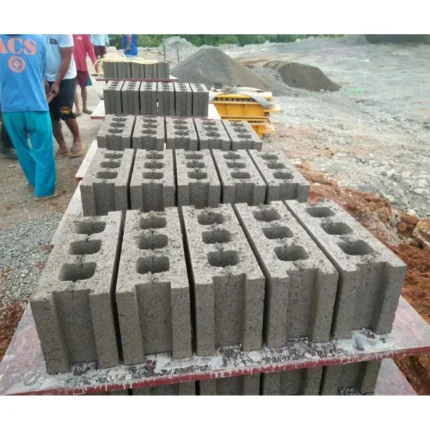
| Mould Formats | Hollow block, porous brick, standard solid brick, paving stone, interlocking block, kerbstone, grass block, slope block |
| Raw Materials | Crushed stone, sand, cement, fly ash, cinder, slag, gangue, gravel, perlite, industrial waste |
| Certification | CE / SGS / ISO 9001 |
| Warranty | 1 year (spare parts set included) |
Application Suitability
| Application | Material or Output |
|---|---|
| Hollow block production for building walls | Crushed stone, sand, cement, fly ash on 880×700 mm pallets |
| Porous brick manufacturing for insulation | Lightweight aggregate, perlite, cement blends |
| Standard solid brick for masonry | Sand, cement, gangue, slag mixes |
| Paving stone and interlocking block for roads | High-density aggregate, crushed stone, cement |
| Kerbstone and slope block for infrastructure | Coarse gravel, cement, industrial waste blends |
| On-site block production for housing projects | Locally sourced aggregate with PLC-controlled batching |
Why the PLC Language Question Must Come Before the Shipment Date
An automatic QT612 block making machine PLC controlled in the wrong display language delays commissioning by days, not hours.
Buyers frequently finalize voltage and frequency while leaving the PLC interface language as an afterthought. When the operator panel arrives in a language the local crew cannot read, the plant sits idle while translation patches are sourced. I have seen machines wait on-site for several days because the HMI labels were never confirmed during production [NEED_CITE: PLC display language requirements by export market]. The automatic QT612 block making machine PLC controlled setup should have the target language locked into the build sheet before the control cabinet is wired.
Control Logic That Removes Operator Variability
The PLC on the QT612 governs the feed cycle, vibration duration, hydraulic press stroke and pallet advance as a single timed sequence. When a plant runs manual or semi-automatic, each operator develops slightly different rhythm habits that shift block density across a shift. The automatic QT612 block making machine PLC controlled architecture holds each parameter to the programmed value, so batch-to-batch density remains within a narrow band regardless of who stands at the panel.
From Semi-Automatic to Full Line Integration
A buyer starting with manual pallet handling can specify the QT612 with the PLC pre-wired for future stacking and cubing modules. The control cabinet includes reserved I/O channels and communication ports so that adding automatic pallet feeding or a cubing station later does not require a full rewiring. This upgrade path lets a plant owner invest in automation incrementally while keeping the core press identical [NEED_CITE: PLC expansion standards for block making lines].
Pressure and Vibration Tuned to the Mix, Not the Brochure
The 16 MPa hydraulic pressure and 4600 r/min platform vibration must work together to compact the buyer’s specific aggregate. River sand, volcanic scoria, and crushed limestone each demand a different balance: too much vibration with light aggregate fractures the particles, while too little pressure on coarse gravel leaves voids. On the QT612, the PLC stores multiple recipes so that switching from hollow block to porous brick adjusts both the press force and vibration time to match the target format and material.
When Pallet Size and Curing Area Do Not Match
A frequent oversight is specifying the 880×700 mm pallet without checking the curing rack dimensions or the forklift tine spacing already on site. If the curing racks were built for a different pallet standard, fresh blocks end up stacked on the floor until new racks arrive. The QT612 pallet size must be confirmed against the curing footprint and handling equipment before the first pallet is loaded [NEED_CITE: pallet handling compatibility in block curing yards].
Why Source Verification Matters Here
The machine, mould, pallet and handling system are specified as one matched set rather than assembled from separate suppliers. Configuration is built around the buyer’s actual mix design and local aggregate, not a default catalogue recipe. Mould design covers the formats the buyer’s market sells, including custom drawings when standard formats do not match local demand. The automation level is selectable, allowing a semi-automatic start with a defined upgrade path. Installation support includes operator training so the crew can run the PLC recipes from day one.
Documentation & Verification
- Line layout showing capacity per block format with mould and cycle time noted
- Machine specification sheet covering pressure, vibration, pallet size and power
- Mould drawing and format list matched to buyer’s market requirements
- Voltage, frequency and PLC language confirmation signed before production
- Factory test record run on buyer’s target block format before dispatch
Installation, Commissioning & Support
- Foundation pad leveled for the 7350×1780 mm footprint with anchor bolt plan
- Dedicated power circuit sized for 30.5 kW total draw with correct voltage
- PLC display language and recipe parameters verified at first power-on
- Operator training on mould change procedure and recipe selection
- Wear parts and hydraulic seal kit included for first-year operation
- Preventive maintenance schedule tied to vibration motor and hydraulic pump hours
What We Need to Size Your Line Correctly
Provide your target block formats, the local aggregate type and source, and the daily output you need per format. Confirm the available voltage and frequency at your site, the PLC display language your operators require, and whether your existing curing racks and forklift match the 880×700 mm pallet. With these details the configuration proposal can state capacity per format instead of a single unqualified number.
Frequently Asked Questions
Q: How is output capacity verified for each block format on the QT612?
A: Capacity is calculated from the mould cavity count and the cycle time for each specific format. For the 400×200×200 mm hollow block, six cavities per mould at 12–15 seconds yields 1080 pieces per hour. Every output figure on the proposal states the block format, mould cavity count and cycle time behind it so buyers can match the number to their actual product mix.
Q: What automation level options are available, and can a semi-automatic setup be upgraded later?
A: The QT612 can be delivered as a stand-alone automatic press with manual pallet handling or specified with automatic pallet feeding, stacking and cubing. The PLC cabinet is pre-wired with reserved I/O channels so that adding handling modules later does not require a full control replacement. This lets a plant start at a lower investment and add automation as production volume grows.
Q: How are voltage, frequency and PLC language confirmed for the target market?
A: These three parameters are written into the build sheet before the control cabinet is assembled. The buyer signs off on a voltage and frequency confirmation document and selects the PLC display language from available options. Locking these values at the order stage prevents commissioning delays caused by mismatched electrical supply or unreadable operator panels on site.
Q: What is the mould change procedure, and how does it affect daily production time?
A: Mould change involves unbolting the current mould set from the vibration platform, lifting it out, positioning the new mould, and securing the clamp bolts. The actual duration depends on the crew’s familiarity and whether a quick-change frame is specified. Buyers running multiple formats per shift should confirm the expected changeover time during the proposal stage so daily scheduling accounts for it.
Q: Which wear parts and hydraulic components are included in the first-year support package?
A: The one-year warranty package includes a set of wear parts and hydraulic seals typically consumed during the first year of operation. The exact parts list is documented in the wear parts and mould list supplied with the machine. This ensures that the first replacement cycle does not force the buyer to source components locally before a supply relationship is established.