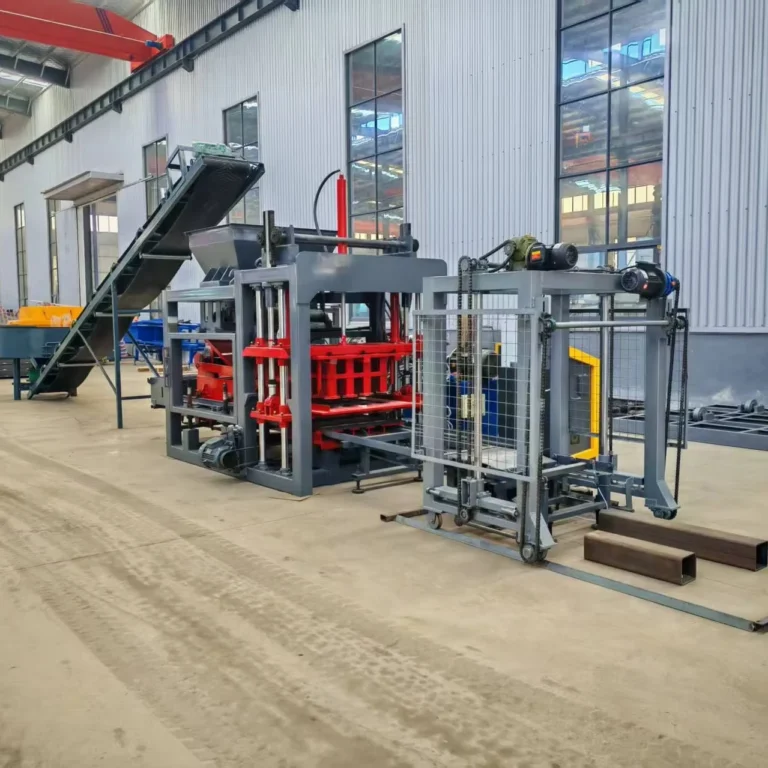
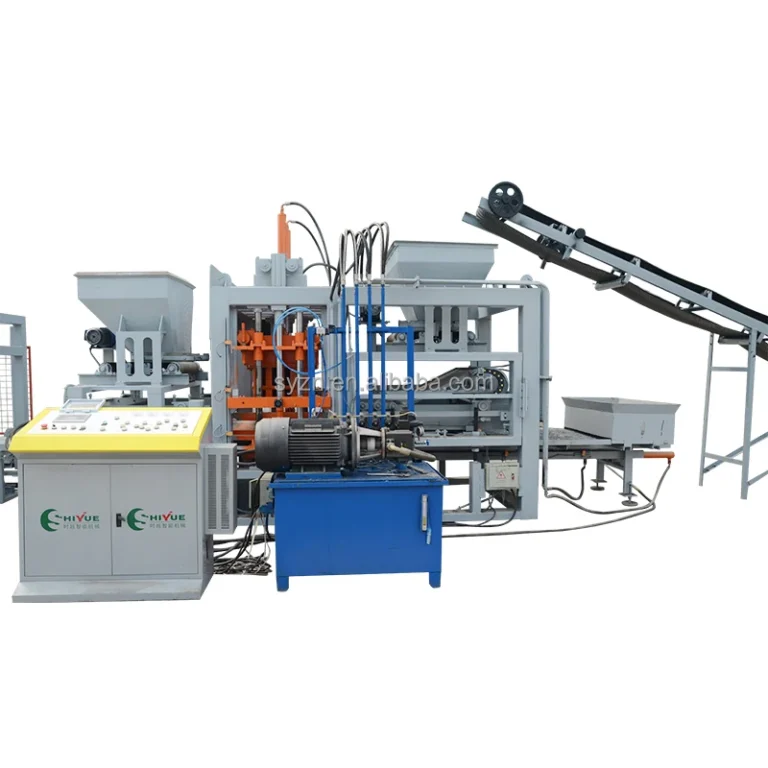
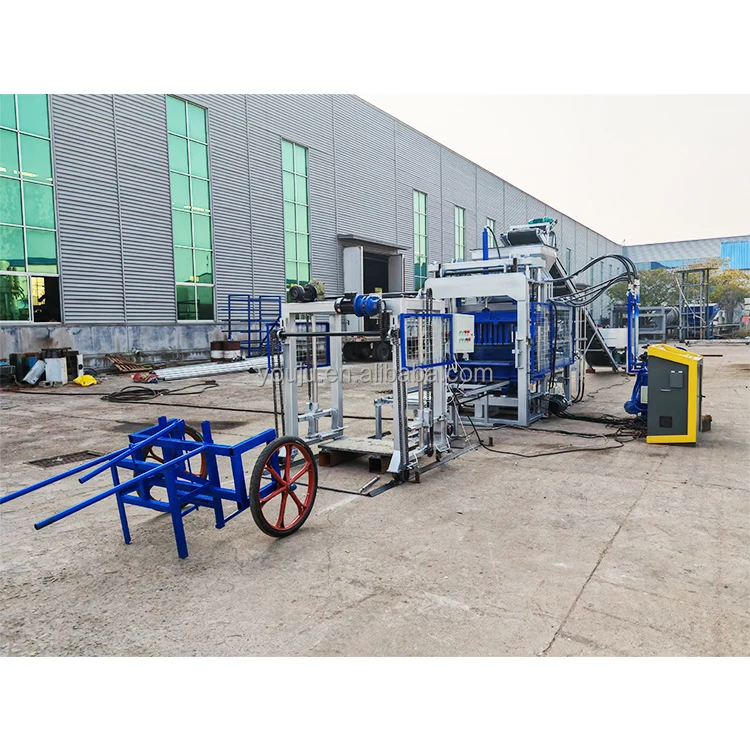
Description
Upgrade-Ready Control — Every QTF3-20 leaves the factory with PLC language and voltage confirmed in writing, so the operator reads every alarm on day one.
Technical Specifications
| Parameter | Value |
|---|---|
| Model | QTF3-20 |
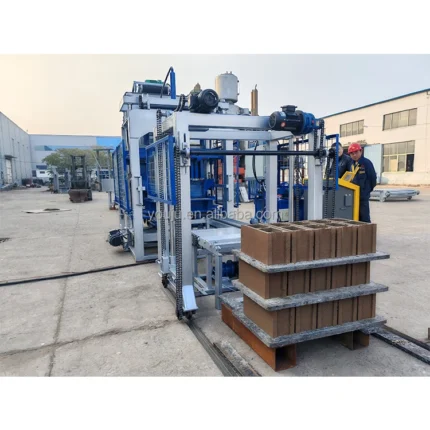
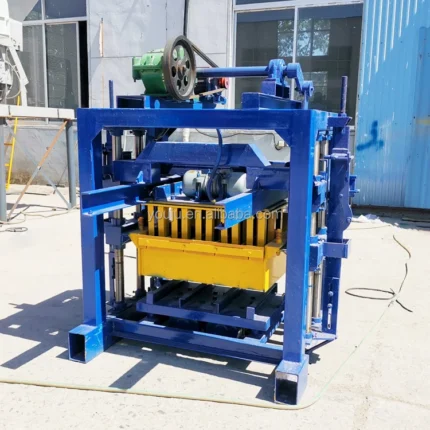
| Product Type | Semi-Automatic Concrete Paving Block Making Machine |
| Hydraulic System | Adopted for even and dependable working procedure |
| Vibration System | Efficient vibration combined with hydraulic press for high density blocks |
| Output Capacity (Paving Block) | 2700 pcs/hour, 21600 pcs/8 hours based on 200×100×60mm format, 15 pcs/mould |
| Output Capacity (Hollow Block) | 540 pcs/hour, 4320 pcs/8 hours based on 400×200×200mm format, 3 pcs/mould |
| Output Capacity (Interlocking Brick) | 1440 pcs/hour, 11520 pcs/8 hours based on 225×112.5×60mm format, 8 pcs/mould |
| Automation Level | Semi-automatic |
| Motor Voltage | Customizable to fit local supply (basis to be confirmed) |
| Control System | Configurable PLC or relay logic (basis to be confirmed) |
| Warranty | 1 year (except wearing parts) |
Application Suitability
| Application | Material or Output |
|---|---|
| Paving block production | Cement and local aggregates for 200×100×60mm driveways and walkways |
| Hollow block production | Cement, sand and crushed stone for 400×200×200mm load-bearing walls |
| Interlocking brick production | Cement and fine aggregate for 225×112.5×60mm erosion-control slopes |
| Curbstone forming | Cement and coarse aggregate for roadside and perimeter demarcation |
What "2700 Pieces per Hour" Leaves Out When Automation Is an Afterthought
A PLC controlled semi-automatic concrete block making machine only delivers consistency when the control language, voltage and hydraulic parameters match the plant floor, not just the catalogue.
Capacity figures printed in brochures assume a specific block format, a specific mix and a pallet cycle that never stalls. When a buyer upgrades from manual operation expecting turnkey output, the gap between quoted cycles and actual daily production often shows up at the pallet stacker, not the press [NEED_CITE: gap between quoted and realised output in semi-automatic block lines].
I have seen semi-automatic lines in Southeast Asia sit idle for two full shifts because the PLC interface arrived in a language the local team could not read. The alarm code meant nothing to the operator, and the machine waited for a flight and a parameter reset. A PLC controlled semi-automatic concrete block making machine should eliminate that class of failure before the crate is nailed shut.
Defining Semi-Automatic Before the Press Arrives
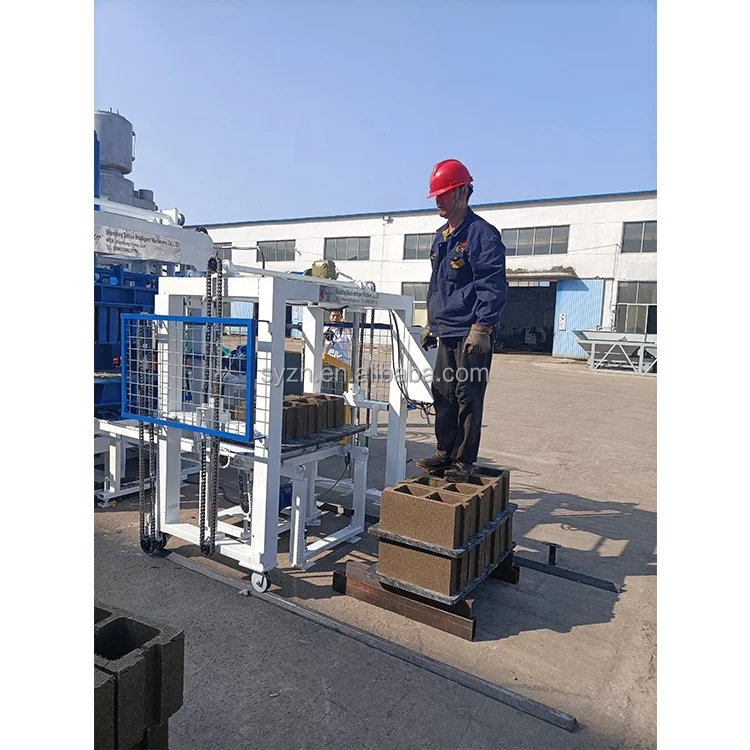
Semi-automatic on the QTF3-20 covers the press cycle, hydraulic pressure and vibration sequence under PLC control. Pallet feeding, wet block stacking and curing rack handling remain manual stations that the buyer supplies or adds later. Confirming exactly which stations are inside the PLC scope and which sit outside prevents the commissioning week from turning into a negotiation.
Mapping the Upgrade Path in Advance
A plant owner who starts with manual pallet handling today usually wants automatic stacking within eighteen months. The QTF3-20 is configured to accept automatic pallet feeding, stacking and cubing modules without replacing the press, provided the PLC I/O count and hydraulic valve block are specified with that future step in mind at the order stage [NEED_CITE: PLC I/O reservation for future automation modules in block lines]. Locking the upgrade path into the original quotation keeps the second investment predictable.
Reading the Hydraulic and Vibration Specs
Hydraulic pressure and vibration force together determine whether a paving block survives the forklift journey to the curing yard. The QTF3-20 uses a hydraulic system described as delivering an even and dependable working procedure, paired with efficient vibration for high density blocks. The actual MPa and kN figures must be confirmed against the buyer’s specific aggregate gradation and cement content, because a mix that works at one pressure may crumble at another. Pallet size is equally critical; choosing a dimension that does not match the existing curing rack or forklift creates a bottleneck no amount of press speed can fix.
Mould Change Time and Format Flexibility
Quoted output assumes a single format running uninterrupted. In practice, a plant switches between paving blocks, hollow blocks and interlocking bricks within the same week. If the mould change procedure on a PLC controlled semi-automatic concrete block making machine takes most of a shift, the format flexibility the buyer paid for cancels out the capacity gain. Mould change time and procedure should be confirmed in writing before the first format list is finalised.
The Cost of Skipping the Voltage Conversation
When voltage, frequency and PLC display language are left to assumption rather than confirmed in writing, the machine may arrive and refuse to start. A 380V 50Hz motor on a 440V 60Hz supply will run, but the hydraulic pump will deliver different pressure and the vibration motor will hit a different frequency, shifting block density outside the tolerance the factory test proved. Rectifying this after arrival means rewinding motors, replacing contactors and waiting weeks for a new PLC [NEED_CITE: motor voltage and frequency mismatch consequences on hydraulic block presses]. The cost of the rewrite is always higher than the cost of the confirmation call.
Why Procure the QTF3-20 Through This Channel
Block machinery is the single focus here, so the QTF3-20 is specified as one matched system — press, mould, pallet and handling — rather than assembled from separate suppliers who have never met. Configuration is set against the buyer’s actual mix design and local aggregate, not pulled from a catalogue default row. Mould design covers the formats the buyer’s market actually sells, and custom drawings are accepted. Automation level is selectable, allowing a plant to start semi-automatic and add pallet feeding and stacking later without scrapping the press. Installation, commissioning and operator training are included in the scope, with the control language and voltage locked in before production begins.
Documentation & Verification
- Line layout and capacity calculation stating the block format assumed for each output figure
- Voltage, frequency and PLC display language confirmation sheet signed before production
- Hydraulic and electrical schematic provided for local maintenance team reference
- Factory test record on the buyer’s specific block format before dispatch
- Operation and maintenance manual with wear parts and mould list at delivery
Installation, Commissioning & Support
- Foundation pad sized to the QTF3-20 overall footprint and vibration isolation requirements
- Dedicated circuit matching confirmed motor voltage and rated power with correct breaker rating
- Press arrives partially assembled; hydraulic and electrical connections completed on site
- PLC parameters, vibration timing and hydraulic pressure set against the buyer’s mix on day one
- Operator training covers mould change procedure, alarm response and daily lubrication points
- Wear parts and mould list supplied with recommended first-order quantities
What to Include in Your First Enquiry
Send the target block format, daily output requirement and local aggregate description so the PLC controlled semi-automatic concrete block making machine can be configured against your actual material profile. Confirm your site voltage, frequency and the control language your team reads so the interface is correct before crating. State which automation stations you plan to add later — pallet feeding, stacking, cubing — so the PLC I/O is reserved now and the upgrade path stays open.
Frequently Asked Questions
Q: What does semi-automatic include and exclude on the QTF3-20?
A: Semi-automatic covers the press cycle, hydraulic pressure and vibration sequence under PLC control. Pallet feeding, wet block stacking and curing rack handling remain manual stations that the buyer supplies. Each boundary is confirmed in writing before production so there is no gap between what the buyer expects and what arrives on site.
Q: Can pallet feeding and stacking be added later without replacing the press?
A: Yes. The QTF3-20 is configured to accept automatic pallet feeding, stacking and cubing modules when the PLC I/O count and hydraulic valve block are specified with that future step in mind at the order stage. Confirming the upgrade path at quotation keeps the second investment predictable and avoids a press swap.
Q: How is hydraulic pressure matched to my local aggregate and mix?
A: The buyer provides the aggregate gradation and cement content. The hydraulic pressure and vibration timing are then set against that profile during the factory test, not left at a catalogue default. A test record on the buyer’s specific block format is supplied before dispatch to prove density holds within tolerance.
Q: What PLC brand and control language will be installed?
A: The PLC brand and display language are confirmed in writing before production, based on the buyer’s site voltage, frequency and operator language. This confirmation prevents the commissioning week from being lost to an unreadable alarm code and ensures the local team can respond to every fault independently.
Q: How is batch-to-batch consistency held when switching moulds?
A: Each mould format has a stored PLC recipe covering vibration time, hydraulic pressure and cycle sequence. The operator selects the format, and the PLC applies the matched parameters rather than relying on manual adjustment. Mould change procedure and timing are documented in the manual supplied at delivery.