

Description
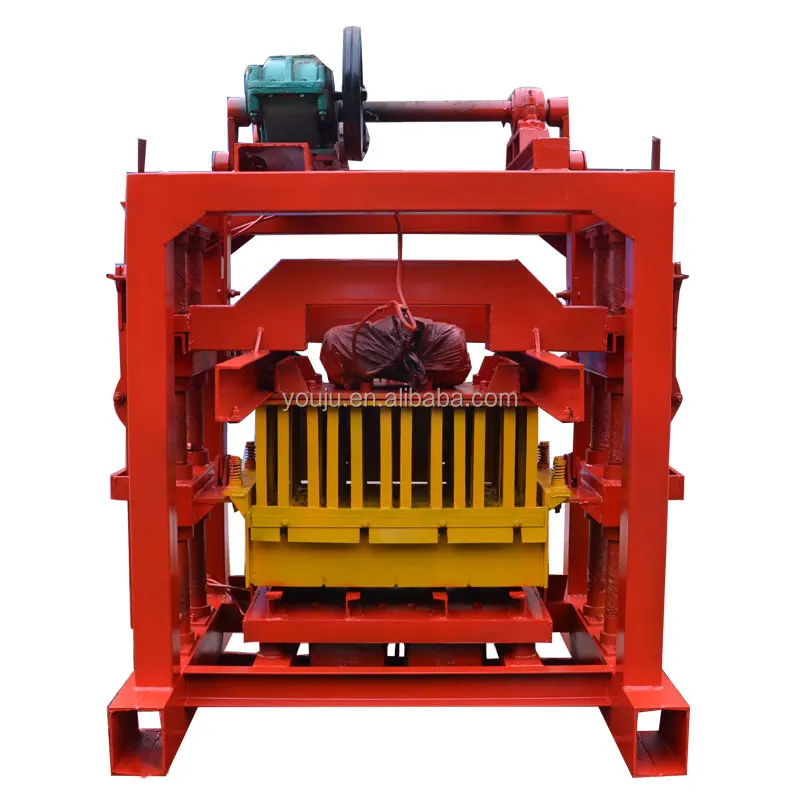
Matched system configuration — the QTJ4-40 is specified as a complete vibration and control baseline so buyers can layer in automatic pallet feeding, stacking, and PLC modules as production scales.
Technical Specifications
| Parameter | Value |
|---|---|
| Model | QTJ4-40 |
| Product Type | Concrete Block Making Machine |
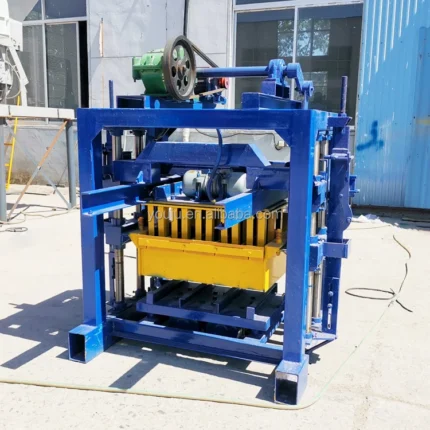
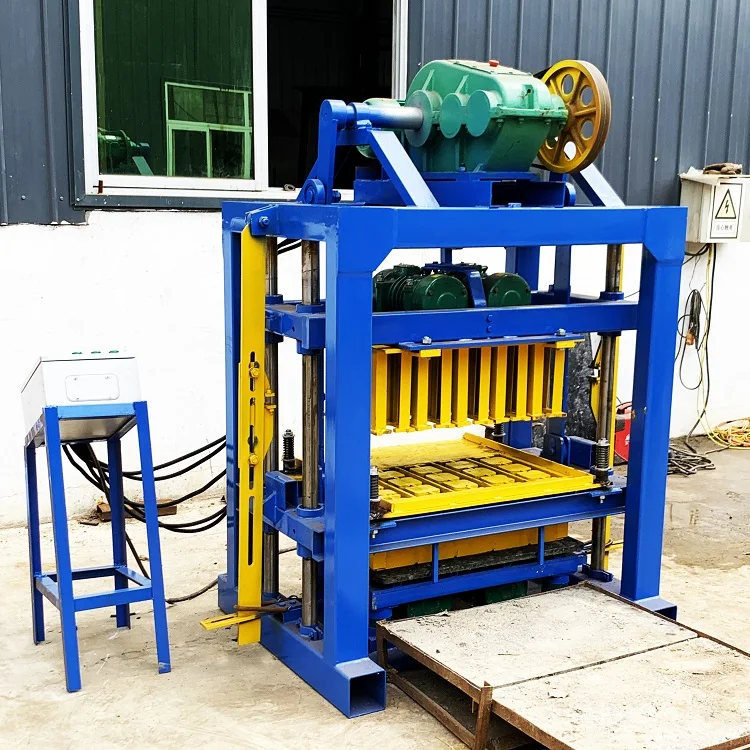
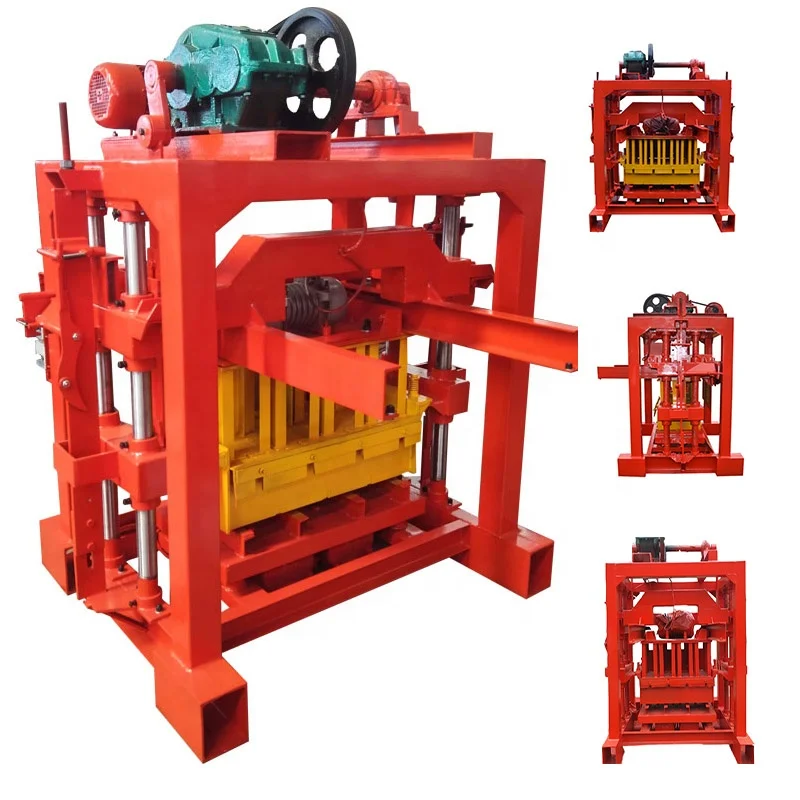
| Machine Type | Stationary, small platform vibration |
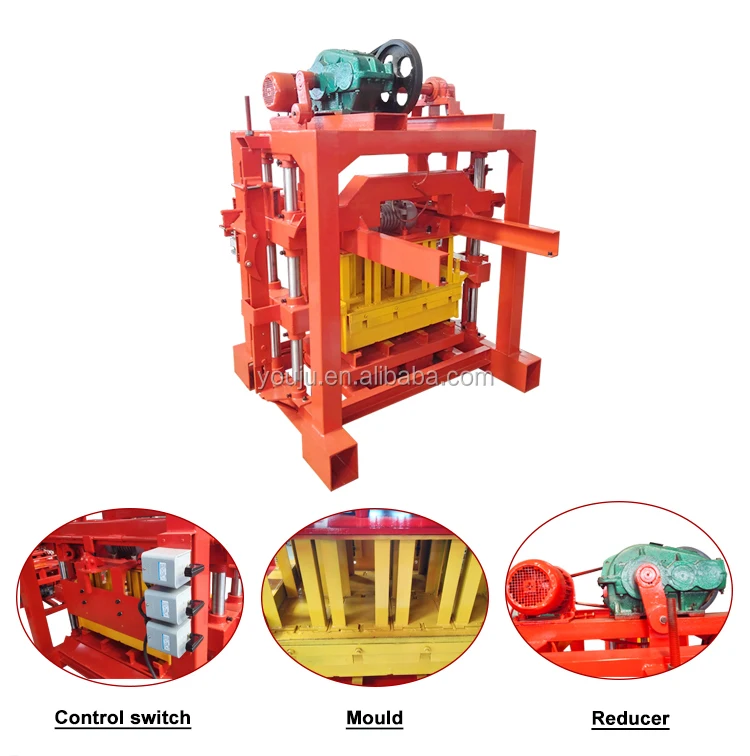
| Operation Mode | Manual with mechanical-electric combination control |
| Rated Power | 10.4 kW |
| Voltage & Frequency | Three-phase four-wire (exact voltage/frequency to be confirmed per target market) |
| Overall Dimensions (L×W×H) | 1350 × 1460 × 1800 mm |
| Total Mass | 1200 kg |
| Cycle Time | 40 s |
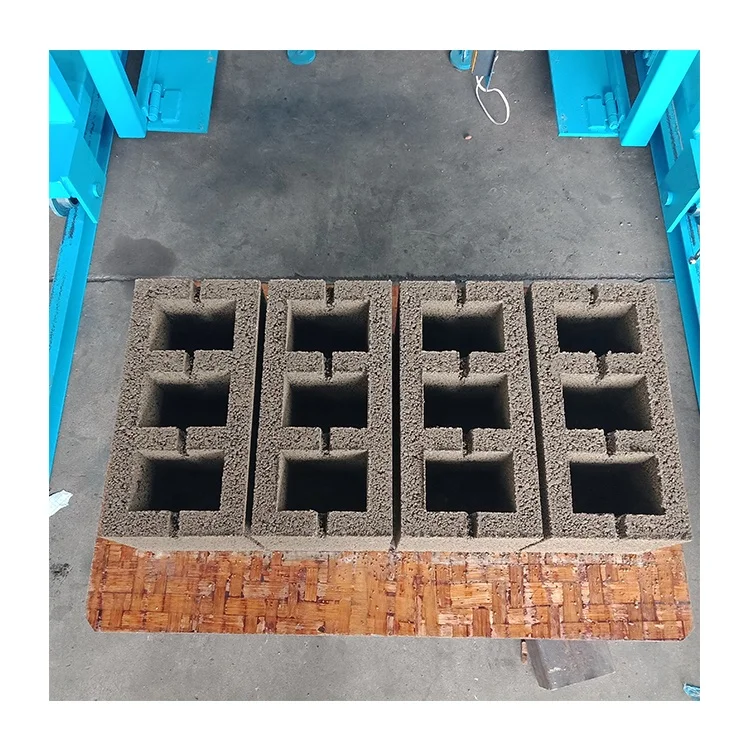
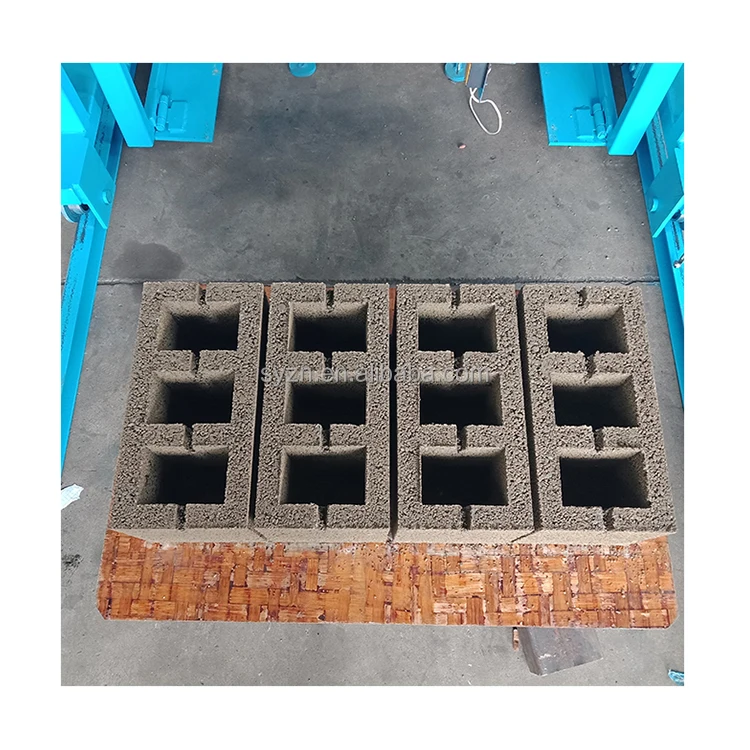
| Output Capacity | 2400 pcs/hour based on 400×200×200mm hollow block, 5 pcs/mould (shift length and actual daily output to be confirmed) |
| Vibration Frequency | 2800 r/min |
| Vibration System | Table vibration feeding + fluctuation vibration molding, upper and lower vibrators |
| Pallet Size | 850 × 450 × 20 mm |
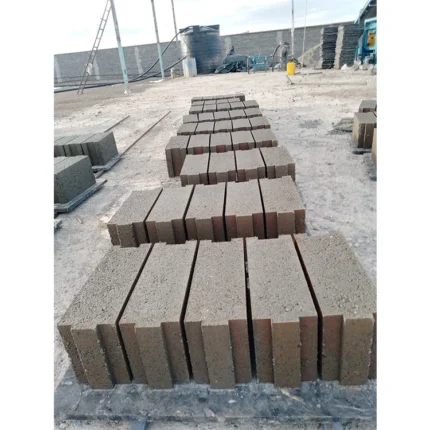
| Mould Format | 400×200×200mm hollow block (5 pcs/mould included as standard) |
| Automation Level | Manual / semi-manual (operator handles pallet loading and block removal) |
| Stacking Method | Manual |
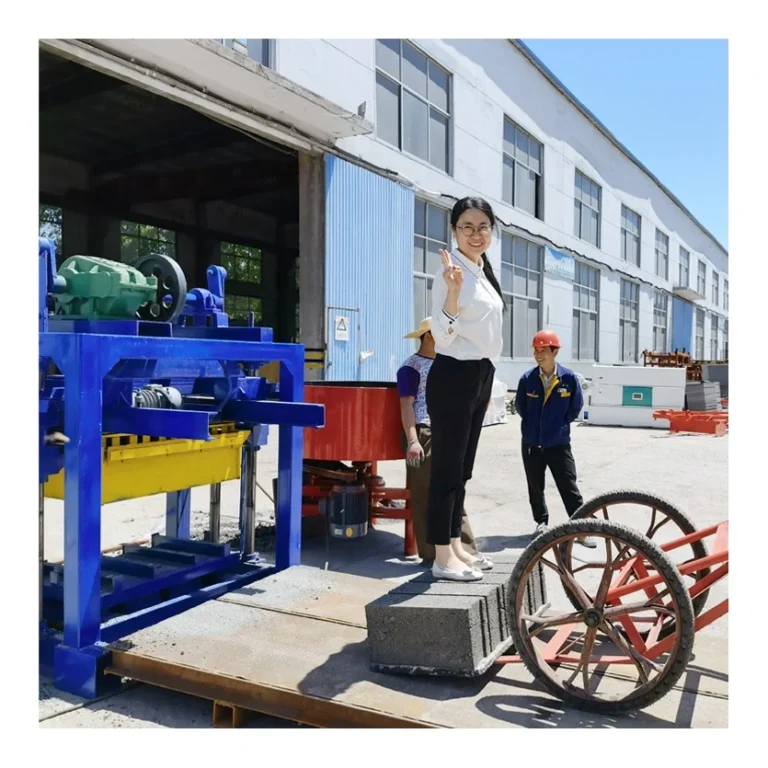
| Mixer Included | JQ350 vertical mixer |
| Control Language | To be confirmed before production |
| Assembly State | Requires on-site installation on flat cement foundation |
| Foundation Requirement | Flat, solid cement ground; vibration platform leveled with four-corner benchmark, unevenness ≤1° |
Application Suitability
| Application | Material or Output |
|---|---|
| Small-scale hollow block production | Crushed stone, cement, sand, water |
| Solid block manufacturing | Cement and local aggregate blends |
| First plant setup for entrepreneurs | Standard hollow and solid formats in limited daily volume |
| On-site block production for construction projects | Cement, sand, and locally sourced aggregate |
| Format extension for existing manufacturers | Hollow block added to existing product range |
Why Vibration Consistency Matters More Than Headline Capacity
Batch-to-batch block strength depends on controlled vibration parameters, not on the highest cycle count a catalogue can claim.
When vibration force and cycle timing drift from one batch to the next, block density varies and compressive strength becomes unpredictable. I have seen small stationary presses on site where operators manually adjust timing by feel, leading to blocks that pass testing in the morning and fail by the afternoon. The QTJ4-40 uses a mechanical-electric interlock across its upper and lower vibrators, which reduces faulty operation and keeps each 40-second cycle within a defined window. For buyers evaluating an automatic concrete block making machine PLC controlled setup, understanding this baseline vibration behaviour is essential before adding higher-level automation. [NEED_CITE: vibration consistency and compressive strength correlation in concrete block production]
The Control Baseline Before Automation
The mechanical-electric combination control on the QTJ4-40 gives operators a defined cycle sequence that removes guesswork from each press stroke. An automatic concrete block making machine PLC controlled upgrade path starts from this baseline — once the mechanical cycle is stable, PLC modules can take over pallet feeding timing, vibration duration, and stacking logic without re-engineering the press itself. This matters because buyers who skip straight to full automation on an untested press often spend weeks troubleshooting communication errors between the PLC and an inconsistent mechanical platform.
Upgrade Path From Manual To Controlled Operation
Starting with manual pallet loading and block removal keeps initial investment contained while the operator learns the mix behaviour and cycle rhythm. As daily volume grows, the next step is typically adding an automatic pallet feeder matched to the 850 × 450 × 20 mm pallet size already in use, followed by a stacker that handles the same pallet dimensions without reconfiguration. [NEED_CITE: typical automation retrofit sequence for small stationary block plants] Planning these modules before the initial purchase means the mechanical interfaces — pallet guide rails, conveyor mounting points, sensor positions — are built into the frame from the start rather than welded on later.
Reading The Specifications That Actually Affect Output
The 10.4 kW rated power must be matched to the site’s three-phase four-wire supply at the correct voltage and frequency; running a 380V-rated motor on a 415V supply causes overheating within weeks, while undervoltage reduces vibration amplitude and weakens block density. The 2800 r/min vibration frequency works with the table vibration feeding and fluctuation vibration molding system to compact the mix from both directions — upper vibrators settle the top surface while lower vibrators drive density through the mould base. The JQ350 vertical mixer included in the standard configuration handles raw material preparation at a pace that prevents the press from waiting between cycles, provided the mix design suits the local aggregate. Pallet size of 850 × 450 × 20 mm must match the curing racks and forklifts the buyer already operates; ordering non-standard pallets after installation creates handling bottlenecks that no amount of press automation can solve.
The Cost Of Skipping Configuration Verification
When voltage and frequency are not confirmed in writing before production, the machine arrives on site and cannot be commissioned until a transformer or motor swap is arranged — I have watched lines sit idle for weeks while a single contactor was air-freighted from the manufacturer. When pallet size is chosen without checking the curing area dimensions, pallets stack unevenly and blocks cure at inconsistent rates, producing strength variations that only appear during third-party testing. [NEED_CITE: common commissioning delays caused by unconfirmed electrical specifications] When the mould format is assumed rather than specified, the buyer discovers on arrival that the standard 400×200×200mm hollow block mould does not match the format their market actually purchases.
Why Source This Machine Through A Single-Focus Supplier
Block machinery is the sole product line, so the QTJ4-40 press, its mould, pallet specification, and JQ350 mixer are configured as one system rather than assembled from separate vendors who shift blame when cycle times do not align. Configuration is set against the buyer’s actual mix design and local aggregate, not pulled from a catalogue default that assumes materials unavailable at the job site. Mould design covers the formats the buyer’s market sells, with custom drawings available for non-standard dimensions. The automation level is selectable at purchase, meaning a buyer can start with manual pallet handling and add controlled feeding and stacking modules as volume justifies the investment. Installation support includes operator training on the mechanical-electric control sequence, ensuring the team understands the baseline cycle before any PLC retrofit is attempted.
Documentation & Verification
- Line layout showing capacity calculation per block format, not a single headline number
- Machine specification sheet with confirmed voltage, frequency, and control display language
- Mould drawing and format list matching the buyer’s target market dimensions
- Pallet specification confirming size, material, and compatibility with existing curing racks
- Factory test record demonstrating cycle time and vibration consistency before dispatch
- Hydraulic and electrical schematic for on-site troubleshooting and future automation retrofit
Installation, Commissioning & Support
- Flat cement foundation required; vibration platform leveled to ≤1° using four-corner benchmark
- Three-phase four-wire power supply at confirmed voltage and frequency with dedicated circuit for 10.4 kW load
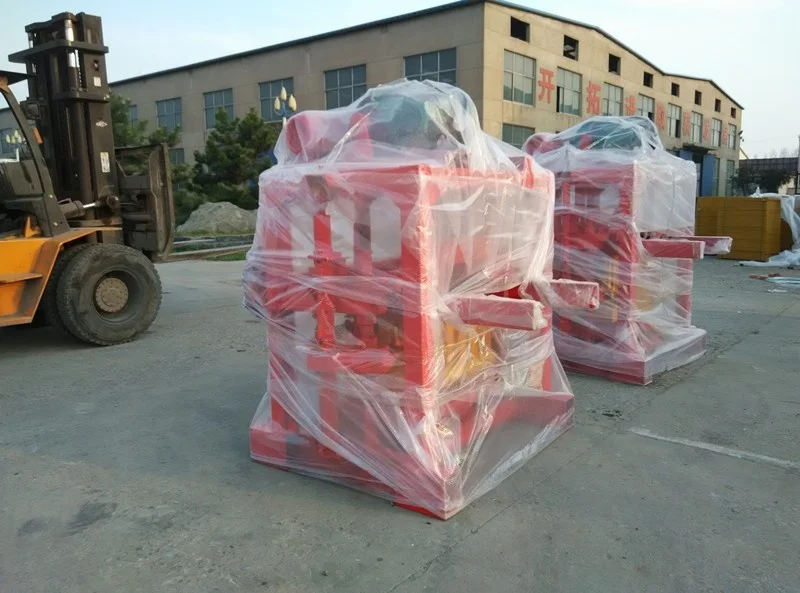
- Machine ships partially assembled; on-site installation covers vibration platform alignment and mixer positioning
- First commissioning includes cycle timing verification at 40 s per mould with operator present
- Operator training covers mechanical-electric interlock sequence and pallet loading rhythm
- Wear parts list provided at shipment covering seals, vibrator mounts, and mould wear surfaces
- Mould change procedure demonstrated for the included 400×200×200mm format with changeover time confirmed on site
What To Include In Your Inquiry
Provide the target block format and dimensions your market purchases, along with the daily output volume you plan to reach within the first year. Confirm your site’s voltage, frequency, and whether the control display language needs to match a specific operator group. Share your local aggregate type and mix design so vibration parameters can be matched before production. State whether you plan to add automatic pallet feeding or stacking modules later, so the frame interfaces can be prepared at the factory.
Frequently Asked Questions
Q: How is the QTJ4-40 daily output calculated, and which block format does it assume?
A: The stated output of 2400 pieces per hour is based on 400×200×200mm hollow blocks with 5 pieces per mould and a 40-second cycle time. Actual daily output depends on shift length, operator pace during manual pallet handling, and mixer throughput. Request a capacity calculation document that states the assumed block format and shift duration so you can compare realistic daily figures against your production target.
Q: What voltage and control language options are available, and how are they confirmed?
A: The machine operates on a three-phase four-wire supply with voltage and frequency confirmed in writing before production begins. Control display language is agreed at the same stage to match the operator team on site. This confirmation is documented in the specification sheet so commissioning proceeds without electrical modifications or control panel reprogramming after arrival.
Q: Can the QTJ4-40 be upgraded with automatic pallet feeding or PLC control later?
A: Yes, the mechanical-electric baseline is designed to accept automatic pallet feeding, stacking, and PLC control modules as production volume grows. Discussing the upgrade path at the inquiry stage ensures the frame includes the necessary mounting points and sensor interfaces from the start, avoiding structural modifications when retrofitting automation components.
Q: How should vibration frequency be matched to my local aggregate and block strength target?
A: The 2800 r/min vibration frequency works with the upper and lower vibrator system to compact the mix from both directions. The configuration is set against your actual mix design and local aggregate type rather than a catalogue default. Provide your aggregate grading and cement ratio so the vibration parameters can be verified against your target compressive strength before production.
Q: What installation conditions are required, and is on-site training included?
A: The machine requires a flat, solid cement foundation with the vibration platform leveled to within one degree using a four-corner benchmark. A dedicated three-phase circuit handles the 10.4 kW load. On-site commissioning covers platform alignment, cycle timing verification, and operator training on the mechanical-electric control sequence and pallet handling procedure.