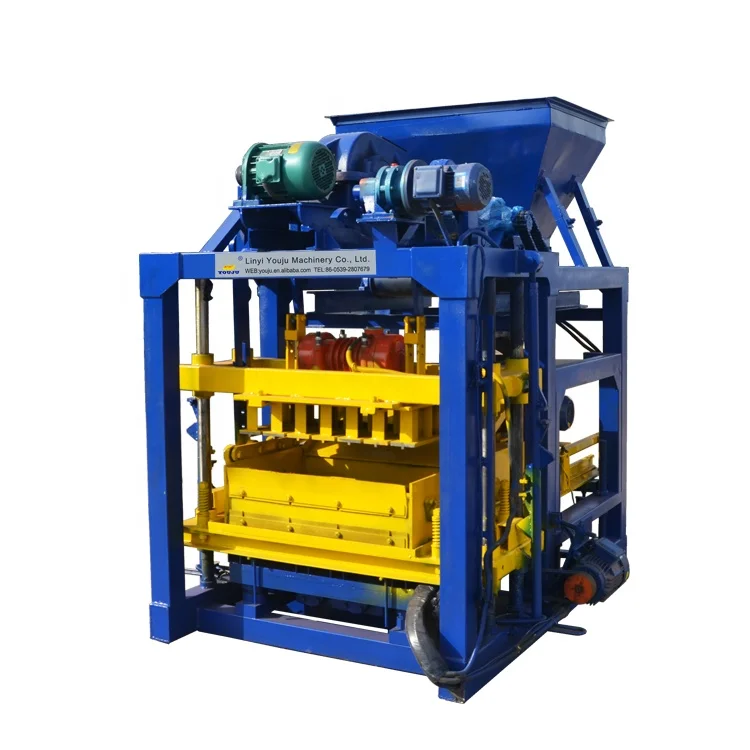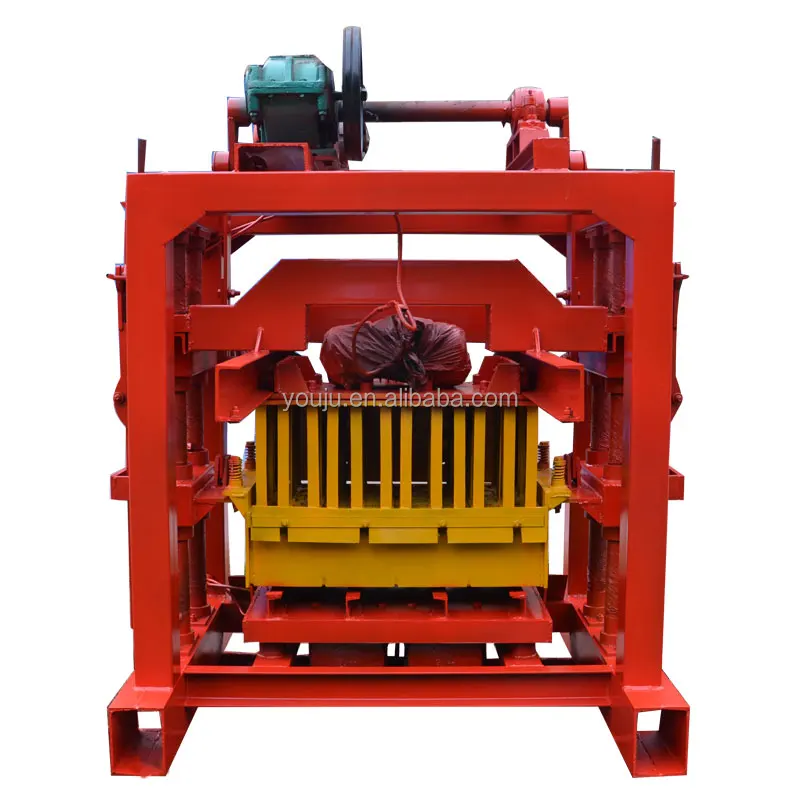
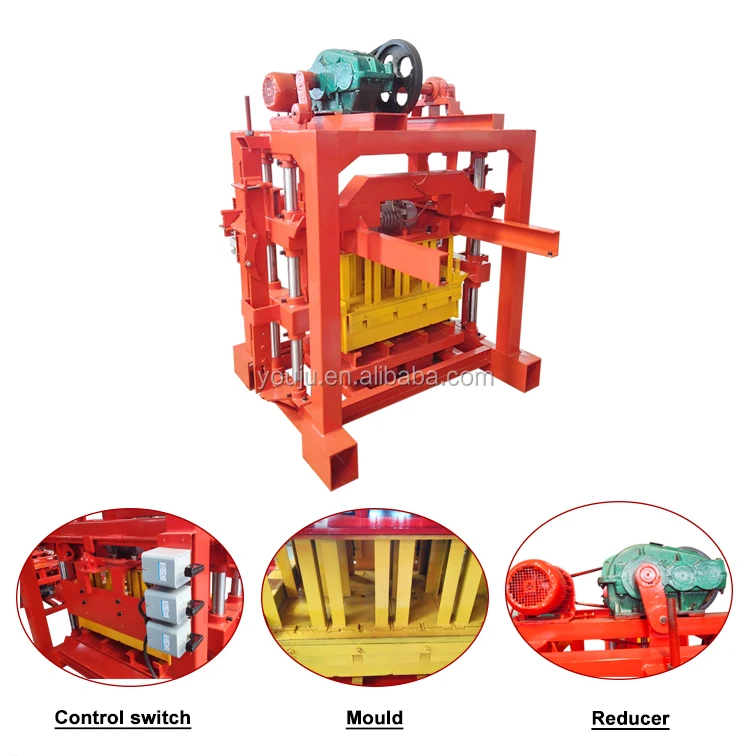
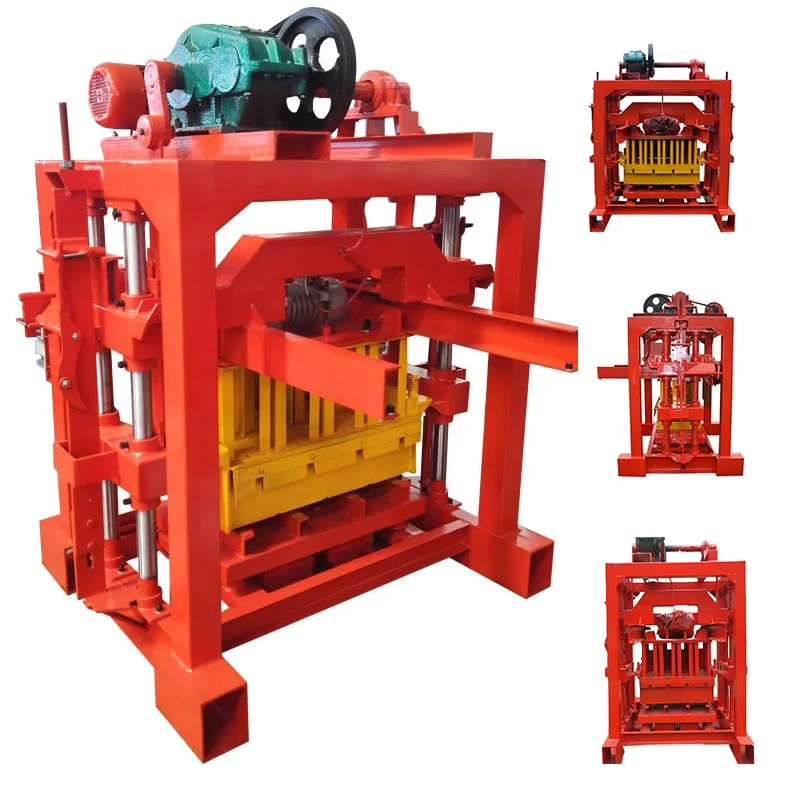


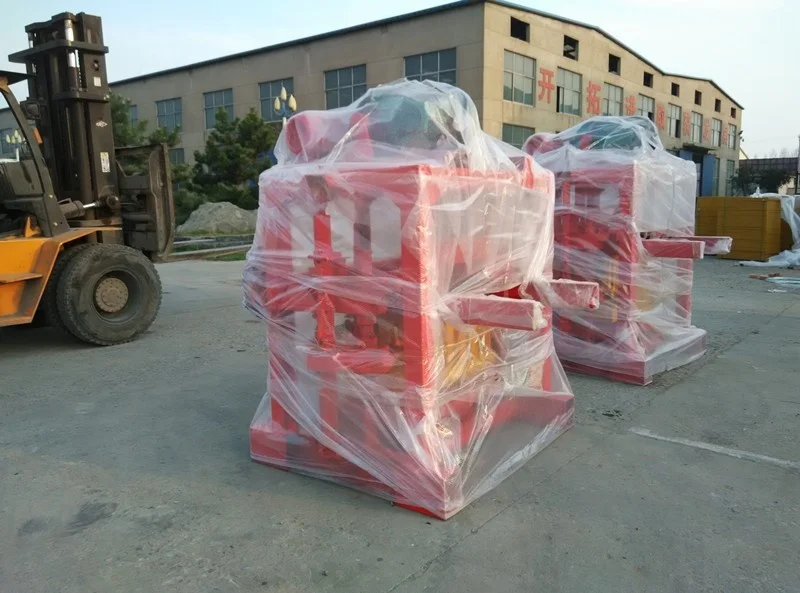
Description
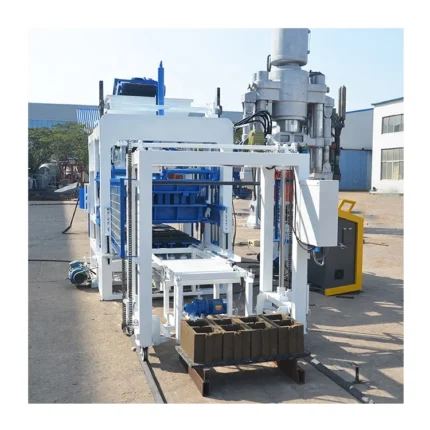
Single-focus machinery supply — the QTJ4-40 press, moulds, pallets and handling are specified as one matched system from a dedicated block machinery builder, not assembled from separate vendors.
Technical Specifications
| Parameter | Value |
|---|---|
| Model | QTJ4-40 |
| Product Type | Manual Concrete Block Making Machine |
| Machine Configuration | Stationary, small platform vibration |
| Operation Mode | Manual (mechanical and electric combination) |
| Rated Power | 10.4 kW |
| Overall Dimensions (L×W×H) | 1350 × 1460 × 1800 mm |
| Total Mass | 1200 kg |
| Molding Cycle | 40 s |
| Pallet Size | 850 × 450 × 20 mm |
| Vibration Frequency | 2800 r/min |
| Output Capacity | 19200 pcs/day based on 400×200×200mm hollow block, 5 pcs/mould (basis not stated in source for other formats) |
| Mould Format Supplied | 400×200×200mm hollow block (5 pcs/mould) |
| Automation Level | Manual / Semi-manual with table vibration feeding |
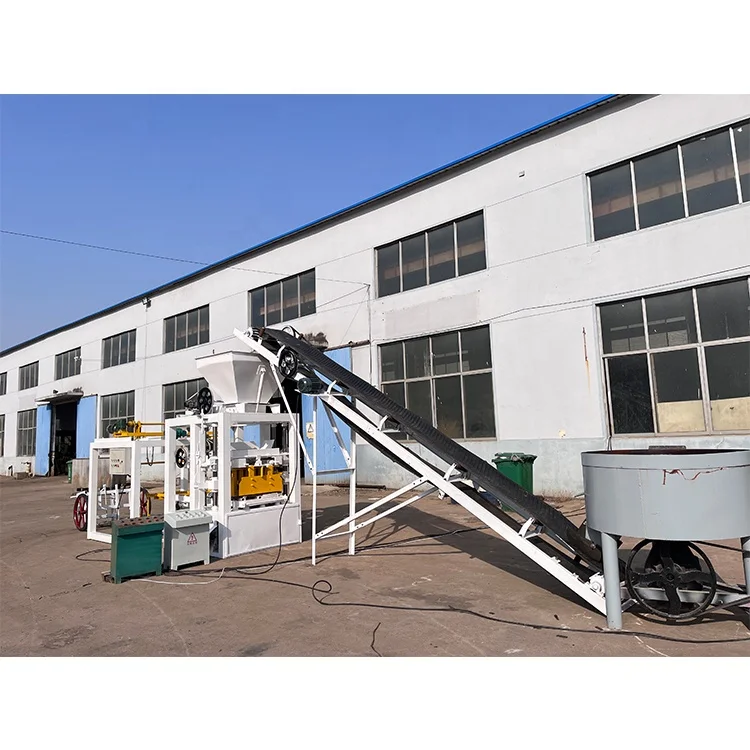
| Standard Configuration | Host machine 1 set, block mould 1 set, JQ350 mixer |
| Stacking Method | Manual (pallet handling equipment scope to be confirmed) |
| Voltage & Frequency | To be confirmed before production |
| Control System | Electrical control components (PLC availability to be confirmed) |
| Standards | CE (verify applicability to this model) |
Application Suitability
| Application | Material or Output |
|---|---|
| Small-scale hollow block production | Concrete, cement, sand and local aggregate |
| On-site block manufacturing for contractors | Mobile production with local mix design |
| First block plant setup | Low initial investment with upgrade path |
| Building material distributors | Adding hollow and solid block formats to catalogue |
| Solid block and paving block runs | Alternative mould formats on same pallet size |
Why "19200 Blocks per Day" Needs a Closer Look Before You Order
Capacity figures only mean something when the block format, mix design and pallet cycle are all stated together.
The automatic QTJ4-40 block machine is rated at 19200 pieces per day based on a 400×200×200mm hollow block with 5 cavities per mould and a 40-second cycle. Switch to a smaller solid block format and the pieces-per-mould count changes, the cycle may shift, and the daily total moves with it. I have seen buyers compare two quotations on cycle speed alone, only to discover after installation that their actual product format cut output noticeably short of expectation. [NEED_CITE: common block format dimensions and their effect on daily output calculations] Always ask for a capacity table that lists each block format your market sells, not just the fastest cycle the press can achieve.
Control System Options and the Upgrade Path From Manual
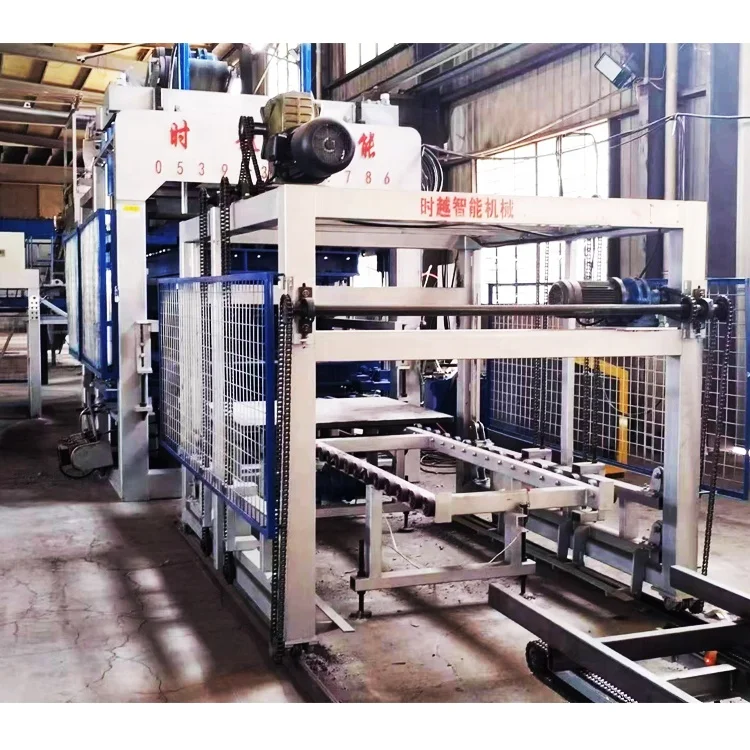
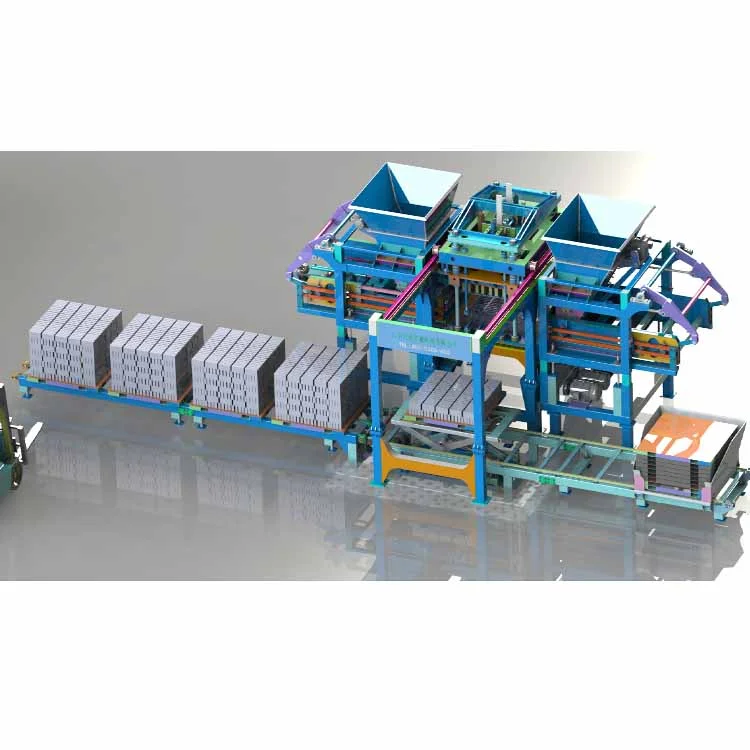
The QTJ4-40 starts as a manual stationary block machine where the operator handles pallet feeding and stacking by hand. Electrical control components manage the vibration cycle and mechanical interlocking to prevent faulty operation damage. For buyers planning to grow output without adding shifts, the platform supports a move toward PLC-controlled pallet feeding and automatic stacking. This upgrade removes the heaviest repetitive tasks from the operator while keeping cycle-to-cycle compaction consistent.
How Batch Consistency Holds Across a Full Production Day
Table vibration feeding combined with fluctuation vibration molding means every cycle delivers the same compaction energy to the mix. The 2800 r/min vibration frequency works together with engine hydraulic pressure to compact concrete uniformly across all five cavities. When the PLC controlled concrete block machine configuration is selected, batching accuracy improves further because the control system governs feed timing and vibration duration rather than leaving them to operator judgment. [NEED_CITE: effect of consistent vibration frequency on block compressive strength]
Reading the Numbers That Actually Shape Your Output
The 10.4 kW rated power covers both the vibration motor and the JQ350 mixer drive, so electrical supply planning must account for the full connected load including any pallet conveyor added later. The 850 × 450 × 20 mm pallet size determines how many blocks sit on each board and how those boards fit your existing curing racks and forklift tines — a mismatch here means reshuffling the curing yard before the first production run. The 1200 kg total mass gives the press enough weight to resist vibration walk-off on a level concrete pad without a bolted foundation, though a reinforced floor is still required. Molding cycle of 40 seconds sets the rhythm for the entire line; any upstream mixer or downstream stacker must match this pace or the press spends time waiting.
What Happens When Automation Scope Is Left Undefined
Buyers who receive a quotation that lists the press but omits pallet handling, stacking and curing equipment often end up stacking wet blocks by hand for the first year. The labour burden is heavy, block breakage rises from rough handling, and the daily output never reaches the calculated figure because the operator cannot keep up with the 40-second cycle. [NEED_CITE: manual versus automatic pallet handling impact on block breakage rates] Specifying exactly what is manual, what is automatic, and what the upgrade path covers before signing the order avoids this gap.
Why Sourcing the Line From One Builder Matters
Block machinery is our single focus, so the QTJ4-40 press, its mould, pallet specification and any handling equipment are configured as one system rather than bolted together from unrelated suppliers. Mould design covers the formats your local market actually buys, including custom drawings when your product range goes beyond standard hollow blocks. Automation level is selectable, meaning a buyer can commission the machine in semi-manual mode and add PLC-controlled stacking when volume justifies the investment. Installation support includes operator training on the exact control system shipped with your unit. [NEED_CITE: importance of matched vibration and mould design for block density]
Documentation & Verification
- Line layout and capacity calculation stating each block format assumed for the QTJ4-40
- Machine specification sheet covering rated power, vibration frequency and pallet dimensions
- Mould drawing and format list confirming cavity count and changeover procedure
- Voltage, frequency and control display language confirmation before production
- Factory test record run on your specified mix design before dispatch
- Operation and maintenance manual covering vibration motor and electrical component service intervals
Installation, Commissioning & Support
- Reinforced concrete pad sized to the 1350 × 1460 mm footprint with level tolerance for vibration stability
- Dedicated electrical circuit matching confirmed voltage and frequency for the 10.4 kW connected load
- Mixer and host machine arrive separately and require on-site mechanical assembly and belt alignment
- First-run commissioning includes vibration frequency and hydraulic pressure adjustment to your aggregate sample
- Operator training covers pallet loading rhythm, mould change procedure and daily greasing points
- Wear parts list identifies vibration motor bearings, mould liner plates and electrical contactors
What We Need From You to Build the Right Configuration
Send us the block formats your market sells, your target daily volume per format, and a sample of the local aggregate and sand you plan to use. Confirm the voltage, frequency and control language required at your site so the electrical panel is built correctly before shipping. Let us know your curing yard dimensions and forklift specification so the pallet size and stacking method are matched from day one.
Frequently Asked Questions
Q: How is the 19200 pcs/day capacity calculated for the QTJ4-40?
A: The figure is based on a 400×200×200mm hollow block with 5 cavities per mould and a 40-second molding cycle running continuously. Switching to a different block format changes the pieces-per-mould count and may shift cycle time, so daily output will differ. Always request a per-format capacity table before comparing quotations.
Q: Can this machine be upgraded to automatic stacking later?
A: Yes. The QTJ4-40 platform supports adding PLC-controlled pallet feeding and automatic stacking as a subsequent upgrade. The electrical control architecture allows integration of these functions without replacing the host press or vibration system, keeping the initial investment intact.
Q: What voltage and control language options are available?
A: Voltage and frequency are configured to match your site supply before production begins. Control display language is confirmed at the same stage so operators can read the interface in their working language on arrival. Both must be locked in before the electrical panel is built.
Q: How does vibration force match my local aggregate?
A: The 2800 r/min vibration frequency and hydraulic pressure are adjusted to suit the density and particle size of your specific mix design. We ask every buyer to send a local aggregate sample so parameters are set before factory testing, preventing weak blocks caused by mismatched compaction energy.