

Description
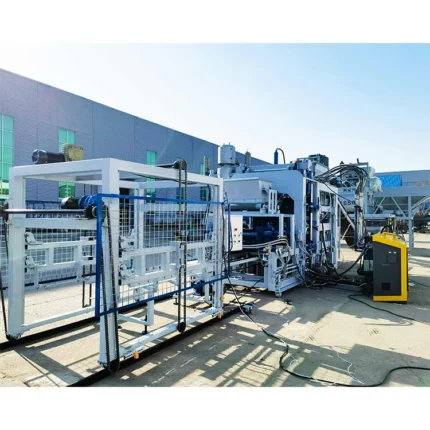
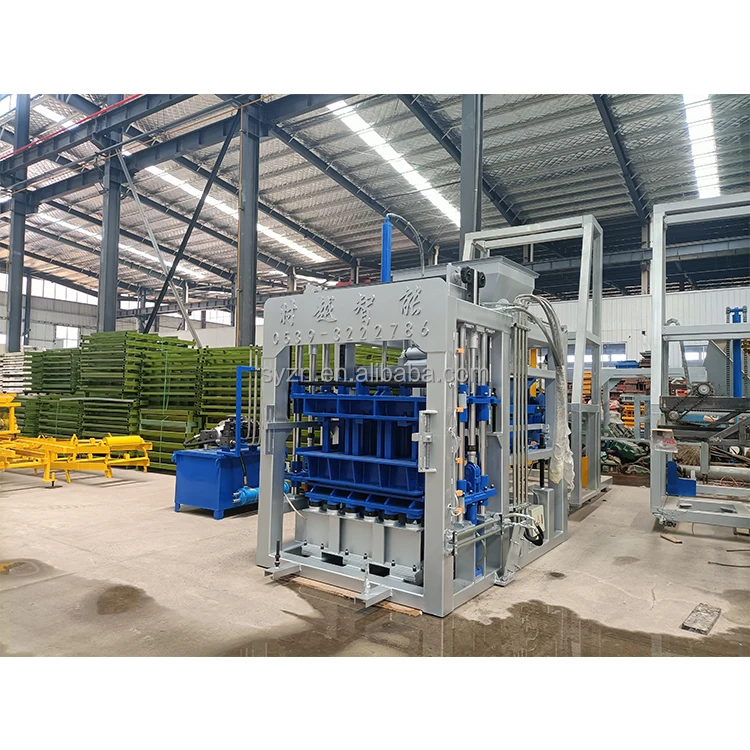
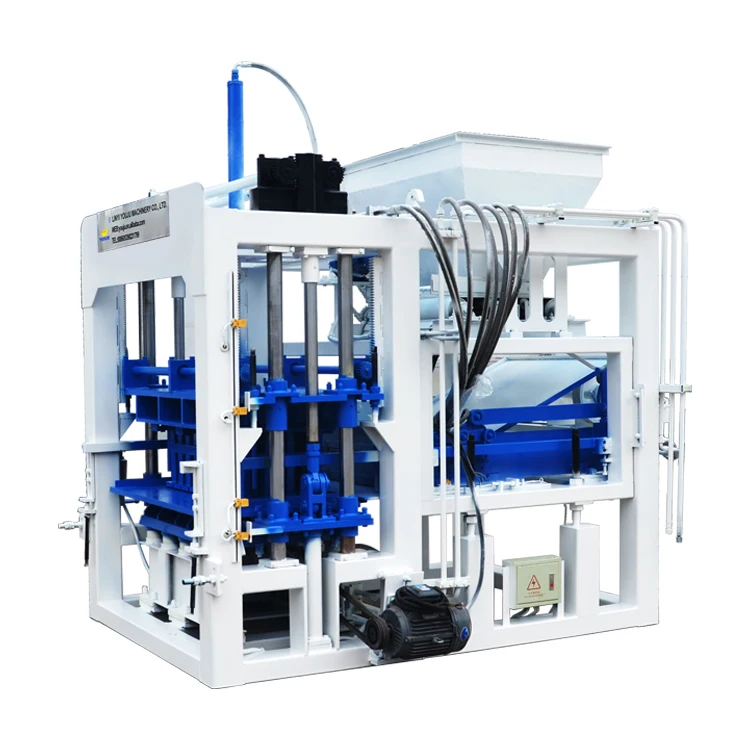
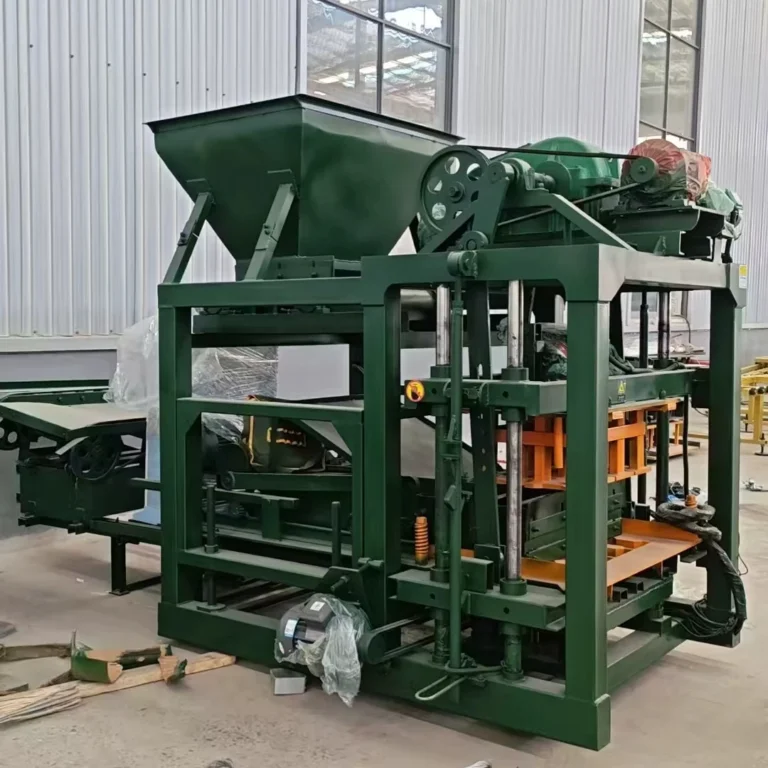
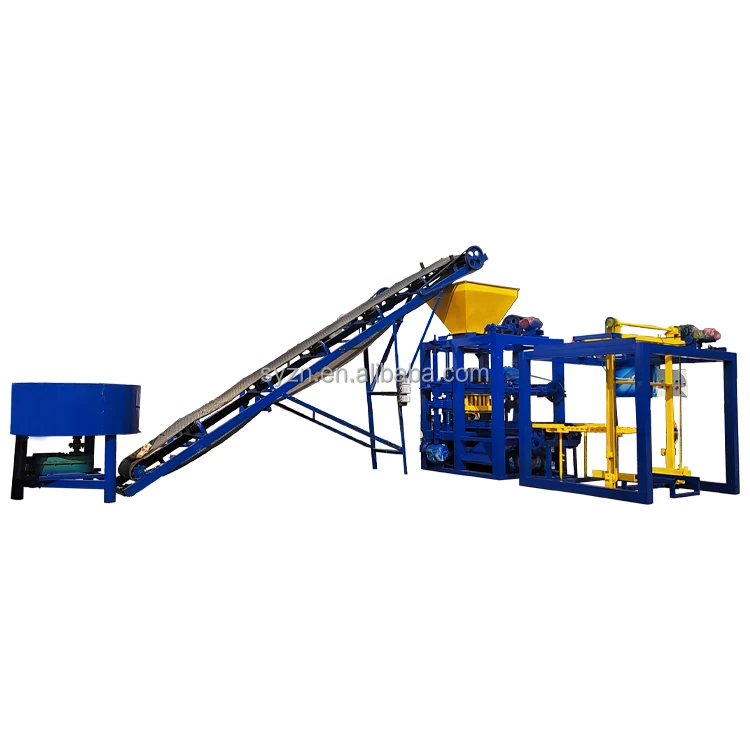
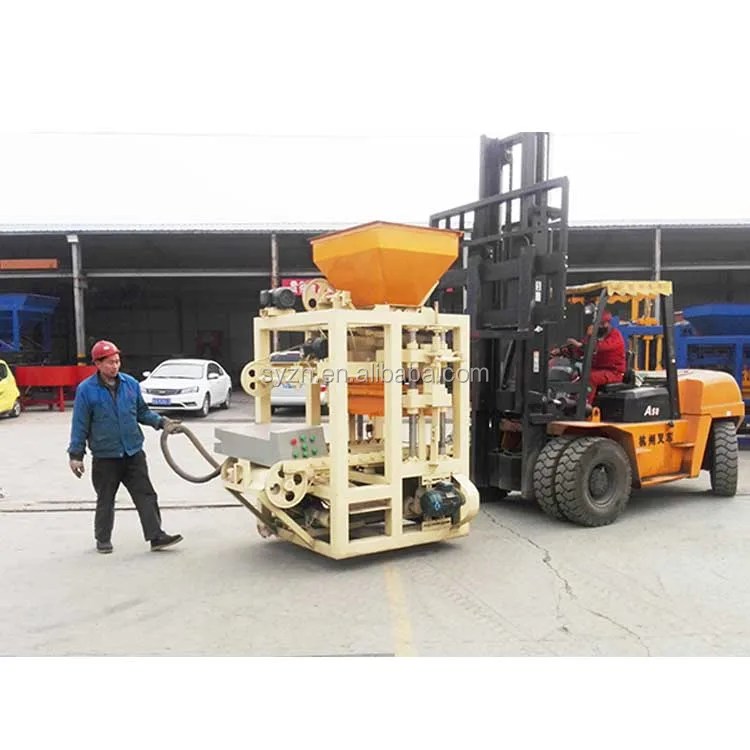
Mould & Line Match — the QTJ4-24 is specified as a press, pallet, and handling sequence rather than a standalone unit, so cycle time and block format align before the line is built.
Technical Specifications
| Parameter | Value |
|---|---|
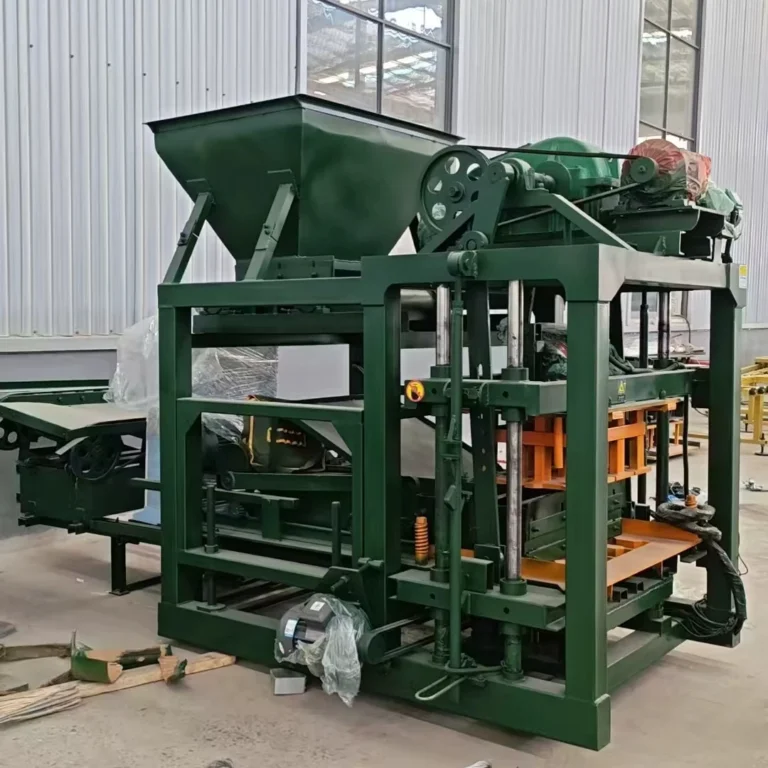
| Product Type | Stationary Block Making Machine |
| Model | QTJ4-24 |
| Overall Dimensions (L×W×H) | 3600 x 1700 x 2560 mm |
| Pallet Size | 850 x 450 mm |
| Molding Cycle | 24–26 s (basis not stated in source — confirm block format / material / thickness) |
| Overall Power | 11.95 kW |
| Vibration Force | 45 kN |
| Total Mass | 2 T |
| Molding Method | Mechanical |
| Vibration Configuration | 2 × 3 kW lower vibrators + 2 × 1.5 kW upper vibrators |
| Reducer for Mold Lifting | 350-type |
| Material Distribution | Full-automatic spiral |
| Automation Level | Semi-automatic (mechanical molding with spiral material distribution) |
| Control System | Available with PLC or relay logic depending on buyer configuration |
| Voltage & Frequency | Configurable to site supply (e.g., 380V/50Hz, 415V/50Hz, 220V/60Hz) |
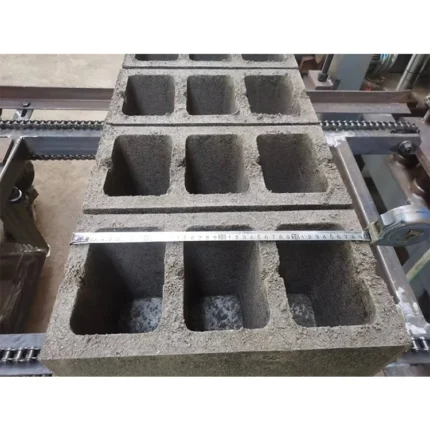
| Mould Compatibility | Interlocking, paving, hollow, solid formats |
Application Suitability
| Application | Material or Output |
|---|---|
| Hollow block production for low-rise residential walls | Cement, sand, and crushed stone mixes with local aggregate gradation |
| Interlocking brick for paving and landscaping | Fine sand and cement blends requiring tight dimensional tolerance |
| Solid block for load-bearing partition walls | Dense aggregate mixes where higher vibration force improves compaction |
| Paving brick for walkways and light-traffic yards | Cement and stone dust mixes needing surface finish consistency |
Why the Voltage Question Comes Before the Price on the QTJ4-24 Automatic Block Machine PLC Controlled
Confirming site voltage and frequency before production starts prevents control panel damage and weeks of delayed commissioning.
An automatic QTJ4-24 block making machine PLC controlled configuration relies on sensitive boards inside the electrical cabinet. I once saw a 380V-rated panel arrive at a 415V site in Southeast Asia; a board burned during first energization, and the line sat idle while a replacement shipped. That kind of delay is avoidable when the supply spec is locked before the build [NEED_CITE: voltage and frequency standards by export market]. The cost of the board is small compared to the lost production weeks and the contractor penalties that follow.
From Semi-Automatic Operation to Full PLC Control
The QTJ4-24 ships as a mechanical press with spiral material distribution and integrated upper-and-lower vibration. At this level, an operator feeds pallets and manages stacking manually, which suits a first plant where capital is limited. The machine frame and vibration system remain the same whether the control is relay-based or PLC-driven, so the buyer is not replacing the press when automation scales up.
Automation That Removes Variables from the Operator
When the plant adds PLC-controlled pallet feeding, automatic stacking, and cubing, the cycle sequence runs without operator timing decisions. Batch-to-batch consistency improves because the spiral feed duration, vibration time, and mold lift speed are stored as recipes rather than adjusted by feel. This matters most when the same machine switches between hollow and paving formats across a shift [NEED_CITE: CE machinery directive requirements for batch consistency in automated presses]. Labour shifts from pressing blocks to supervising the line and managing curing logistics.
Reading the Specs That Actually Shape Block Strength
The 45 kN vibration force is generated by four motors — two 3 kW units below the mould and two 1.5 kW units above. Upper vibration compacts the face of the block while lower vibration drives density through the body; if only lower vibration were present, paving bricks would show a weak surface layer. The 850 × 450 mm pallet size defines the mould cavity area and must match the curing racks and forklift tine spacing already on site. The 350-type reducer on the mold lifting mechanism is sized for continuous cycling; a smaller reducer would overheat under multi-shift operation. Mechanical molding means there is no hydraulic pressure to adjust — compaction depends entirely on vibration force and the mix design feeding the spiral distributor.
What Happens When the Pallet Size Is Chosen Without the Curing Area in Mind
If the 850 × 450 mm pallet does not fit the buyer’s existing curing racks, the plant either rebuilds the racks or handles wet blocks by hand off the pallet — both outcomes cancel the throughput the press was bought to deliver. Pallets that are too heavy for the site forklift slow movement to the curing zone and create a bottleneck the press cycle time never predicted [NEED_CITE: pallet handling bottlenecks in stationary block plants]. These mismatches surface only after the machine arrives.
Why Buyers Source This Machine Here
Block machinery is the single focus, so the press, mould, pallet, and handling equipment are specified as one matched system. Configuration is set against the buyer’s actual mix design and local aggregate, not pulled from a catalogue default. Mould design covers the formats the buyer’s market actually sells, including custom drawings when standard formats do not fit. The automation level is selectable, letting a buyer start semi-automatic and add PLC-controlled stacking later without replacing the press. Installation support includes on-site commissioning and operator training so the line runs from the first day.
Documentation & Verification
- Line layout and capacity calculation stating the block format assumed for the 24–26 s cycle
- Machine specification sheet with vibration force, pallet size, and power confirmed per site voltage
- Mould drawing and format list for interlocking, paving, hollow, and solid bricks
- Voltage, frequency, and PLC display language confirmation signed before production
- Factory test record run on the buyer’s target block format before dispatch
- Operation and maintenance manual with wear parts and mould replacement intervals
Installation, Commissioning & Support
- Foundation pad sized to the 3600 x 1700 mm footprint with anchor bolt pattern for the 2 T mass
- Dedicated electrical circuit rated for the 11.95 kW total draw at confirmed site voltage and frequency
- Machine arrives with vibration motors and reducer pre-mounted; pallet feeder and stacker bolt on during commissioning
- First-run parameter setting covers spiral feed timing, vibration duration, and mold lift speed per block format
- Operator training on mould change procedure, daily vibrator inspection, and 350-type reducer oil checks
- Wear parts list covering spiral blades, vibrator bushings, and mould liner plates with reorder part numbers
Before You Request a Quote
To size the QTJ4-24 correctly, share the block formats you sell most, the daily output target per format, and the cement-sand-stone ratios available from your local suppliers. Confirm the site voltage, frequency, and the language your operators need on the PLC display. If you already have curing racks and forklifts, send the pallet dimensions and rack spacing so the handling equipment matches from day one.
Frequently Asked Questions
Q: How is the QTJ4-24’s output capacity verified, and which block format is the cycle time based on?
A: The 24–26 s cycle is quoted without a stated block format in the base source, so capacity must be calculated per format. We provide a written calculation for hollow, solid, paving, and interlocking bricks separately, showing pieces per hour and daily output based on your shift length and curing constraints.
Q: What automation options are available from the base semi-automatic setup?
A: The mechanical press can be paired with PLC-controlled pallet feeding, automatic stacking, and cubing as the plant scales. The frame and vibration system stay the same, so the upgrade adds handling automation without replacing the core machine.
Q: How are voltage, frequency, and PLC language confirmed before shipment?
A: We collect your site supply specification and operator language requirement before production begins. A written confirmation is signed off, and the electrical cabinet is built and tested at that voltage so the machine energizes correctly on arrival.
Q: What mould formats are available, and how long does a change take?
A: Moulds are available for interlocking, paving, hollow, and solid brick formats. Custom designs are produced from buyer drawings. Change time depends on the mould clamping system selected and is confirmed during configuration.
Q: How is vibration force matched to local aggregate and mix design?
A: The 45 kN total force from four vibrators is evaluated against your aggregate gradation and cement ratio. If the local mix is coarser or leaner, vibration duration and amplitude settings are adjusted so block strength stays consistent across batches.