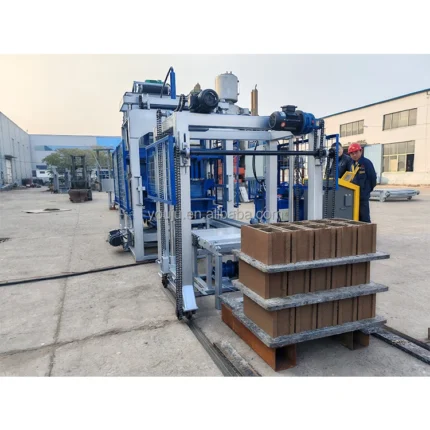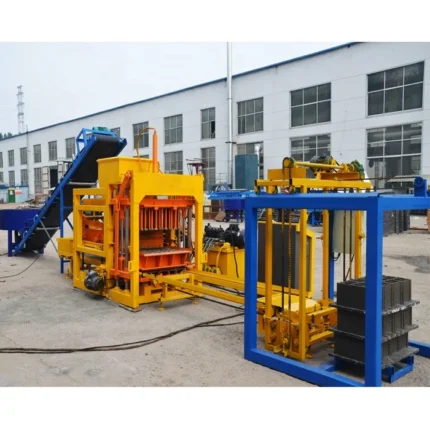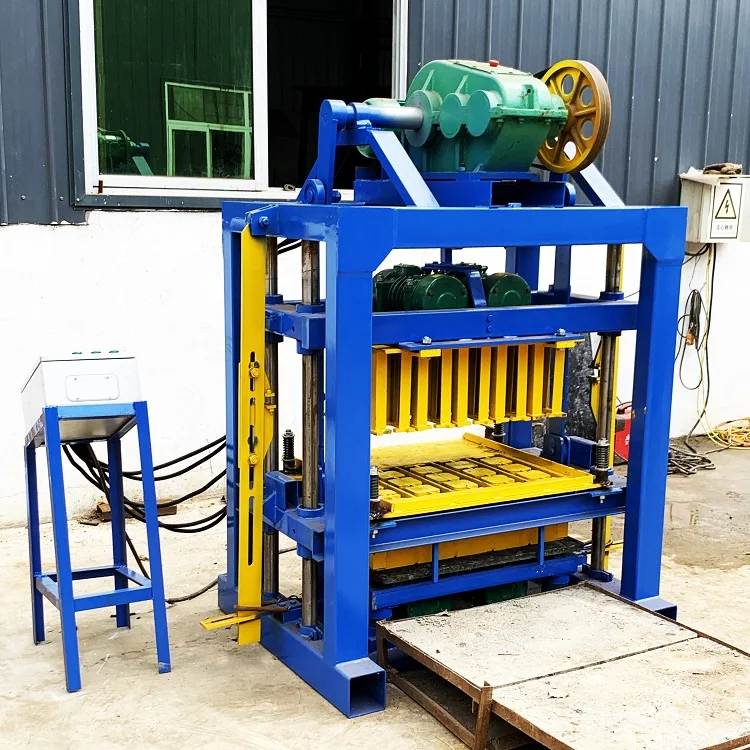

Description
Vibration-matched to your mix — every QTJ4-24 we ship leaves the factory with its platform vibration tuned against the buyer’s actual aggregate sample, not a generic catalogue default.
Technical Specifications
| Parameter | Value |
|---|---|
| Model | QTJ4-24 |
| Product Type | Semi-Automatic Concrete Block Making Machine |
| Molding Type | Platform Vibration |
| Overall Dimensions (L×W×H) | 3600 mm × 1700 mm × 2560 mm (working state) |
| Net Weight | 1750 kg |
| Overall Power | 14.25 kW |
| Pallet Size | 850 mm × 450 mm |
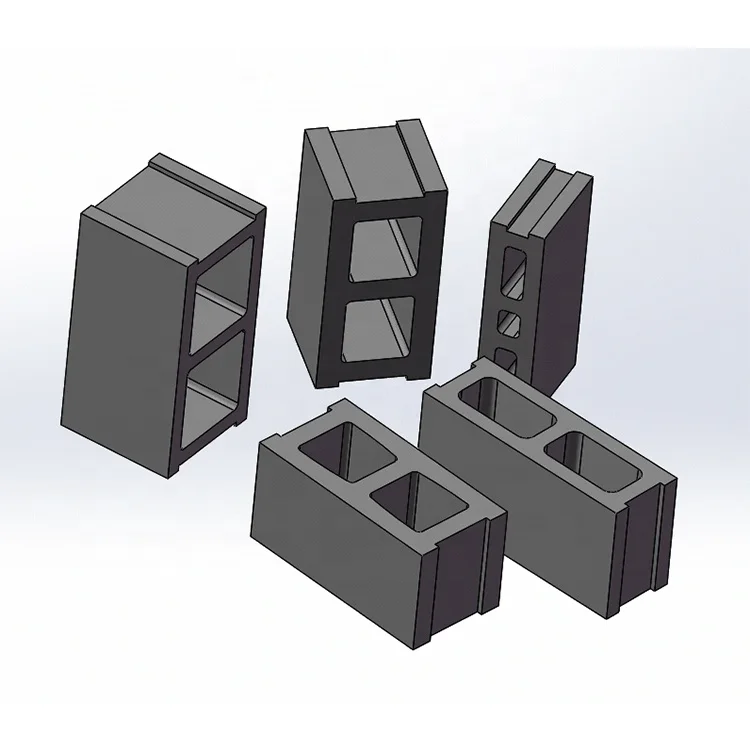
| Standard Hollow Block Format | 390 mm × 190 mm × 190 mm (4 pcs/mould) |
| Standard Solid Brick Format | 240 mm × 115 mm × 53 mm (21 pcs/mould) |
| Vibration System | Lower platform (2 × 3 kW motors) + Upper attached vibrator (1.5 kW) |
| Elevating System | Cone-shape motor with JZQ250 reducer, V-belt drive |
| Delivery Device | Cycloidal pin wheel reducer, chain and V-belt drive |
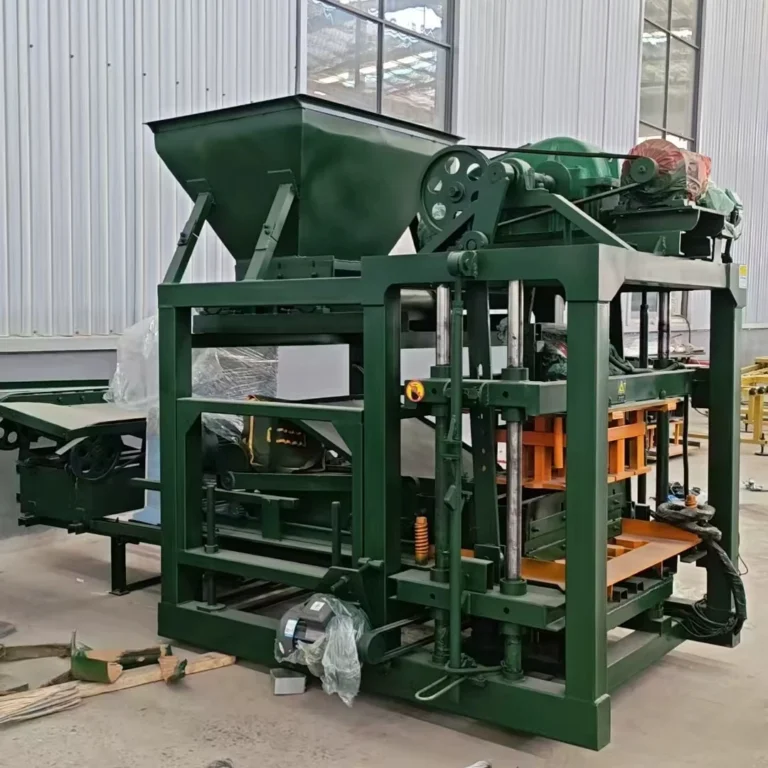
| Machine Frame | Dragon gate style, super steel, four vertical wear-resisting shafts |
| Material Storing Device | Releasing hopper + storing hopper, bolt-fixed |
| Control System | Electronic controlling part (PLC brand and language to confirm) |
| Voltage & Frequency | Configurable to target market (to confirm before production) |
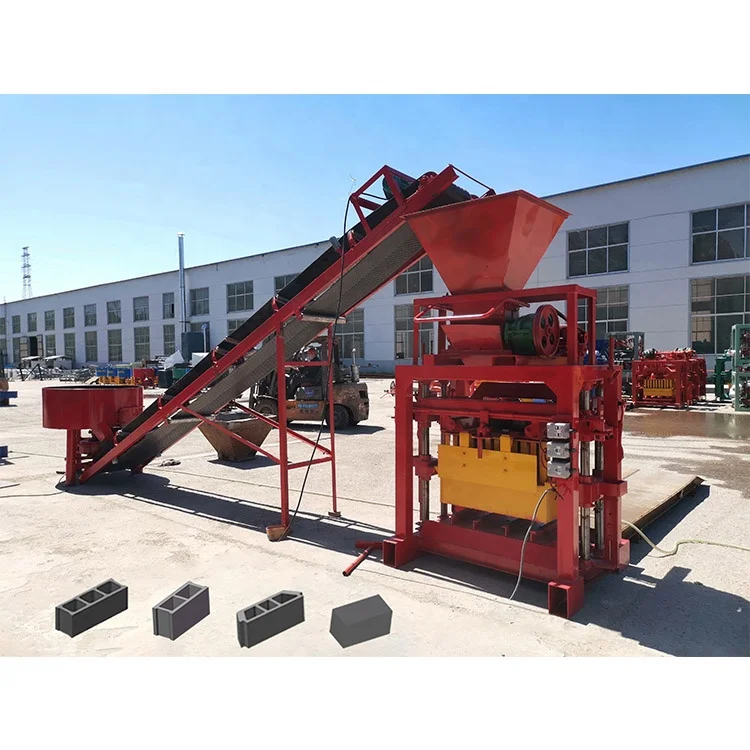
| Support Equipment in Line | JQ350 pan mixer, 6 m belt conveyor |
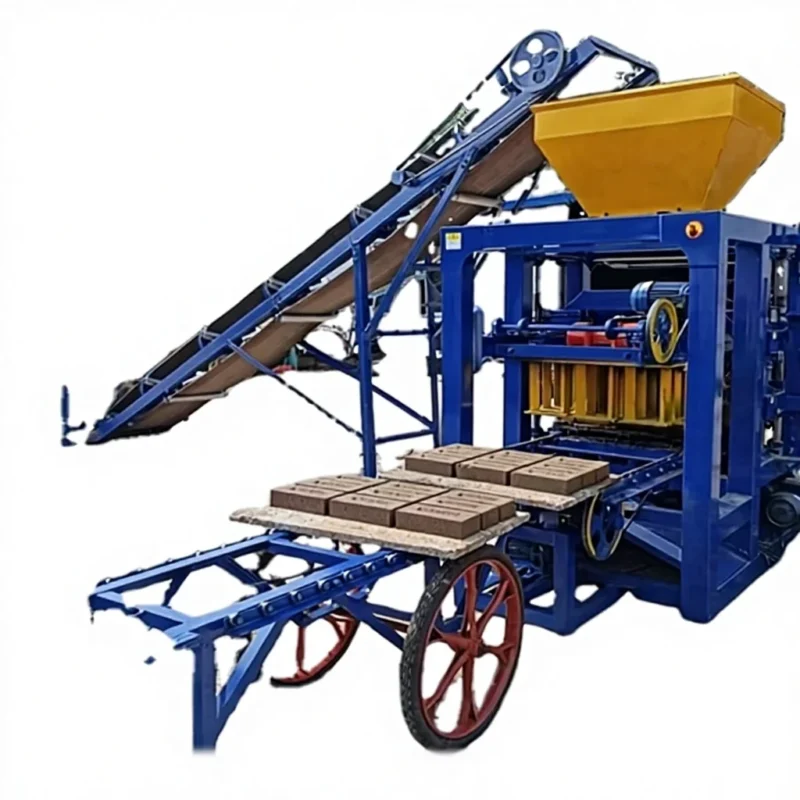
| Optional Equipment | Auto stacker (3–6 layers depending on block height), curing yard trolley |
Application Suitability
| Application | Material or Output |
|---|---|
| Hollow concrete block production | Crushed stone, river sand, cement blends yielding 390×190×190 mm units |
| Solid clay-free brick production | Sand, stone dust and cement mixes pressed into 240×115×53 mm bricks |
| Small-scale plant start-ups | Entrepreneurs producing hollow blocks and solid bricks for local housing projects |
| On-site contractor block making | Construction crews pressing blocks directly at the building location using locally sourced aggregate |
Why "Semi-Automatic" Means Different Things to Different Suppliers
The QTJ4-24 is semi-automatic in its press cycle, but the pallet handling, stacking and curing transport remain manual unless you specify the optional stacker and trolley.
I have watched buyers receive a machine quoted as "semi-automatic" only to find operators still lifting every pallet by hand at the discharge end. The press itself cycles through elevation, vibration and material delivery electronically, yet the surrounding workflow defines what the operator actually does all shift. When we quote this automatic QTJ4-24 block machine, we state exactly which stations are powered and which still rely on manual labour, so there is no surprise on commissioning day [NEED_CITE: automation level definitions in block machinery trade].
How the Control Sequence Removes Operator Guesswork
The electronic controlling part coordinates the elevating motor, vibration motors and delivery device into a single timed sequence. Once the operator triggers the cycle, the system runs through material release, mould filling, vibration compaction and demoulding without further manual input on those steps. This consistency matters because batch-to-batch strength variation on a fully manual press usually traces back to the operator shortening the vibration window under time pressure.
Where the Upgrade Path Begins
A plant that starts with manual pallet handling at the discharge side can introduce the optional auto stacker later, removing the heaviest repetitive lift from the operator’s shift. The stacker builds pallets into three to six layers depending on block height, feeding directly onto the curing yard trolley. The PLC controlled semi-automatic block machine therefore sits at the entry point of an automation ladder rather than being a fixed endpoint, and the electrical interface for the stacker is pre-wired on the control panel during initial assembly.
Reading the Vibration and Frame Specs
The dual vibration arrangement pairs two 3 kW high-speed motors beneath the platform with a 1.5 kW attached vibrator above, distributing compaction force across both the bottom and top of the mould cavity. On hollow blocks this means the face mix and core fill receive comparable densification instead of the top surface staying soft. The dragon gate frame with four vertical wear-resisting shafts keeps the mould aligned through thousands of cycles, preventing the taper wear that makes blocks wider at one end. Meanwhile the JZQ250 speed reducer on the elevating system handles the shock load of the press head dropping into position cycle after cycle [NEED_CITE: vibration force distribution principles in block presses]. The 850 mm × 450 mm pallet size needs matching against your existing curing rack spacing and forklift tine width before the order is finalised.
The Cost of Skipping the Pallet and Voltage Conversation
Pallet size decided after the machine arrives means building new curing racks or buying a different forklift. Voltage confirmed on the day of energisation means the motor contactors chatter and burn out within the first week. I have seen a block plant in West Africa sit idle for three weeks because the PLC display arrived in a language the operators could not read, and the local electrician had no wiring diagram to trace the fault. These are not engineering failures — they are specification gaps that a longer pre-order conversation would have closed [NEED_CITE: common commissioning delays in exported block machinery].
Why Buyers Source This Machine Through Our Line
We configure the QTJ4-24 against your actual mix design and local aggregate rather than quoting a catalogue default, because vibration force that works with Shandong river sand may leave Nigerian laterite under-compacted. Mould formats are selected around the blocks your market actually buys, and custom mould drawings are available when a non-standard dimension is needed. The machine, pallet and handling equipment are specified as one matched system so that cycle times across the mixer, conveyor and press stay synchronised. Automation level is selectable at order and upgradable on site without replacing the press. Documentation arrives with the machine in the language your maintenance team reads, including hydraulic and electrical schematics that match the as-built configuration.
Documentation & Verification
- Line layout drawing showing mixer, conveyor and press station spacing for your site dimensions
- Capacity calculation stating output per block format with assumed mix and cycle time
- Electrical schematic matching the confirmed voltage, frequency and PLC display language
- Factory test record run on a mix proportion aligned with your submitted aggregate sample
- Mould drawing pack listing every format included in the order with dimensional tolerances
Installation, Commissioning & Support
- Foundation pad must be level and cured before the 1750 kg machine is bolted down
- Dedicated electrical circuit sized for the 14.25 kW total draw including start-up surge
- Machine ships partially dismantled; reassembly on site requires overhead clearance above 2560 mm
- First-run commissioning includes vibration timing adjustment against your local material sample
- Operator training covers mould change procedure, daily greasing points and pallet inspection routine
- Wear parts list identifies shaft bushes, vibration motor mounts and belt sizes for local sourcing
What We Need Before Quoting
To size the QTJ4-24 correctly for your plant, share the block formats you intend to sell and the daily output you are targeting for each format. Tell us your local aggregate type, cement source and whether you have sample material available for a test press. Confirm the voltage, frequency and control display language your site requires, along with the pallet size your existing curing area and forklift can handle.
Frequently Asked Questions
Q: What automation level does the QTJ4-24 provide, and what is the upgrade path?
A: The press cycle is electronically controlled, but pallet handling and stacking remain manual unless you add the optional auto stacker and trolley. The control panel is pre-wired for the stacker, so you can add it later without replacing electrical cabinets. This lets you start with lower investment and scale automation as order volume grows.
Q: How is output capacity calculated for different block formats?
A: Capacity depends on the format being pressed, the mix design and the vibration time set for adequate compaction. A 390×190×190 mm hollow block cycles differently from a 240×115×53 mm solid brick. We provide a written capacity calculation stating the assumed format and cycle time so your daily planning starts from a realistic number.
Q: Can the PLC display language and voltage be set before shipment?
A: Yes, both are confirmed during the order process. We need your site voltage, frequency and preferred display language before production begins. The electrical schematic shipped with the automatic QTJ4-24 block machine reflects the as-built configuration so your electrician can trace any fault on site.
Q: How does the dual vibration system handle different local aggregates?
A: The lower platform vibration and upper attached vibrator work together to compact the full mould depth. When a buyer switches from crushed granite to softer laterite, the vibration timing and amplitude may need adjustment. We test with your submitted material sample and record the settings before dispatch.
Q: What supporting equipment is included versus optional?
A: The standard package includes the JQ350 pan mixer and 6 m belt conveyor. The auto stacker and curing yard trolley are optional. Station cycle times must be balanced so the press is not left waiting for material or pallets, which is why we specify the line together rather than quoting the press alone.