

Description
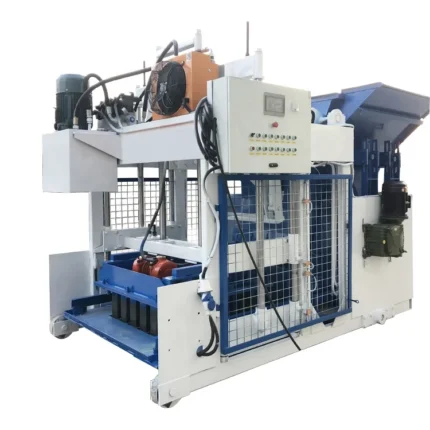
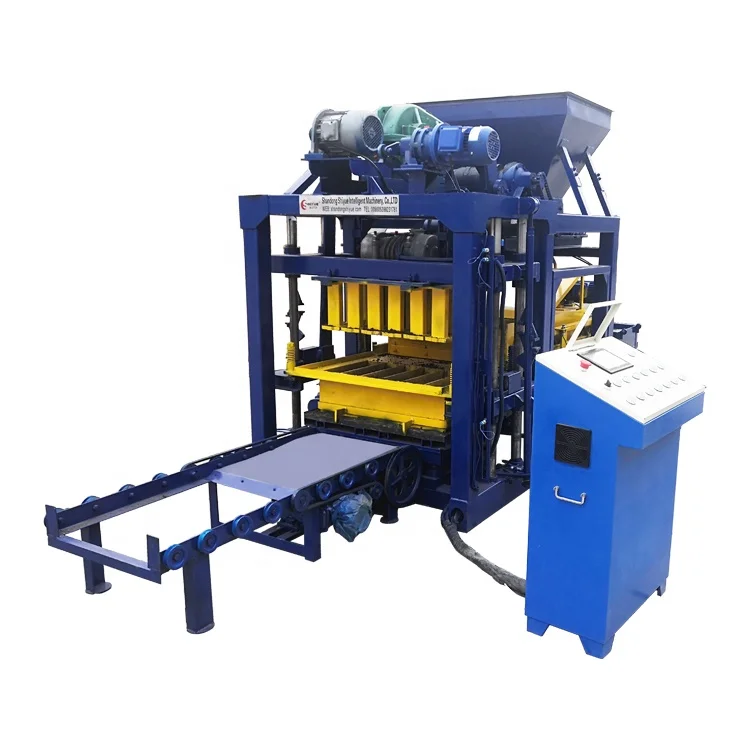
Matched Control Logic — electrical interlocking coordinates vibration, feed and mould lift on the QTJ4-24 so the operator cannot force a cycle out of sequence.
Technical Specifications
| Parameter | Value |
|---|---|
| Model | QTJ4-24 |
| Product Type | Semi-Automatic Concrete Block Making Machine |
| Overall Dimensions (L×W×H) | 3600mm × 1700mm × 2560mm |
| Total Mass | 3.5T |
| Main Machine Power | 11.95kW |
| Pallet Size | 900mm × 450mm |
| Molding Cycle | 24-26s (basis not stated in source — confirm block format) |
| Vibration Type | Table vibration feeding, fluctuation vibration molding |
| Automation Level | Semi-automatic (manual feeding, electrical control and mechanical interworking) |
| Feed Method | Manual feeding, two selectable feed ways |
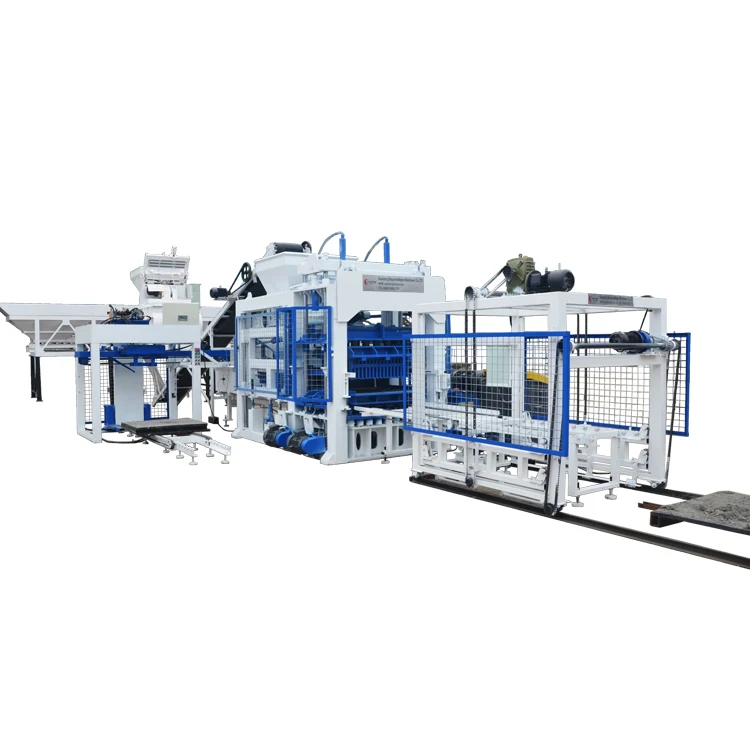
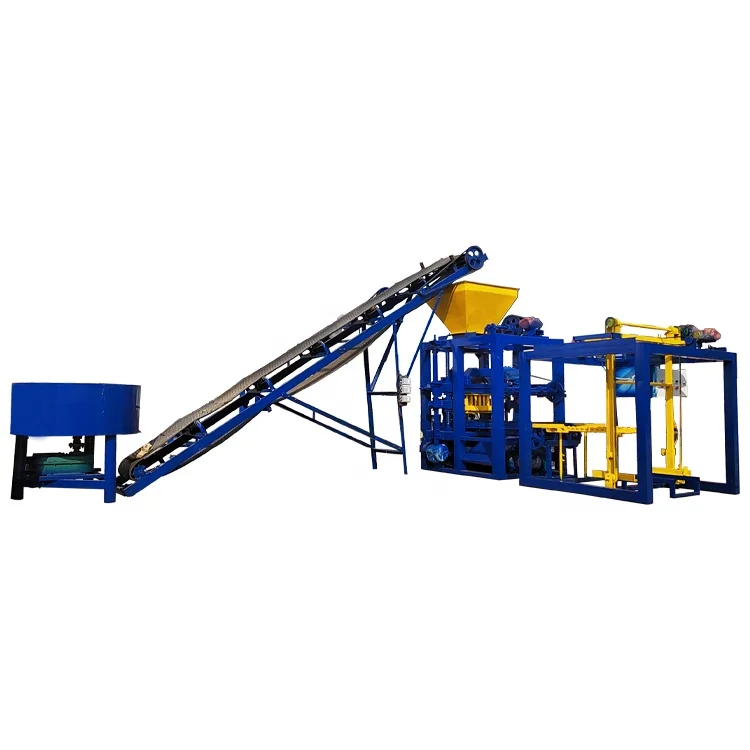
| Companion Equipment | J350/JQ350 or JQ500 Mixer, 6m or 8m Belt Conveyor |
| Control System | Electrical control cabinet with knife switch (basis not stated in source — confirm PLC / relay logic) |
| Voltage & Frequency | Configurable to site supply (basis not stated in source — confirm voltage, frequency and phase) |
| Language Options | Configurable (basis not stated in source — confirm control display language) |
| Assembly State | Stationary, requires precast concrete ground |
| Warranty | 1 year for whole machine (excluding spare parts) |
Application Suitability
| Application | Material or Output |
|---|---|
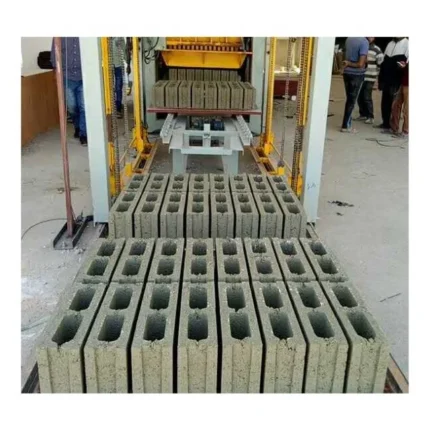
| Small-scale hollow block production | Crushed stone, sand, cement, water |
| Standard solid brick manufacturing | Fly ash, sand, cement blends |
| On-site contractor block making | Locally sourced aggregate and cement |
| Paving brick and multicellular brick | Fine aggregate with cement binder |
What "Semi-Automatic" Actually Means for Your Operators
The QTJ4-24 automates the press cycle sequence but still relies on manual pallet handling, feeding and stacking — know exactly where your labour goes before you sign.
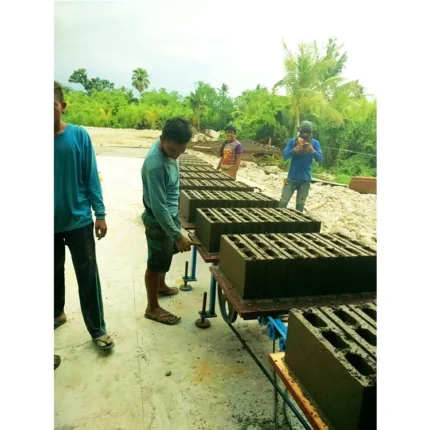
Many buyers assume "semi-automatic" covers pallet movement and block stacking. On machines in this class, the electrical cabinet coordinates upper and lower vibration with mould lifting, but an operator still places pallets, shovels or wheelbarrows mix into the hopper, and carries finished blocks to the curing area. I once visited a plant in West Africa where the owner had budgeted for two workers and ended up needing five because nobody had clarified the boundary between what the automatic QTJ4-24 block machine handles and what remains manual [NEED_CITE: automation scope definitions in block machinery procurement]. The gap between expectation and reality is where small block plants lose their margin.
The Control Cabinet as the Operator’s Guardrail
On a PLC controlled semi-automatic block machine, the electrical interlocks prevent the operator from triggering the mould lift before vibration completes, or feeding material while the press head is descending. This is not about removing the operator — it is about removing the worst outcomes of fatigue and inexperience. The QTJ4-24 uses an electrical control cabinet that sequences the vibration table, fluctuation vibration and mould movement in a fixed order, so a new hire on their third day cannot accidentally crush a mould or produce a batch of under-compacted blocks.
Two Feed Methods and Why the Choice Matters
The QTJ4-24 offers two selectable feed ways, which sounds minor until you run different mixes. A dry, low-slump mix with coarse aggregate needs a different feed approach than a wetter fly ash blend. I recall a buyer in Southeast Asia who ran standard sand in our factory and got consistent results, then switched to a local volcanic ash on site and found the default feed method caused uneven filling across the mould cavity [NEED_CITE: effect of aggregate grading on block feed uniformity]. The ability to switch feed methods lets the operator compensate without rewriting the entire cycle programme.
Reading the Specifications That Actually Matter
The 11.95kW main machine power drives both the vibration table and the hydraulic system that raises and lowers the mould box. For a machine of this footprint, that power rating indicates a vibration force sufficient for hollow blocks in the 400×200×200mm range, but the actual compaction density depends on how well your mix design matches the vibration frequency. The 900×450mm pallet size determines your curing rack dimensions and the forklift tine spacing you will need — order pallets before confirming your rack layout and you may find the forklift cannot pick them up. The 24-26s molding cycle is achievable with a standard concrete mix; heavier or stickier blends will extend this [NEED_CITE: relationship between mix moisture content and block molding cycle time].
The Cost of Skipping the Automation Scope Conversation
When buyers focus only on the press price and skip the automation boundary discussion, the consequences appear within the first month. Pallets pile up at the press exit because nobody budgeted for a conveyor or stacking station. Curing racks are built to the wrong pallet dimensions. The local electrician discovers the voltage does not match the control cabinet and commissioning stalls for days. I have seen plants where the owner assumed the belt conveyor included in the quotation also handled pallet return — it did not, and a worker spent every shift walking pallets back by hand [NEED_CITE: common scope gaps in semi-automatic block plant quotations]. These are not machine faults. They are specification gaps.
Why Source This Machine Through a Matched System Approach
The QTJ4-24 is specified as one system — press, pallet, mixer and belt conveyor are selected together so the cycle timing aligns across stations rather than each component running at its own pace. Mould formats are chosen against the block types your local market actually buys, not pulled from a catalogue default. The electrical control language and voltage are confirmed in writing before production starts, so the cabinet that arrives on site speaks your operator’s language and matches your grid. If you plan to grow output later, the automation level is selectable — starting semi-automatic and adding automatic pallet feeding or stacking is a planned path, not a retrofit gamble.
Documentation & Verification
- Electrical schematic showing relay logic or PLC wiring for the control cabinet
- Voltage and frequency confirmation sheet signed before production begins
- Factory test record running your specified mould format and block dimensions
- Pallet specification sheet matching the 900×450mm size and your curing rack plan
- Mould drawing and format list for every block type included in your order
- Operation manual with control sequence steps and fault diagnosis flowchart
Installation, Commissioning & Support
- Precast concrete ground required under the 3600×1700mm footprint before machine arrival
- Dedicated electrical circuit sized for the 11.95kW main motor plus companion mixer
- Stationary assembly with belt conveyor positioned for your existing mixer discharge height
- First-run cycle tuning to match your local aggregate and chosen mould format
- Operator training covering both feed methods and the electrical interlock reset procedure
- Wear parts list covering vibration table springs and mould liner replacements
Before You Request a Quote
To size the QTJ4-24 correctly for your site, send us the block formats you sell most, the aggregate type available locally, and your daily output target stated per format. Confirm your site voltage, frequency and phase, and tell us which control display language your operators read. If you already have curing racks or a forklift, share the pallet dimensions they accept so we match the 900×450mm pallet to your existing handling equipment.
Frequently Asked Questions
Q: What does semi-automatic actually cover on the QTJ4-24?
A: The electrical control cabinet automates the vibration sequence, mould lifting and lowering, and coordinates the press cycle so the operator cannot force steps out of order. Manual work still includes placing pallets on the press table, feeding mix into the hopper, removing finished pallets and stacking blocks in the curing area.
Q: Can the control system be upgraded to full PLC with automatic pallet feeding later?
A: The QTJ4-24 is built on a platform that supports automation additions. Moving to full PLC control with automatic pallet feeding and stacking is a planned upgrade path. We confirm the upgrade compatibility and wiring provisions before your initial order so future additions do not require replacing the control cabinet entirely.
Q: How is voltage, frequency and control language confirmed before shipment?
A: We send a written confirmation sheet listing your site voltage, frequency, phase and the control display language before production begins. The electrical cabinet is built and tested to those specifications. This prevents the common situation where a machine arrives on site and the local electrician cannot energise it.
Q: How does the QTJ4-24 maintain cycle consistency batch to batch?
A: The electrical interlocks enforce a fixed sequence for vibration, feed and mould lift, so cycle timing does not drift with operator fatigue. The two selectable feed methods let the operator adjust for mix consistency changes without altering the vibration duration. Consistency depends on keeping the mix ratio stable across batches.