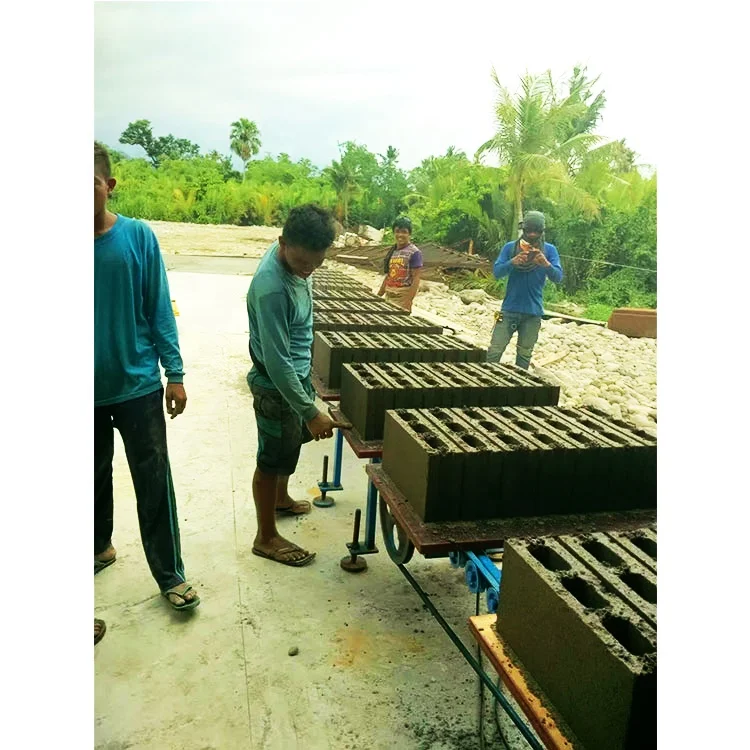
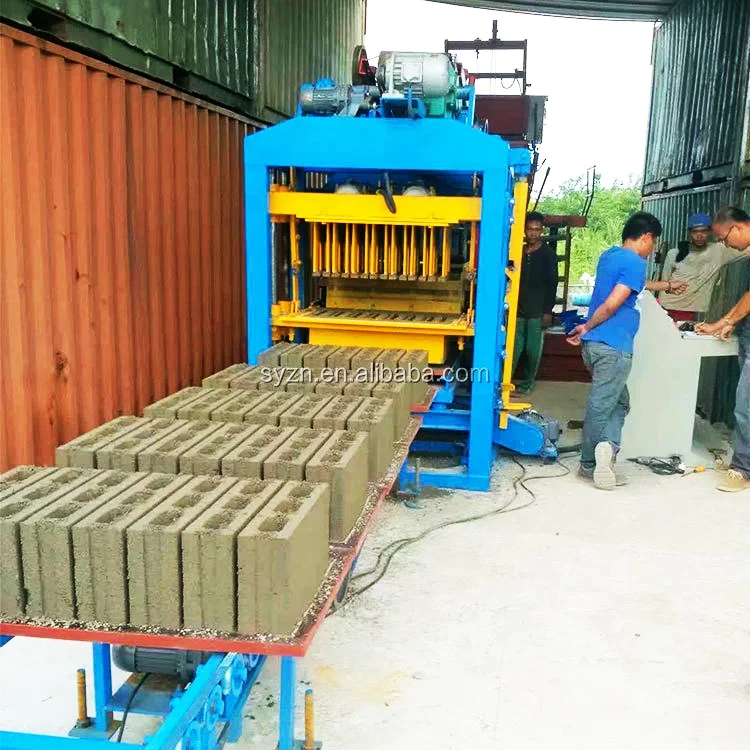
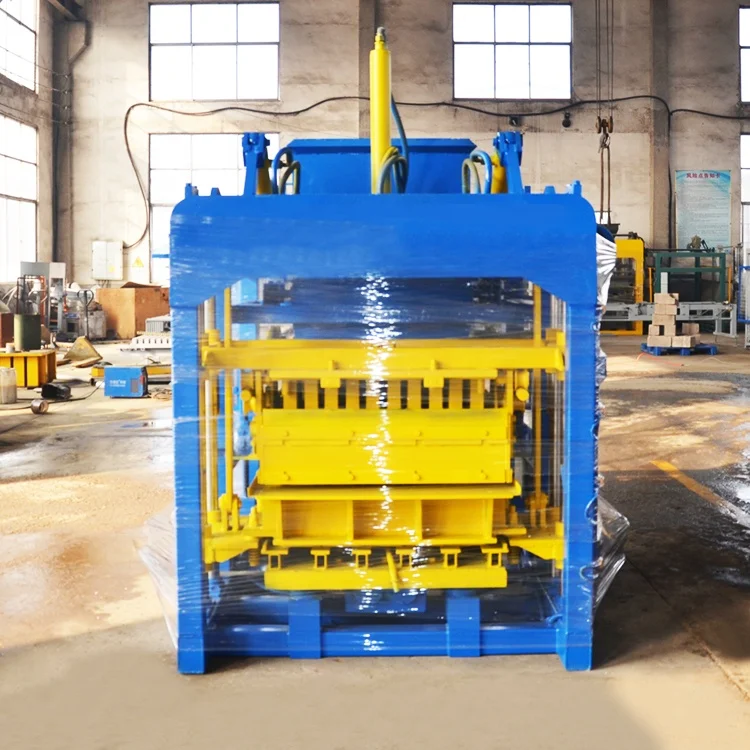
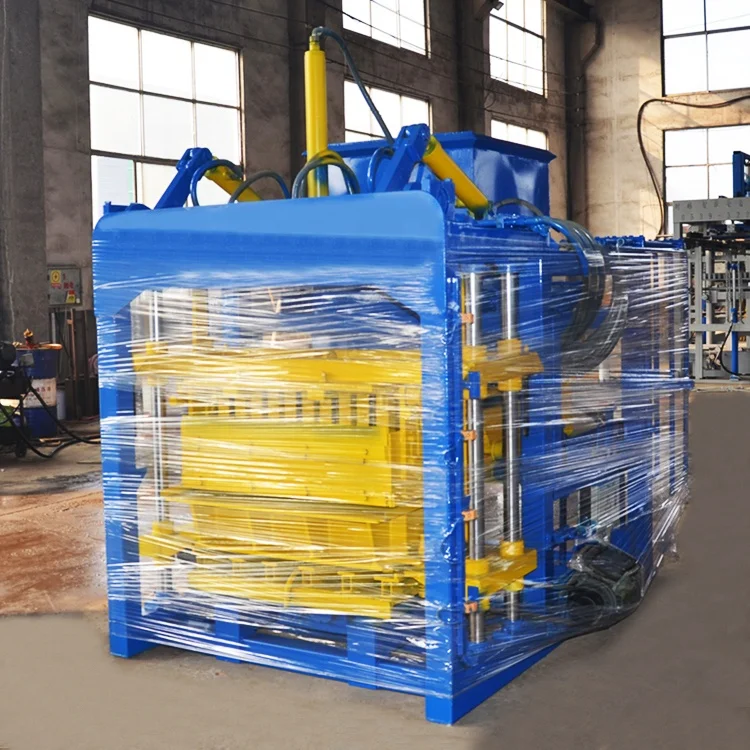
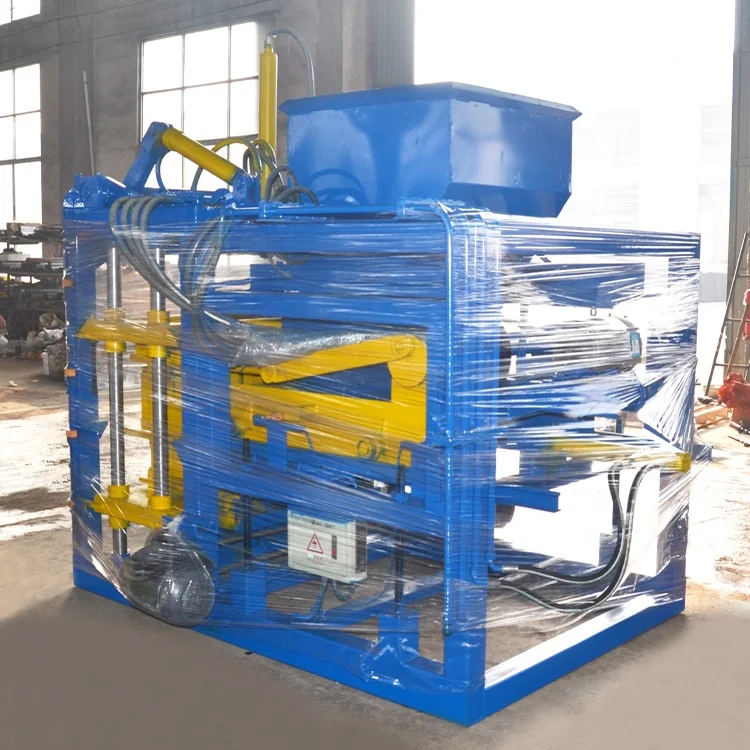
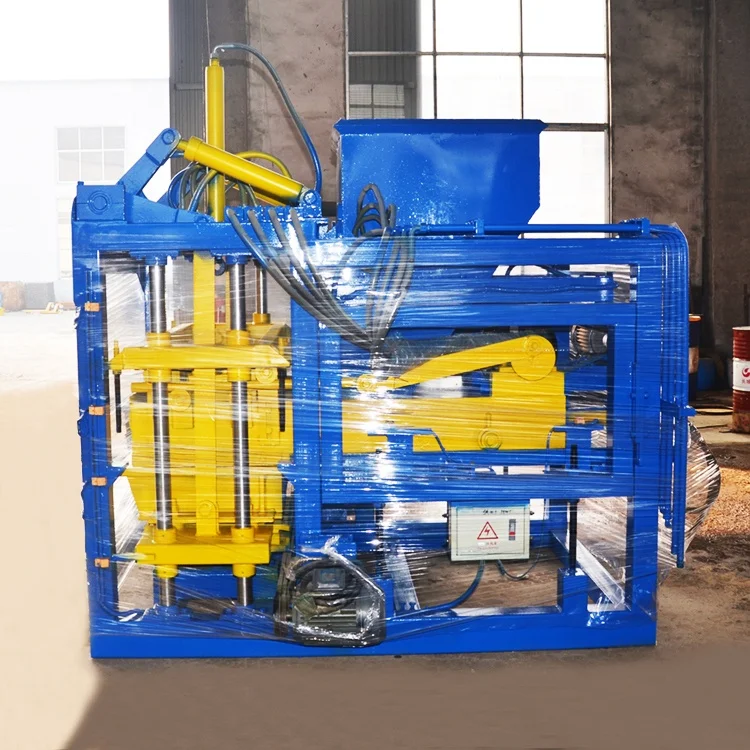
Description
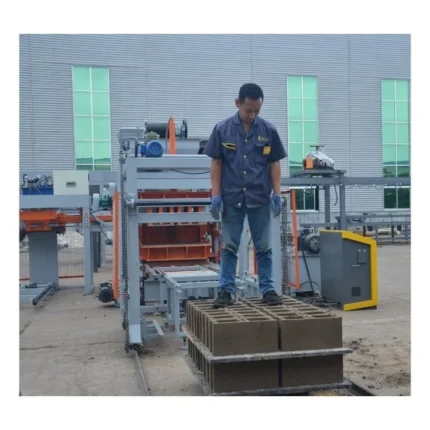
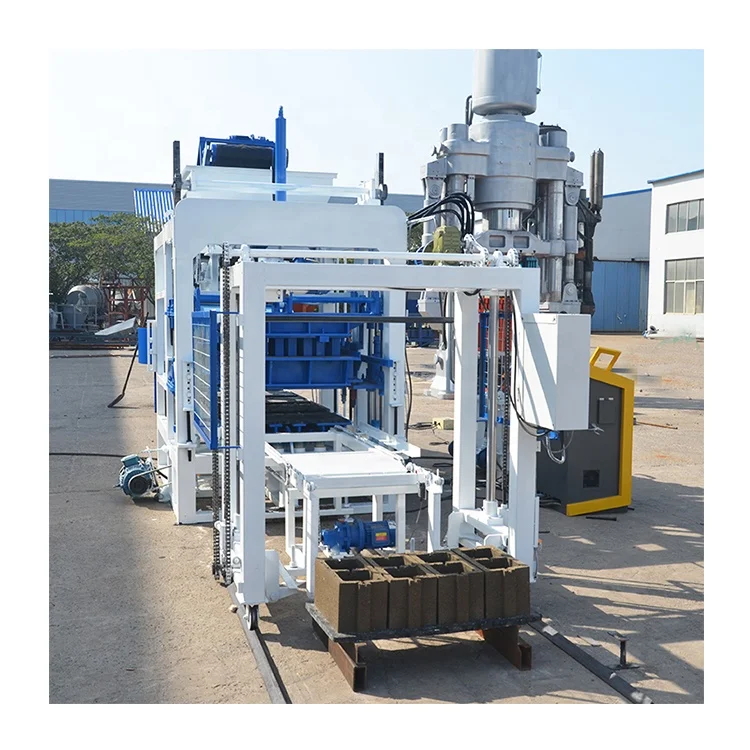
Automation Architecture — the QTJ4-25 ships with a PLC-ready control framework that lets you start with operator-assisted pallet handling and layer on automatic stacking and cubing when volume justifies the upgrade, rather than buying capacity you cannot yet use.
Technical Specifications
| Parameter | Value |
|---|---|
| Model | QTJ4-25 |
| Product Type | Semi-Automatic Concrete Block Making Machine |
| Overall Dimensions | 6400×1500×2700 mm |
| Molding Cycle | 25 s |
| Vibration Frequency | 2800–5100 r/min |
| Exciting Force | 60 kN |
| Rated Power | 17.9 kW |
| Mixer Model | JQ350 |
| Pallet Size | 850×550×20 mm |
| Net Weight | 2500 kg |
| Hydraulic Station | Equipped, high-pressure |
| Vibration System | Bed mould vertical vibration + upper mould compression vibration |
| Automation Level | Semi-automatic, PLC-ready architecture |
| Applied Products | Hollow block, solid brick, paver |
Application Suitability
| Application | Material or Output |
|---|---|
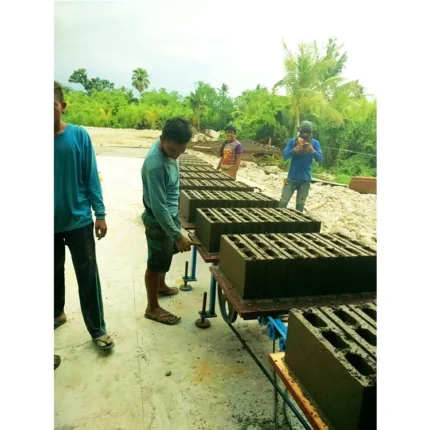
| Small to medium concrete block plants | Hollow block 390×190×190 mm — 480 pcs/h, 3800 pcs/8hr (4 pcs/mould) |
| On-site production for construction contractors | Hollow block 400×150×200 mm — 600 pcs/h, 4800 pcs/8hr (5 pcs/mould) |
| Building material distributors adding formats | Solid brick 240×115×53 mm — 2100 pcs/h, 17000 pcs/8hr (18 pcs/mould) |
| First-time plant entrepreneurs with limited investment | Pavers and interlocking bricks from crushed stone, sand, cement, fly ash |
Why the PLC Language Question Should Come Before the Deposit
Confirm the PLC display language and local voltage before production starts, not after the machine lands on site.
I once watched a crew in Central America stand around a freshly unpacked block line because the control screen defaulted to a language the operators could not read, and the local electrician had wired a panel that did not match the machine’s frequency. Commissioning stalled for days while firmware and transformers were sorted out. The automatic QTJ4-25 block making machine can ship with voltage and PLC language matched to your plant, but only if those details are locked down during the order stage, not treated as an afterthought. [NEED_CITE: voltage and frequency standards by export market]
PLC Control as a Growth Path, Not a Cliff
The QTJ4-25 PLC controlled block machine starts semi-automatic: operators handle pallets manually while the press, vibration, and hydraulic cycle run under programmable logic. When your daily volume grows and you need automatic pallet feeding or stacking, the control architecture already has the I/O capacity and program slots for those modules. You add the hardware and unlock the corresponding routines without rewiring the cabinet or replacing the PLC.
Batch-to-Batch Density Through Dual Vibration
Consistent block strength depends on matching vibration force to the mix. The QTJ4-25 uses bed mould vertical vibration combined with upper mould compression vibration, running between 2800 and 5100 r/min. The operator can adjust frequency through the PLC to suit different aggregates — heavier crushed stone needs higher force, while fly-ash-heavy mixes require a gentler profile. This adjustability removes the guesswork when you switch between hollow block and paver formats in the same shift.
Reading the Specs That Actually Matter
The 60 kN exciting force and the equipped hydraulic station work together: hydraulic pressure holds the mould closed while vibration consolidates the mix, and both must be balanced for the block to eject at target density. The 850×550×20 mm pallet size dictates your curing rack spacing and forklift tine width — measure your existing curing area before confirming the order. The 25-second molding cycle applies to the standard hollow block format; denser paver mixes may require a longer cycle to reach full compaction. At 17.9 kW rated power, verify that your workshop panel has a dedicated circuit with enough headroom for the JQ350 mixer running simultaneously. [NEED_CITE: CE machinery directive requirements for industrial equipment]
What Happens When Automation Details Are Skipped
I have seen plants where the buyer assumed stacking was included in the quotation, only to find workers hand-carrying wet blocks off the line because no pallet conveyor or stacker was specified. With a semi-automatic platform, the risk is smaller but still real: if the pallet return path is not planned, two operators spend the shift walking pallets back to the feed end instead of managing mix quality. [NEED_CITE: typical labour allocation on semi-automatic block lines]
What You Actually Get From This Configuration
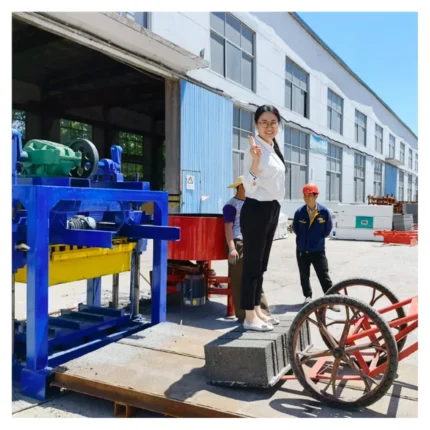
Every QTJ4-25 we build is configured against your actual mix design and local aggregate, not pulled from a catalogue default. The mould is designed for the block format your market buys, and if you need a custom profile, we work from your drawings. The machine, pallet, and handling stations are specified as one matched system so the press is never waiting on a bottleneck downstream. Automation level is selectable — you can start with manual pallet handling today and add stacking later without replacing the press. Factory testing on your chosen block format happens before the crate is sealed.
Documentation & Verification
- Line layout showing pallet flow and curing rack placement for the QTJ4-25 footprint
- Capacity calculation sheet stating block format assumed for each output figure
- Hydraulic and electrical schematic with confirmed voltage and frequency
- PLC program language confirmation signed off before production
- Factory test record on your selected hollow block and paver formats
- Wear parts and mould list covering the first six months of production
Installation, Commissioning & Support
- 6400×1500×2700 mm footprint requires a level concrete slab with anchor bolt provisions
- 17.9 kW rated power demands a dedicated breaker; confirm phase and frequency before wiring
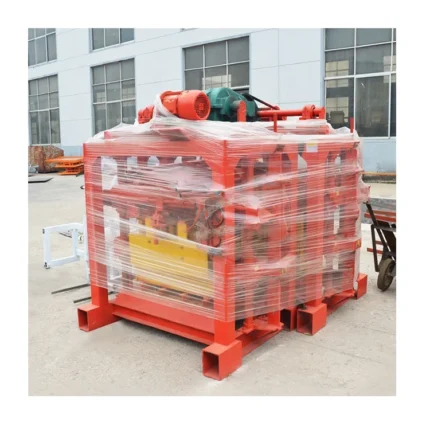
- Machine ships dismantled; our technician reassembles and levels the frame on site
- First-run parameter tuning sets vibration frequency and hydraulic pressure to your mix
- Operator training covers PLC navigation, mould change sequence, and daily greasing points
- Six-month wear parts kit including hydraulic seals and vibration springs shipped with the machine
Before You Request a Quote
Share the block format you sell most — dimensions, weight class, and whether you need solid or hollow — along with your target daily output. Tell us the local voltage, frequency, and the language your operators read. If you already have pallets and curing racks, send us the dimensions so we can confirm the QTJ4-25 pallet size fits your existing setup.
Frequently Asked Questions
Q: How do I verify the real daily output of the QTJ4-25 for my specific block format?
A: Request a capacity calculation sheet that states the exact block format behind each output figure. The QTJ4-25 achieves 3800 pcs/8hr on 390×190×190 mm hollow blocks at four per mould, but denser paver formats will run a longer cycle and produce fewer pieces. We provide per-format numbers so you can plan against your actual product mix.
Q: What automation upgrades are available — can I add automatic pallet feeding and stacking later?
A: Yes. The PLC architecture reserves I/O channels for pallet feeding, automatic stacking, and cubing modules. When your volume justifies the investment, we supply the hardware and the corresponding PLC routines. The press itself does not need replacement; the upgrade bolts onto the existing frame and control cabinet.
Q: How is the PLC control language and voltage confirmed before shipment?
A: During order confirmation, we lock in your local voltage, frequency, and the PLC display language your operators need. These parameters are written into the production work order and verified during the factory test, so the machine arrives ready to run without firmware swaps or transformer delays.
Q: What is the mould change time, and how many formats can one machine run in a single shift?
A: Mould change on the QTJ4-25 is designed for rapid switching between hollow block, solid brick, and paver formats. A trained operator completes the swap within a portion of one shift, leaving the remaining time for production. The exact change time depends on the format pair; we state it in the commissioning manual for your specific mould set.
Q: How does the vibration force and hydraulic pressure get matched to my local aggregate and mix design?
A: During configuration, we review your aggregate type — crushed stone, river sand, fly ash — and adjust the vibration frequency range and hydraulic pressure setting accordingly. The dual vibration system allows fine-tuning on site during commissioning so that block density remains consistent across the full shift.