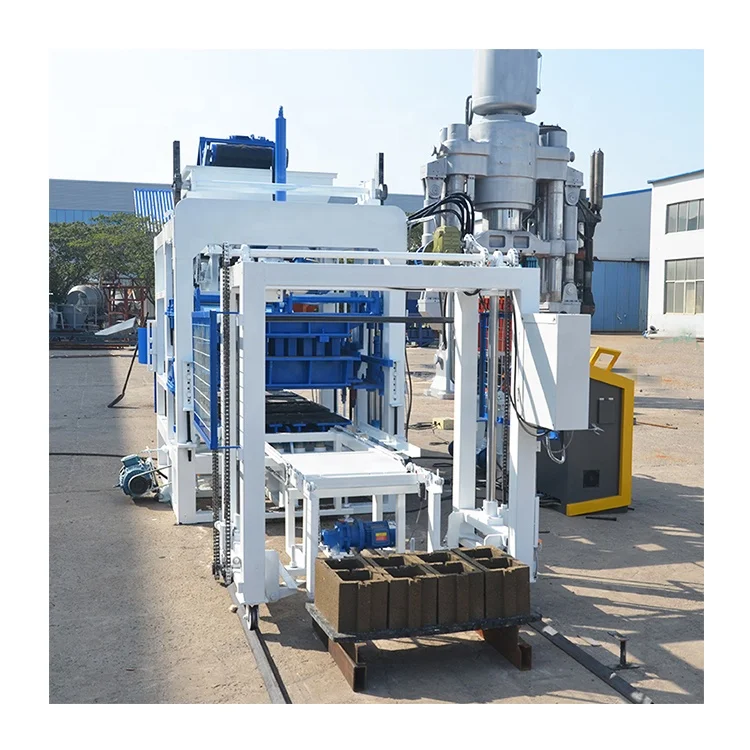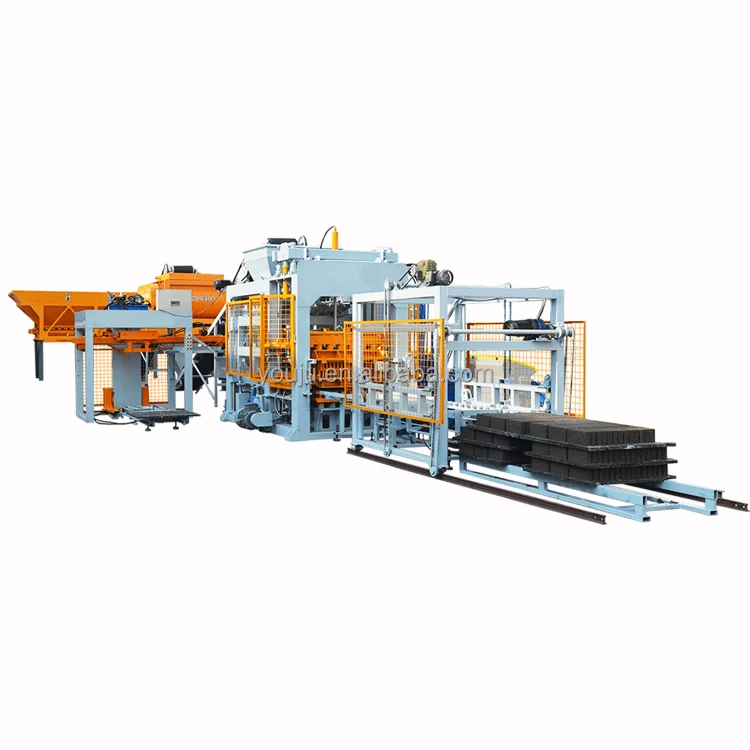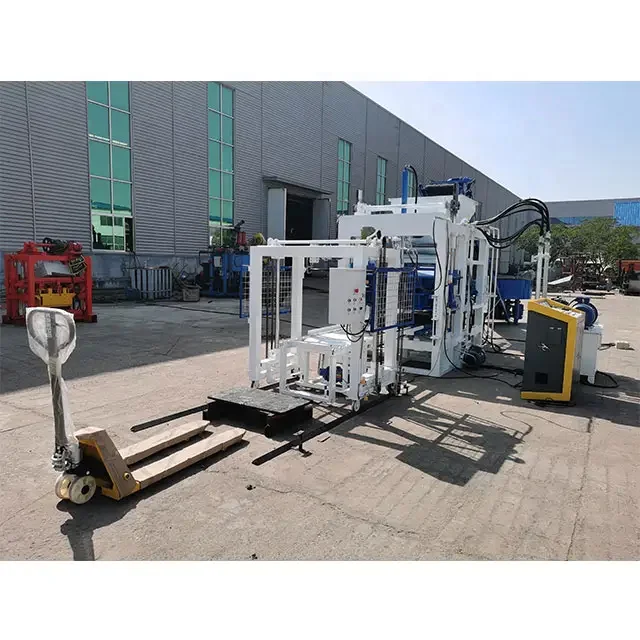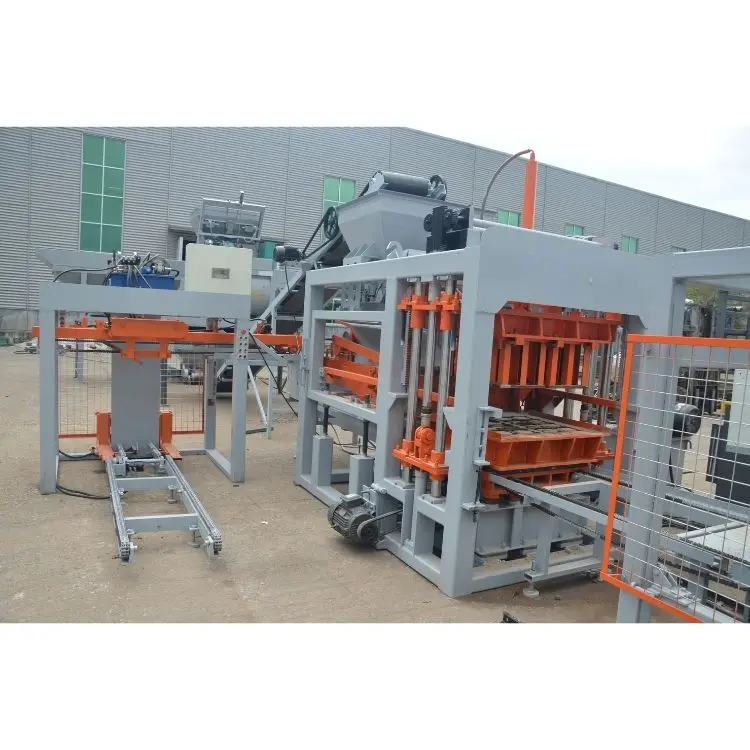



Description
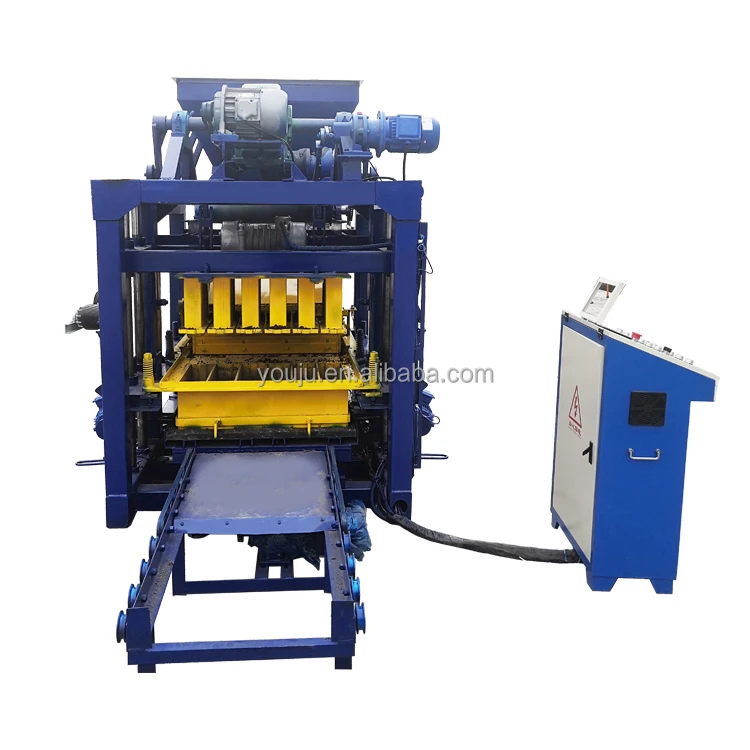
Matched Automation Path — the QTJ4-25 ships semi-automatic with mechanical demolding, and its control architecture allows a staged move to PLC-managed pallet feeding and stacking as your operation grows.
Technical Specifications
| Parameter | Value |
|---|---|
| Model | QTJ4-25 |
| Product Type | Semi-Automatic Concrete Block Making Machine |
| Overall Dimensions (L×W×H) | 3000×1800×2680 mm |
| Vibration Force | 60 kN |
| Vibration Form | Platform Vibration |
| Vibration Frequency | 2800–4500 r/min |
| Pallet Size | 850×480 mm |
| Molding Cycle | 25 s |
| Overall Power | 16.58 kW |
| Total Mass | 3.5 T |
| Demolding Method | Mechanical |
| Recommended Factory Area | 300 m² |
| Guide Column | Four-column, chrome-plated, overlong guide design |
| Frame Material | National standard manganese steel |
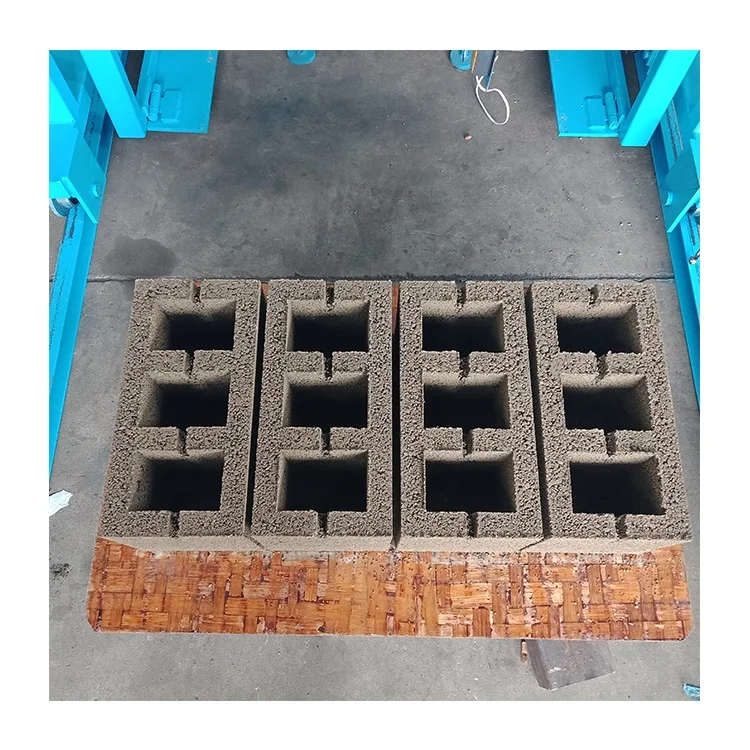
| Output — 400×200×200 mm hollow block | 580 pcs/h (4 pcs/mould, 25 s cycle) |
| Output — 240×115×90 mm multi-cellular brick | 1,400 pcs/h (9 pcs/mould, 25 s cycle) |
| Output — 240×115×53 mm solid brick | 3,300 pcs/h (21 pcs/mould, 25 s cycle) |
| Daily Output (8 h) | 4,640 / 11,200 / 26,400 pcs respectively |
| Control System | To be confirmed (PLC / relay / manual panel) |
| Voltage & Frequency | To be confirmed before commissioning |
| Automation Level | Semi-automatic, manual pallet handling implied |
| Warranty | 1 year (excluding spare parts) |
Application Suitability
| Application | Material or Output |
|---|---|
| Hollow block production for masonry walls | Crushed stone, sand, cement, fly ash aggregates |
| Solid brick manufacturing for load-bearing structures | Cement, sand, gravel, slag blends |
| Interlocking paver runs for driveways and walkways | Colored concrete mixes with fine aggregate |
| On-site block production for housing projects | Locally sourced aggregate and cement |
| Curbstone and kerb formats for road infrastructure | High-density concrete with coarse aggregate |
What "Cycles per Hour" Hides About a PLC Controlled QTJ4-25 Semi-Automatic Block Machine
Every capacity figure on this page is tied to a specific block format and pieces-per-mould count.
Buyers regularly receive quotations stating "580 pieces per hour" without the seller mentioning which block size that number assumes. When the machine arrives and the buyer switches to a larger hollow block, real output drops sharply because the cycle time and mould cavity count were never matched to the actual product. The PLC controlled QTJ4-25 semi-automatic block machine documentation here states the exact format behind each throughput number so you can plan your daily production around what you actually sell. [NEED_CITE: common block machine capacity misrepresentation in export quotations]
How Vibration Uniformity Affects Block Density Across Formats
Platform vibration at 60 kN combined with an upper mould vibration motor delivers compaction force through both the pallet and the mould head. On the QTJ4-25, this dual-source approach matters most when you switch between a tall hollow block and a thin paver in the same shift. The 2800–4500 r/min frequency range lets the operator adjust for mix stiffness, ensuring that a fly-ash-heavy batch and a crushed-stone batch both reach target density. A PLC controlled QTJ4-25 semi-automatic block machine with consistent vibration transfer reduces the reject rate that typically appears at format changeover.
Automation Staging From Manual Pallet Handling to Full Line Control
The QTJ4-25 starts as a semi-automatic unit where pallet feeding and product stacking are handled manually. Its control architecture supports incremental upgrades: first adding an automatic pallet feeder to cut cycle idle time, then integrating a stacking station once daily volume justifies the capital outlay. [NEED_CITE: automation upgrade paths for semi-automatic block production lines] This staged approach means a first-time plant owner does not pay for full automation on day one but retains the wiring and PLC expansion slots to add it later without replacing the main press.
Reading the Specs That Determine Daily Output
The 25-second molding cycle sets the rhythm for the entire line. At four cavities per mould for a 400×200×200 mm hollow block, that cycle yields 580 pieces per hour; at 21 cavities for a 240×115×53 mm solid brick, the same cycle produces 3,300 pieces per hour. The 850×480 mm pallet size must match your curing rack dimensions and forklift fork width — ordering a pallet that your existing handling equipment cannot move creates a bottleneck no amount of press speed will fix. The four-column chrome-plated guide system with overlong guide design keeps mould alignment tight over thousands of cycles, which directly affects whether blocks stack straight on the curing rack without toppling. Overall power draw of 16.58 kW means a standard industrial three-phase supply is sufficient without requiring a dedicated transformer, though voltage and frequency must be confirmed against your local grid before production begins.
The Cost of Skipping the Control Language Confirmation
When the PLC display and operation manual arrive in a language the floor operator cannot read, commissioning stalls until a translator rewrites every menu label and alarm message. [NEED_CITE: commissioning delays caused by untranslated PLC interfaces on imported machinery] On a semi-automatic line like the QTJ4-25, the operator interacts with the control panel for every mould change and cycle adjustment, so unclear interface text leads to incorrect parameter entries. Blocks come out under-vibrated or over-pressed, and the buyer blames the machine rather than the language gap that was never addressed before shipment.
Why Sourcing the Press and the Line Together Matters
The QTJ4-25 is specified alongside its pallet, mould, and handling equipment so that cycle times match at every station — the press is not left waiting for a pallet, and the stacking point is not overwhelmed by output. Mould design covers the formats your market actually buys, with custom drawings available for non-standard shapes. Configuration is set against your local aggregate and mix design rather than a catalogue default, which means vibration force and cycle time are adjusted before the machine leaves the factory. [NEED_CITE: importance of matching block machine configuration to local raw materials] Automation level is selectable, so you can begin with manual pallet handling and add automatic feeding and stacking as demand grows. Installation support includes operator training on the exact control system your unit ships with.
Documentation & Verification
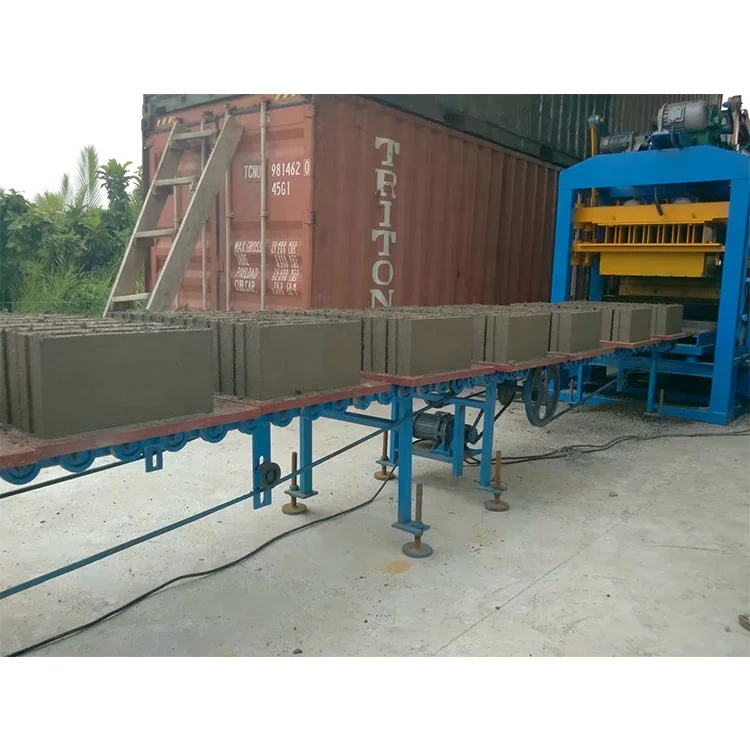
- Line layout showing pallet flow, curing rack placement, and press footprint for the QTJ4-25
- Capacity calculation sheet stating block format and pieces-per-mould for each output figure
- Voltage, frequency, and PLC display language confirmation signed before production
- Mould drawing and format list detailing included and optional cavity plates
- Operation and maintenance manual covering mechanical demolding adjustment procedures
- Wear parts list identifying guide column bushings, vibration motor brushes, and mould liners
Installation, Commissioning & Support
- Foundation must support 3.5 T total mass across the 3000×1800 mm footprint with level tolerance for guide column alignment
- Dedicated three-phase circuit rated for 16.58 kW with voltage and frequency confirmed before energizing the control panel
- Mechanical demolding linkage requires on-site calibration after transport to restore 25-second cycle timing
- Chrome-plated guide columns inspected and re-lubricated after transit before first production run
- Operator training covers mould change procedure, vibration frequency adjustment, and pallet loading sequence
- Spare parts kit includes guide bushings and vibration motor consumables for the first production year
Before You Request a Quote
Provide the block formats you currently sell and their dimensions so the mould configuration and cavity count can be matched to your market. Confirm your workshop ceiling height and floor area against the 3000×1800×2680 mm machine envelope and the 300 m² recommended plant footprint. State your local voltage, frequency, and preferred PLC display language so the control system is built to your grid and operator requirements from the start.
Frequently Asked Questions
Q: How is the QTJ4-25 output verified per block format?
A: Each capacity figure on this page states the exact block dimensions and pieces-per-mould count behind it. The 580 pcs/h figure assumes a 400×200×200 mm hollow block at four cavities, while the 3,300 pcs/h figure assumes a 240×115×53 mm solid brick at 21 cavities, all at a 25-second cycle. A capacity calculation sheet is provided with every quotation.
Q: What is the automation upgrade path from this semi-automatic unit?
A: The QTJ4-25 ships with mechanical demolding and manual pallet handling. Its control architecture supports adding an automatic pallet feeder first, then a stacking station, without replacing the main press. Wiring and PLC expansion capacity are included at build so later upgrades connect to the existing panel.
Q: How are voltage, frequency, and control language handled before shipment?
A: A confirmation sheet listing your local voltage, frequency, and preferred PLC display language is signed before production begins. The control panel is then wired and programmed to those specifications, and the factory test runs on matching power to verify operation before dispatch.
Q: What does a mould change involve on this machine?
A: The mould is bolted to the platform and upper head, and a format swap requires unbolting the current set, lifting it out, and securing the new mould plate. Tools are standard hex and socket sizes. The exact changeover time depends on operator familiarity and whether a lifting aid is available on-site.
Q: How do I confirm pallet compatibility with my existing curing setup?
A: The standard pallet size is 850×480 mm. Measure your curing rack shelf width and your forklift fork spacing before ordering. If your existing racks use a different dimension, custom pallet sizing can be discussed during the configuration stage to avoid handling bottlenecks after delivery.