

Description
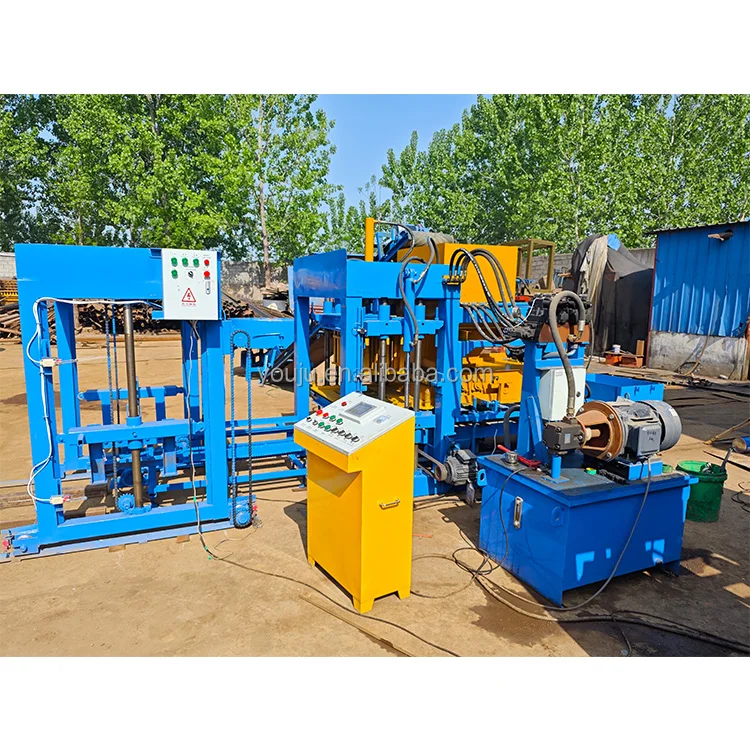
Control System Configured to the Operator — the QTJ4-25 ships with PLC display language and voltage set to the buyer’s actual site conditions before dispatch, eliminating first-day commissioning stalls caused by unreadable screens or mismatched power.
Technical Specifications
| Parameter | Value |
|---|---|
| Model | QTJ4-25 |
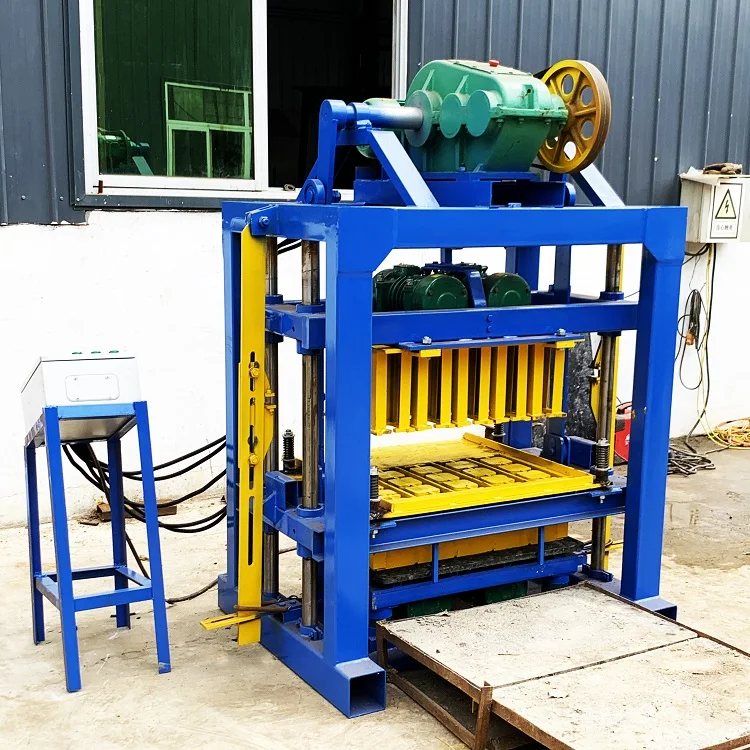
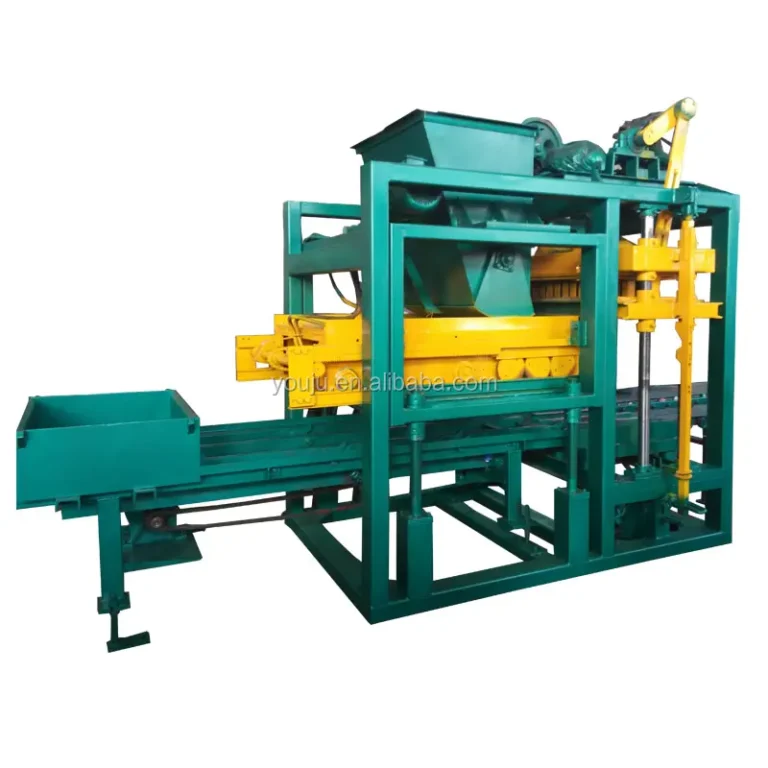
| Product Type | Stationary Concrete Block Making Machine |
| Rated Power | 17.9 kW |
| Overall Dimensions (L×W×H) | 6400 × 1500 × 2700 mm |
| Net Weight | 2500 kg |
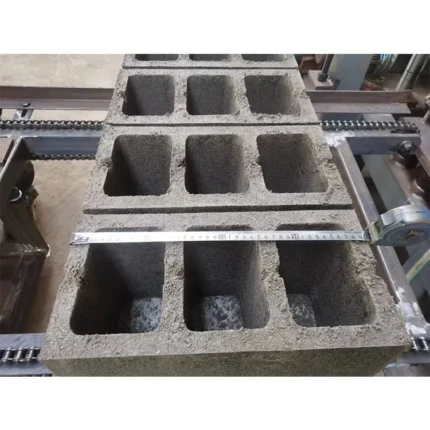
| Output Capacity | 960 pcs/h based on 400×200×200 mm hollow block, 4 pcs/mould (basis to be confirmed for other formats) |
| Molding Cycle | 25 s |
| Pallet Size | 850 × 550 × 20 mm |
| Vibration Frequency | 2800 r/min |
| Vibration Force / Exciting Power | 60 kN |
| Control System | Motor-driven, semi-automatic (PLC or MCC available) |
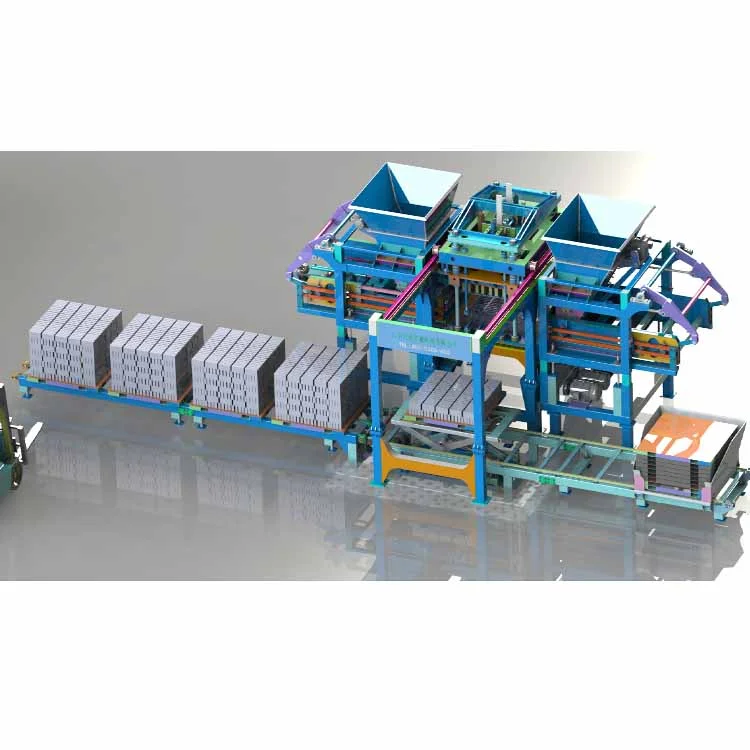
| Automation Level | Semi-automatic with upgrade path to PLC-controlled pallet feeding, stacking and cubing |
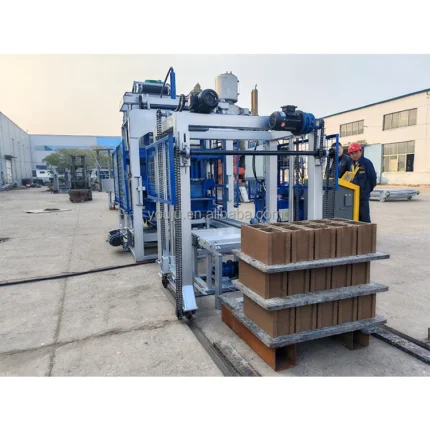
| Stacking Method | Manual — pallets moved by trolley to drying area |
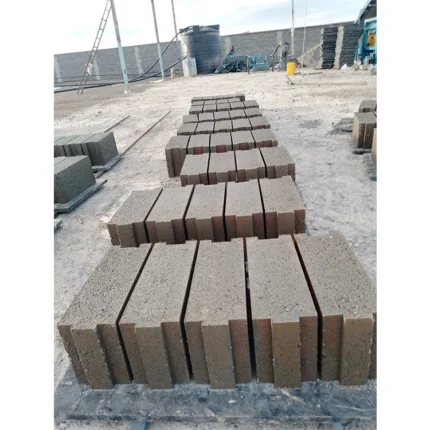
| Mould Format | Hollow, solid, paver, kerbstone (multiple sizes available) |
| Hydraulic Station | Equipped, high-pressure system |
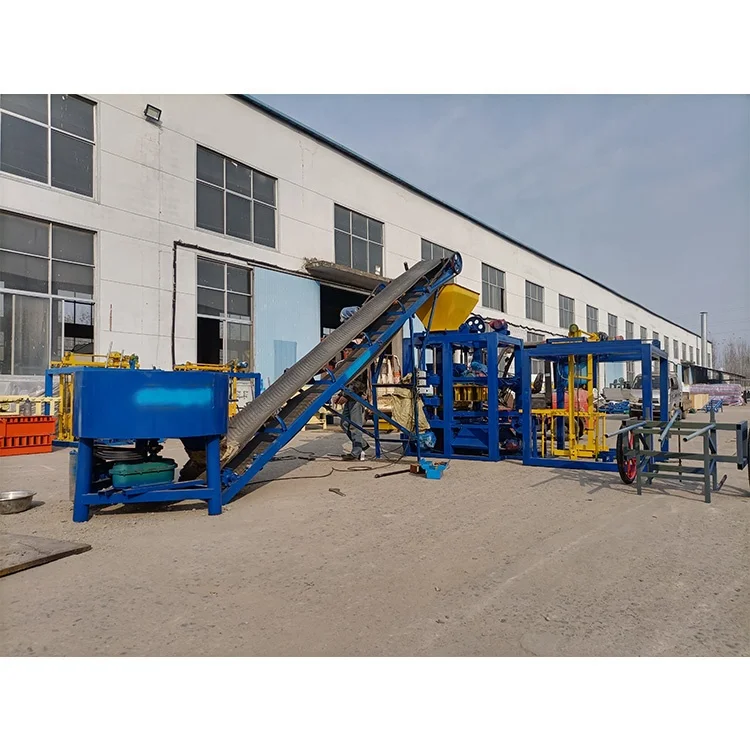
| Included Configuration | Host machine 1 set, block mould 1 set, JQ350 mixer |
| Voltage & Frequency | Configurable to buyer’s site standard |
| Language Options | Configurable to buyer’s requirement |
Application Suitability
| Application | Material or Output |
|---|---|
| Hollow block production for wall construction | Concrete mix with crushed stone, sand, cement and water |
| Solid block manufacturing for load-bearing walls | Dense aggregate mix with higher cement ratio |
| Paving block production for walkways and yards | Fine aggregate mix with surface layer colour pigment |
| Kerbstone forming for road and curb edging | Coarse aggregate concrete with extended vibration cycle |
| On-site contractor block production | Local aggregate sourced near project location |
Why the Language on the Control Panel Matters More Than the Price
A PLC screen the operator cannot read turns an automatic QTJ4-25 block making machine into a manual press on the first day.
I once spent a full week on a West African site because the control interface shipped in English while the local crew spoke only French. The machine sat idle, the project schedule slipped, and the contractor paid for my extended stay. When a PLC controlled concrete block machine arrives with the wrong display language, the automation investment is effectively cancelled until someone resolves the translation. Voltage mismatch creates a different but equally costly delay — a 380V/50Hz machine plugged into a 440V/60Hz supply will trip breakers or burn motor windings before the first block is pressed [NEED_CITE: voltage and frequency standards by export market].
What Automation Actually Removes from the Operator
The semi-automatic base of the QTJ4-25 handles the core press cycle: vibration, hydraulic compression and mould release run on a fixed 25-second sequence. What remains manual is pallet handling — the operator feeds empty pallets and moves loaded pallets to the curing area by trolley. This is where the upgrade path matters. Adding automatic pallet feeding removes one operator from the cycle. Adding stacking and cubing removes two more. The PLC controlled concrete block machine can therefore grow with the plant: start with the semi-automatic press, add peripherals as volume justifies the labour cost.
Batch Consistency Depends on Parameters the Operator Should Not Touch
On a manual or basic semi-automatic line, the operator decides when to vibrate, how long to press, and when to release. Shift-to-shift variation in block strength often traces back to these human timing decisions. With PLC control, the vibration duration, hydraulic pressure hold time and mould descent speed are locked into the programme. The operator initiates the cycle but cannot alter the parameters mid-run. This is how batch-to-batch density stays uniform across a ten-hour shift, and why the control system language must be confirmed before the machine leaves the factory [NEED_CITE: PLC parameter locking and batch consistency in concrete forming].
Reading the Specs That Determine Block Quality
The 60 kN vibration force at 2800 r/min is applied through both the bed mould and the upper mould. Vertical vibration from the bed compacts the concrete mix upward, while the upper mould compression vibration drives density from the top. Together they aim to eliminate the weak core that forms when only one-direction vibration is used. For a buyer using locally sourced crushed stone rather than washed river sand, the vibration force must be matched to the aggregate particle size and the cement ratio — a catalogue default setting will produce under-compacted blocks if the local mix is coarser than the factory test mix. The hydraulic station provides the clamping pressure that holds the mould halves together during vibration; insufficient pressure causes flash and dimensional drift, while excessive pressure accelerates seal wear. The 850 × 550 × 20 mm pallet size must match the curing rack spacing and the forklift tine width already on site — a mismatched pallet means the buyer replaces either the pallets or the handling equipment upon arrival.
What Happens When Automation Peripherals Are Left Off the Quote
A block machine quotation that lists only the press, one mould and a mixer leaves the buyer responsible for everything that happens after the block leaves the mould. Pallets must be hand-fed, loaded pallets must be wheeled to the drying area, and cured blocks must be stacked manually. On a plant targeting several thousand blocks per day, that manual chain requires additional workers, introduces handling damage, and creates a bottleneck that caps real daily output well below the rated cycle capacity. The automation upgrade path exists, but adding pallet feeders and stackers after installation costs more in retrofit labour and line downtime than specifying them at the outset [NEED_CITE: hidden labour costs in semi-automatic block plants].
Why Sourcing the Line from One Supplier Changes the Commissioning Week
Shandong Shiyue Intelligent Machinery configures the QTJ4-25 as a matched system: the press, mould, pallet, hydraulic station and control panel are specified together against the buyer’s mix design and site conditions. The pallet size is selected to fit the buyer’s existing curing racks, not pulled from a default list. The PLC display language is confirmed during the order stage, not discovered at uncrating. Factory testing runs the buyer’s target block format before dispatch, so the cycle time and output figure in the test record reflect the actual product, not a generic hollow block. When vibration force, hydraulic pressure and mould design are engineered by separate suppliers, commissioning becomes a process of eliminating incompatibilities rather than fine-tuning a single system.
Documentation & Verification
- Line layout drawing showing press, pallet flow, curing area and stacker placement
- Capacity calculation sheet stating block format and cycle time for each output figure
- PLC parameter list with locked vibration duration, pressure hold time and cycle sequence
- Factory test record run on buyer’s specified block format before shipment
- Voltage, frequency and control language confirmation sheet signed before production
- Wear parts and mould compatibility list with reorder part numbers
Installation, Commissioning & Support
- Foundation pad must be level and rated for 2500 kg static load plus dynamic vibration from the 60 kN exciter
- Dedicated electrical circuit sized for 17.9 kW continuous draw with voltage matching confirmed on site
- Host machine ships as one unit; mould and JQ350 mixer packed separately for container loading
- First-run commissioning includes vibration frequency calibration to buyer’s local aggregate mix
- Operator training covers PLC cycle initiation, mould change procedure and daily hydraulic check routine
- Mould wear parts and hydraulic seals listed with reorder numbers for local procurement or direct supply
Before You Send an Inquiry
To size the QTJ4-25 and its automation peripherals accurately, share the block formats your market currently sells, the daily output you need for each format, and your local aggregate type and cement availability. Include your site voltage and frequency, the control panel language your operators require, and whether your curing area uses pallet racks or floor stacking. If you already operate a mixer or forklift, note the model so pallet and feed configuration can be matched.
Frequently Asked Questions
Q: How is the output capacity calculated, and which block format does each figure assume?
A: The 960 pieces per hour rating is based on a 400×200×200 mm hollow block with four cavities per mould and a 25-second cycle. For smaller formats like paving blocks or kerbstones, the cycle time and pieces per mould differ, so the hourly figure changes. Always request a capacity table that lists output per specific format rather than accepting one aggregate number.
Q: What automation upgrades are available from the semi-automatic base?
A: The QTJ4-25 supports automatic pallet feeding, which removes one operator from the cycle, and automatic stacking with cubing, which removes two more. These peripherals can be added after the press is installed, though specifying them at order avoids retrofit downtime. The PLC retains the base programme and accepts the peripheral control modules without a full system replacement.
Q: How do I confirm voltage, frequency and PLC control language before shipment?
A: A confirmation sheet listing your site voltage, frequency and required display language is signed during the order stage and referenced during factory testing. The PLC is loaded with the confirmed language pack before the control panel is wired. Changing the language after arrival requires a software reload that delays commissioning by several days.
Q: How are vibration force and hydraulic pressure matched to my local aggregate?
A: The 60 kN vibration force at 2800 r/min is calibrated during factory testing using a mix sample or mix data the buyer provides. If the local aggregate is coarser or the cement ratio differs from the default test mix, the vibration duration and hydraulic hold time are adjusted in the PLC to achieve target block density. Running the machine on a catalogue default setting with an unmatched mix produces inconsistent block strength.
Q: How long does a mould change take, and what tools are needed?
A: Mould change on the QTJ4-25 involves releasing the clamp bolts, lifting the current mould out with a hoist, setting the new mould in position and re-tightening. The time depends on whether the operator has done the procedure before and whether a hoist is available at the press. Request the mould change procedure document to see the step sequence and required tools before the machine arrives.