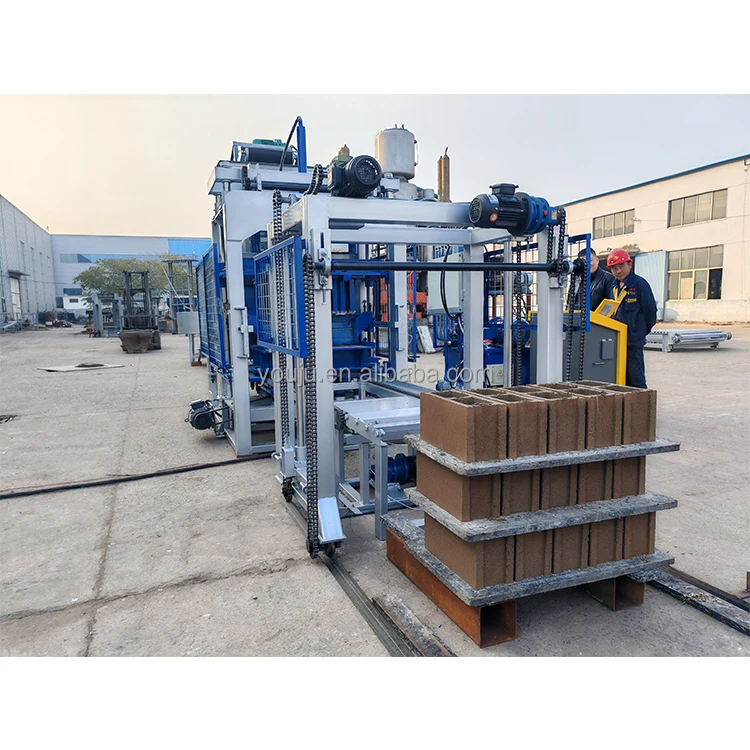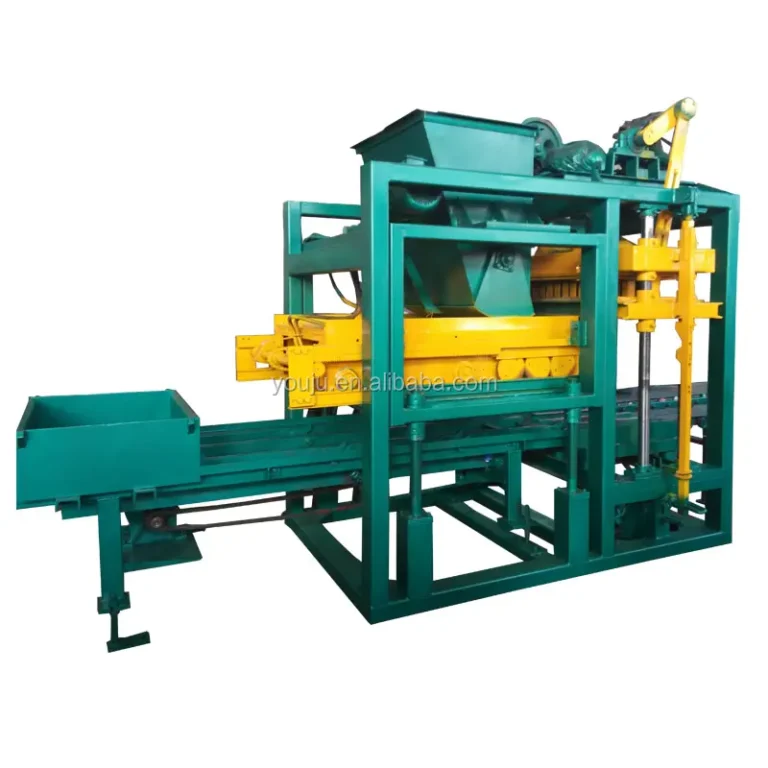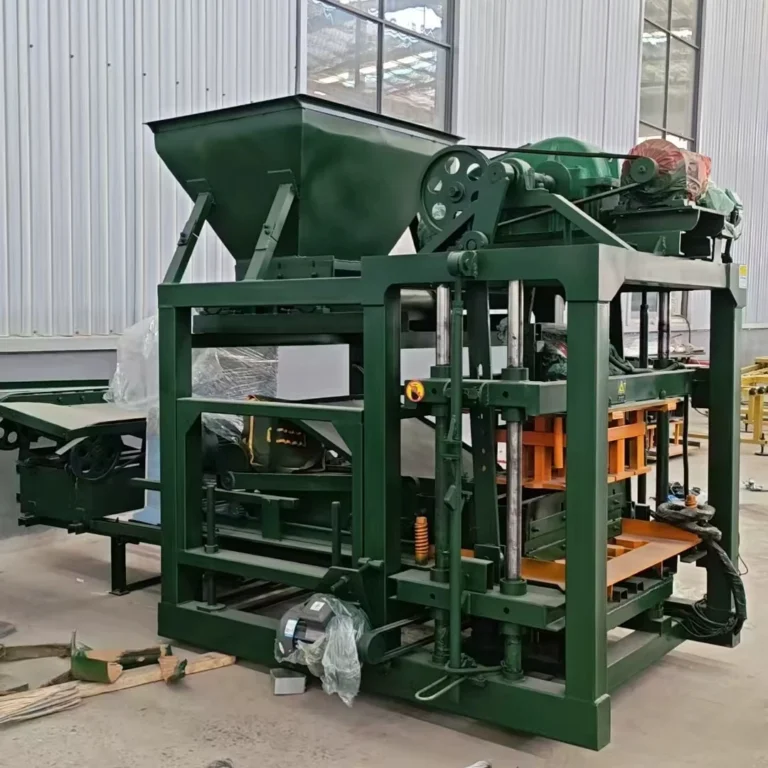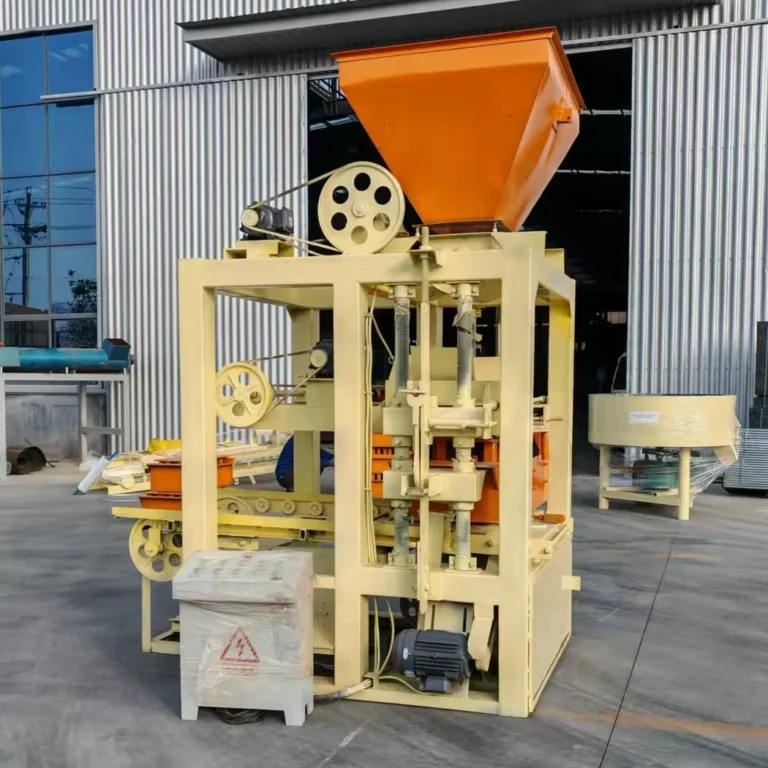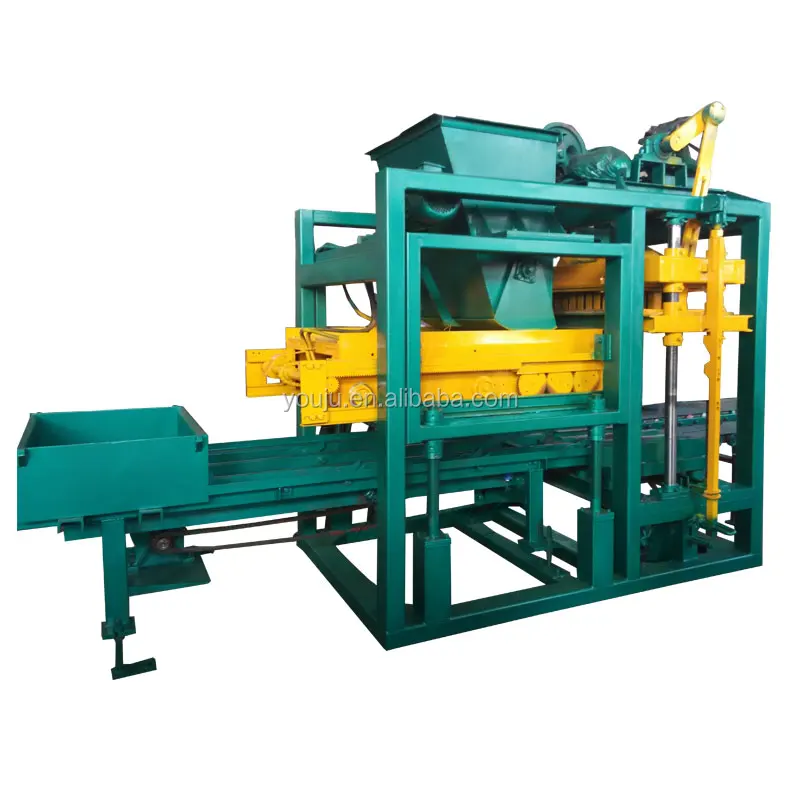
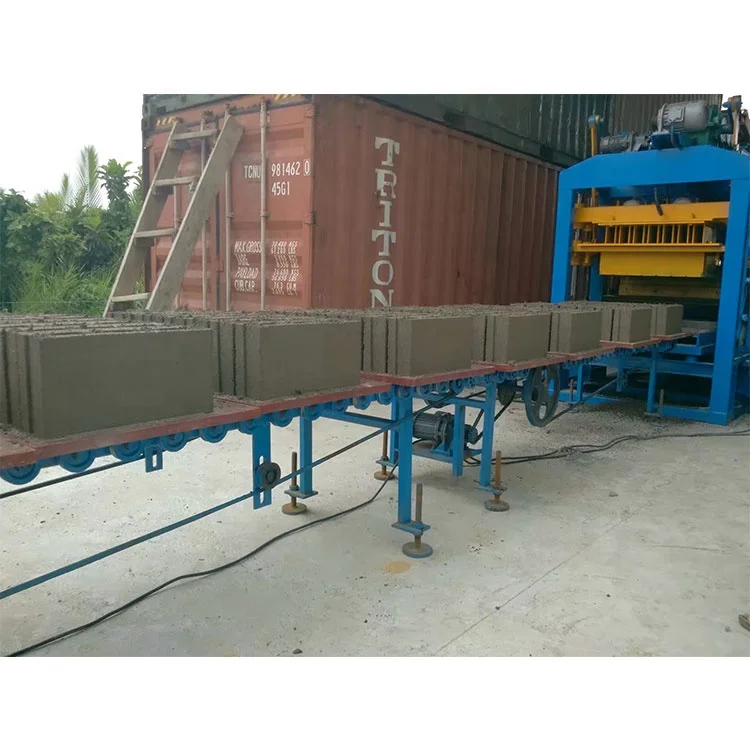
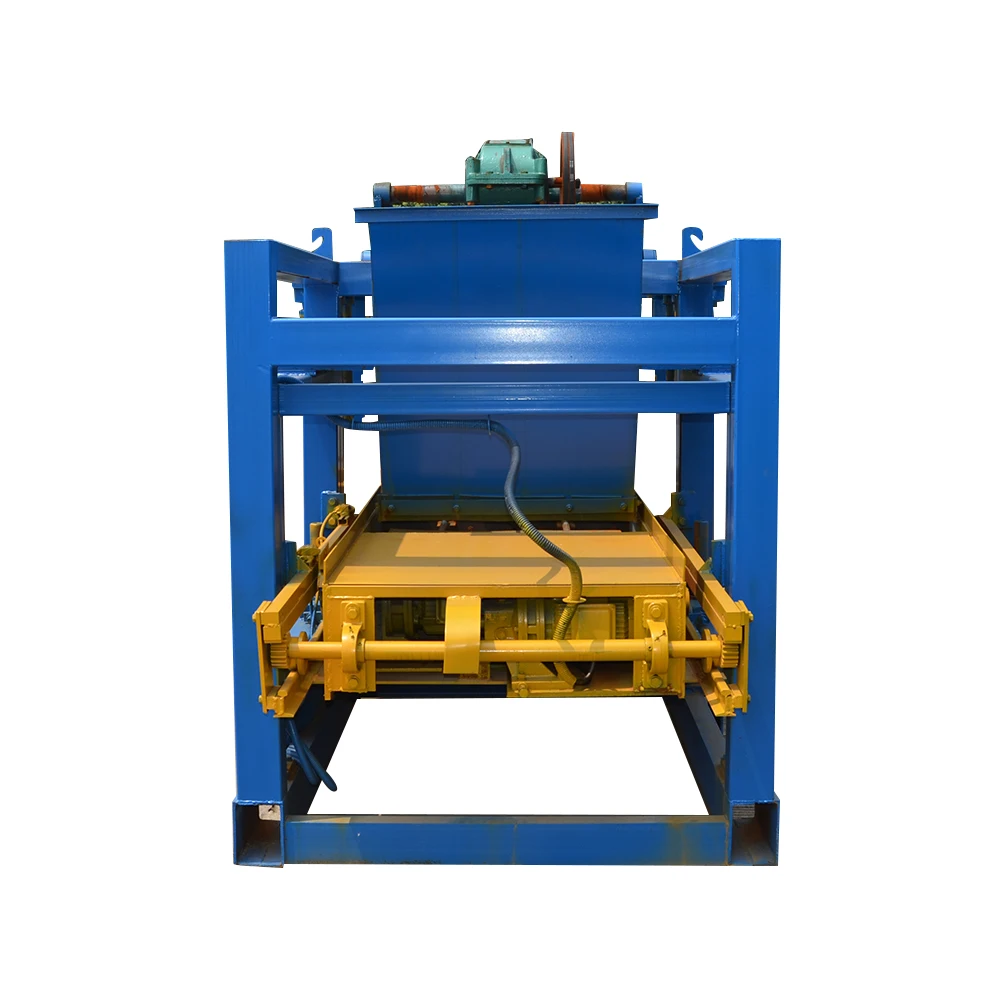

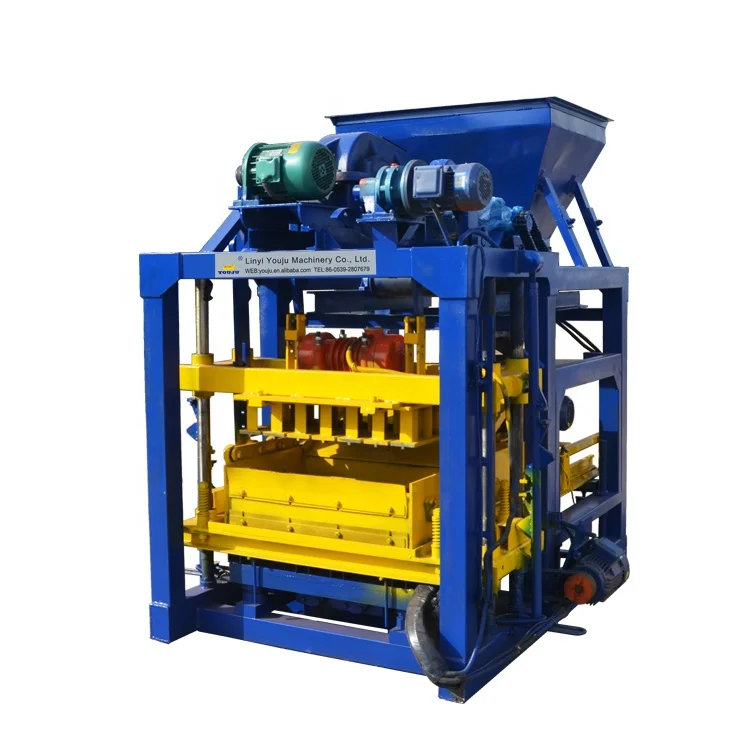

Description
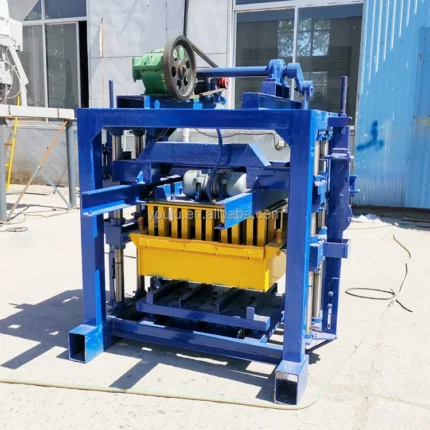
PLC-First Block Machine Integration — QTJ4-25 control parameters are specified against your actual mix design, local aggregate, and target block format, not a catalogue default, ensuring repeatable cycle management and a clear semi-to-full automation path.
Technical Specifications
| Parameter | Value |
|---|---|
| Model | QTJ4-25 |
| Product Type | Stationary Block Making Machine |
| Rated Power | 17.9 kW |
| Control System | PLC (semi-automatic operation) |
| Overall Dimensions (L×W×H) | 6400 × 1500 × 2700 mm |
| Net Weight | 2500 kg |
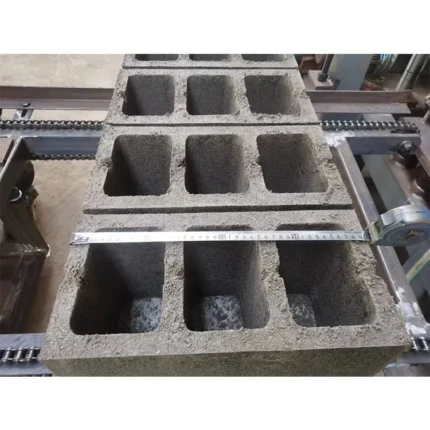
| Output Capacity | 960 pcs/h based on 400×200×200 mm hollow block (4 pcs/mould) |
| Mould Format | 400 × 200 × 200 mm hollow block (4 pcs/mould); supports solid, paver, curbstone |
| Cycle Time | 25 s |
| Vibration Frequency | 2800 r/min |
| Exciting Force | 60 kN |
| Pallet Size | 850 × 550 × 20 mm |
| Hydraulic Pressure | Source mentions hydraulic station; specific pressure value not stated (basis to be confirmed) |
| Mould Change Time | Not stated (basis to be confirmed) |
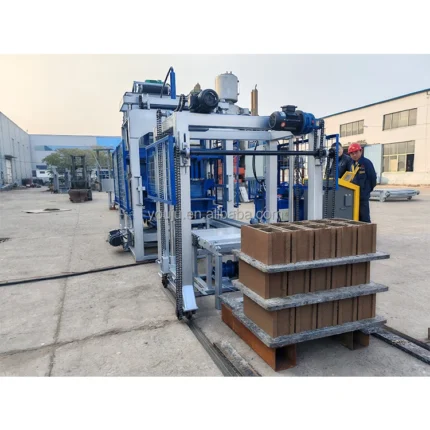
| Stacking Method | Manual (stacked by hand, moved with trolley) |
| Standard Configuration | Host machine 1 set, block mould 1 set, JQ350 mixer |
| Voltage & Frequency | Configurable (basis to be confirmed with buyer’s site) |
| Key Features | PLC controlled, vibration and hydraulic integration, multiple mould compatibility |
Application Suitability
| Application | Material or Output |
|---|---|
| Hollow block production for wall construction | Crushed stone, sand, cement, water — standard concrete mix |
| Solid block manufacturing for load-bearing structures | Dense aggregate blend with cement binder |
| Paving block production for walkways and yards | Fine aggregate and cement mix with colour pigment |
| Curbstone forming for road and kerb edging | Coarse aggregate and cement under high vibration and pressure |
| Small to medium plant operation with expansion potential | Semi-automatic base with automation upgrade readiness |
What "Automatic" Really Means When PLC Control Is Involved
Many suppliers label a block press "automatic" the moment it has a PLC screen, but an automatic QTJ4-25 block making machine PLC controlled should mean the system actively manages cycle timing, vibration, and hydraulic sequencing — not just logging operator inputs.
The PLC manages the sequence; the operator still handles pallets and stacking on this semi-automatic tier.
I have stood on sites where a machine arrived with a PLC interface locked to a language the local operator could not read. Commissioning stalled for days while we chased a firmware update across time zones [NEED_CITE: PLC HMI language configuration for export machinery]. That single oversight negated every automation benefit the buyer thought they were purchasing. Before the machine enters production, we confirm the HMI display language, the voltage and frequency, and the I/O map so the control logic matches the physical sensors on your line.
How PLC Control Changes the Operator’s Day
On a relay-based block press, the operator watches a timer, manually triggers vibration, and guesses when the cycle is done. The QTJ4-25 replaces that guesswork with a programmable logic controller that sequences each stage — material feed, vibration onset, hydraulic press, and mould release — in a fixed, repeatable order. The automatic QTJ4-25 block making machine PLC controlled platform stores cycle parameters per mould format, so switching from a hollow block to a paver does not require the operator to remember a different timing routine.
The Semi-Automatic Baseline and Where Automation Ends
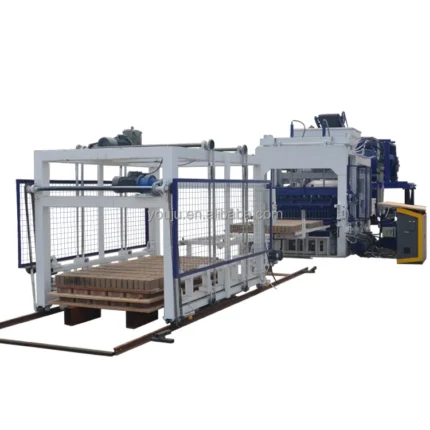
This machine runs semi-automatic, meaning the PLC governs the press cycle but pallet feeding and block stacking remain manual. The operator places pallets, the press completes its cycle, and finished blocks exit on a trolley. This configuration keeps initial investment measured while leaving the mechanical interface points — pallet feeder mounting, stacker conveyor connection, cubing station — ready for future automation modules. Plant owners who start here typically add automatic pallet feeding first, then stacking, as daily volume justifies each addition [NEED_CITE: block plant automation upgrade staging from semi-automatic to full-automatic].
Reading the Numbers That Matter
The 25-second cycle time applies to the 400×200×200 mm hollow block format with four cavities per mould. If you switch to a denser solid block or a thinner paver, the cycle will shift because the vibration dwell and hydraulic hold times change. The 60 kN exciting force at 2800 r/min sets the compaction energy available to the mould; whether that force produces adequate block density depends on your local aggregate’s particle shape and the cement content in your mix. The 850×550×20 mm pallet size determines how many blocks cure per pallet and must match the curing rack spacing and forklift tine width you already have on site.
The Cost of Ignoring Control Configuration Before Shipment
When voltage and frequency arrive mismatched, the PLC either refuses to boot or runs the motor at the wrong speed, altering vibration frequency and cycle timing. I have seen a 50 Hz machine shipped to a 60 Hz market where the vibration motor oversped, producing blocks that cracked during curing because the compaction energy was wrong. The hydraulic station pressure was never verified against the buyer’s mix, so the press force was insufficient for their coarse aggregate, and block breakage rates climbed. These are not machine defects; they are specification gaps [NEED_CITE: electrical frequency mismatch consequences on industrial vibration motors].
Why Procurement Focuses on System Matching
Block machinery is our single focus, so the QTJ4-25 is specified as one matched system — press, mould, pallet, and mixer — rather than assembled from separate suppliers. We configure the control parameters against your actual mix design and local aggregate, not a catalogue default. Mould design covers the formats your market sells, including custom drawings when standard formats do not match local construction codes. The automation level is selectable, so you start semi-automatic and add pallet feeding, stacking, or cubing as volume grows. Installation and commissioning include operator training on the PLC interface, with hydraulic and electrical schematics provided for local maintenance.
Documentation & Verification
- Factory test record run on your specified block format before dispatch
- PLC specification sheet confirming HMI brand, I/O count, and display language
- Hydraulic and electrical schematic for local maintenance and future upgrades
- Capacity calculation per block format with cycle time stated per mould
- Voltage, frequency, and control language confirmation signed before production
- Operation and maintenance manual with PLC alarm code reference list
Installation, Commissioning & Support
- Foundation plan sized to the 6400×1500 mm footprint and 2500 kg static load
- Dedicated power circuit rated for 17.9 kW with confirmed voltage and frequency
- Machine shipped as single host assembly; mixer and mould packed separately
- On-site PLC parameter loading and cycle timing calibration per your block format
- Operator training on HMI navigation, mould change sequence, and alarm response
- Wear parts list covering hydraulic seals, vibration motor bearings, and mould liners
- Preventive maintenance schedule aligned to vibration hour meter and hydraulic oil intervals
What We Need to Size This Correctly
To configure the QTJ4-25 for your plant, we need your target block format and daily output requirement, the local aggregate type and available cement grades, your site voltage and frequency, and the HMI language your operators read. If you already have curing racks and forklifts, share the pallet dimensions so we match the 850×550 mm spec or adjust accordingly. Tell us whether you plan to stay semi-automatic or want the pallet feeder interface prepared for a later stacking upgrade.
Frequently Asked Questions
Q: How is the PLC control configured and what does it manage on the QTJ4-25?
A: The PLC sequences material feed, vibration onset, hydraulic press, and mould release in a fixed order. Cycle parameters are stored per mould format. The HMI displays cycle status and alarms. Before production, we confirm the PLC brand, I/O configuration, and display language to match your operators and local electrical standards.
Q: What is the realistic daily output and what format is it based on?
A: The stated output of 960 pieces per hour and 7680 per day is based on the 400×200×200 mm hollow block at four per mould with a 25-second cycle. Other formats — solid blocks, pavers, curbstones — will have different cycle times and outputs, which we calculate per your specific mould selection before quotation.
Q: How do vibration force and hydraulic pressure match my local aggregate?
A: The 60 kN exciting force at 2800 r/min provides the compaction energy, but block density depends on your aggregate particle shape and cement content. We review your mix design and adjust vibration dwell and hydraulic hold times within the PLC program so the QTJ4-25 produces consistent strength with your available materials.
Q: What is the automation upgrade path from this semi-automatic base?
A: The QTJ4-25 leaves mechanical interface points for automatic pallet feeding, stacking, and cubing. Most buyers add an automatic pallet feeder first, then a stacking station. Each module connects to the existing PLC I/O, so control logic extends rather than replaces the base program.
Q: Which spare parts are PLC or hydraulic specific, and what is the lead time?
A: PLC-specific items include the HMI screen, input/output modules, and proximity sensors. Hydraulic items include pump seals, solenoid valves, and cylinder seals. We provide a complete wear parts list with the machine, and standard replacement items ship within typical multi-week lead times.