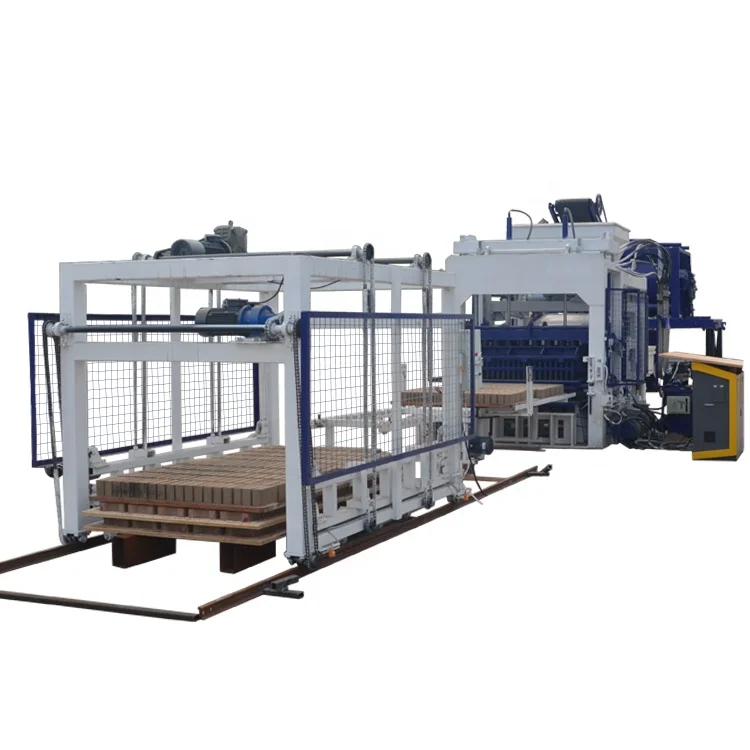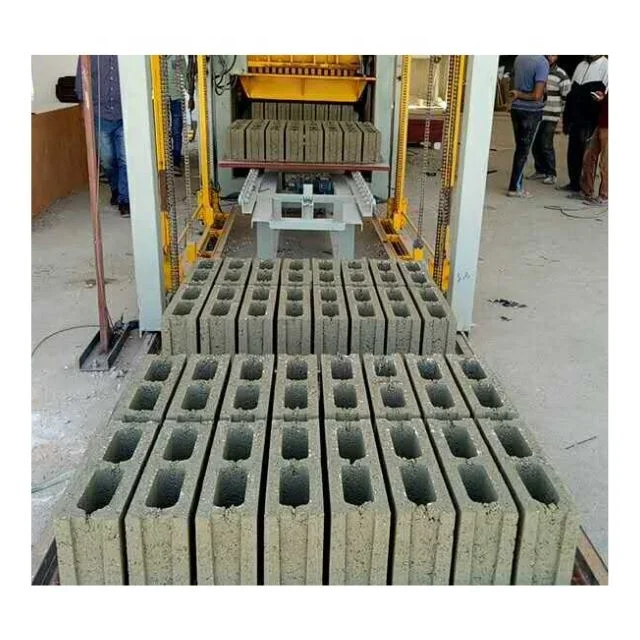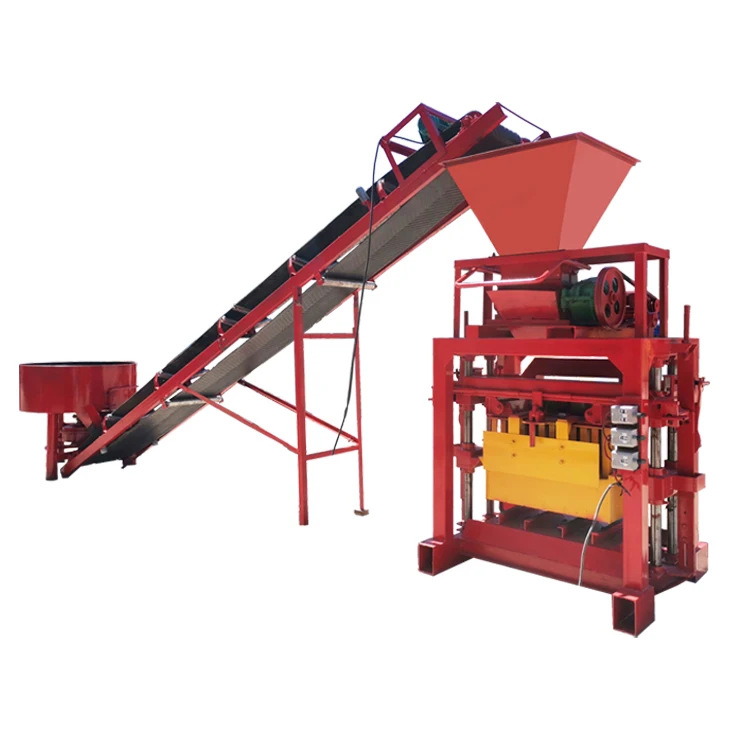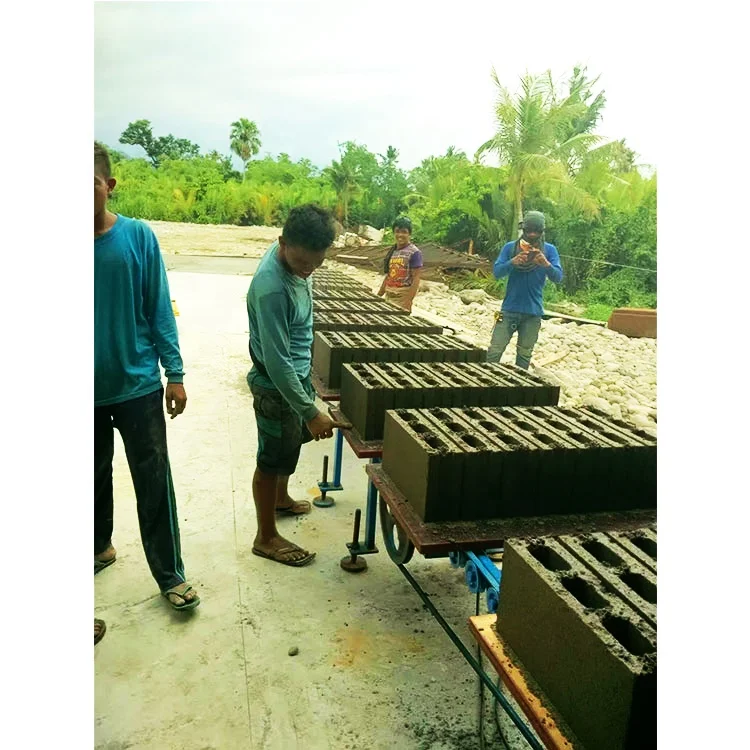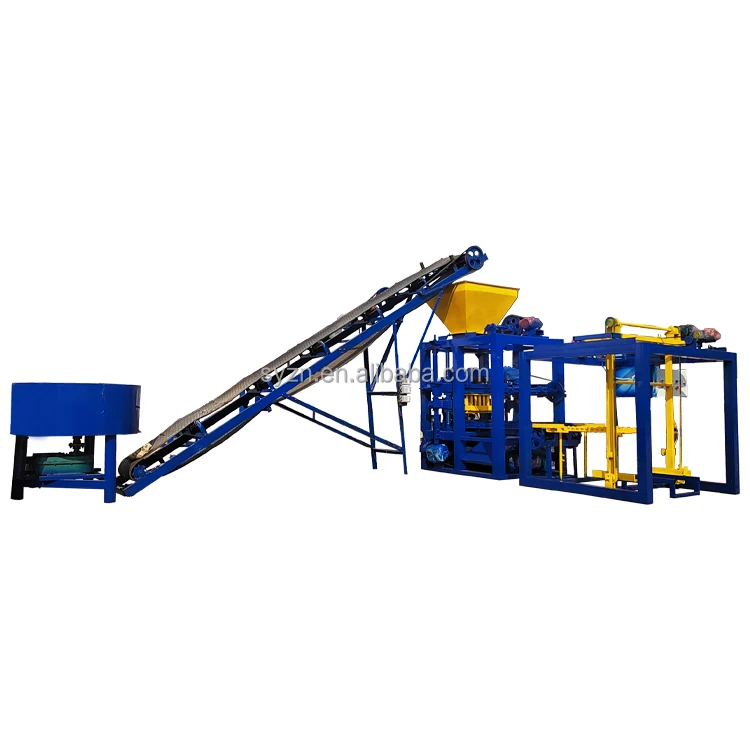


Description
Matched Control Logic — every relay and sensor in the QTJ4-26 panel is tested against your local voltage tolerance before dispatch, not assumed from a catalogue default.
Technical Specifications
| Parameter | Value |
|---|---|
| Model | QTJ4-26 |
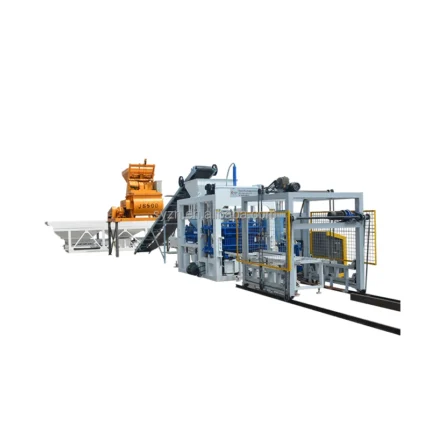
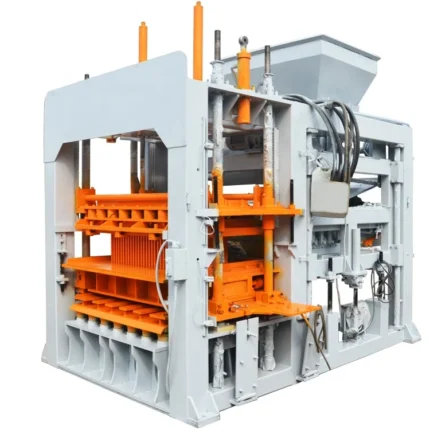
| Product Type | Semi-Automatic Concrete Block Making Machine |
| Overall Dimensions (L×W×H) | 2060×1730×2580 mm |
| Net Weight | 1800 KG |
| Molding Cycle | 26 s |
| Vibration Frequency | 4200 r/min |
| Vibration Force | 35.5 kN |
| Total Power | 14.25 kW |
| Mixer Model | JQ350 |
| Pallet Size | 850×450×20 mm |
| Control System | Semi-automatic (basis not stated in source — confirm PLC or relay logic) |
| Voltage & Frequency | Configurable (basis not stated in source — confirm voltage, frequency and phase) |
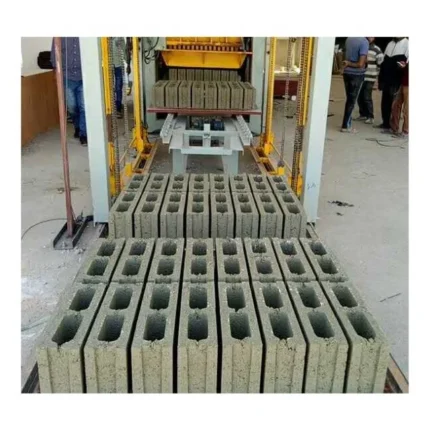
| Output: 390×190×190 mm Hollow Block | 4 pcs/mould, 480 pcs/hr, 3800 pcs/8hr |
| Output: 400×150×200 mm Hollow Block | 5 pcs/mould, 600 pcs/hr, 4800 pcs/8hr |
| Output: 240×115×53 mm Solid Brick | 18 pcs/mould, 2100 pcs/hr, 17000 pcs/8hr |
Application Suitability
| Application | Material or Output |
|---|---|
| Hollow block production for masonry walls | Crushed stone, sand, cement, fly ash — 390×190×190 mm or 400×150×200 mm formats |
| Solid brick manufacturing for load-bearing structures | Sand, cement, dust, crushed stone — 240×115×53 mm format |
| On-site block production for housing projects | Locally sourced aggregate blended with cement |
| First plant setup by entrepreneurs | Standard hollow and solid formats for regional building material markets |
What "480 Pieces per Hour" Leaves Out When No Block Format Is Named
Capacity only means something when tied to the exact block size and mould you intend to run.
Many quotations list a single cycle-per-hour figure without disclosing which block format that number assumes. A machine rated at 480 pieces per hour on a 390×190×190 mm hollow block will produce a very different daily total when the same press switches to a smaller solid brick mould. I have watched operators in West Africa spend an entire morning chasing a daily target that was never achievable with the block format their market actually buys. The automatic QTJ4-26 block machine specification sheet here lists output separately for each confirmed mould size so the number on paper matches what arrives at the curing rack [NEED_CITE: block format assumptions in capacity quotations].
PLC Timing, Vibration Sequences and Why Relay Logic Alone Falls Short
The PLC controlled semi-automatic block making machine configuration governs when the mould descends, how long vibration holds, and when the upper press lifts. If the control logic only uses relay timers, any voltage dip can reset the cycle mid-press and produce a half-compacted block. On a past installation in East Africa, I spent five days rewriting ladder logic after the local grid kept dropping below the relay’s holding threshold. Specifying whether the QTJ4-26 panel runs on PLC or relay logic — and confirming the PLC scan cycle against your voltage tolerance — prevents that scenario from reaching your shop floor.
Matching the 26-Second Molding Cycle to Real Operator Pace
A 26-second molding cycle assumes the operator feeds a fresh pallet, positions it, and clears the finished block before the next press stroke. In semi-automatic operation, manual pallet handling introduces a variable that pure machine timing does not capture. If your curing area is 40 metres from the press and your team is still learning the rhythm, the realistic cycle stretches. We state the automatic QTJ4-26 block machine cycle at 26 seconds under continuous feed; your daily output calculation should factor in pallet changeover and any brief pauses for mould cleaning [NEED_CITE: semi-automatic cycle time versus actual output].
How Vibration Force and Hydraulic Pressure Shape Block Density Together
The 35.5 kN vibration force at 4200 r/min works in tandem with upper mould pressure to compact aggregate into a uniform matrix. Vibration alone without sufficient pressing leaves voids in the block core; pressing without adequate vibration leaves the outer shell dense but the interior loose. For a mix heavy in fly ash, the vibration frequency may need adjustment to avoid over-fluidisation. I always run a test batch with the buyer’s actual crushed stone and sand blend before locking in the vibration dwell time on the PLC controlled semi-automatic block making machine control panel.
Pallet Size, Forklift Reach and the Curing Bottleneck Nobody Quoted For
The 850×450×20 mm pallet fits the QTJ4-26 mould area, but it also has to fit the curing racks and forklift tines you already own. A pallet that is 20 mm wider than your rack slots forces manual restacking. A pallet thickness that does not match your forklift’s tine spacing risks cracking under load during transport to the yard. I have seen plants where the pallet specification was never cross-checked against the curing infrastructure, leaving finished blocks piled by hand for the first month of operation.
The Cost of Skipping Voltage and Language Confirmation Before Shipment
Arriving at a 415 V three-phase workshop with a control panel wired for 380 V means rewinding motors or installing a step-down transformer you did not budget for. A control display in a language the operator cannot read turns a simple fault code into a production halt. These are not rare edge cases [NEED_CITE: commissioning delays caused by unconfirmed voltage and language]. Every automatic QTJ4-26 block machine order should include a written voltage, frequency and display language confirmation before the panel leaves the factory bench.
Why Sourcing the Control and Press From One Supplier Matters
Block machinery as a single focus means the vibration motor, PLC timing, pallet dimensions and mould mounting are specified as one system rather than assembled from separate vendors. When a fault occurs, there is one schematic to trace, not three supplier manuals to cross-reference. Configuration is set against your actual mix design and target block format, not a catalogue default. Moulds are designed for the formats your market sells, with custom drawings available when standard sizes do not match local building codes. The automation level can start semi-automatic and grow toward automatic pallet feeding and stacking as volume increases. Installation support includes on-site commissioning and operator training so the first production run happens with someone who knows the PLC sequence standing beside your team.
Documentation & Verification
- Line layout stating block format assumed for each output figure
- Machine specification sheet with vibration force and cycle time per mould
- Voltage, frequency and control language confirmation record before production
- Factory test record on your target block format before dispatch
- Mould drawing and format list for local market verification
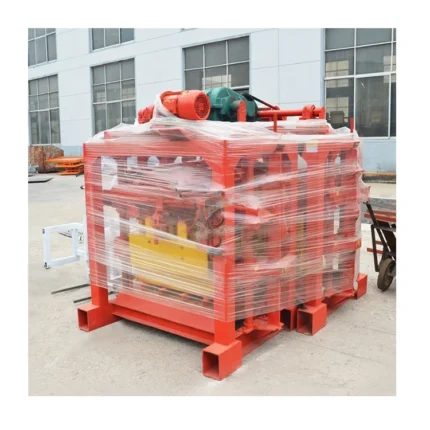
- Packing photographs issued prior to container loading
Installation, Commissioning & Support
- 14.25 kW total power requires a dedicated circuit sized for motor starting surge
- 2060×1730 mm footprint needs level concrete pad with drainage clearance
- Control panel language and PLC display confirmed to operator preference before power-on
- Vibration motor alignment checked on-site after transport settling
- Pallet feeding rhythm trained with your team against the 26-second cycle
- Wear parts list covering vibration springs and mould liners for the first production year
What to Include in Your Inquiry
Share the exact block dimensions your market demands, the daily output target you need to hit, and the local aggregate type you plan to mix. Confirm your workshop voltage, frequency and preferred control panel language. If you already have pallets, curing racks or forklifts on site, send their dimensions so the automatic QTJ4-26 block machine configuration aligns with your existing infrastructure before the quotation is issued.
Frequently Asked Questions
Q: How is the 480 pcs/hr figure for 390×190×190 hollow block calculated, and what happens when I switch formats?
A: That figure comes from the 26-second molding cycle producing 4 pieces per mould, assuming continuous pallet feed with no interruption. Switching to the 240×115×53 mm solid brick mould changes output to 2100 pcs/hr because 18 bricks fit per mould. Each format has its own verified capacity line, so you can plan production around the block your market actually orders.
Q: What voltage, frequency and PLC display language options are available for my country?
A: The control panel can be configured for your local supply before production begins. We confirm voltage, phase, frequency and display language in writing during the inquiry stage. This prevents rewiring or transformer costs after arrival and ensures your operator can read fault codes without translation delays during commissioning.
Q: How long does a mould change take on the QTJ4-26, and is it manual or assisted?
A: Mould change time depends on whether the mounting system is bolted or clamped. This detail is confirmed during configuration so you know the exact changeover procedure before the machine ships. For plants running two formats in one shift, we recommend ordering both moulds with matching bolt patterns to minimise downtime.
Q: Can the automation level be upgraded later to include automatic pallet feeding and stacking?
A: The semi-automatic configuration leaves room for adding automatic pallet feeding and stacking modules as your production volume grows. The PLC controlled semi-automatic block making machine panel is specified with spare I/O channels to accommodate these additions. We discuss the upgrade path during the initial inquiry so the control architecture supports future expansion without a full panel replacement.
Q: Which moulds and wear parts should I order with the machine to cover the first year?
A: We provide a wear parts list covering vibration springs, mould liners and hydraulic seals based on your target annual output. Ordering these alongside the machine means replacements are on the shelf before your first scheduled changeover, avoiding production stops while waiting for international shipment of a single component.