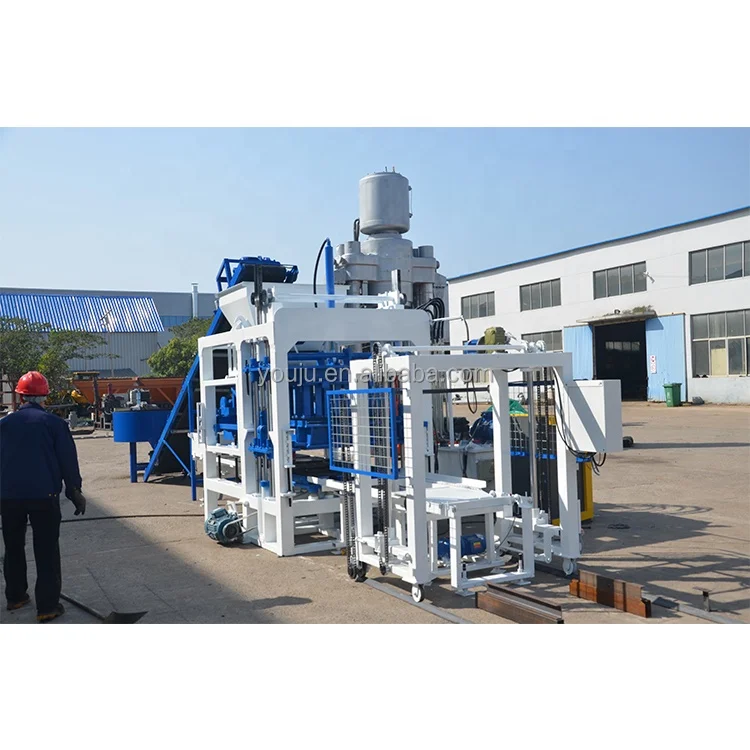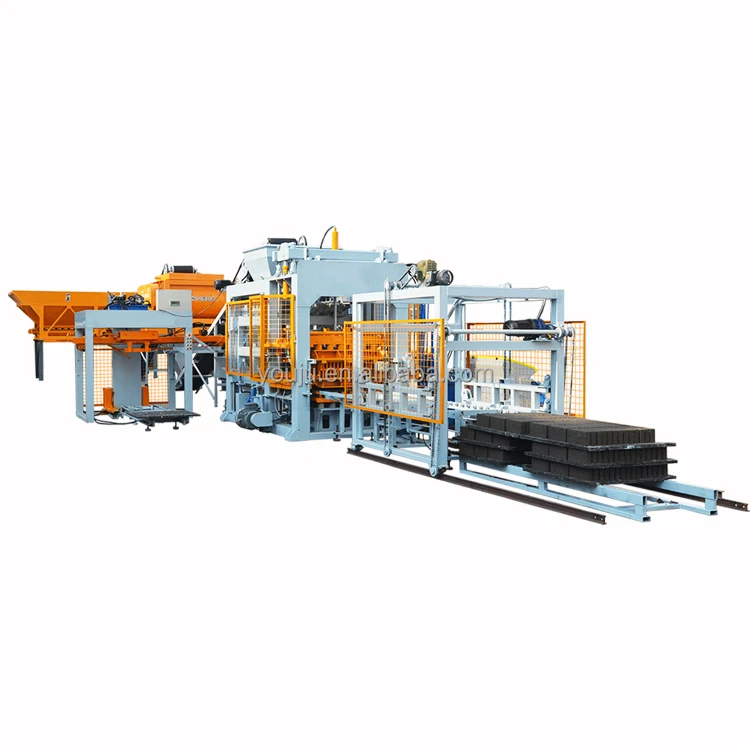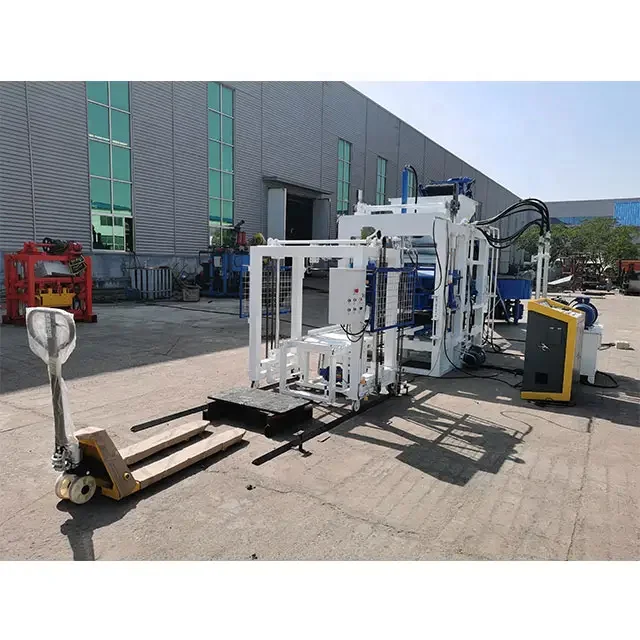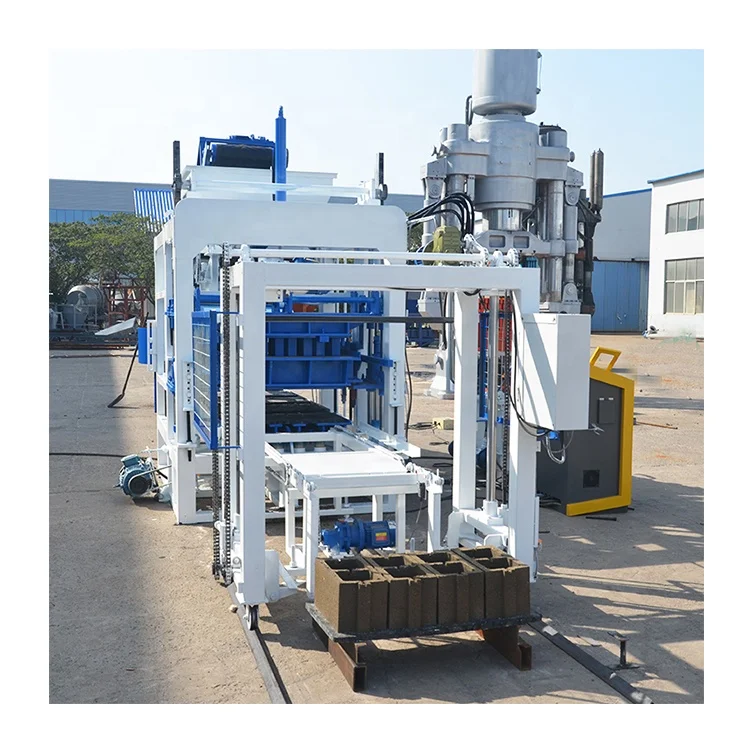
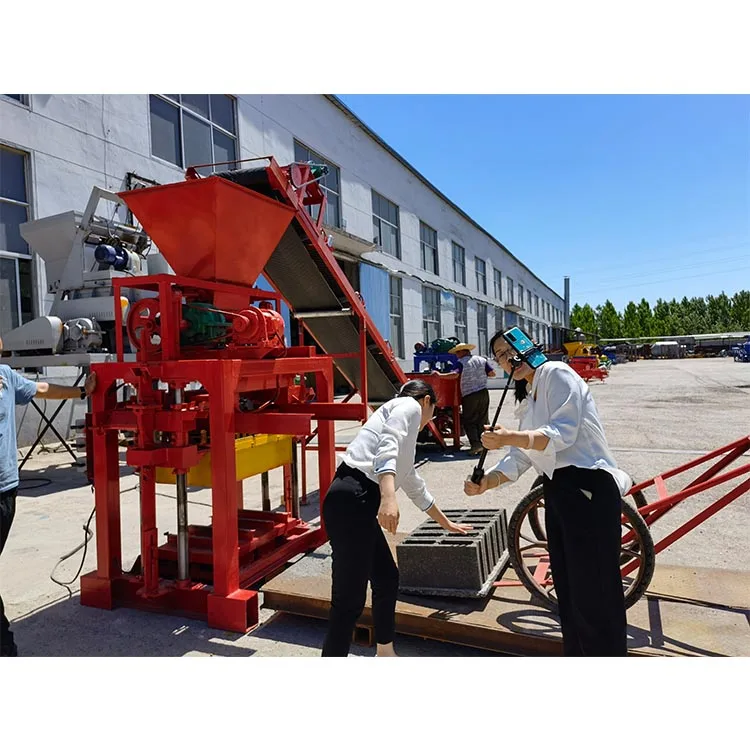
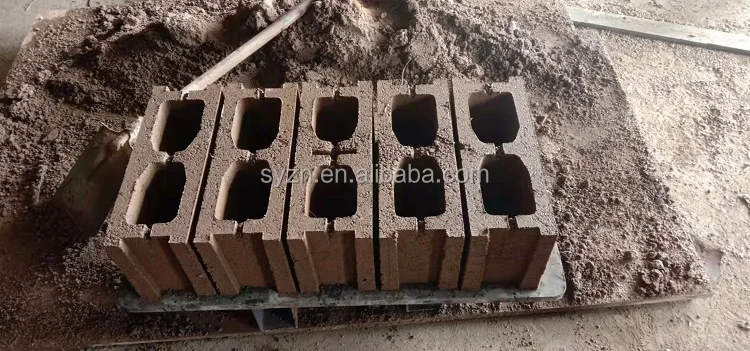
Description
Control Language Before Arrival — the QTJ4-35 control panel is locked to the buyer’s local language and voltage before the crate leaves Linyi, so operators read prompts in their own words on day one.
Technical Specifications
| Parameter | Value |
|---|---|
| Model | QTJ4-35 |
| Product Type | Semi-Automatic Concrete Block Making Machine |
| Automation Level | Semi-automatic |
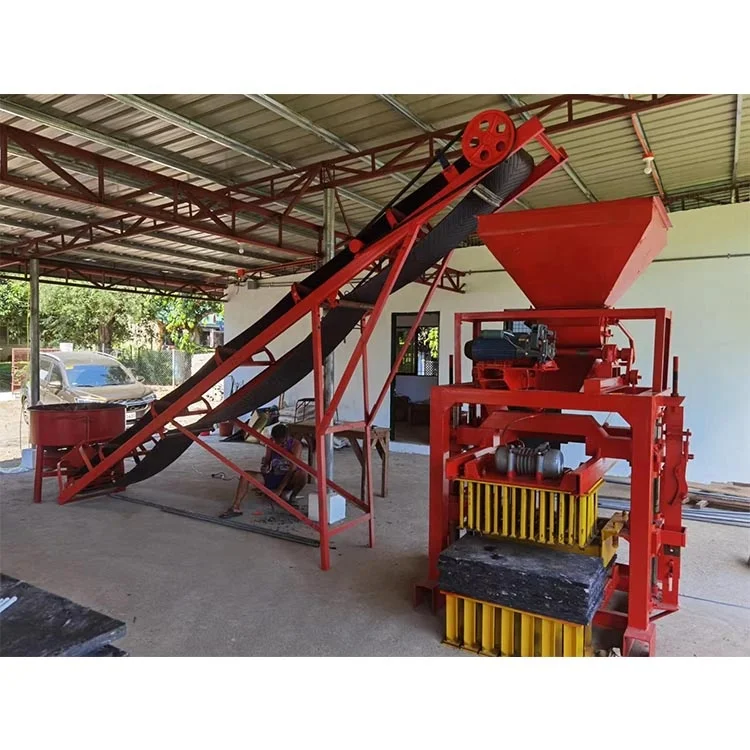
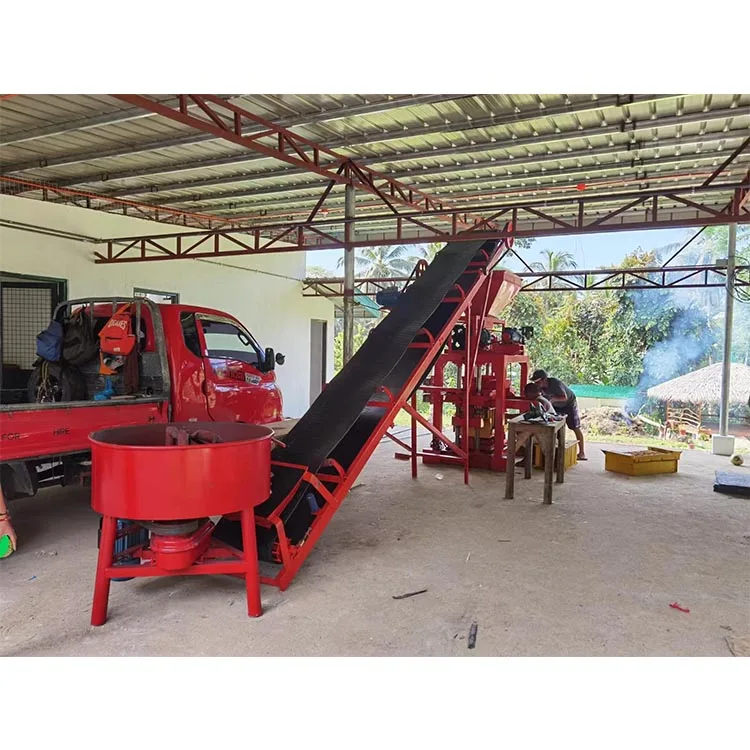
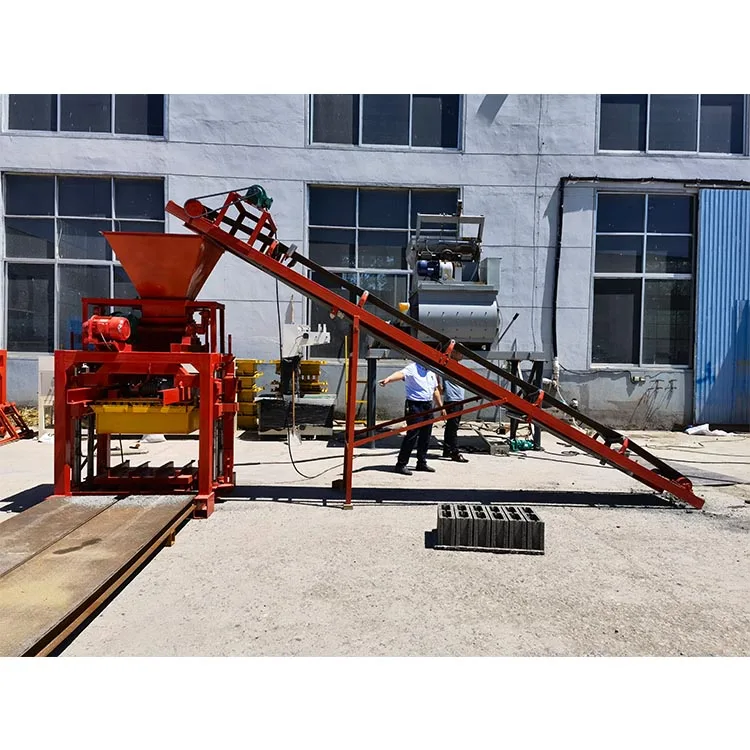
| Line Configuration | Host machine + JQ350 mixer + belt conveyor |
| Mould Compatibility | Hollow blocks, solid blocks, pavers |
| Capacity (400×200×200mm hollow block) | 4 pcs/mould, 400 pcs/hour, 3200 pcs/8 hours |
| Capacity (400×150×200mm hollow block) | 5 pcs/mould, 500 pcs/hour, 4000 pcs/8 hours |
| Capacity (225×112.5×60mm solid block) | 9 pcs/mould, 900 pcs/hour, 7200 pcs/8 hours |
| Vibration System | Airbags and four vibration motors (European-style design) |
| Control System | PLC controlled (brand and language configurable) |
| Voltage & Frequency | Configurable to destination market (to be confirmed) |
| Stacking Method | Manual |
| Certification | CE declaration where applicable |
Application Suitability
| Application | Material or Output |
|---|---|
| First-stage block plant | Hollow and solid blocks from crushed stone, sand, cement |
| On-site contractor production | Hollow blocks using locally sourced aggregate and cement |
| Paver expansion for existing yard | Interlocking and paving blocks from standard concrete mix |
| Small-format solid block run | Solid blocks for partition walls and boundary fencing |
What the PLC Screen Should Say Before the Crate Ships
An automatic QTJ4-35 block machine PLC controlled interface only works if the operator can read it.
I spent a week in eastern Turkey commissioning a semi-automatic press much like this class. The machine ran perfectly on the factory floor, but the operator in Sivas stared at a Chinese-character menu and refused to touch the start button. We lost two full shifts re-flashing the HMI while the concrete truck idled outside. That kind of delay is entirely avoidable when the control language and voltage are settled at the inquiry stage, not at the port.
A buyer in a 50 Hz market plugging into a 60 Hz wired cabinet faces the same stall, only with burned contactors instead of unreadable text. The automatic QTJ4-35 block machine PLC controlled cabinet ships with frequency and language matched to the destination grid [NEED_CITE: voltage and frequency standards by export market]. Confirming these two items before production begins removes the most common commissioning roadblocks.
How Semi-Automatic Control Reduces Operator Guesswork
The PLC on the QTJ4-35 replaces manual timing of the vibration cycle with a programmed sequence. The operator loads the mould cavity and presses start; the controller runs the four vibration motors through a fixed ramp-up, dwell, and release profile. This removes the variation that happens when different workers guess how long to vibrate a wet mix versus a dry one. The automatic QTJ4-35 block machine PLC controlled sequence holds the same cycle profile across every shift.
Where the Upgrade Path Opens
The semi-automatic configuration handles pressing and vibration while leaving pallet handling and stacking to manual labour. When daily volume outgrows two workers per shift, the same host machine can accept an automatic pallet feeder and a stacking unit without replacing the press or the PLC cabinet. The controller already carries the I/O points for those stations, so the upgrade is a wiring and programming addition rather than a full cabinet swap [NEED_CITE: typical PLC I/O expansion for block line automation].
Reading the Vibration and Pressure Numbers
The QTJ4-35 uses four vibration motors paired with airbags in a European-style layout. The airbags isolate the vibrating table from the main frame, concentrating energy into the mould cavity instead of shaking the entire chassis. This produces denser blocks at lower noise levels compared to rigid-mount vibration tables. The hydraulic pressure specification is not published in the source data, so the exact kN figure must be confirmed against the buyer’s target block strength and mix design. Pallet size is also unlisted and must be matched to the buyer’s existing curing racks and forklift tines before the order is finalized.
The Cost of Skipping the Voltage Conversation
When a buyer skips the voltage and frequency confirmation, the consequences arrive at the worst possible moment. A machine wired for 380 V three-phase in a workshop that only has 220 V three-phase will trip breakers on the first start attempt, and repeated attempts can damage the motor windings. The QTJ4-35’s four vibration motors draw significant inrush current, making correct breaker sizing even more critical. Sorting this out after the machine is bolted to the floor means rewiring the entire cabinet on-site, which adds days to a schedule that was already tight [NEED_CITE: CE machinery directive requirements for industrial equipment].
Why Buyers Come Back to This Configuration
Block machinery is our single focus, so the QTJ4-35 host, JQ350 mixer, and belt conveyor are specified as one matched system rather than assembled from separate suppliers. The mould design covers the hollow, solid, and paver formats the buyer’s market actually sells, including custom drawings when standard sizes do not fit. The automation level is selectable, so a buyer starts semi-automatic and adds pallet feeding or stacking later. Installation support includes operator training on the PLC interface in the buyer’s chosen language. Every machine ships with a factory test record documenting cycle time and block density using the buyer’s selected mould.
Documentation & Verification
- Factory test record on buyer’s chosen hollow or solid block mould before dispatch
- Machine specification sheet with confirmed voltage, frequency, and PLC language
- Mould drawing and format list covering all ordered block types
- Hydraulic and electrical schematic for on-site maintenance reference
- Operation and maintenance manual in destination language
- Wear parts and mould list with first replacement quantities noted
Installation, Commissioning & Support
- Foundation pad sized to the QTJ4-35 host footprint with anchor bolt plan provided
- Dedicated three-phase circuit matching confirmed voltage and breaker rating for four vibration motors
- Host machine and JQ350 mixer shipped dismantled for container loading, reassembled on-site
- PLC parameters set to buyer’s block format and cycle profile during commissioning
- Operator training covering mould change, PLC navigation, and daily maintenance routines
- Wear parts list supplied with first replacement quantities identified at delivery
Preparing a Useful Inquiry
To size the QTJ4-35 correctly for your plant, share the target block formats and dimensions you plan to produce, along with your daily volume goal. Include the available workshop floor area and ceiling height, and specify your local voltage, phase, and frequency. Let us know the primary language your operators will need on the PLC display so the HMI is configured before shipment.
Frequently Asked Questions
Q: How is the daily capacity of the QTJ4-35 calculated for each block format?
A: Capacity depends entirely on the block size being produced. With a 400×200×200mm hollow block, the machine produces 4 pieces per mould cycle, reaching 3200 pieces over an 8-hour shift. A smaller 225×112.5×60mm solid block yields 9 pieces per cycle and 7200 pieces per shift. The buyer’s specific format determines the realistic daily output.
Q: Which steps does the QTJ4-35 automate, and what remains manual?
A: The machine automates the mixing feed via belt conveyor, the pressing cycle, and vibration timing through the PLC. Pallet handling, moving wet blocks to the curing area, and stacking remain manual tasks. The PLC cabinet carries spare I/O points, so automatic pallet feeding and stacking can be added later when production volume justifies the investment.
Q: How does the four-motor vibration system with airbags affect block density?
A: The airbags isolate the vibration table from the main frame, directing energy into the mould cavity rather than dissipating it through the chassis. Combined with four motors, this produces stronger and more uniform compaction across the block face. The result is higher density and more consistent strength compared to rigid-mount single-motor vibration tables.
Q: Can the PLC interface be set to the buyer’s local language before shipment?
A: Yes. The control system language and voltage are confirmed during the order stage, and the PLC display is configured before the machine leaves the factory. This avoids commissioning delays caused by unreadable menus on-site. The buyer specifies language, voltage, and frequency at inquiry, and all three are verified on the factory test record before dispatch.