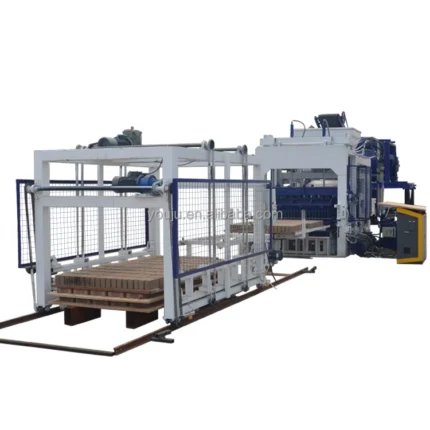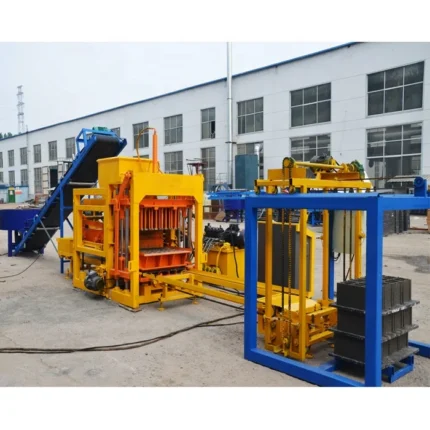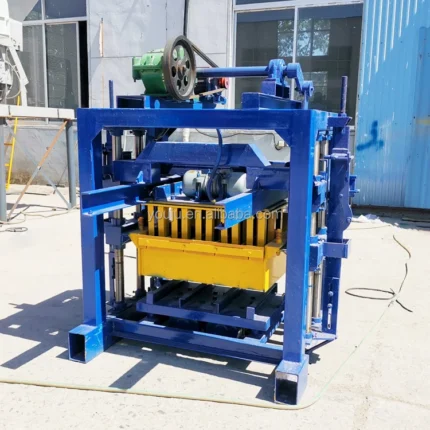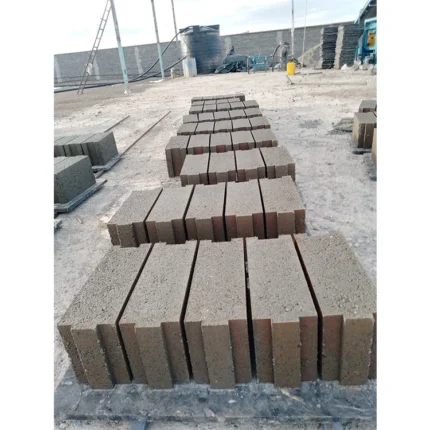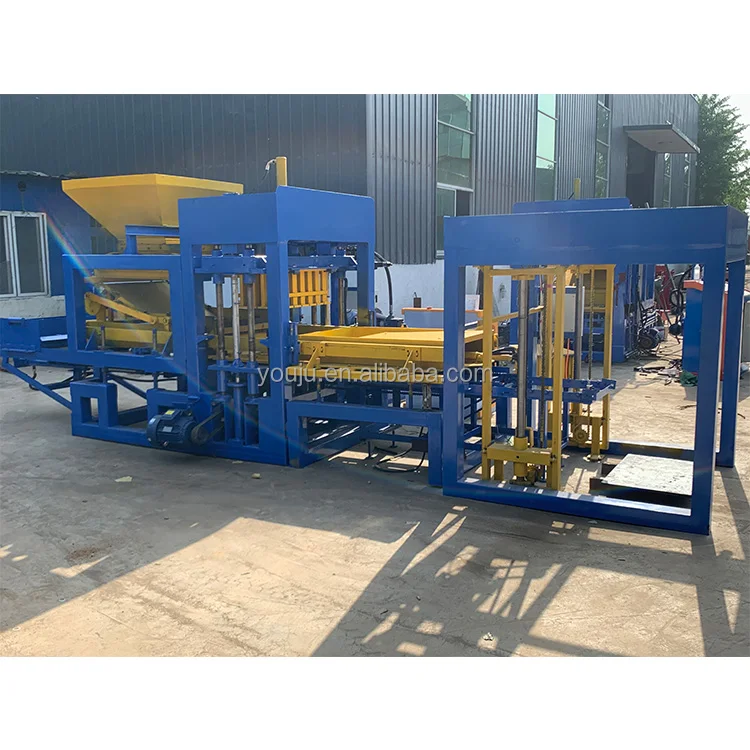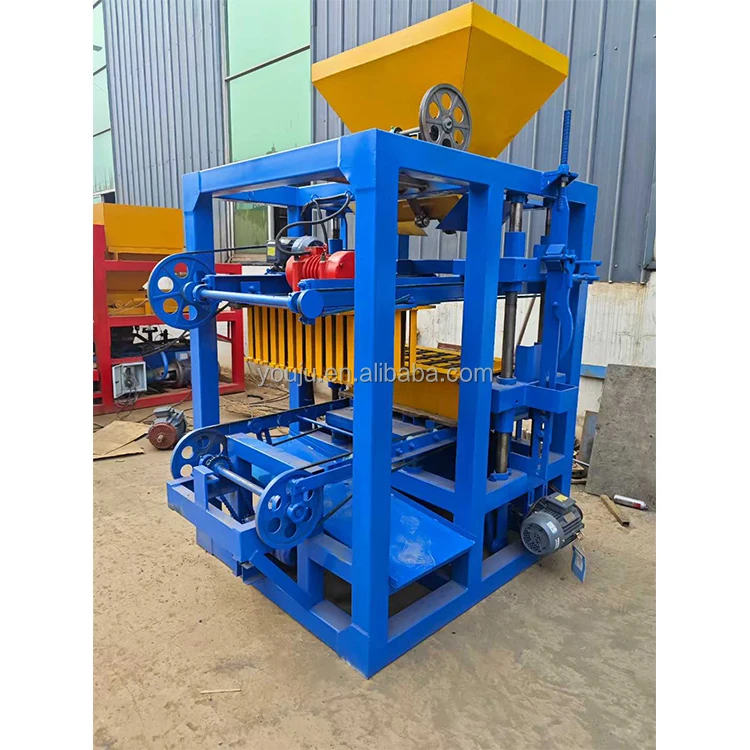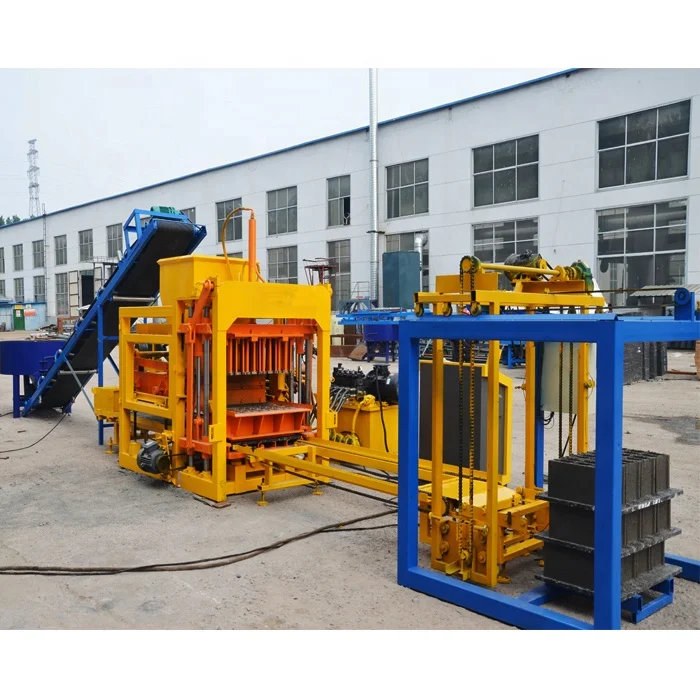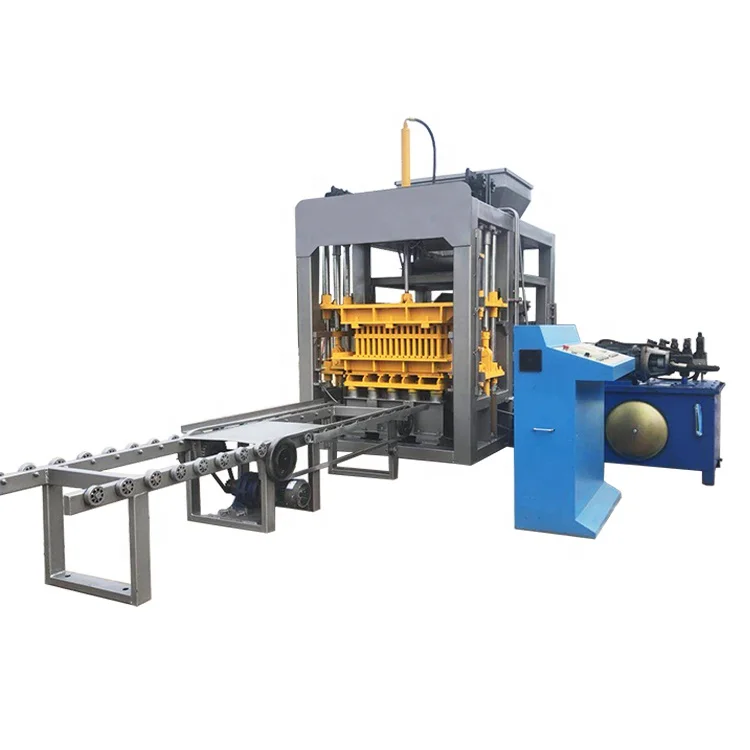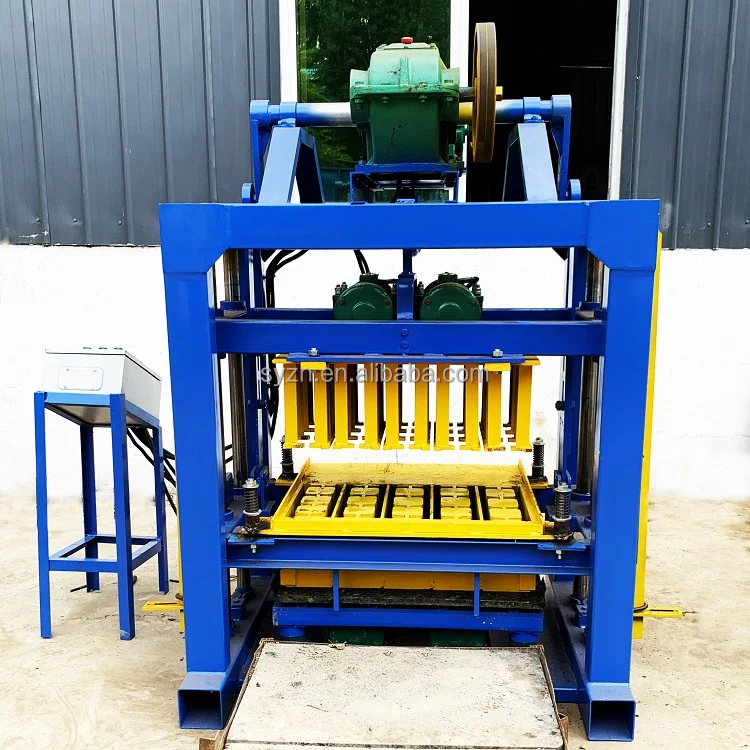


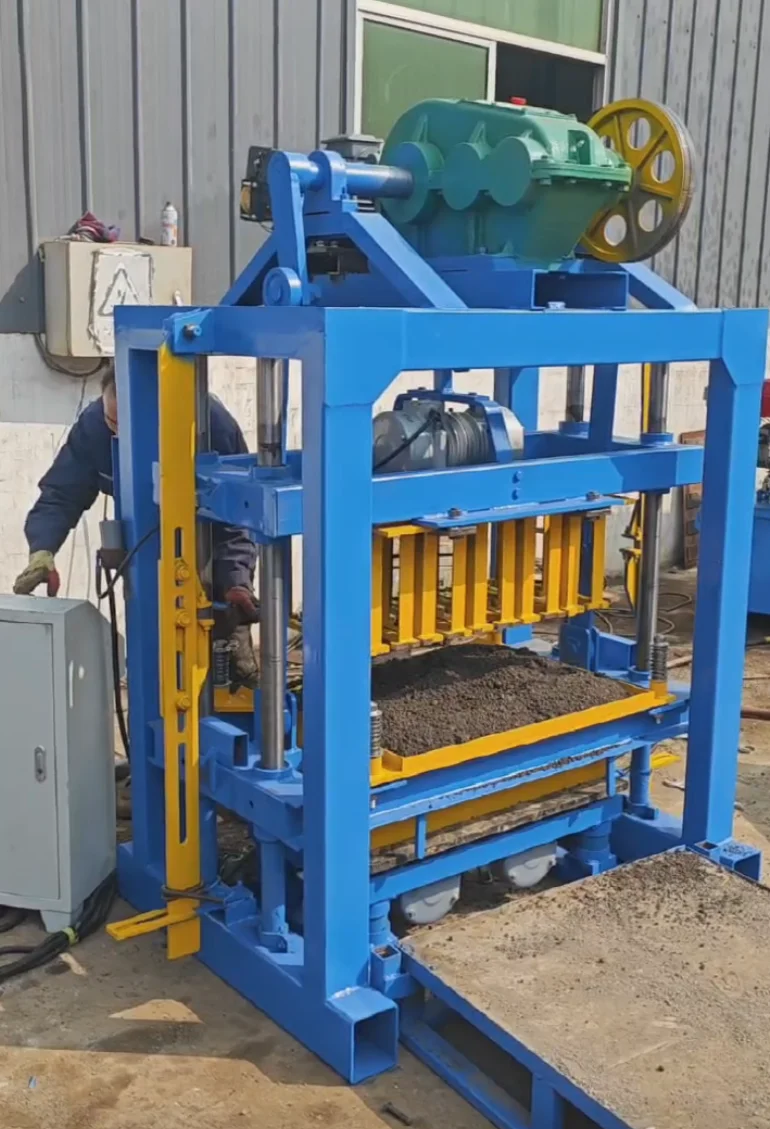
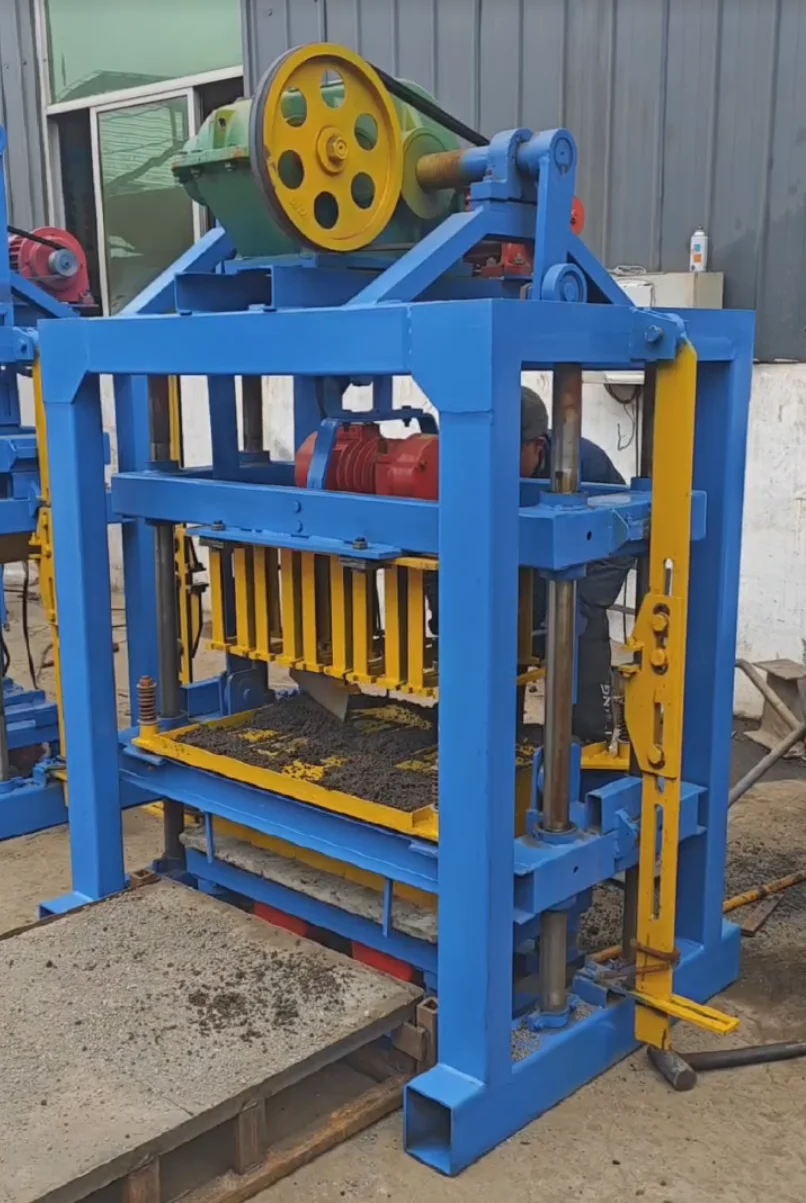

Description
Control Language Confirmed Before Dispatch — every HMI panel and PLC display on this line is verified against the operator’s native language prior to crating, avoiding on-site reprogramming delays.
Technical Specifications
| Parameter | Value |
|---|---|
| Model | QTJ4-40 |
| Product Type | Hydraulic Semi-Automatic Block Making Machine |
| Overall Dimensions (L×W×H) | 1350 × 1460 × 1800 mm |
| Rated Power | 10.4 kW |
| Molding Cycle | 40 s |
| Output Capacity (Hollow Block 400×200×200 mm) | 4 pcs/mould, 360 pcs/hour, 2880 pcs/day |
| Output Capacity (Hollow Block 400×150×200 mm) | 5 pcs/mould, 450 pcs/hour, 3600 pcs/day |
| Output Capacity (Solid Brick 225×112.5×60 mm) | 9 pcs/mould, 800 pcs/hour, 6400 pcs/day |
| Pallet Size | 850 × 450 × 20 mm |
| Machine Weight | 1.2 T |
| Vibration System | Bed mould vertical vibration + upper mould compression vibration |
| Automation Level | Semi-automatic, upgradeable |
| Mould Compatibility | Hollow, solid, paver (8″, 6″, 5″, 4″ formats) |
| Voltage | Configurable to local supply (frequency and phase to be confirmed) |
| Required Auxiliary Equipment | Mixer, host machine, block mould, pallets |
Application Suitability
| Application | Material or Output |
|---|---|
| Small to medium block plant startup | Hollow and solid concrete blocks from local aggregate and cement |
| On-site contractor production | Paving blocks and kerbstones for housing and infrastructure projects |
| Format expansion on existing line | Interlocking pavers and porous bricks added via mould change |
| First-time entrepreneur plant | Low-footprint semi-automatic entry with future automation upgrade path |
What "40-Second Cycle Time" Leaves Out When No Format Is Named
A cycle time figure without a named block format is meaningless for daily output planning.
The QTJ4-40 completes a press cycle in roughly 40 seconds, but what that yields per hour depends entirely on how many cavities the active mould carries. A four-cavity hollow block mould produces far fewer pieces per shift than a nine-cavity solid brick mould, yet both run on the same 40-second cadence. Buyers who evaluate this automatic QTJ4-40 block making machine on cycle time alone end up with a throughput figure that collapses once the actual sales format is loaded [NEED_CITE: capacity calculation methodology for multi-format block presses]. Stating output per format — not per machine — is the only honest way to compare presses across suppliers.
What Semi-Automatic Actually Removes from the Operator
On this PLC controlled semi-automatic block machine, the press cycle itself is automated: the PLC triggers vibration, hydraulic compression, and mould release in sequence, so the operator does not time each step manually. What remains manual is pallet feeding and green-block stacking. This split matters because it defines exactly where labour is still needed and where batch-to-batch density variation has already been reduced. A plant owner moving up from a fully manual egg-layer can see which tasks the PLC has absorbed and which still depend on operator rhythm.
The Upgrade Path Without Replacing the Press
The QTJ4-40 frame and hydraulic circuit accept bolt-on automation modules — an automatic pallet feeder, a stacking station, and eventually a cubing system — without a new press chassis. Buyers who start semi-automatic can add pallet feeding first, then stacking, matching each investment to growing order volume. The PLC program already contains I/O addresses reserved for these modules, so commissioning an upgrade is primarily a wiring and sensor task rather than a full control rewrite [NEED_CITE: modular automation expansion in entry-level block lines]. This staged approach keeps initial capital low while preserving a clear route toward hands-off operation.
Reading the Specs That Decide Daily Reality
The dual vibration arrangement — vertical vibration through the bed mould combined with compression vibration from the upper mould — is the mechanism that determines block density. When both vectors act on the concrete simultaneously, aggregate particles settle more uniformly, reducing strength scatter across a production run. The 850 × 450 × 20 mm pallet dimension is not arbitrary; it must match the curing rack spacing and the forklift tine width already in the buyer’s yard. A pallet specified without checking existing handling equipment leads to double-handling or rack modification costs. The 10.4 kW rated power figure defines the minimum dedicated circuit capacity, which should be confirmed against the mixer and conveyor loads that will share the same panel. Mould change time, meanwhile, determines whether a two-format day is practical or whether the second format always gets pushed to tomorrow.
The Hidden Cost of Skipping the Language and Voltage Conversation
When a PLC panel arrives with display text in a language the local operator cannot read, commissioning stalls until someone rewrites every HMI string. We have seen machines sit idle on-site for weeks because the control language defaulted to English in a Francophone region. Voltage mismatches create a different problem: a 380 V motor connected to a 415 V supply without transformer correction overheats within the first shift, damaging windings before the warranty conversation even begins [NEED_CITE: voltage and frequency standards by export market]. Both issues are entirely preventable if the buyer and supplier confirm language, voltage, frequency, and phase in writing before the control cabinet is assembled.
Why Buyers Source This Line Here
Block machinery is the single product focus of this operation, so the press, mould, pallet, and handling equipment are specified as one matched system rather than assembled from unrelated vendors. Each QTJ4-40 configuration is set against the buyer’s actual mix design and local aggregate, not pulled from a catalogue default. Mould design covers the formats the buyer’s market actually sells, with custom drawings available when standard cavities do not match. The automation level is selectable and upgradable, so a semi-automatic start does not lock the buyer into a permanent ceiling. Installation support includes on-site commissioning and operator training, ensuring the PLC parameters and vibration timing are tuned before the first production shift.
Documentation & Verification
- Line layout showing capacity per block format assumed for the QTJ4-40
- Voltage, frequency, and PLC display language confirmation sheet signed before production
- Factory test record on the buyer’s specified mould and pallet combination
- Hydraulic and electrical schematic matching the as-built machine serial number
- Operation and maintenance manual in the operator’s confirmed language
- Wear parts and mould list with part numbers for reorder reference
Installation, Commissioning & Support
- Foundation pad sized for the 1350 × 1460 mm footprint and 1.2 T operating weight
- Dedicated circuit rated for 10.4 kW plus auxiliary mixer and conveyor loads
- Machine shipped partially assembled; vibration motors and PLC cabinet bolted on-site
- PLC parameters and vibration duration tuned to the buyer’s mix during first-run trials
- Operator training covers mould change procedure, pallet loading, and fault code reading
- Mould and hydraulic wear parts list provided with reorder lead times
Information Needed to Prepare Your Configuration
Provide the block format your market currently sells, including dimensions and target daily volume, so we can calculate realistic output per shift on this automatic QTJ4-40 block making machine. Confirm your local supply voltage, frequency, and phase, along with the preferred PLC display language. If you already operate pallets, curing racks, or forklifts on-site, share their dimensions so the pallet and handling specification aligns with existing equipment rather than forcing new purchases.
Frequently Asked Questions
Q: How is capacity verified per block format, and what does the 40-second cycle time assume?
A: The 40-second cycle is constant across moulds, but output per hour changes with cavity count. Capacity is stated separately for each format — four-cavity hollow block, five-cavity hollow block, and nine-cavity solid brick — so buyers compare figures that match their actual product mix rather than a single headline number.
Q: What does "semi-automatic" include, and what is the upgrade path?
A: The PLC automates press cycling, vibration timing, and mould release. Pallet feeding and stacking remain manual in the base configuration. Automatic pallet feeders and stackers can be bolted on later using reserved PLC I/O addresses, so the upgrade is mainly wiring and sensor work.
Q: Which electrical details must be confirmed before production starts?
A: Voltage, frequency, phase, and PLC display language must be agreed in writing before the control cabinet is built. Getting these wrong causes motor overheating or unreadable HMI text, both of which stall commissioning until corrections arrive by post.
Q: How does pallet specification affect the rest of the line?
A: The 850 × 450 × 20 mm pallet must fit the buyer’s existing curing racks and forklift tines. If pallet dimensions are chosen without checking handling equipment, blocks require double-handling or the racks must be rebuilt, adding cost before production even begins.
Q: How long does a mould change take, and does it fit within a shift?
A: Mould change involves unbolting the current mould, lifting it out, positioning the new one, and realigning the vibration contacts. On this semi-automatic platform the changeover is designed to complete within a single shift, but buyers should request the documented time for their specific format pair before committing to a multi-format day.