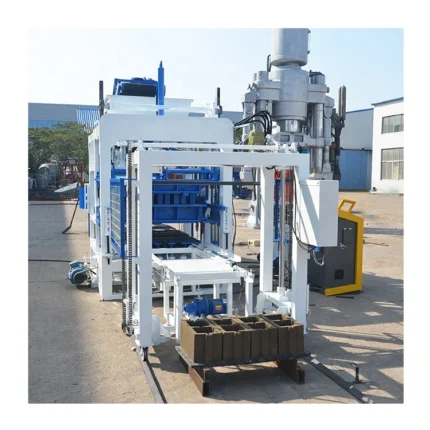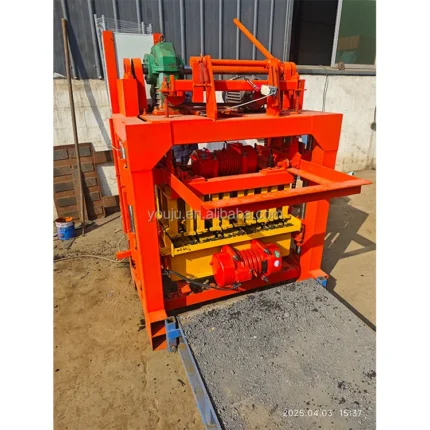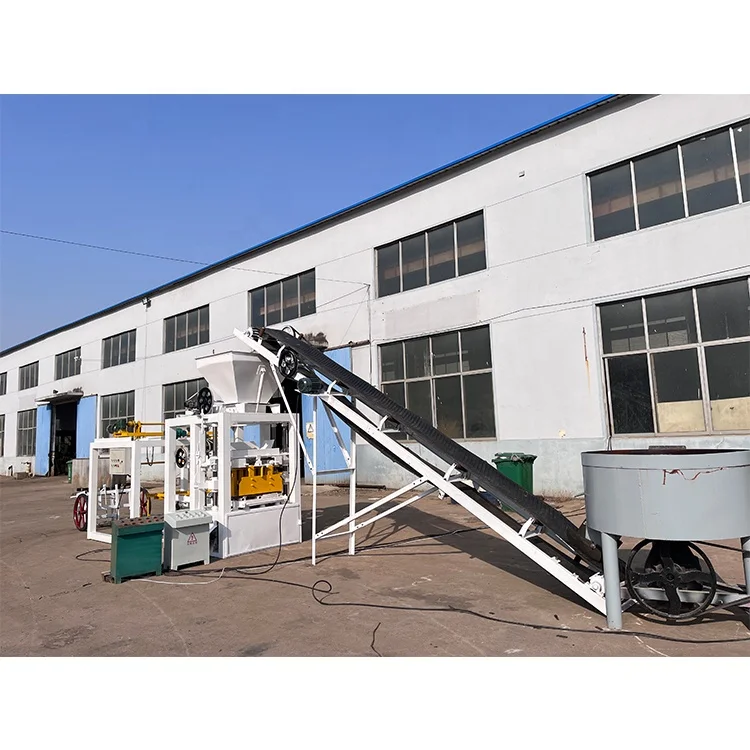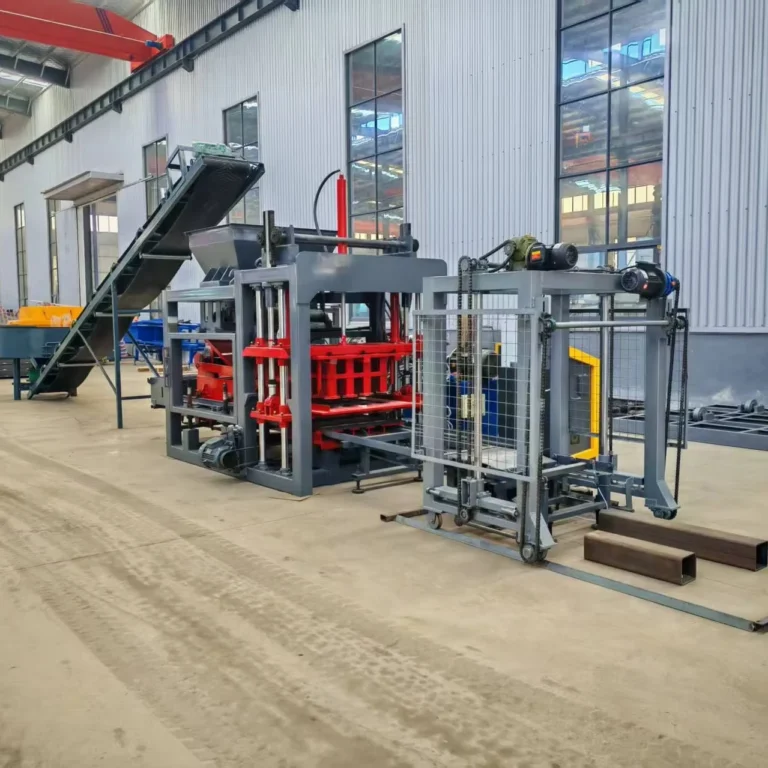
Description
Configurable Control Logic — the automatic QT4-18 block making machine PLC controlled system lets you define automation stages around your operator skill level and local power conditions rather than adapting your plant to a fixed sequence.
Technical Specifications
| Parameter | Value |
|---|---|
| Model | QT4-18 |
| Product Type | Stationary Concrete Block Making Machine |
| Overall Dimensions (L×W×H) | 3900 × 1600 × 2300 mm |
| Total Weight | 3 T |
| Rated Power | 24 kW |
| Vibration Force | 40–50 kN |
| Moulding Cycle | 15–25 s (basis to be confirmed per block format) |
| Pallet Size | 850 × 550 × 25 mm |
| Pallet Material | Fiberglass (wooden pallet optional) |
| Mixer Model | JQ350 |
| Control System | PLC (brand and display language to be confirmed) |
| Output Capacity | 1200–1680 pcs/h based on 400×200×200 mm hollow block at 15–20 s cycle |
| Output Capacity | 1800–2400 pcs/h based on 400×150×200 mm hollow block at 15–20 s cycle |
| Output Capacity | 3240 pcs/h based on 240×115×53 mm solid brick at 15–20 s cycle |
| Daily Output (8 h) | 9600–13440 pcs (400×200×200 mm hollow block) |
| Daily Output (8 h) | 14400–19200 pcs (400×150×200 mm hollow block) |
| Daily Output (8 h) | 16200–19440 pcs (240×115×53 mm solid brick) |
| Automation Level | Semi-automatic (upgrade path to full automatic available) |
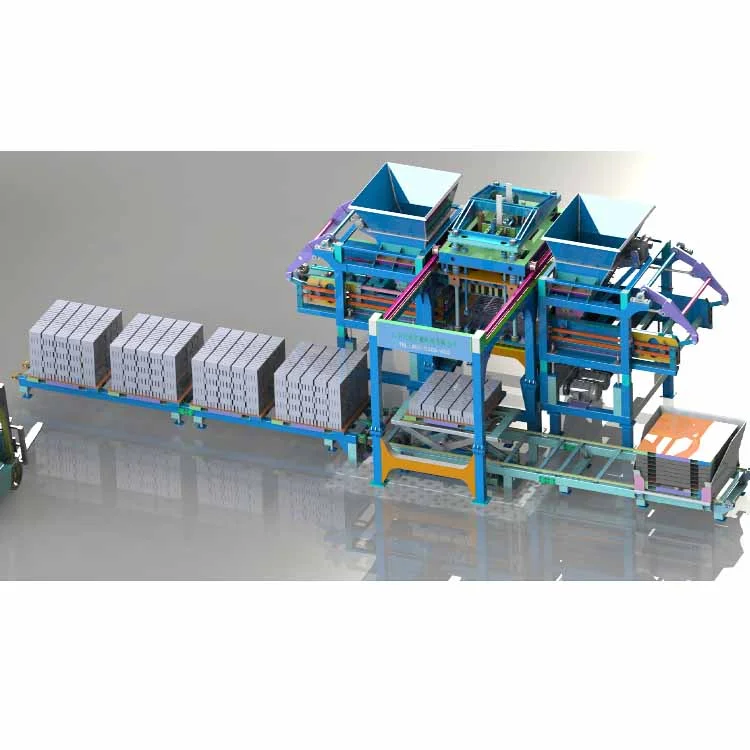
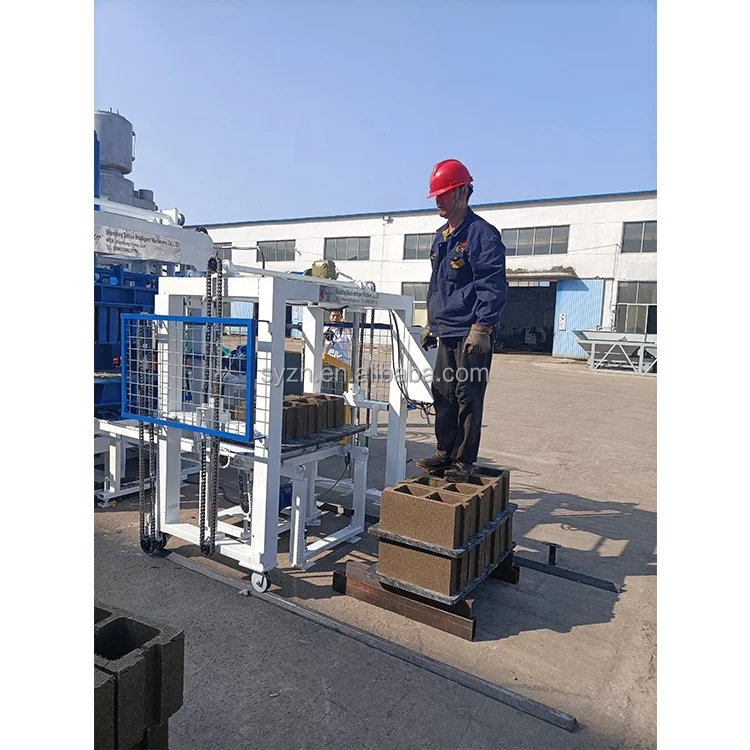
| Stacking Method | Automatic stacker places bricks on pallet; trolley moves to curing area |
| Hydraulic Station | Equipped |
| Raw Materials | Crushed stones, sand, cement, dust, fly ash |
| Mould Formats | Hollow block, solid brick, paver, curbstone |
Application Suitability
| Application | Material or Output |
|---|---|
| Hollow block production for masonry walls | Crushed stone, sand, cement, fly ash mixes at 400×200×200 mm or 400×150×200 mm |
| Solid brick production for load-bearing and infill | Cement and fine aggregate blends at 240×115×53 mm |
| Paver and curbstone production for external works | Dense aggregate mixes requiring higher vibration force and longer cycle |
| Small to medium-scale block plants | First-line entrepreneurs or contractors producing on-site |
| Format expansion for existing concrete product manufacturers | Adding hollow block or paver lines without replacing the press |
What a PLC Panel Actually Controls on the QT4-18
The control logic governs vibration timing, hydraulic pressure sequencing, and pallet indexing — not just a start button.
Many buyers assume a PLC-equipped press handles everything from raw feed to stacking. On the automatic QT4-18 block making machine PLC controlled architecture, the programmable logic coordinates the moulding cycle stages: vibration onset, hydraulic head descent, pressure hold, and demoulding sequence. But upstream batching accuracy and downstream pallet movement depend on how the rest of the line is configured. [NEED_CITE: PLC control scope in stationary block machines] I have watched a commissioning stall for an entire day because the PLC display arrived in a language the local operators could not read — the machine was functional, the interface was not.
Control Language and Voltage Confirmation Before Dispatch
The automatic QT4-18 block making machine PLC controlled interface can be set to different display languages, but this must be specified before the panel is programmed. In my experience running on-site commissioning, a language mismatch at startup costs more downtime than a mechanical fault because no one can read the error codes. Voltage and frequency must also match the buyer’s site supply exactly. A 50 Hz machine running on a 60 Hz grid will cycle faster than the hydraulic station can respond, causing pressure faults that look like mechanical failures on the diagnostic screen.
Matching Automation Stages to Your Operator Pool
The QT4-18 ships as a semi-automatic baseline where the PLC handles the press cycle while pallet loading and curing-area transport remain manual. This is deliberate: it lets a buyer train operators on the press logic first, then add automatic pallet feeding and cubing as throughput grows. [NEED_CITE: automation upgrade paths in block production] The hydraulic station maintains stable pressure across each moulding cycle regardless of automation level, so block density consistency does not depend on how many stages are automated — it depends on whether the vibration force and pressure are matched to the buyer’s mix design.
Vibration Force, Hydraulic Pressure, and Block Density
The 40–50 kN vibration force and the hydraulic station work together to compact the mix inside the mould cavity. Vibration liquefies the aggregate so it fills the mould corners; hydraulic pressure then consolidates it. If the vibration is too low for a stiff mix, blocks emerge with weak edges. If hydraulic pressure is too high for a lean cement mix, the block cracks during demoulding. The QT4-18 moulding cycle of 15–25 seconds is a range, not a fixed number — the actual cycle depends on block thickness, mix workability, and the target strength. Pallet size at 850 × 550 mm must also match the curing rack spacing and the forklift tine width already on site, or pallets will not fit the existing handling infrastructure.
The Cost of Skipping Configuration Verification
When a buyer orders without confirming voltage, control language, or mix design, the problems do not appear in the factory test. They appear on day one of production, when the PLC throws an error code no one can read, the hydraulic pump overheats because the frequency is wrong, or the blocks crack because the vibration force was set for a sand-rich mix the buyer cannot source locally. [NEED_CITE: common commissioning failures in exported block machinery] These are not warranty claims — they are configuration oversights that delay production by weeks.
Why Buyers Specify the Full Control Package Here
Each automatic QT4-18 block making machine PLC controlled unit ships with configuration set against the buyer’s actual site supply, target block format, and operator skill level rather than a catalogue default. The PLC display language, voltage, and frequency are confirmed in writing before the panel is programmed. Line layout documentation states which block format each output figure assumes, so there is no gap between quoted capacity and real daily production. Moulds are designed for the formats the buyer’s market sells, including custom drawings when standard formats do not match local building codes. The automation level is selectable, meaning a buyer can start semi-automatic and integrate automatic stacking later without replacing the press.
Documentation & Verification
- Line layout and capacity calculation stating the block format assumed for each output tier
- Hydraulic and electrical schematic matching the shipped QT4-18 configuration
- Voltage, frequency, and PLC display language confirmation record before dispatch
- Factory test record run on the buyer’s specified block format and cycle time
- Operation and maintenance manual with wear parts list and mould drawing set
- CE declaration documentation where applicable to the destination market
Installation, Commissioning & Support
- Foundation pad sized to the 3900 × 1600 mm footprint with anchor bolt template provided
- Dedicated 24 kW circuit with voltage and frequency matching confirmed before wiring
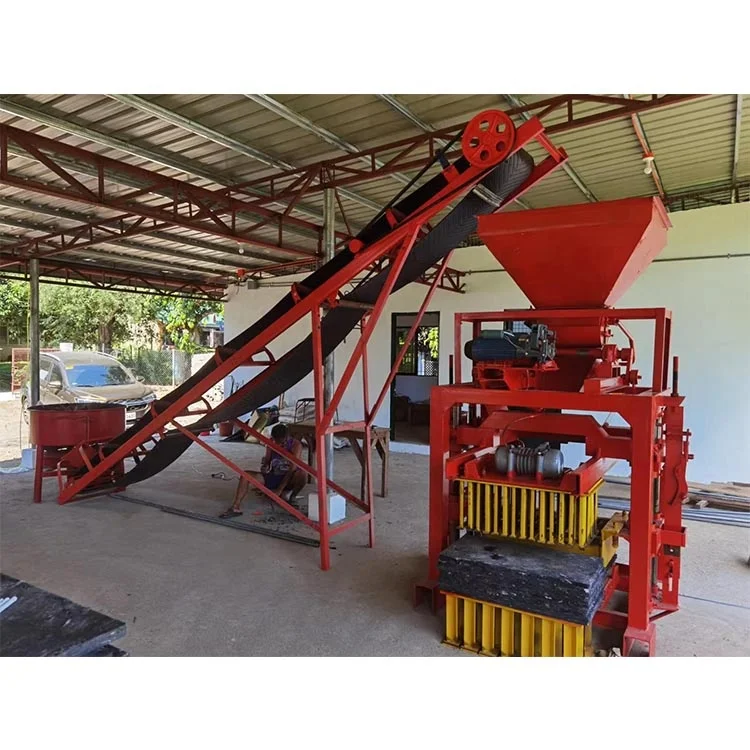
- Host machine, JQ350 mixer, conveyor, and stacker arrive as a complete line for staged assembly
- PLC parameters set to the buyer’s block format and cycle during on-site commissioning
- Operator training covers PLC navigation, mould change procedure, and daily maintenance schedule
- Wear parts and mould availability confirmed for the first replacement cycle
Request a Configuration Proposal
To size the QT4-18 to your production, share your target block formats, daily output requirement, local aggregate and cement availability, site voltage and frequency, and preferred PLC display language. If you already operate a curing area, provide the rack spacing and forklift specifications so pallet size can be matched. Let us know whether you plan to start semi-automatic and add automatic pallet handling later, or need full automation from the first shift.
Frequently Asked Questions
Q: How is the QT4-18 output capacity verified, and which block format does each figure assume?
A: Every output figure is stated against a specific block format and cycle time. For example, 1200–1680 pieces per hour is based on a 400×200×200 mm hollow block at a 15–20 second cycle. Solid brick output is listed separately because the format, mould cavity count, and cycle differ. Capacity calculations in the line layout documentation state the assumed format so buyers can verify against their actual product mix.
Q: What automation level does the QT4-18 ship with, and what is the upgrade path?
A: The baseline configuration is semi-automatic: the PLC controls the press cycle and the stacker places bricks on pallets, but pallet loading and curing-area transport are manual. Buyers can add automatic pallet feeding and cubing later. The hydraulic station and PLC logic remain the same across automation levels, so the upgrade does not require replacing the press.
Q: How are voltage, frequency, and PLC display language confirmed before shipment?
A: These are confirmed in writing during the sales process, before the control panel is programmed. The PLC display language is set to match the operator pool, and voltage and frequency are matched to the buyer’s site supply. A confirmation record is included in the documentation package shipped with the machine.
Q: What is the mould change procedure and how does it affect daily production time?
A: The QT4-18 supports hollow block, solid brick, paver, and curbstone formats through mould change. The time required depends on the mould clamping system and operator familiarity. On a semi-automatic setup, a trained team can complete a change within a portion of a shift. Mould drawings and format lists are provided so buyers can plan production schedules around format rotation.
Q: How does the QT4-18 cycle time match with upstream mixing and downstream pallet handling?
A: The 15–25 second moulding cycle range must align with the JQ350 mixer batch time and the pallet feed rate. If the mixer cannot deliver a fresh batch within the press cycle, the press waits and real output drops below the rated figure. Line layout documentation maps each station’s timing so the press is not bottlenecked by upstream or downstream equipment.