

QT4-15 Cement Silo & Block Machine Wholesale Supplier
Buying a larger cement silo does not guarantee higher production output.
The most critical factor in selecting a cement silo wholesale supplier is not the storage volume alone, but the precise synchronization between the silo’s discharge rate and the QT4-15 block machine’s mixing cycle. A mismatch here creates invisible bottlenecks that halt production far more frequently than mechanical breakdowns, turning initial cost savings into long-term operational losses.
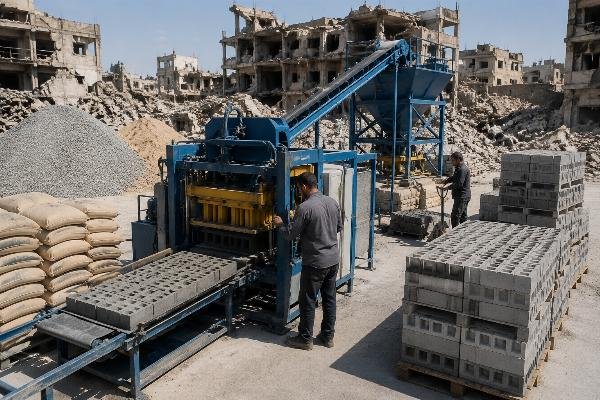
I recall standing on a dusty construction site in Riyadh, watching a brand-new QT4-15 line sit idle for two hours every afternoon. The issue was not the block machine itself, which was capable of producing thousands of units daily, but the cement feeding system. The contractor had selected a supplier based on the lowest bid, opting for a standard thirty-ton silo with a basic gravity discharge mechanism. However, the local humidity caused the cement to compact, and the undersized screw conveyor could not keep up with the mixer’s demand during peak shifts. The result was a constant stop-start rhythm that degraded the quality of the blocks and exhausted the operators. This experience highlighted a fundamental truth in industrial equipment procurement: the silo is not just a storage tank; it is the heart of the feeding logic. [NEED_CITE: impact of material flow consistency on concrete block density]
Understanding this dynamic requires moving beyond simple price comparisons and examining the technical integration of the entire production line.
Why Do Most Housing Projects Fail with Cheap Cement Silos?
Hidden downtime costs often exceed the initial savings from purchasing low-cost equipment.
Many developers assume that the primary risk in buying a cement silo wholesale supplier package is structural failure. In reality, the greater risk is operational inefficiency caused by poor capacity matching. When a silo is too small or its discharge mechanism is unreliable, the block machine operator spends significant time waiting for materials rather than producing blocks. This reduces the effective daily output well below the machine’s rated capacity.
Consider the case of a housing project in Nigeria where the contractor chose a budget-friendly silo without verifying the screw conveyor’s power rating. During the humid season, the cement absorbed moisture and formed bridges inside the cone. The weak motor struggled to break these clumps, leading to frequent clogging. Maintenance teams had to manually clear the outlet multiple times a day, halting production entirely. In contrast, a properly specified system would have included vibration motors and a more robust auger design to handle such conditions. [NEED_CITE: common causes of cement flow obstruction in tropical climates]
| Feature | Budget-Oriented Silo | Optimized Production Silo |
|---|---|---|
| Discharge Mechanism | Basic gravity or low-power auger | High-torque screw conveyor with vibration assist |
| Material Handling | Prone to bridging in humidity | Designed for consistent flow in varied climates |
| Maintenance Frequency | High due to manual clearing | Low with automated cleaning features |
| Impact on Uptime | Frequent unplanned stops | Continuous operation aligned with mixer speed |
The table above illustrates how seemingly minor specifications dictate overall reliability. A cement silo wholesale supplier who focuses only on steel weight and volume ignores these functional nuances. For large-scale housing projects, where deadlines are tight and labor costs are rising, the ability to maintain continuous production is far more valuable than a slightly lower upfront equipment cost.
How to Calculate the Right Silo Capacity for Your QT4-15 Line?
Balance storage volume with daily consumption and refill logistics rather than maximizing size.
A common misconception is that bigger is always better. While a larger silo reduces the frequency of refills, it also increases structural costs, foundation requirements, and height restrictions. The optimal capacity is determined by calculating the daily cement consumption based on the block output volume and matching it with the local supply chain’s delivery schedule.
To determine the right size, start by estimating the daily production target. A QT4-15 machine can produce a significant number of blocks per hour, depending on the mold type and operator skill. Multiply this by the cement ratio per block to find the daily tonnage requirement. Then, consider the refill frequency. If cement trucks can deliver daily, a smaller silo may suffice. If deliveries are weekly, a larger capacity is necessary to buffer against supply delays. [NEED_CITE: standard cement consumption rates for concrete block manufacturing]
However, storage capacity is only half the equation. The discharge rate must match the mixer’s feeding speed. If the silo holds fifty tons but can only release one ton per hour, while the mixer consumes two tons per hour, the system will fail during peak production. Therefore, when evaluating a cement silo wholesale supplier, ask for detailed performance data on the discharge mechanism, not just the tank volume.
In a recent project in the UAE, a precast plant upgraded from a thirty-ton to a fifty-ton silo. The key improvement was not just the extra storage, but the integration of level sensors and a faster discharge valve. This allowed them to automate the refilling process and reduce manual monitoring labor significantly. The investment paid off through improved operational efficiency rather than just increased storage.
What Key Features Define a Reliable Wholesale Cement Silo Supplier?
Look for integrated discharge systems, climate-resistant materials, and after-sales support.
Selecting the right partner involves more than checking certifications. It requires assessing their ability to provide a solution that fits your specific environmental and operational context. A reliable cement silo wholesale supplier will offer equipment designed to withstand local weather conditions, such as high humidity, extreme heat, or heavy rain.
Steel thickness and anti-corrosion treatment are critical. In coastal areas or regions with high humidity, standard paint jobs may not suffice. Galvanization or specialized epoxy coatings can extend the lifespan of the silo and prevent contamination of the cement with rust particles. Additionally, the structural design should account for wind loads and seismic activity if applicable. [NEED_CITE: international standards for bulk storage tank structural integrity]
Another vital feature is the integration of automation. Modern silos come with level indicators that alert operators when stocks are low, preventing unexpected run-outs. Some advanced models even integrate with the block machine’s control system, automatically adjusting the discharge rate to match the mixing cycle. This level of synchronization minimizes waste and ensures consistent block quality.
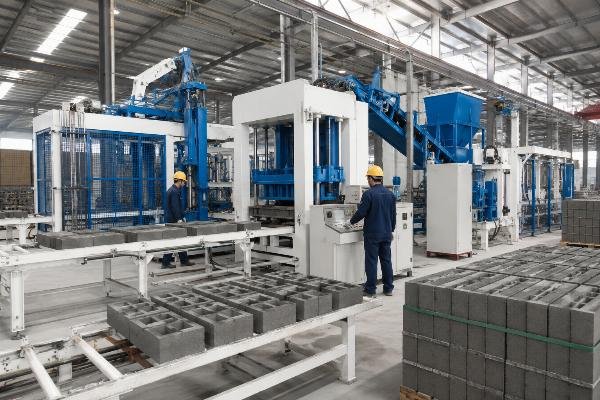
Shiyue Machinery approaches this by offering turnkey packages where the cement silo is pre-matched with the QT4-15 machine. This ensures that the discharge rate, capacity, and control systems are optimized for each other, eliminating the guesswork for the buyer. Instead of sourcing components separately and risking incompatibility, customers receive a cohesive system designed for immediate productivity.
Case Study: Optimizing Production Flow in Middle East Housing Projects
Real-world examples demonstrate how capacity matching improves ROI.
The theoretical benefits of proper silo selection become clear when examining actual project outcomes. In Saudi Arabia, a developer initially faced chronic delays due to an undersized feeding system. By switching to a correctly sized silo with a high-efficiency screw conveyor, they eliminated the daily two-hour downtime. This change alone increased their daily output by a substantial margin, allowing them to meet tight housing deadlines without adding extra shifts or machinery.
Similarly, in another Middle Eastern market, a contractor struggled with cement wastage due to inconsistent feeding. The old silo had poor sealing, allowing moisture to enter and spoil the material. Upgrading to a model with better seals and a pressurized discharge system reduced waste noticeably. The cost of the new equipment was recovered quickly through savings on raw materials and improved product quality.
These cases underscore the importance of viewing the silo as part of a holistic production system. A cement silo wholesale supplier who understands this perspective will guide buyers toward solutions that enhance overall efficiency, not just sell standalone tanks. The focus shifts from unit price to total cost of ownership, including maintenance, downtime, and material waste.
Conclusion
Matching silo capacity and discharge rate to your block machine’s cycle time is essential for profitable operations.
Selecting a cement silo wholesale supplier requires a deep understanding of how storage and feeding dynamics impact production flow. By prioritizing technical compatibility over initial price, developers can avoid costly downtime and ensure consistent output. The right equipment integrates seamlessly with the QT4-15 line, supporting long-term profitability and project success.
Leave a Reply