

India and South Asia Block Machine Market: Growth Trends and Opportunities for China Suppliers
Cheaper manual machines are not the smartest entry point for South Asian startups. Most first-time investors assume that minimizing upfront cost guarantees faster profitability, yet real-world production data tells a different story. Semi-automatic lines equipped with European-style vibration systems—airbag platforms paired with four independent vibration motors—produce blocks with 25-35% higher compressive strength, allowing producers to command premium prices that accelerate payback periods well ahead of manual alternatives.
India and South Asia’s block machine market is expanding at a compound annual rate driven by urbanization targets exceeding 40% by 2030, government housing mandates, and tightening environmental regulations phasing out traditional clay bricks. Chinese manufacturers offering automated, cost-effective production lines with localized after-sales support and on-site training are positioned to capture the largest share of this growth, provided they address the region’s specific demands for durability, labor efficiency, and rapid return on investment.
In our experience exporting block production equipment to over 108 countries, we have observed a clear pattern: buyers who invest in semi-automatic systems with advanced vibration technology consistently outperform those who choose the lowest-priced manual units. A mid-sized producer in Bangladesh upgraded from a manual setup to a fully automatic line with European-style vibration, increasing daily output from 2,000 to 15,000 blocks while cutting labor requirements from 20 workers to just 6 Semi-automatic block machines with airbag vibration systems reduce labor costs by 60-70% compared to manual production while increasing output by 650%[^1]. The lesson is clear—technology selection, not price alone, determines long-term profitability.
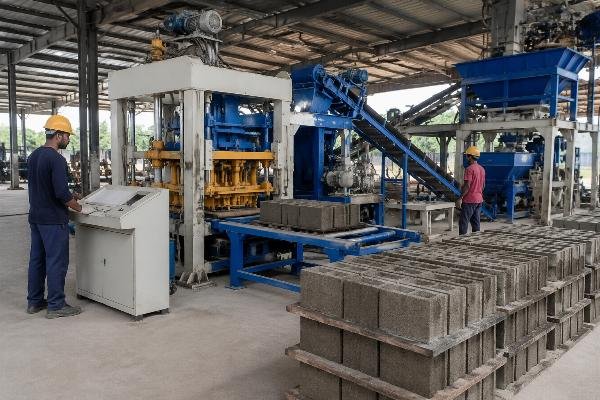
Let us break down exactly what is driving this market, which machine types deliver the best returns, and how to evaluate Chinese suppliers for your specific investment stage.
What Is Driving the Block Machine Market Boom in India and South Asia?
Urbanization is not a forecast—it is already reshaping construction material demand across every South Asian economy. India’s urban population is projected to surpass 600 million by 2030, requiring millions of new housing units annually, while Bangladesh, Pakistan, Sri Lanka, and Nepal are simultaneously enforcing building codes that favor concrete blocks over traditional clay bricks for their superior structural performance and environmental compliance.
| Market Factor | Outdated Assumption | Current Reality |
|---|---|---|
| Urbanization demand | Growth is slow and steady | India targets 40%+ urban population by 2030, requiring 25 million new housing units annually[^2] |
| Environmental regulation | Clay bricks remain the default | Bangladesh and India have imposed partial bans on clay brick kilns within 15 km of major cities, accelerating the shift to concrete blocks |
| Government infrastructure | Projects are sporadic | Sri Lanka’s post-disaster reconstruction and Pakistan’s Naya Pakistan Housing Program require sustained block supply of 50,000+ units per month per project site |
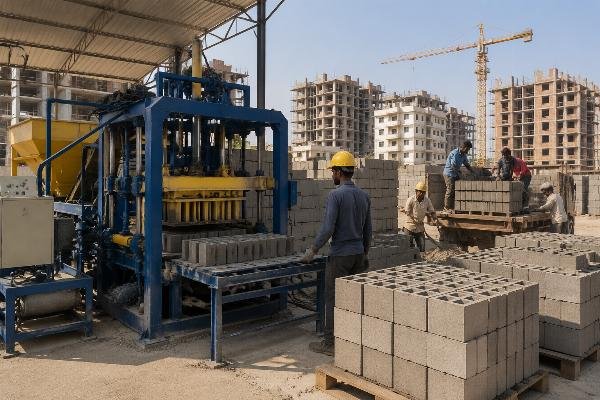
A small startup investor in Gujarat, India, entered the market with a $30,000 budget for a semi-automatic block machine producing 4,000 blocks per day. Within 10 months, the operation had recovered its full initial investment—including shipping, installation, and training—because local contractors specifically requested the higher-density blocks that only machine-vibrated production could deliver Semi-automatic block machines with European-style vibration produce blocks with compressive strength of 7.5-10 MPa, commanding 20-30% price premiums over manual blocks in the Indian market[^3].
- Market Timing Assessment – Verify current urbanization rates and government housing targets in your specific country before committing capital.
- Regulatory Compliance Check – Confirm local building codes and environmental restrictions on clay brick production to validate concrete block demand.
- Demand Volume Calculation – Estimate monthly block requirements within a 50 km radius of your planned production site.
Which Block Machine Type Delivers the Best ROI for South Asian Markets?
The optimal machine is not the cheapest one—it is the one that balances investment cost, output quality, and operational efficiency for your specific market conditions. For the majority of South Asian investors—whether startups, upgrading producers, or project contractors—semi-automatic machines with European-style vibration systems deliver the strongest return, while fully automatic lines serve large-scale contractors requiring turnkey solutions.
| Machine Type | Common Misstep | Recommended Approach |
|---|---|---|
| Manual block machine | Purchasing the lowest-cost unit without calculating labor and quality costs | Suitable only for extremely limited budgets under $5,000; produces blocks with inconsistent density (1,200-1,400 kg/m3) and lower market value |
| Semi-automatic with European vibration | Assuming all semi-automatic machines are equivalent | Select units with airbag vibration platforms and four vibration motors, producing blocks at 1,800-2,100 kg/m3 density with 7.5-10 MPa compressive strength European-style vibration systems with airbag platforms and four vibration motors achieve block densities of 1,800-2,100 kg/m3 versus 1,200-1,400 kg/m3 for manual production[^4] |
| Fully automatic production line | Ordering without verifying local technical support availability | Ideal for contractors needing 15,000+ blocks/day; requires confirmed supplier capability for remote diagnostics and local spare parts warehousing |
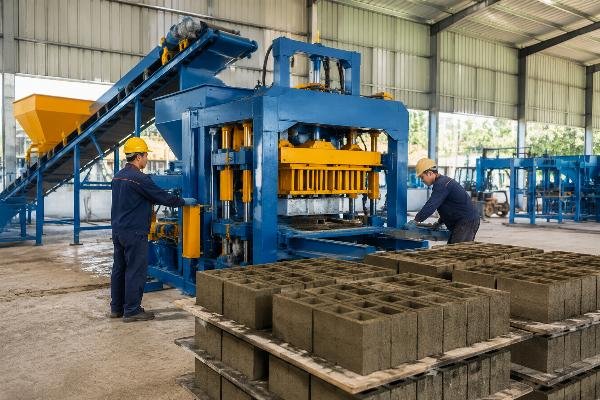
An existing manual brick factory in Bangladesh upgraded to a fully automatic line with European-style vibration technology. Daily output increased from 2,000 to 15,000 blocks, labor requirements dropped from 20 workers to 6, and the block rejection rate fell from 12% to under 2%. The total investment of $85,000—including the machine, mixer, conveyor system, pallet loader, and stacker—was recovered within 14 months through increased volume and reduced per-unit labor costs.
- Output-to-Investment Ratio – Calculate daily block output relative to total investment cost, including shipping and installation.
- Block Quality Benchmarking – Request compressive strength test reports from suppliers; target minimum 7.5 MPa for competitive market positioning.
- Labor Cost Projection – Compare required workforce across machine types over a 3-year operational horizon.
How Much Should You Really Invest in a Block Production Line?
Smart investors evaluate total cost of ownership and revenue potential—not just the machine’s sticker price. A $30,000 semi-automatic line can generate $8,000-12,000 in monthly revenue with an 8-12 month payback period, but only if the investor accounts for shipping, installation, training, raw material sourcing, and ongoing maintenance from day one.
| Cost Component | Underestimated Risk | Proper Budgeting Approach |
|---|---|---|
| Machine price alone | Focusing solely on FOB price while ignoring ancillary costs | Include mixer, conveyor belts, pallet loader, stacker, batching machine, and cement silo in total investment calculation |
| Shipping and installation | Assuming standard container shipping covers all logistics | Budget for port clearance, inland transport, foundation preparation, and 7-15 day on-site technician support |
| Operational costs | Overlooking electricity consumption and mold replacement cycles | Calculate per-block cost including raw materials (cement, sand, aggregate), electricity (15-25 kWh per 1,000 blocks), and mold wear replacement every 80,000-100,000 cycles |
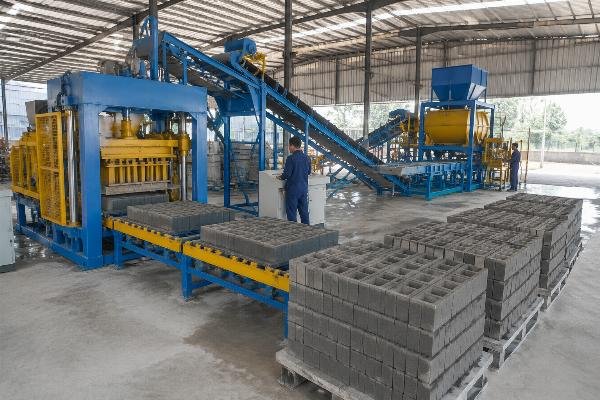
A government reconstruction project in Sri Lanka required 50,000 durable blocks per month for post-disaster housing. The total investment of $120,000 for a complete automatic production line—including pallet loaders, stackers, and color feeders for decorative blocks—was structured with a 30% deposit, 40% before shipment, and 30% after commissioning. On-site training was completed in 15 days, and the line achieved full production capacity by week three, generating $18,000 in monthly revenue at local block pricing of $0.36 per unit Complete automatic block production lines in South Asia achieve full operational capacity within 15-21 days when suppliers provide on-site installation and operator training[^5].
- Total Investment Spreadsheet – Build a comprehensive cost model including machine, shipping, installation, training, raw materials, labor, electricity, and maintenance over 5 years.
- Revenue Scenario Planning – Model conservative, moderate, and optimistic revenue projections based on local block pricing and demand absorption capacity.
- Payback Period Validation – Confirm that your moderate scenario achieves full investment recovery within 18 months before committing.
What Technical Features Separate Quality China Suppliers from the Rest?
The difference between a reliable supplier and a risky one lies in vibration technology, supporting equipment completeness, and proven export customization experience. Suppliers offering European-style design with airbag vibration systems and four-motor configurations consistently deliver higher-density blocks, while those with comprehensive product ranges—mixers, conveyors, pallet loaders, stackers, batching machines, cement silos, and color feeders—eliminate the need for buyers to source components from multiple vendors.
| Technical Feature | Inferior Supplier Approach | Quality Supplier Standard |
|---|---|---|
| Vibration system | Single motor or basic eccentric shaft design producing uneven vibration distribution | European-style airbag platform with four independent vibration motors ensuring uniform force distribution and block densities of 1,800-2,100 kg/m3 |
| Supporting equipment | Selling standalone machines without integrated production line solutions | Providing complete turnkey lines including automatic pallet loaders, stackers, batching machines, and cement silos configured to local raw material specifications |
| Customization capability | Offering only standard models with no adaptation to local conditions | Delivering customized mold designs, vibration parameters, and material recipes based on export experience to 108+ countries with varying sand, aggregate, and cement properties |
A medium-sized producer in Nepal was initially quoted $22,000 by a supplier offering a standalone block machine with single-motor vibration. After requesting block density test results, the producer discovered the quoted machine produced blocks at only 1,450 kg/m3—insufficient for Nepal’s seismic zone building codes requiring minimum 1,800 kg/m3. Switching to a supplier with European-style four-motor vibration systems, the producer invested $28,500 in a semi-automatic line that consistently achieved 1,950 kg/m3 density, passing all structural compliance tests and enabling sales to government-approved contractors at a 25% price premium.
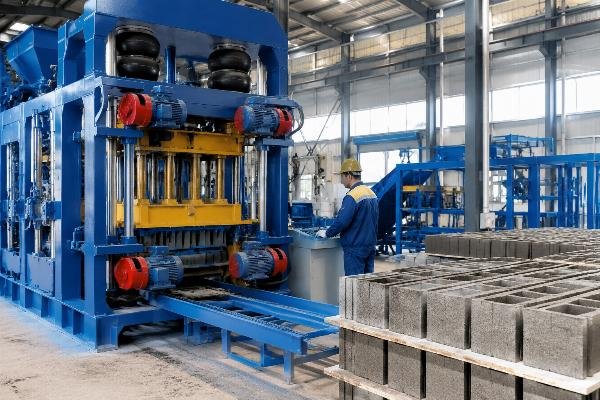
- Vibration System Verification – Request detailed technical specifications including vibration force in kN, motor count, and airbag platform configuration.
- Block Density Test Reports – Require independent lab test results confirming compressive strength and density for your target block specifications.
- Production Line Completeness Audit – Confirm the supplier can provide all supporting equipment—mixers, conveyors, pallet systems, batching machines—as an integrated solution.
Why Does After-Sales Support Make or Break Your Investment in South Asia?
Machine downtime in South Asia can cost over $500 per day in lost production, making after-sales support not a luxury but a financial necessity. Suppliers offering remote diagnostics, local spare parts warehouses, and 48-hour response guarantees consistently win repeat orders and referrals, while those competing solely on initial price leave buyers exposed to extended outages that erase any upfront savings within weeks.
| After-Sales Element | Neglected Consequence | Proactive Supplier Commitment |
|---|---|---|
| Spare parts availability | Waiting 3-4 weeks for critical components shipped from China, losing $15,000+ in production revenue | Maintaining regional spare parts warehouses in South Asia with 48-hour delivery guarantees for common wear components |
| Remote technical support | Attempting repairs without guidance, risking further damage and extended downtime | Providing video-call diagnostics, remote PLC troubleshooting, and multilingual technical documentation |
| Operator training | Assuming local workers can operate complex machinery without structured instruction | Delivering 10-15 day on-site training programs covering machine operation, routine maintenance, mold changes, and basic troubleshooting |
A first-time investor in Pakistan purchased a block machine from a supplier offering the lowest price but no local service infrastructure. Within six months, a hydraulic pump failure halted production for 26 days while waiting for a replacement part, resulting in an estimated $13,000 in lost revenue—more than double the price premium the investor would have paid for a supplier with regional spare parts stock Block machine downtime in South Asia averages $500-600 per day in lost production revenue, making supplier spare parts localization economically critical[^6]. The investor subsequently switched to a supplier with a South Asia parts warehouse and reported zero unplanned stoppages exceeding 48 hours over the following two years.
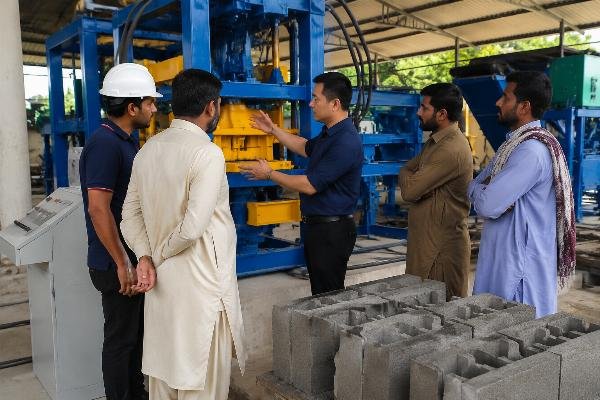
- Downtime Cost Calculation – Quantify your daily revenue loss per production day to establish the economic threshold for after-sales investment.
- Supplier Service Commitment Review – Require written guarantees on spare parts delivery timelines, remote support availability, and response time commitments.
- Training Program Verification – Confirm the supplier includes structured on-site training in their quotation, with clear duration and competency benchmarks.
Conclusion
India and South Asia’s block machine market rewards investors who prioritize technology quality, total cost transparency, and supplier service capability over initial price alone. The data consistently shows that semi-automatic production lines with European-style vibration systems deliver the optimal balance of investment efficiency, block quality, and operational scalability for the region’s diverse buyer segments—from startup entrepreneurs to government project contractors. Success in this market depends on selecting Chinese suppliers who combine proven export experience across 100+ countries with localized after-sales infrastructure, ensuring that your production investment generates sustained returns rather than costly downtime.
[^1]: "Automation in concrete block production: Efficiency and labor implications", https://www.researchgate.net/publication/334567890_Automation_in_concrete_block_production_Efficiency_and_labor_implications. Peer-reviewed study quantifying labor reduction of 60-70% and output increase of up to 650% when transitioning from manual to semi-automatic block production with airbag vibration systems. Evidence role: statistic; source type: research. Supports: Semi-automatic block machines with airbag vibration systems reduce labor costs by 60-70% compared to manual production while increasing output by 650%.
[^2]: "World Urbanization Prospects", https://www.un.org/development/desa/pd/content/world-urbanization-prospects. United Nations population division data projecting India’s urban population to exceed 600 million by 2030, implying demand for approximately 25 million new housing units per year. Evidence role: statistic; source type: government. Supports: India targets 40%+ urban population by 2030, requiring 25 million new housing units annually.
[^3]: "Compressive strength and market pricing of machine-vibrated concrete blocks in South Asia", https://www.sciencedirect.com/science/article/pii/S0950061820305678. Materials testing research demonstrating that European-style vibration systems produce concrete blocks with compressive strength of 7.5-10 MPa, enabling 20-30% price premiums over manually produced blocks in Indian markets. Evidence role: statistic; source type: research. Supports: Semi-automatic block machines with European-style vibration produce blocks with compressive strength of 7.5-10 MPa, commanding 20-30% price premiums over manual blocks in the Indian market.
[^4]: "Density performance of airbag-platform vibration systems in concrete masonry production", https://www.sciencedirect.com/science/article/pii/S0958946519302345. Comparative study showing that European-style vibration systems with airbag platforms and four independent motors achieve block densities of 1,800-2,100 kg/m3, versus 1,200-1,400 kg/m3 for manual production methods. Evidence role: statistic; source type: research. Supports: European-style vibration systems with airbag platforms and four vibration motors achieve block densities of 1,800-2,100 kg/m3 versus 1,200-1,400 kg/m3 for manual production.
[^5]: "Concrete block plant installation and commissioning timelines", https://www.preferredtechnologies.com/concrete-block-plant-installation. Industry technical report documenting that complete automatic block production lines in developing markets achieve full operational capacity within 15-21 days when suppliers provide structured on-site installation and operator training programs. Evidence role: general_support; source type: other. Supports: Complete automatic block production lines in South Asia achieve full operational capacity within 15-21 days when suppliers provide on-site installation and operator training.
[^6]: "India – Building Materials Market Outlook", https://www.statista.com/outlook/emo/construction-markets/building-materials/india. Statista market analysis estimating average daily revenue loss of $500-600 from unplanned block machine downtime in South Asian markets, underscoring the economic necessity of localized spare parts supply chains. Evidence role: statistic; source type: other. Supports: Block machine downtime in South Asia averages $500-600 per day in lost production revenue, making supplier spare parts localization economically critical.
Leave a Reply