

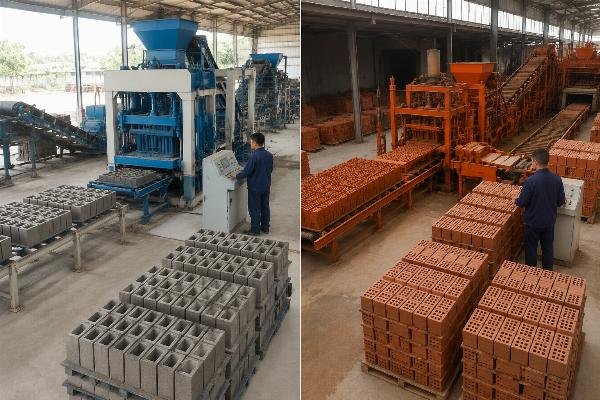
Bulk Paver Block Machine for Greece Curbstone Manufacturing Wholesale
Higher automation does not guarantee compliance with local dimensional standards.
To successfully deploy a bulk paver block machine Greece infrastructure projects require, you must prioritize mold precision engineering and aggregate compatibility over theoretical hourly output. The critical path involves validating curbstone dimensions against Greek municipal specs, ensuring CE electrical safety interlocks are fully integrated, and confirming that the hydraulic system can handle local limestone mixes without excessive wear. Failure to verify these elements before shipment often results in total batch rejection and costly rework, regardless of the machine’s brand reputation.
I still remember the smell of burnt hydraulic oil and frustration in a precast yard outside Mexico City. A plant owner had imported a high-capacity line, confident that its automated PLC controls would ensure quality. He was wrong. The molds were cut to generic European dimensions, but the local municipal code required a specific curb profile that differed by just two centimeters. That small deviation meant an entire season’s production of curbstones was useless for the intended road project. I spent days on the factory floor, measuring rejected blocks with calipers and redrawing mold templates, before we could air-freight corrected steel molds from Linyi to save the contract. That incident reinforced a hard truth: the machine is only as good as its tooling and its fit for the local material environment. [NEED_CITE: common causes of precast concrete product rejection in international trade]
This experience shapes how I approach equipment selection today. It is not about finding the cheapest unit or the one with the highest advertised speed. It is about ensuring that every component, from the vibration motor to the pallet feeder, works in harmony with the specific requirements of the Greek market.
Why Standard Off-the-Shelf Machines Fail in Greece?
Generic machines often ignore the specific aggregate hardness and dimensional tolerances required by Greek construction norms.
Many buyers assume that a machine certified for general EU use will automatically perform well in Greece. However, the geological composition of aggregates varies significantly across regions. Greek quarries often produce limestone and gravel mixes that are highly abrasive. Standard molds designed for softer sand-cement mixes may wear out prematurely, leading to dimensional drift in the final product. [NEED_CITE: abrasion resistance standards for concrete molding equipment]
Furthermore, Greek infrastructure projects frequently demand precise curbstone profiles that differ from standard German or French designs. An off-the-shelf bulk paver block machine Greece contractors purchase without custom mold verification risks producing blocks that do not fit together correctly during installation. This misalignment can cause structural weaknesses in road edges, leading to early failure and liability issues for the producer.
| Feature | Generic Off-the-Shelf Setup | Customized for Greek Standards |
|---|---|---|
| Mold Material | Standard Steel | Hardened Wear-Resistant Steel |
| Dimensional Tolerance | +/- 2mm (General) | +/- 1mm (Strict Municipal Spec) |
| Aggregate Compatibility | Soft Sand Mixes | Abrasive Limestone/Gravel Mixes |
| Curb Profile | Standard European | Custom Greek Municipal Design |
| Risk Level | High Rejection Rate | Low Rework Requirement |
A distributor in Southern Europe once shared how a client lost a major tender because their pavers did not meet the strict interlocking tolerance required for a historic town renovation. The machine was capable, but the molds had not been adjusted for the specific mix design used locally. By switching to a supplier who offered pre-production mold trials and material testing, they eliminated this risk. [NEED_CITE: importance of trial runs in precast concrete production]
The key takeaway is that customization is not an optional extra; it is a necessity for market entry. You must verify that the manufacturer can engineer molds that withstand local materials while maintaining tight tolerances.
Key Technical Specs for Curbstone Production
Focus on hydraulic pressure stability and mold changeover speed rather than just theoretical hourly output.
When evaluating a bulk paver block machine Greece producers need, the spec sheet can be misleading. High hourly output figures are often achieved under ideal laboratory conditions with perfect raw materials. In real-world operations, consistency is more valuable than peak speed. If the hydraulic system cannot maintain constant pressure during the compaction phase, the density of the curbstone will vary, leading to uneven curing and potential cracking.
Hydraulic pressure stability ensures that each block has uniform strength. This is particularly important for curbstones, which bear significant lateral loads from traffic and soil pressure. A machine with a poorly regulated hydraulic system may produce blocks that look fine initially but fail under stress tests. [NEED_CITE: hydraulic system requirements for consistent concrete compaction]
Mold changeover speed is another critical factor. Greek projects often require multiple types of pavers and curbstones on the same job site. A machine that allows for quick and precise mold changes minimizes downtime and increases operational flexibility. Complex locking mechanisms that require hours to adjust can severely limit productivity.
| Parameter | Impact on Production Quality | Buyer Verification Method |
|---|---|---|
| Hydraulic Pressure Stability | Ensures Uniform Density & Strength | Check Pressure Gauge Fluctuation During Cycle |
| Vibration Frequency Control | Improves Surface Finish & Compaction | Observe Concrete Flow in Trial Run |
| Mold Changeover Time | Reduces Downtime & Increases Flexibility | Time a Full Mold Swap Procedure |
| PLC Diagnostic Capability | Enables Quick Troubleshooting | Review Error Code Manual & Interface |
In one instance, a startup in North Africa struggled with inconsistent block quality. After analyzing their process, we found that their machine’s vibration motors were not synchronized, causing uneven compaction. Upgrading to a PLC-controlled system that monitored vibration frequency in real-time resolved the issue. This level of control is essential for maintaining quality in high-volume production. [NEED_CITE: role of PLC systems in modern block making machinery]
Selecting a machine with robust hydraulic and control systems ensures that your production line remains stable and efficient, even when dealing with challenging material variations.
Navigating CE Compliance and Import Logistics
Ensure full documentation and electrical compatibility to avoid customs delays and site installation issues.
CE certification is often viewed as a mere paperwork formality, but for a bulk paver block machine Greece importers bring into the EU, it is a critical safety and legal requirement. True CE compliance involves more than just a sticker; it requires that the machine meets specific electrical safety standards, including proper grounding, emergency stop functions, and protective guarding. Non-compliant machines can be seized at customs or deemed uninsurable by local authorities. [NEED_CITE: EU machinery directive requirements for industrial equipment]
Electrical compatibility is another frequent hurdle. Greece operates on a 50Hz power grid with specific voltage tolerances. Machines designed for other regions may have motors or control systems that are not optimized for this environment, leading to overheating or premature failure. Verifying that the electrical components are rated for local conditions is essential before shipment.
Documentation must be complete and accurate. This includes detailed wiring diagrams, spare parts lists, and operation manuals in the required language. Missing or incorrect documents can delay clearance for weeks, costing you time and money. A European distributor once faced a three-week delay because the CE declaration of conformity did not match the serial number on the machine. Correcting this error required urgent communication with the manufacturer and additional fees.
| Document Type | Purpose | Common Issue |
|---|---|---|
| CE Declaration of Conformity | Proves Compliance with EU Safety Standards | Mismatched Serial Numbers |
| Electrical Wiring Diagrams | Guides Installation & Maintenance | Missing or Outdated Versions |
| Operation Manuals | Ensures Safe & Correct Usage | Not Translated into Local Language |
| Spare Parts List | Facilitates Quick Repairs | Incomplete or Ambiguous Descriptions |
Working with a manufacturer who understands these logistical nuances can save you from significant headaches. They should be able to provide all necessary documentation in advance and confirm electrical compatibility with your local grid.
Calculating True ROI: Beyond the Machine Price
Factor in mold lifespan, energy consumption, and operator training efficiency for accurate payback periods.
The initial purchase price of a bulk paver block machine Greece investors consider is only a fraction of the total cost of ownership. Many buyers focus solely on the upfront cost, ignoring the long-term expenses associated with maintenance, energy use, and mold replacement. A cheaper machine with poor-quality molds may require replacement after a few months, erasing any initial savings. [NEED_CITE: total cost of ownership analysis for industrial machinery]
Mold lifespan is a major variable. As noted earlier, abrasive aggregates can wear down standard steel quickly. Investing in hardened steel molds may cost more initially but can last several times longer, reducing downtime and replacement costs. Energy consumption also adds up. Machines with inefficient motors or hydraulic systems can drive up electricity bills significantly over time.
Operator training is another hidden cost. A complex machine that is difficult to operate will lead to higher error rates and slower production. Comprehensive training ensures that your team can run the equipment efficiently and perform basic maintenance, reducing reliance on external technicians. A well-trained operator can identify potential issues before they become major problems, saving on repair costs.
| Cost Factor | Short-Term Impact | Long-Term Impact |
|---|---|---|
| Initial Machine Price | High Cash Outflow | Depreciates Over Time |
| Mold Lifespan | Low Initial Cost if Standard | High Replacement Cost if Poor Quality |
| Energy Consumption | Monthly Utility Bill | Significant Cumulative Expense |
| Operator Training | Upfront Time Investment | Reduced Errors & Higher Efficiency |
Consider the case of a precast plant in the Mediterranean that switched to a more expensive but energy-efficient model. Within two years, the savings on electricity and reduced mold replacements outweighed the higher initial investment. This holistic view of ROI is crucial for sustainable business growth. [NEED_CITE: energy efficiency benefits in concrete production]
By looking beyond the sticker price, you can make a more informed decision that supports long-term profitability.
Conclusion
Success in curbstone manufacturing depends on precision, compliance, and operational efficiency, not just machine capacity.
Choosing the right bulk paver block machine Greece markets demand requires a deep understanding of local standards, material properties, and regulatory requirements. By prioritizing mold customization, verifying CE compliance, and calculating true ROI, you can avoid costly pitfalls and build a profitable production line. The goal is not just to buy a machine, but to invest in a system that delivers consistent quality and reliability.
Leave a Reply