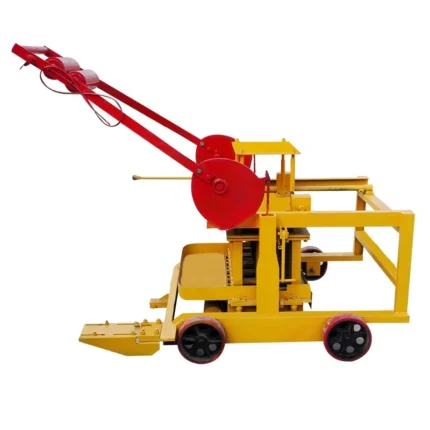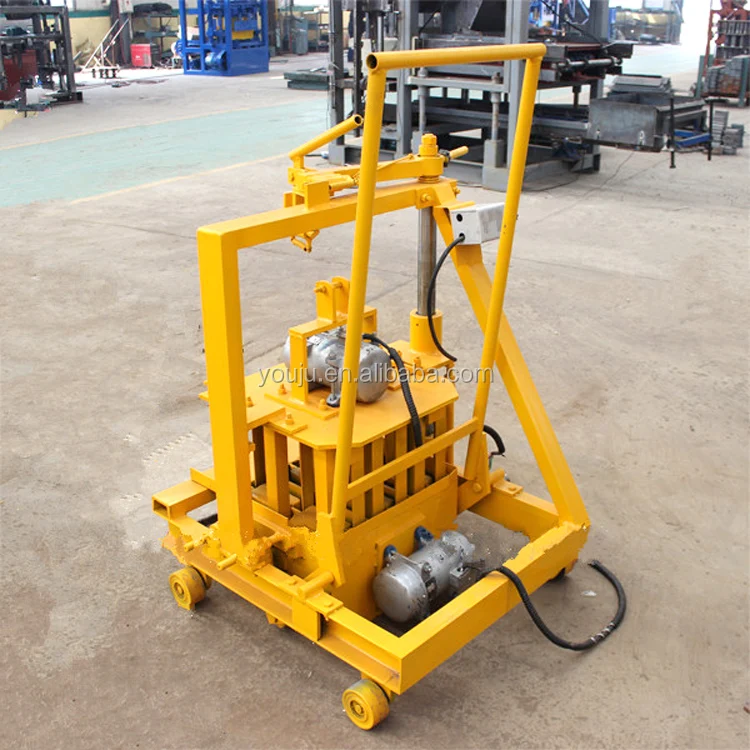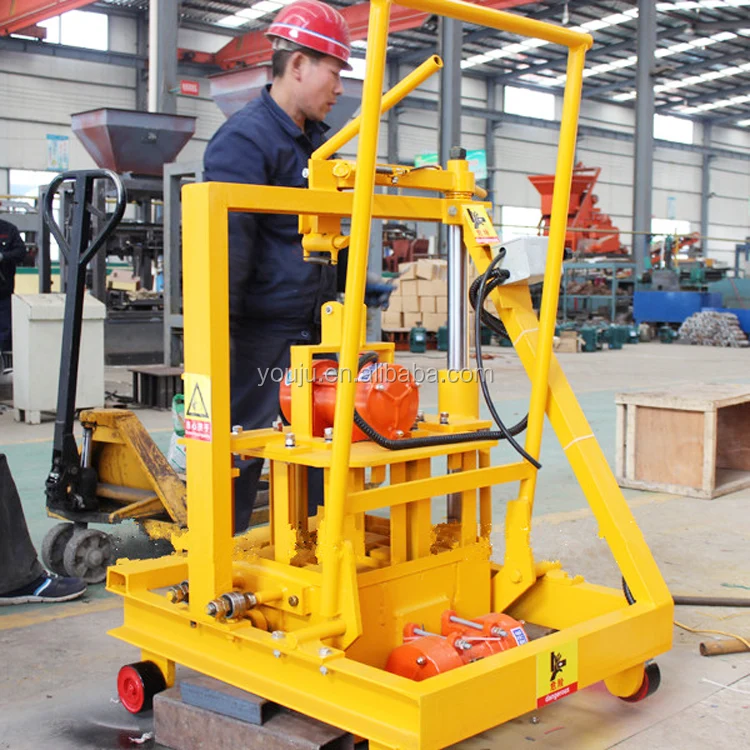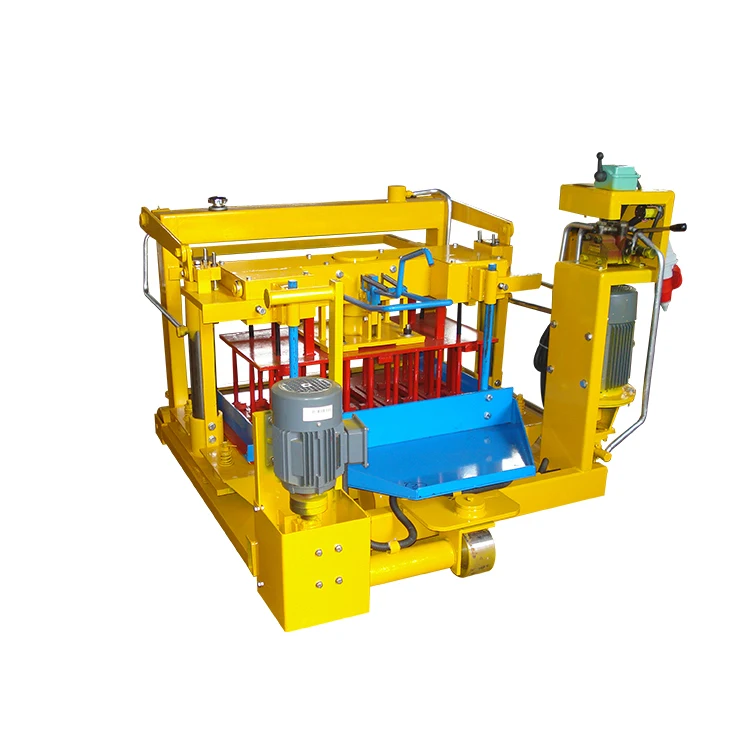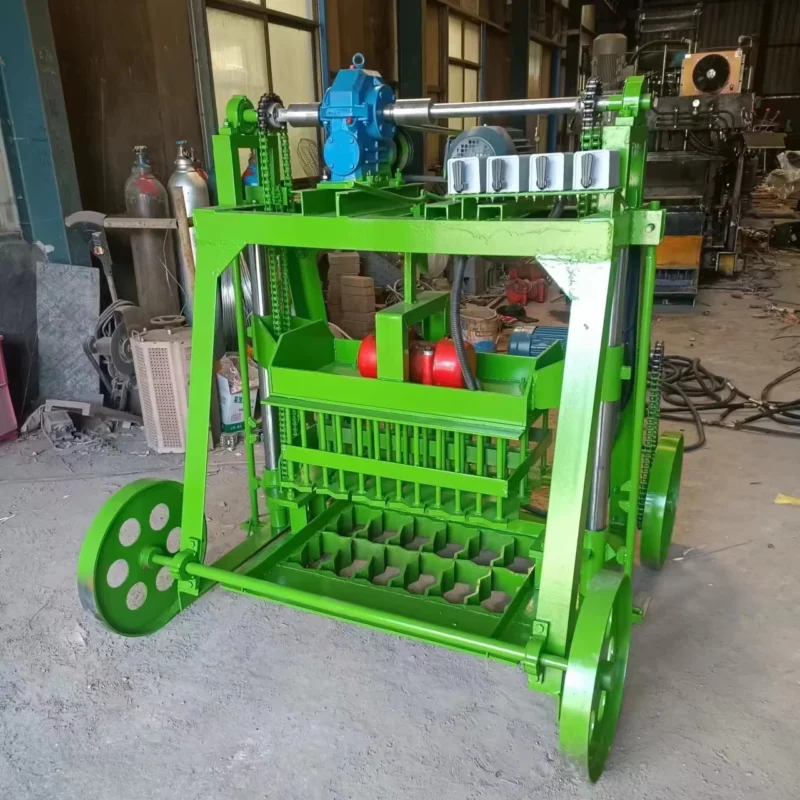
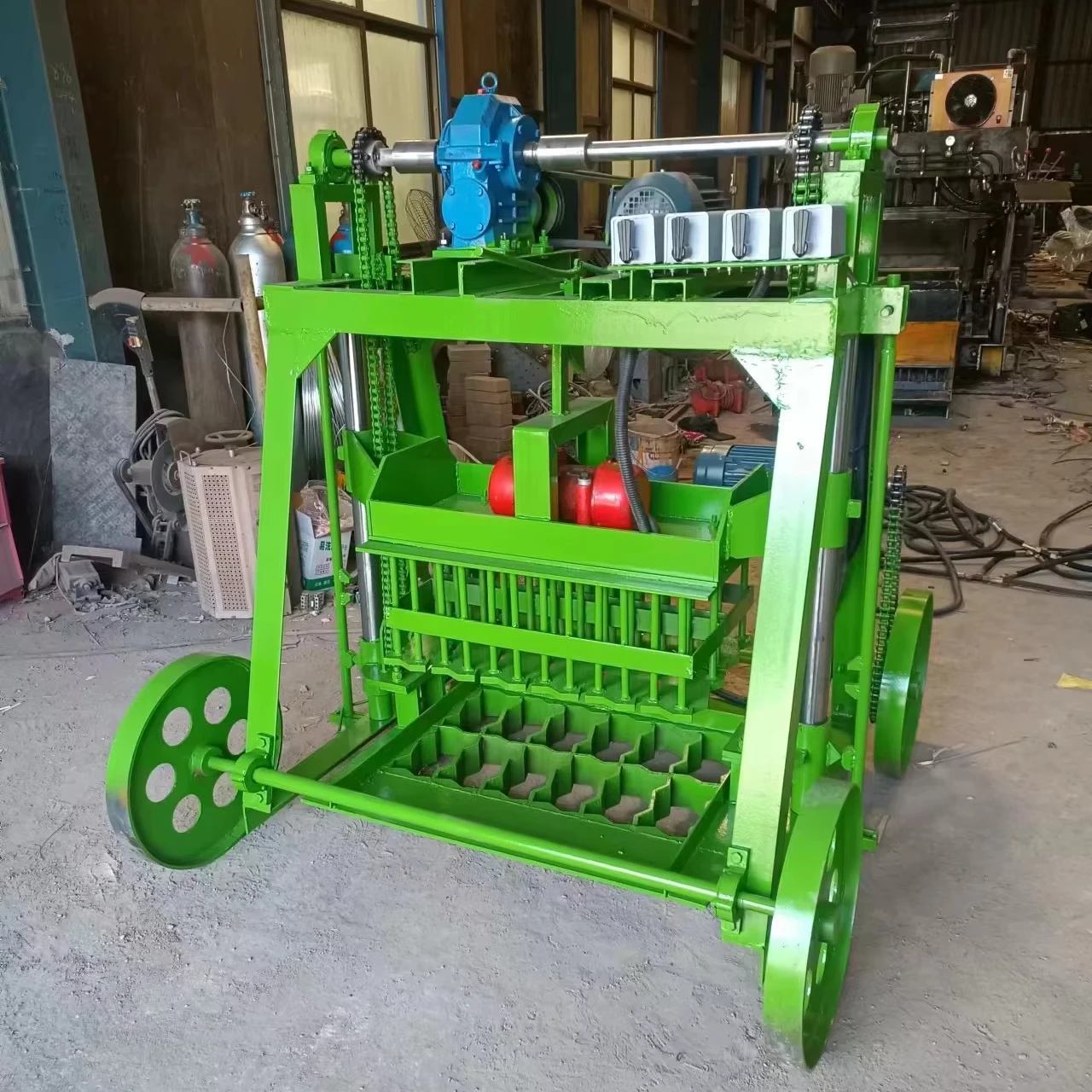
Description
Matched System Spec — The QMJ4-45 is configured as one coordinated unit of engine, mold, and vibration mechanism rather than assembled from mismatched components, so block density stays consistent from the first cycle to the last.
Technical Specifications
| Parameter | Value |
|---|---|
| Model | QMJ4-45 |
| Product Type | Mobile Egg-Laying Block Making Machine |
| Molding Capacity | 4 pcs/mold (basis not stated in source — confirm block format) |
| Productivity | 2600-4000 pcs/day (basis not stated in source — confirm block format and shift length) |
| Molding Cycle | 45 S (basis not stated in source — confirm block format and material) |
| Vibration Frequency | 2400 r/m |
| Vibration Method | Mold vibration |
| Total Power | 6 KW |
| Power Source | Diesel/Petrol engine |
| Demold Method | Manual |
| Turning Method | Manual |
| Automation Level | Manual operation with engine drive |
| Pallet Requirement | Reduced consumption pallets |
Application Suitability
| Application | Material or Output |
|---|---|
| On-site hollow block production | Cement, sand, and crushed stone aggregate for 400×200×200mm, 400×150×200mm, and 400×120×200mm formats |
| Paving block manufacturing on project sites | Cement and fine aggregate mixes for interlocking and rectangular paver formats |
| Remote construction sites without grid power | Engine-driven operation on diesel or petrol fuel |
| Small-scale block plants with limited infrastructure | Manual handling with reduced pallet consumption on existing concrete floors |
What "2600 Blocks Per Day" Actually Means on Your Site
Daily output depends entirely on which block format you run and how your local aggregate behaves under vibration.
I have stood on project sites where the quoted daily capacity looked solid on paper, then watched the crew struggle to hit half that number because the cycle time was measured on a thin paving block while the buyer needed 200mm hollow blocks. The QMJ4-45 molding cycle of 45 seconds applies to specific formats, and switching to a thicker or denser block extends that cycle. [NEED_CITE: block cycle time variation by format and aggregate density] Add in the manual demold and turning steps, and your real hourly rate shifts further. The automatic mobile block machine with PLC control concept does not apply here since this model runs on engine power with manual operation, which keeps the machine simple but means your crew’s rhythm determines actual throughput.
How the Double Vibration Core Changes Block Density
Earlier versions of this class relied on a single vibration source, which left density uneven across the mold cavity. The QMJ4-45 uses a twice-vibration molding core that sends compaction force from two directions, producing blocks with more uniform wall thickness and consistent strength. When I first saw single-vibration egg-layers produce hollow blocks, the corners were often softer than the center. This upgraded vibration method at 2400 r/m addresses that gap, giving you blocks that hold up to handling and stacking without chipping at the edges.
Why Engine Drive Matters Beyond Remote Sites
Diesel or petrol engine power removes the need for a three-phase electrical connection, which opens up production at housing developments, road projects, and rural builds where grid power is unreliable or absent. The 6 KW total power rating is modest enough that fuel consumption stays manageable across a full shift. For contractors who move between sites, the automatic mobile block machine with PLC control is not the right conversation — this engine-driven unit arrives, starts, and produces without waiting for an electrician to wire a dedicated circuit. [NEED_CITE: on-site block production without fixed electrical infrastructure]
Reading the Specs That Actually Affect Your Output
The 4-piece mold capacity tells you how many blocks drop per cycle, but the block format determines whether those 4 pieces are 200mm hollow blocks or smaller solid units. Vibration frequency at 2400 r/m sits in a range that compacts standard cement-aggregate mixes without over-vibrating, which can cause segregation where heavier aggregate sinks and weakens the block face. The manual demold method means an operator physically releases each mold, keeping the mechanism simple and field-serviceable but requiring a trained rhythm to maintain the 45-second cycle consistently. Reduced pallet consumption means the machine lays blocks directly on the concrete floor, eliminating pallet costs but demanding a smooth, level curing surface.
The Cost of Skipping a Local Material Trial
I once spent four days on a site in West Africa because we ran standard mix ratios on sand with high clay content, and the blocks crumbled under hand pressure during curing. The vibration force was correct for clean river sand but wrong for what the contractor could actually source. When you skip the local aggregate trial, you risk the same outcome: a machine that performs perfectly at the factory but fails in your yard. [NEED_CITE: effect of clay content in sand on cement block compressive strength] The QMJ4-45 vibration frequency is fixed at 2400 r/m, so the mix design must adapt to the machine, not the other way around.
Why Procurement Starts With the Line, Not Just the Press
Block machinery is our single focus, which means the QMJ4-45 arrives with mold options matched to the formats your market actually buys, not a generic cavity that requires aftermarket modification. We configure the engine type to your fuel availability and ambient conditions. Capacity calculations state the assumed block format so there is no ambiguity about daily output. Mould drawings and format lists are provided before production begins. The operation manual covers engine service intervals alongside block production procedures. Installation guidance addresses the curing surface preparation that egg-laying machines require. [NEED_CITE: mobile block machine site preparation requirements]
Documentation & Verification
- Line layout showing curing area dimensions matched to the QMJ4-45 laying pattern
- Capacity calculation sheet stating block format and cycle time assumptions
- Mould drawing and format list for your target block dimensions
- Engine specification sheet with service interval schedule
- Factory test record on your specified mix before dispatch
- Operation and maintenance manual with engine and vibration system sections
Installation, Commissioning & Support
- Curing surface must be level concrete to support direct egg-laying without pallets
- Engine requires dedicated fuel storage and ventilation for indoor semi-enclosed operation
- Machine ships partially assembled with mold and engine mounted for quick site setup
- First production run includes mix trial with local aggregate to set vibration parameters
- Operator training covers manual demold rhythm and engine maintenance intervals
- Wear parts list includes vibration motor brushes and mold liner replacements
What to Prepare Before You Request a Quote
Tell us the block formats your market demands, including dimensions and wall thickness requirements. Share a sample of your local sand and aggregate so we can run a compaction trial and confirm the mix design against the 2400 r/m vibration frequency. Let us know whether diesel or petrol is more accessible at your project sites, and describe the curing area you have available.
Frequently Asked Questions
Q: How do I verify daily output against my specific block format?
A: Daily output of 2600-4000 pieces is a range that shifts based on block dimensions and shift length. Request a capacity calculation that states your exact format, the assumed cycle time, and the number of working hours. We run a trial with your target mold and document the actual pieces per hour before confirming the quotation.
Q: What automation upgrade path exists from this manual egg-layer?
A: The QMJ4-45 is a manual operation platform. If your volume grows, you can move to a semi-automatic stationary line with pallet feeding and mechanical stacking. The molds from this machine are not directly transferable, but the block format knowledge and mix design carry over to the larger system.
Q: Which mould formats are available and how long does mould change take?
A: Standard hollow block formats include 400×200×200mm, 400×150×200mm, and 400×120×200mm, plus paving block molds. Mould change is manual and typically requires the operator to unbolt and swap the mold box, which takes a portion of a shift if done for the first time without practice.
Q: What maintenance schedule applies to the diesel engine and vibration system?
A: The engine follows standard diesel or petrol service intervals for oil, filter, and cooling system checks. The vibration motor at 2400 r/m requires periodic inspection of mounting bolts and electrical connections. The operation manual provided with the machine details both schedules with specific hour-based intervals.
Q: How does the double vibration system handle different aggregate types?
A: The twice-vibration core delivers compaction from two directions, which helps maintain even density when aggregate size varies. However, high clay content or oversized stones still require mix adjustment. We recommend a three-round trial with your actual material before locking in production parameters.