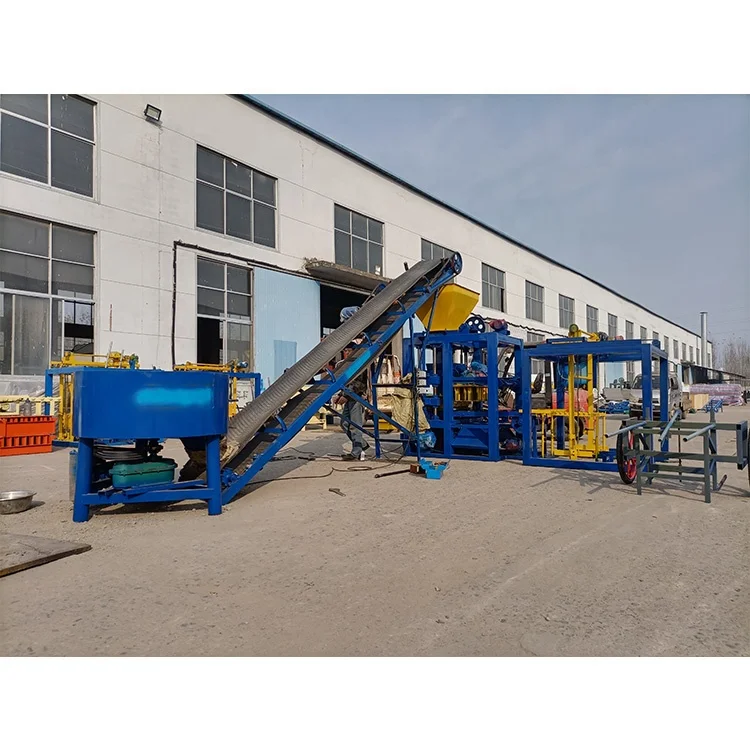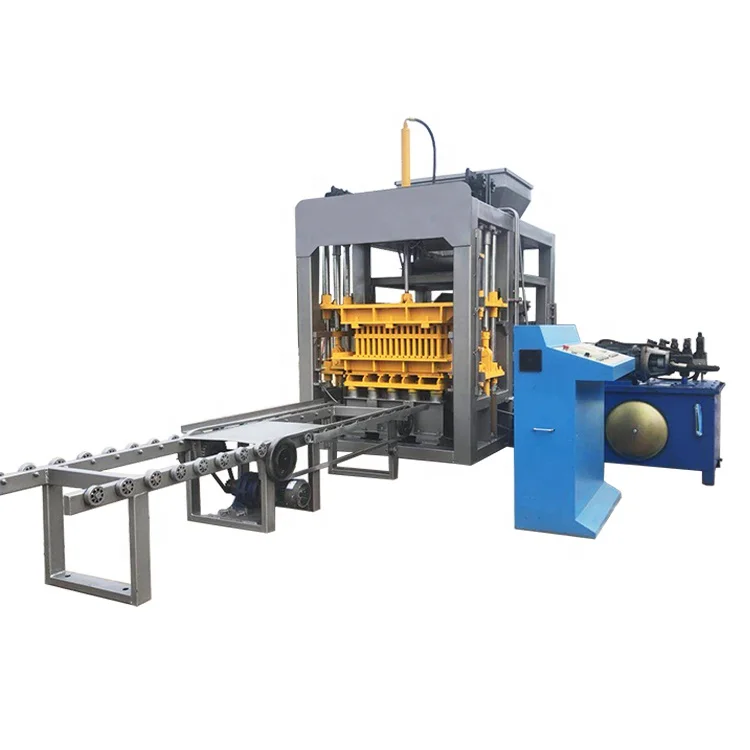
Description
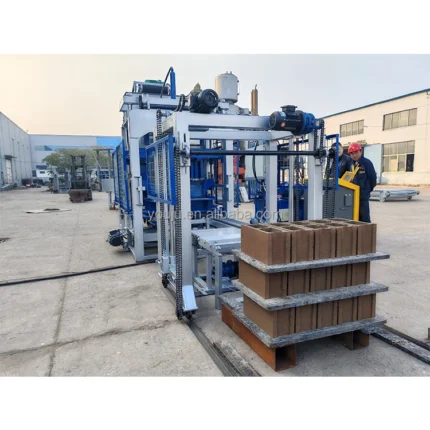
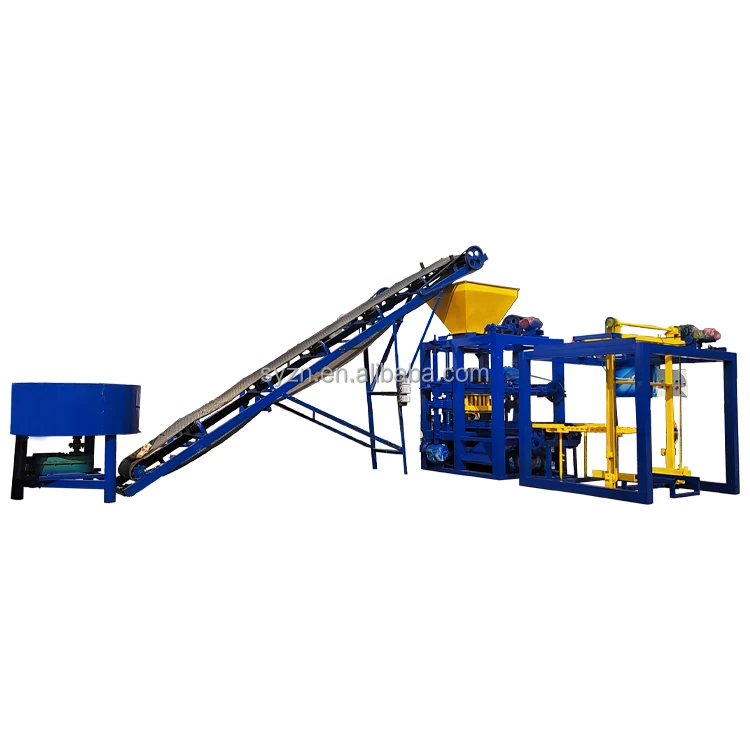
Control-First Configuration — Every cycle on the QT5-15 is managed by the PLC, removing manual timing variables so the operator monitors the line rather than chasing it.
Technical Specifications
| Parameter | Value |
|---|---|
| Model | QT5-15 |
| Product Type | Automatic Concrete Block Making Machine |
| Overall Dimensions (L×W×H) | 7400×1950×2800 mm |
| Rated Pressure | 21 MPa |
| Main Vibration Form | Platform Vibration |
| Vibration Frequency | 2800–4500 r/min |
| Pallet Size | 1100×550 mm |
| Molding Cycle | 15–25 s |
| Overall Power | 26.5 kW |
| Demolding Method | Hydraulic |
| Automation Level | Full Automatic |
| Output Capacity (Hollow brick 400×200×200 mm) | 1800 pcs/h (5 pcs/mold, 16–20 s cycle) |
| Output Capacity (Hollow block 400×150×200 mm) | 1300 pcs/h (6 pcs/mold, 15–20 s cycle) |
| Output Capacity (S paver 225×112.5×60 mm) | 3700 pcs/h (16 pcs/mold, 15–17 s cycle) |
| Raw Materials | Crushed stone, sand, cement, fly ash, gravel, slag |
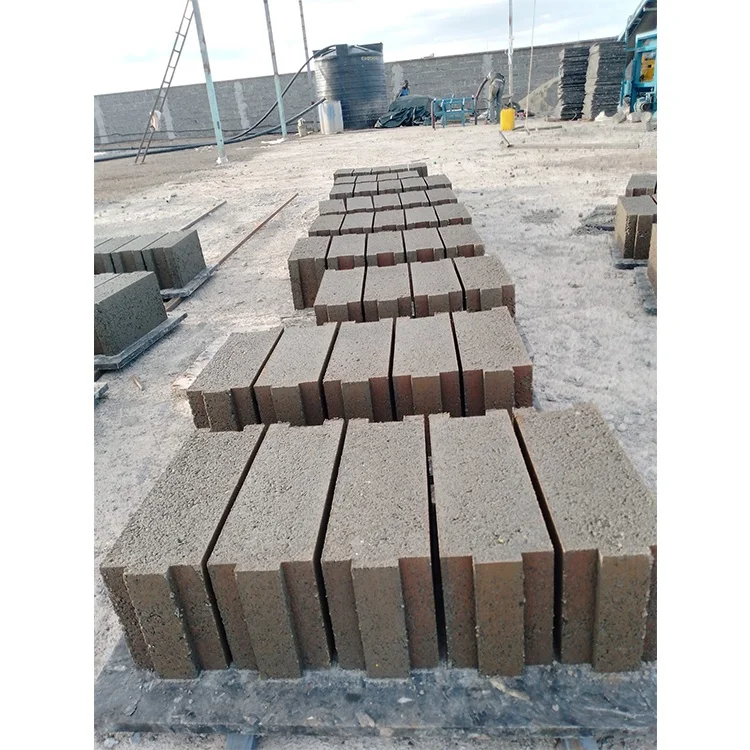
| Applied Products | Hollow blocks, solid blocks, pavers, interlocking blocks, curbstones, colored pavers |
| Control System | PLC controlled (basis to be confirmed) |
| Voltage & Frequency | Configurable (basis to be confirmed) |
| Net Weight | (basis to be confirmed) |
| Mould Change Time | (basis to be confirmed) |
| Language Options | (basis to be confirmed) |
| Standards | CE declaration where applicable |
Application Suitability
| Application | Material or Output |
|---|---|
| Hollow block production for wall construction | Crushed stone, sand, cement, fly ash blends |
| Solid block manufacturing for load-bearing structures | Gravel, sand, cement mixes |
| Paver and interlocking brick production for landscaping | Colored concrete with fine aggregates |
| Curbstone forming for road and pavement edging | High-density concrete with slag or gravel |
| On-site block production for housing projects | Locally sourced sand and crushed stone |
Why the PLC Display Language Should Be Settled Before Production Starts
A machine that speaks the wrong language on arrival adds days of downtime, not minutes of setup.
On a recent project in the Gulf region, an automatic concrete block making machine PLC controlled arrived with its HMI locked to English. The local crew could read basic labels but could not navigate parameter menus, so every recipe had to be rewritten on-site while a translator stood by. Commissioning slipped by over a week because the control language was never confirmed in writing [NEED_CITE: common PLC display language options for export machinery]. Voltage mismatch causes a similar delay: wrong frequency and the vibration motor overheats within the first shift, wrong voltage and the PLC never powers up. Both issues trace back to the same root cause — electrical and control details left open at the quotation stage.
What the PLC Actually Takes Off the Operator’s Plate
The QT5-15 full automatic configuration places the entire press cycle under PLC management — feed timing, vibration duration, hydraulic pressure ramp, and demolding sequence all execute from stored recipes. The operator’s role shifts from pulling levers to watching the HMI for alarms. When a buyer moves from a semi-automatic press to this automatic concrete block making machine PLC controlled system, the first visible change is that cycle repeatability tightens, because the PLC does not vary vibration time by a second or two the way a human does after a long shift.
Automated Pallet Feeding and Where It Connects to the Rest of the Line
Pallet handling is where a block plant either flows or bottlenecks. The QT5-15 line uses an automated pallet feeder that indexes a fresh pallet into position before the mold descends, so the press never waits on manual placement. Downstream, the wet-side stacker lifts filled pallets onto the curing rack without an operator touching them. This is the section of the line where cycle times must match precisely — if the stacker is slower than the press, the PLC queues the next cycle, and the theoretical output drops [NEED_CITE: pallet handling synchronization in stationary block lines]. Confirming pallet dimensions early prevents a mismatch with the curing racks and forklifts already in the buyer’s yard.
Reading the Numbers Behind the Press
The 21 MPa rated pressure and platform vibration at 2800–4500 r/min work together: hydraulic pressure compacts the mix from above while vibration liquefies it from below, so aggregate particles settle into a dense matrix. If either force is out of balance with the buyer’s mix design, blocks come out weak or cracked at the edges. The 1100×550 mm pallet size dictates mold layout — five cavities for a 400×200×200 mm hollow brick, sixteen for a small S paver — and that cavity count is what sets the per-cycle yield. The 26.5 kW overall power draw covers the vibration motors, hydraulic pump, and feed system combined, so the buyer’s electrical room must supply a dedicated circuit at the confirmed voltage and frequency. Molding cycles between 15 and 25 seconds depend on block height and mix moisture, which is why every output figure in this sheet is tied to a specific format.
When Automation Specs Are Left to Assumption
Buyers sometimes assume that "full automatic" includes stacking and cubing, only to find those stations were optional extras not in the original quotation. The result is a press that runs automatically but output that still has to be hand-stacked, defeating the labor reduction the automation was meant to deliver. Another common gap is mould change hardware: if the quick-clamp system is not specified, a format swap can consume most of a shift [NEED_CITE: mould change methods and downtime in stationary block machines]. These are the quiet costs that appear only after commissioning.
What Sets This Procurement Path Apart
Block machinery is the single focus here, which means the press, mold, pallet, and handling equipment are specified as one matched system rather than sourced from separate vendors. Configuration starts from the buyer’s actual mix design and target block format, not a catalogue default. Custom mold design to buyer drawings is available, so a plant can add formats its local market demands without waiting for a standard mold run. The automation level is selectable — a buyer can start with the QT5-15 full automatic press and add stacking or cubing stations later as volume grows. Installation support includes operator training on the PLC interface in the confirmed display language.
Documentation & Verification
- Line layout drawing with capacity calculated per stated block format
- Machine specification sheet matching confirmed voltage and frequency
- Mold drawing and format list including custom cavity designs
- Hydraulic and electrical schematics for the QT5-15 circuit
- PLC display language confirmation signed before production
- Factory test record on buyer’s target block format before dispatch
Installation, Commissioning & Support
- Foundation pad sized to the 7400×1950 mm footprint with anchor bolt plan
- Dedicated power circuit matched to the confirmed voltage for the 26.5 kW total load
- Machine arrives in container-load sections; reassembly supervised on site
- First-run parameter tuning on the buyer’s local aggregate and mix design
- Operator training on the PLC HMI in the confirmed display language
- Wear parts and mold list supplied with reorder part numbers
What to Include With Your Inquiry
Provide the block formats your market actually sells, the daily output target per format, and the raw materials available locally so the mix design can be matched to the 21 MPa pressure and vibration range. Confirm the voltage, frequency, and preferred PLC display language for your site to avoid any rewrite after arrival.
Frequently Asked Questions
Q: How is output capacity calculated and which block format does each figure assume?
A: Every output figure is tied to a specific mold cavity count and cycle time. For example, the QT5-15 produces 1800 hollow bricks (400×200×200 mm) per hour based on five cavities per mold and a 16–20 second cycle. Figures change when the format changes, so always check which block size the number assumes.
Q: What PLC control options and display language are available?
A: The PLC is configured before production with the buyer’s preferred display language and voltage setting. Confirming these details in writing at the order stage prevents on-site rewrites. The HMI stores recipes for each block format so operators can switch production with a menu selection.
Q: How do I match vibration force and hydraulic pressure to my local aggregate?
A: The QT5-15 operates at 21 MPa hydraulic pressure with platform vibration between 2800 and 4500 r/min. The exact frequency and pressure settings are tuned during commissioning based on the buyer’s local aggregate grading and mix design to achieve consistent block density.
Q: What automation level does the QT5-15 include and what is the upgrade path?
A: The QT5-15 ships as a full automatic press with PLC-controlled cycling and automated pallet feeding. Stacking and cubing stations can be added at order or retrofitted later, allowing a plant to increase automation as production volume grows without replacing the press.
Q: How is pallet size selected to match existing curing equipment?
A: The QT5-15 uses a 1100×550 mm pallet. Before ordering, the buyer should verify that this dimension fits the curing racks and forklift forks already on site. Pallet material is also confirmed based on the curing environment and expected service life.