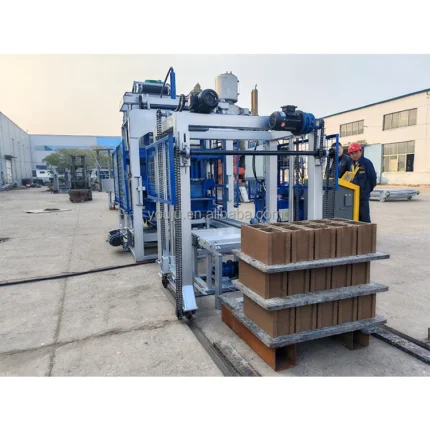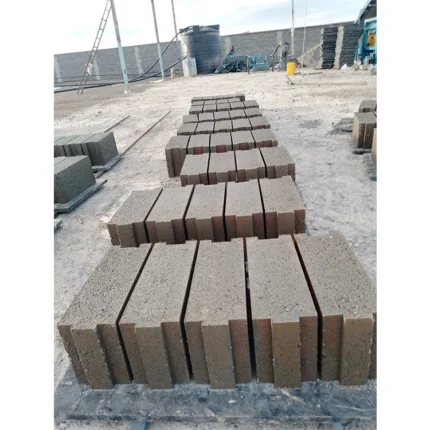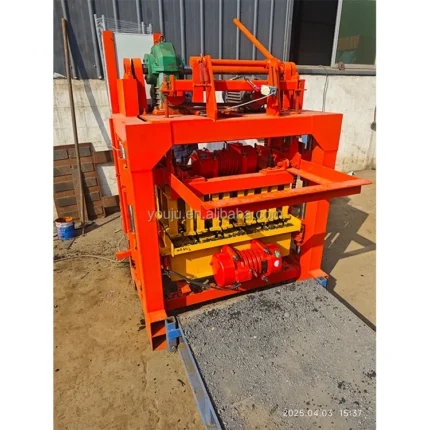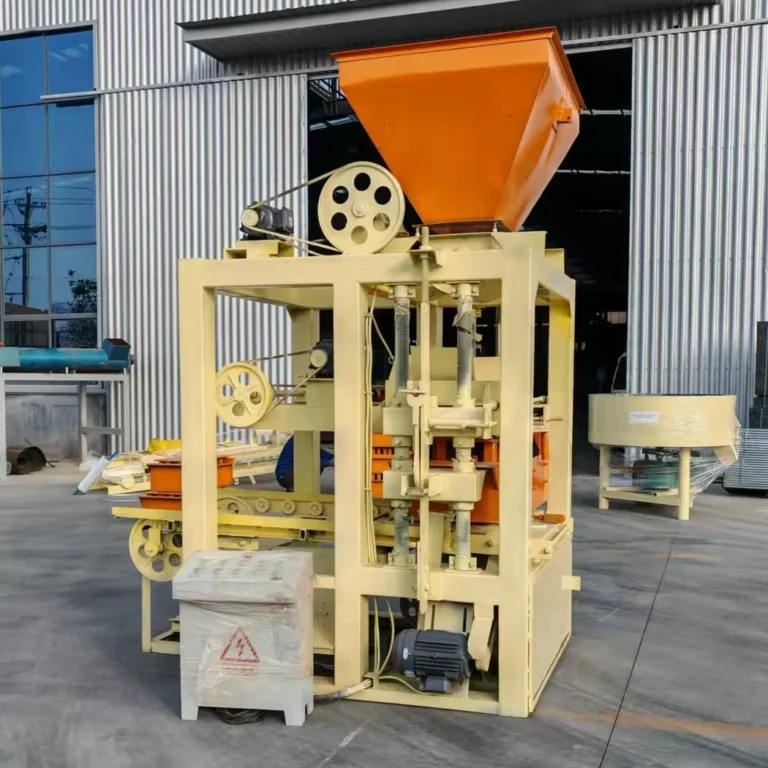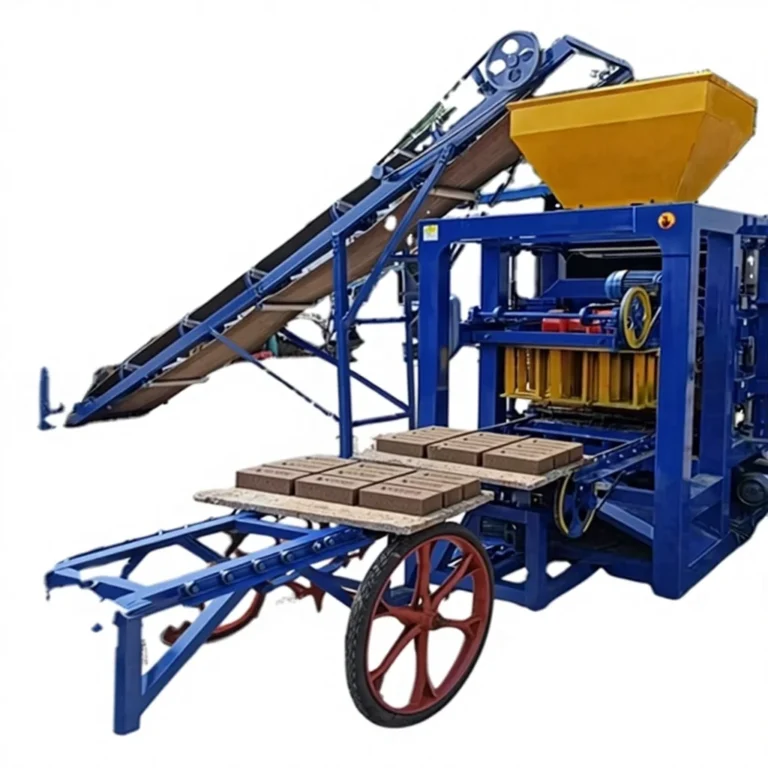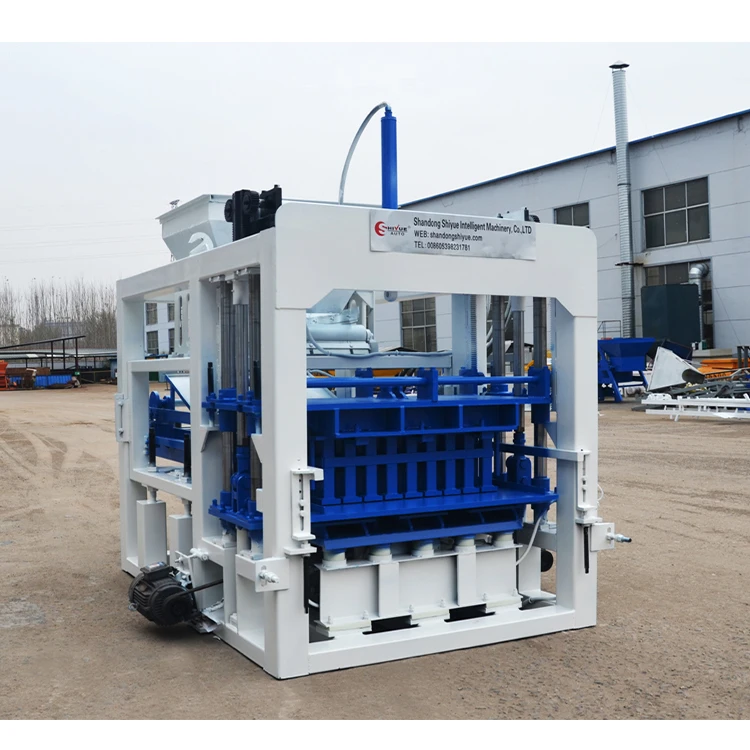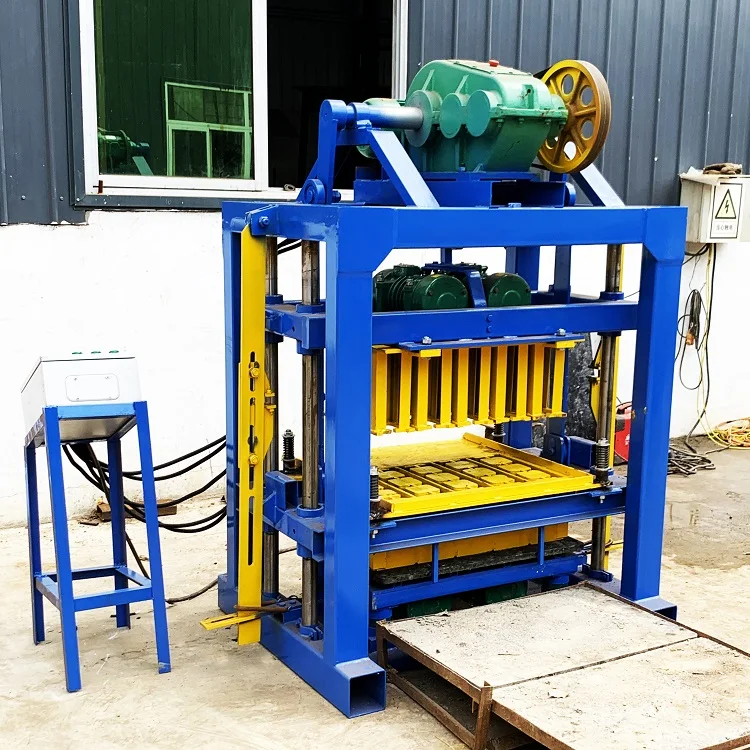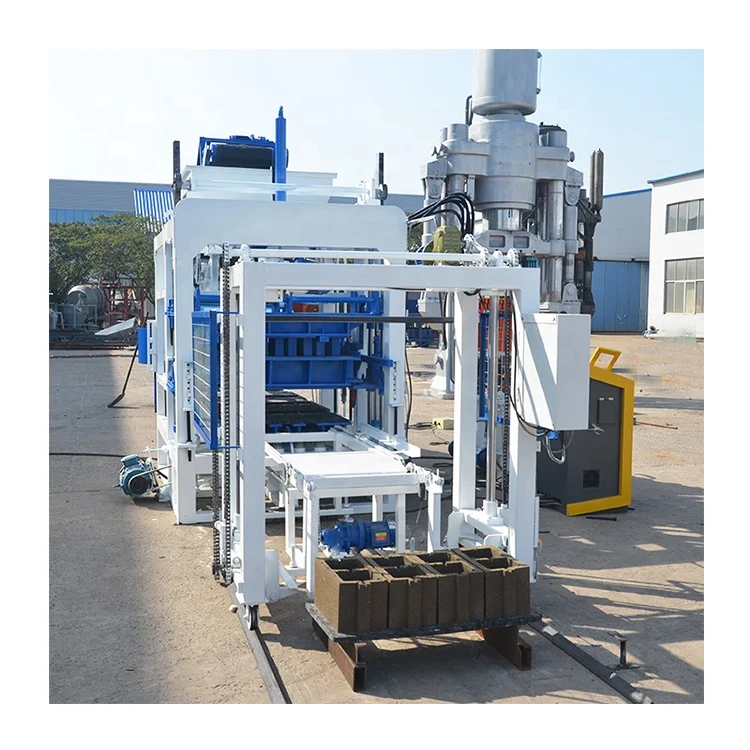


Description
Precision Matched Automation — QT4-15B control logic tuned to your plant’s actual cycle sequence, not a catalogue default, preventing the bottleneck where downstream stacking falls behind the press.
Technical Specifications
| Parameter | Value |
|---|---|
| Model | QT4-15B |
| Product Type | Automatic Concrete Block Making Machine |
| Control System | PLC computer control, fully automatic |
| Vibration Mode | Multiaxis synchronizer vibration (vertically downward) |
| Hydraulic System | High thermal efficiency, low heat productivity |
| Mixer System | Multiaxis forced mixer |
| Guide Bearing | Long-period over-length guide bearing for upper mould and mould box alignment |
| Frame Construction | High-strength steel, special welding technique, vibration shock resistant |
| Molding Cycle | 15–20 seconds |
| Capacity (400×200×200 mm) | 4 pcs/mould, 900–1200 pcs/h, 7200–9600 pcs/8hr (basis: stated format, cycle 15–20s) |
| Capacity (400×150×200 mm) | 5 pcs/mould, 1080–1440 pcs/h, 8640–11520 pcs/8hr (basis: stated format, cycle 15–20s) |
| Capacity (400×100×200 mm) | 8 pcs/mould, 1440–1920 pcs/h, 11520–15360 pcs/8hr (basis: stated format, cycle 15–20s) |
| Capacity (200×100×60 mm) | 16 pcs/mould, 2880–3840 pcs/h, 23040–30720 pcs/8hr (basis: stated format, cycle 15–20s) |
| Capacity (240×115×53 mm) | 28 pcs/mould, 5930–6720 pcs/h, 47400–53700 pcs/8hr (basis: stated format, cycle 15–20s) |
| Voltage & Frequency | Configurable to buyer’s site requirement (basis to be confirmed) |
| Rated Power | To be confirmed per site voltage specification |
| Warranty | 1 year for the whole machine (excluding spare parts) |
Application Suitability
| Application | Material or Output |
|---|---|
| Hollow block production | Cement, crushed stone, sand, fly ash aggregates |
| Multicellular brick production | Lightweight aggregate blends with cement binder |
| Paving block production | Dense aggregate mixes with colour oxide additives |
| Standard solid brick production | River sand, quarry dust, cement compositions |
| On-site block production for contractors | Locally sourced aggregate with portable raw material feeding |
| Format expansion for concrete product plants | Multiple mould formats on a single PLC-managed press |
What "Fully Automatic" Actually Means on Your Factory Floor
The QT4-15B automatic concrete block making machine PLC controlled system removes operator guesswork, but only if the automation scope covers every station from material feeding to stacking.
I have walked into plants where the press itself ran on full automation while pallets piled up at the discharge end because nobody specified the stacker. The operator spent half the shift clearing jams with a shovel. When a buyer says they want an automatic concrete block making machine PLC controlled setup, the real question is whether pallet feeding, block stacking, and curing rack handling are included in the quotation or left for the buyer to source separately. The press cycle means nothing if the downstream line cannot keep pace [NEED_CITE: common automation scope gaps in block plant quotations].
The PLC Logic That Keeps the Line Moving
The PLC computer control on the QT4-15B manages the full molding sequence — material feed, vibration, hydraulic press, mould release, and pallet advance — as a single timed routine. Each station fires on a fixed interval, so the press never waits for a pallet and the stacker never falls behind the output. When you select the automatic concrete block making machine PLC controlled configuration, the timing logic is written around your specific pallet size and cycle duration, not copied from a different plant layout.
Where Automation Breaks Down Without Line-Level Timing
A press running at a 15–20 second cycle generates a full pallet of blocks roughly three times per minute. If the downstream stacker operates on a different timing loop, pallets accumulate at the discharge conveyor and operators intervene manually. I have seen this pattern repeat across plants in Southeast Asia where the buyer specified the press in detail but treated the stacker as an afterthought. The PLC on the QT4-15B can coordinate upstream and downstream stations, provided the entire line is scoped before the control program is written [NEED_CITE: PLC coordination requirements for multi-station block lines].
Reading the Specs That Matter for Consistent Block Density
The multiaxis synchronizer vibration delivers force vertically downward across the full pallet surface, which produces uniform density from the front edge to the back. This matters because uneven vibration creates blocks that pass visual inspection but fail compressive strength tests on one side. The high-strength welded frame absorbs the vibration shock cycle after cycle, keeping the long-period over-length guide bearings aligned so the upper mould enters the mould box without lateral drift. The multiaxis forced mixer breaks up aggregate clumps before they reach the hopper, ensuring each batch has the same moisture distribution and cement dispersion.
The Cost of Skipping Downstream Automation
Buying the press alone and adding pallet handling later creates a mismatch that no amount of operator effort can fix. The press output arrives faster than workers can sort and stack, so cured blocks sit on pallets in the yard, tying up pallet inventory and slowing turnover. When stacking is eventually automated, the original PLC program must be rewritten to integrate the new stations, and the timing offsets rarely match on the first attempt. Plants that budget for the full line upfront avoid this rework entirely [NEED_CITE: hidden costs of phased automation in block plants].
Why Source the Complete System Here
Block machinery is the single focus, so the QT4-15B press, mould, pallet, and handling equipment are specified as one matched system rather than assembled from separate suppliers. The configuration is set against your actual mix design, local aggregate, and target block format, not pulled from a catalogue default. Mould design covers the formats your market sells, including custom drawings for non-standard dimensions. The automation level is selectable, so a buyer can start with semi-automatic stacking and add cubing later without replacing the press. Installation support includes on-site commissioning with operator training so the line runs at documented capacity before the team leaves.
Documentation & Verification
- Line layout and capacity calculation stating the block format assumed for each output figure
- Machine specification sheet with voltage and control language confirmed before production
- Mould drawing and format list matching your target block dimensions
- Hydraulic and electrical schematic for local maintenance reference
- Factory test record on your specified pallet size before dispatch
- Operation and maintenance manual with wear parts and mould replacement schedule
Installation, Commissioning & Support
- Foundation plan specifying load points for the high-strength welded frame and vibration isolation
- Voltage and frequency confirmed before production to match your site power supply
- Machine shipped in dismantled state with reassembly sequence documented per station
- PLC program loaded with your confirmed display language and timing parameters at first power-on
- Operator training covering mould change procedure, cycle adjustment, and fault code response
- Wear parts list with hydraulic seals and guide bearings identified for first replacement order
- Daily maintenance checklist tied to the multiaxis vibration system and forced mixer bearings
Before You Request a Quote
To size the QT4-15B and its automation stations correctly, share your target block formats with dimensions, the daily output you need per format, and the raw materials available locally. Confirm your site voltage, frequency, and the PLC display language your operators will use. If you already have pallets, curing racks, or forklifts on site, send their specifications so the line is configured around your existing equipment rather than requiring new purchases.
Frequently Asked Questions
Q: How is each capacity figure verified against a specific block format?
A: Every output number on the specification sheet states the exact block format, pieces per mould, and cycle time it assumes. For example, the hollow block capacity is rated at 900–1200 pieces per hour based on the 400×200×200 mm format at a 15–20 second cycle. We do not publish a single headline capacity that mixes formats together.
Q: Can the automation level be upgraded from semi-automatic stacking to full cubing later?
A: The QT4-15B press accepts downstream automation additions without mechanical modification to the frame or vibration system. The PLC program is updated to include the new station timing, and the pallet conveyor is extended to reach the cubing station. We recommend planning the floor space for future cubing at initial installation.
Q: What PLC language options are available, and is remote diagnostics supported?
A: The PLC display language is confirmed during the quotation stage so operators read instructions in their working language upon commissioning. Remote diagnostics capability depends on your site network infrastructure and is specified before the control panel is assembled. Confirm your preferred language early to avoid delays.
Q: How does the forced mixer adapt when local aggregate differs from standard specifications?
A: The multiaxis forced mixer handles a range of aggregate sizes and moisture levels, but the blade geometry and mixing time are set based on your actual material sample. We request a sample of your local aggregate and sand before finalizing the mixer configuration so batch consistency is achieved from the first production day.
Q: What is the mould change procedure and typical changeover process between formats?
A: The long-period over-length guide bearings keep the upper mould aligned during removal and installation, reducing the chance of lateral damage during changeover. The mould box is unbolted, the new format is lowered in, and the PLC cycle parameters are adjusted to match the new block dimensions. Operator training covers the full procedure.