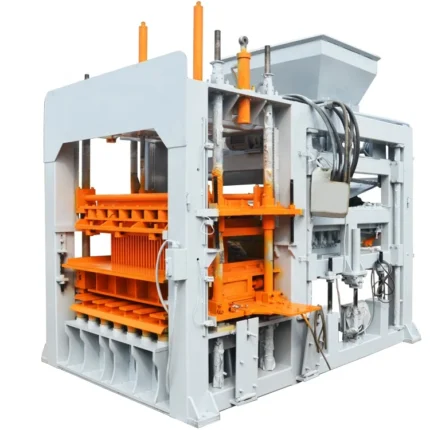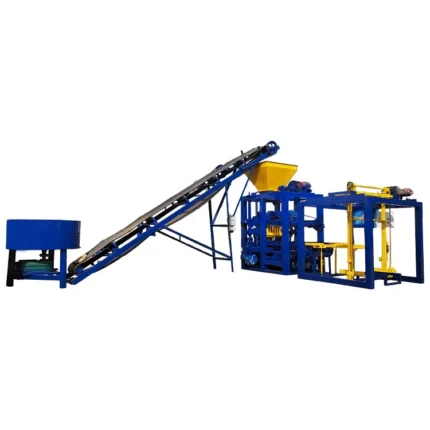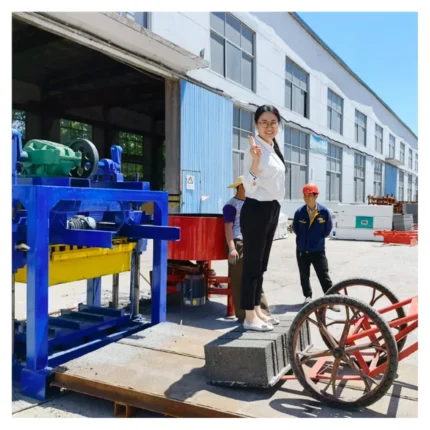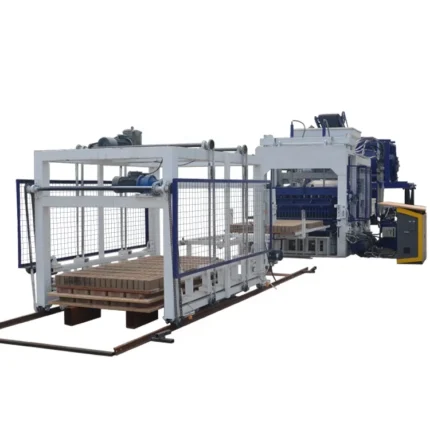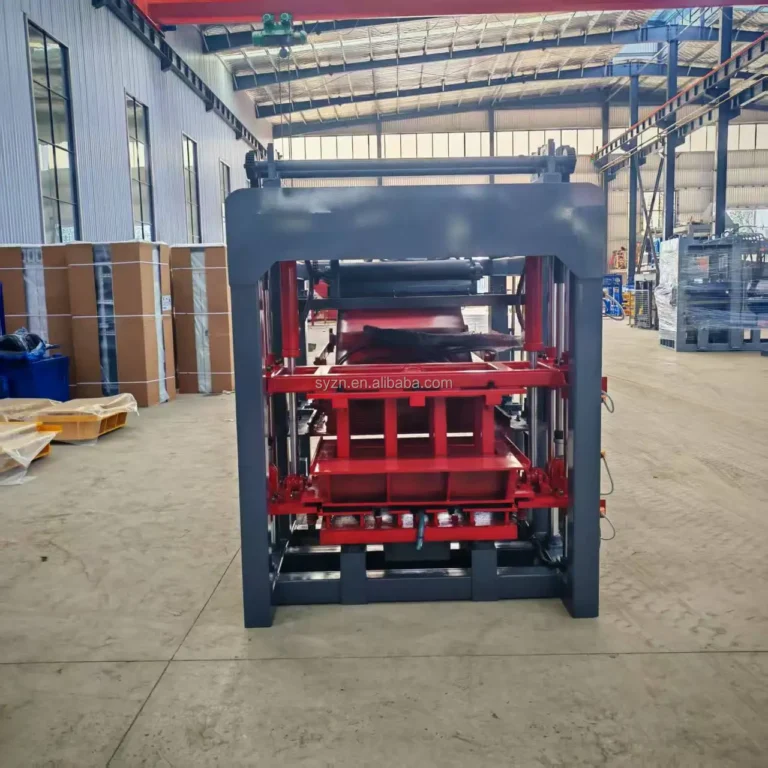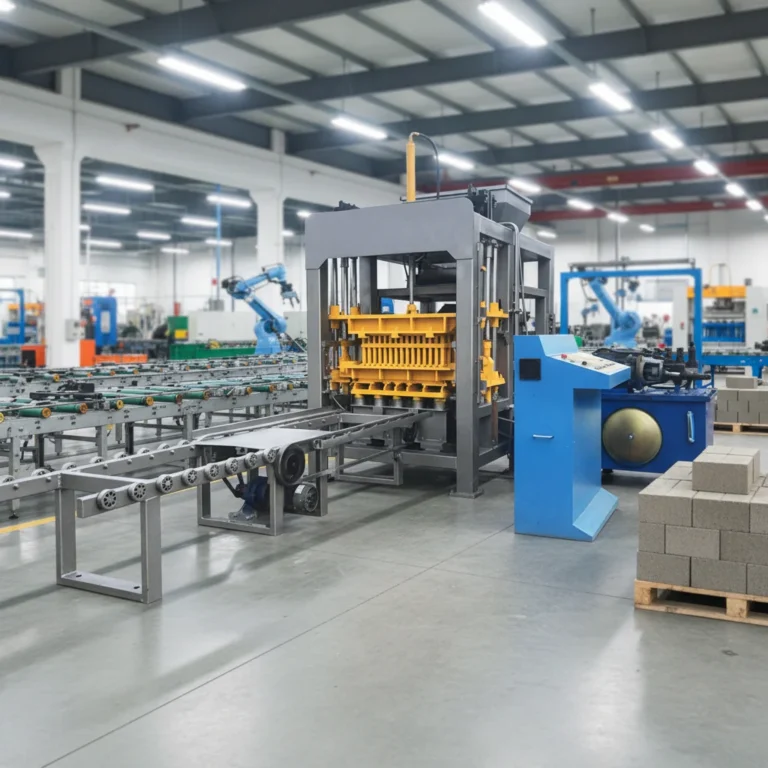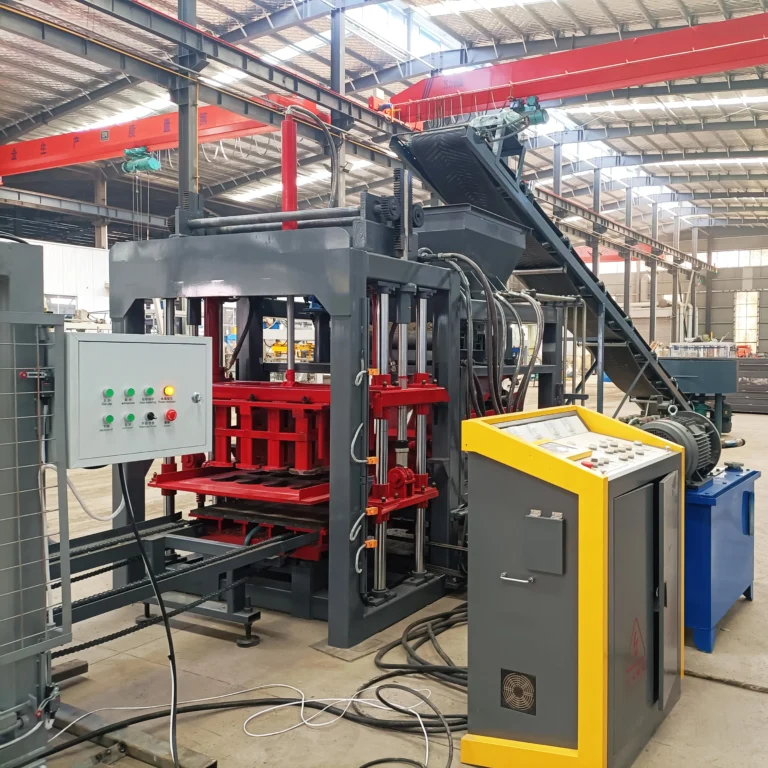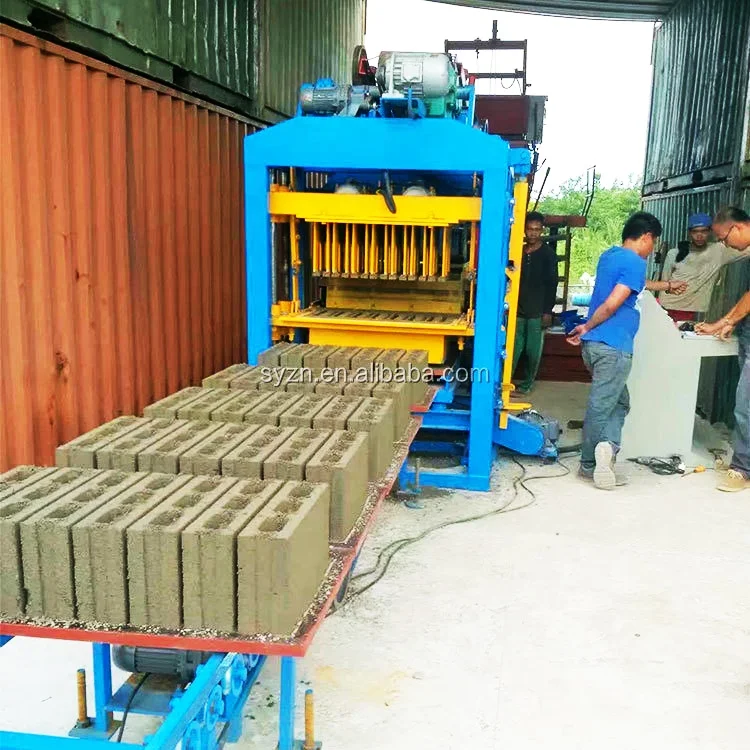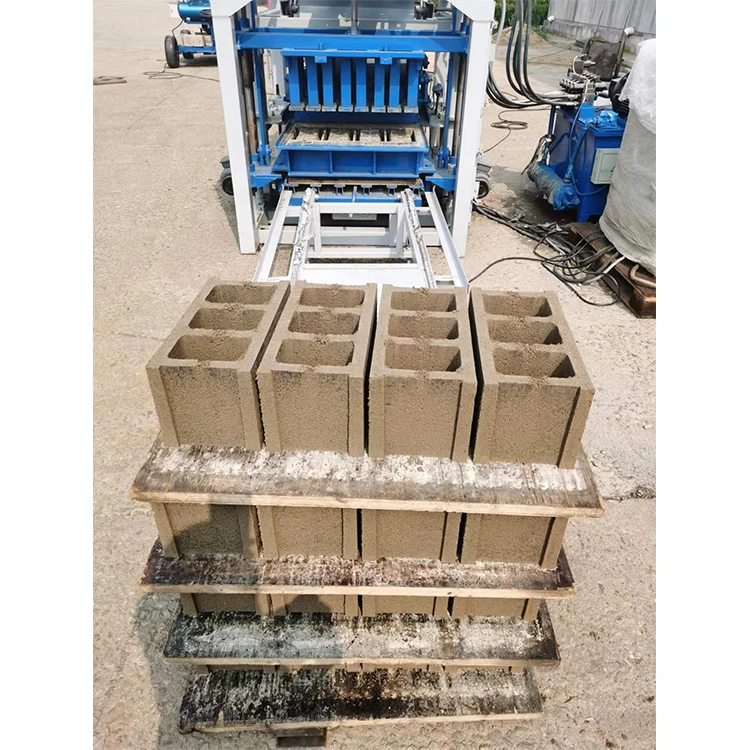
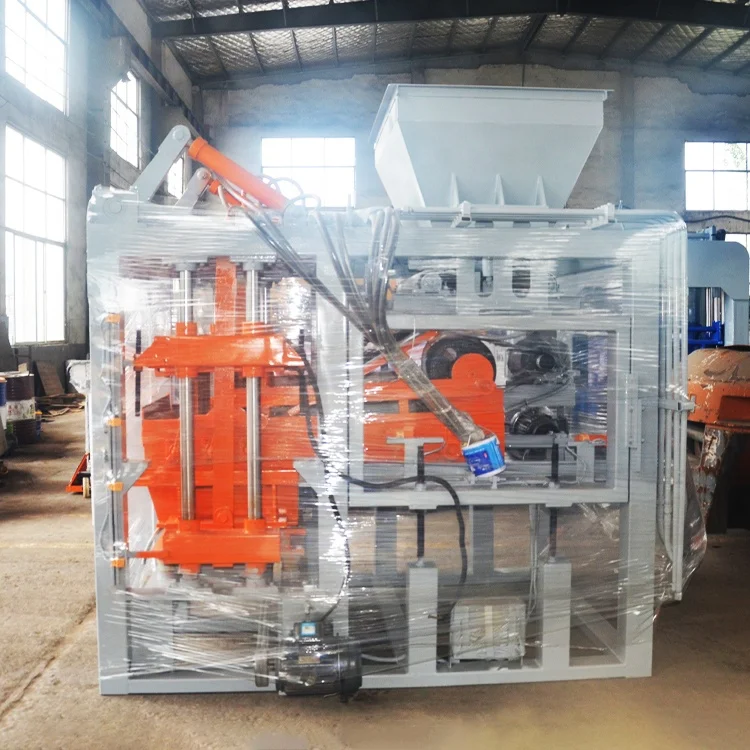


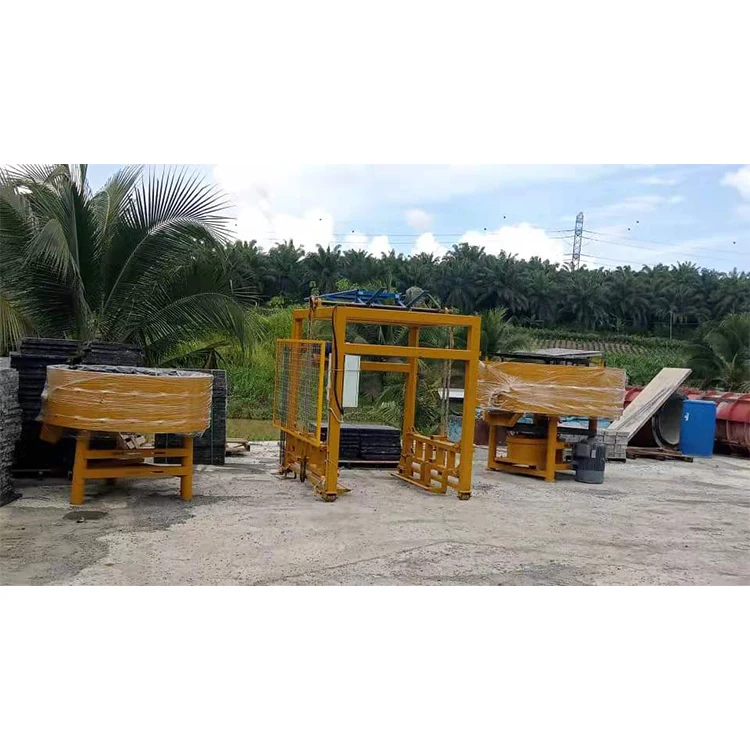
Description
PLC Automation Integration — Every QT4-15A unit ships with confirmed control language and voltage parameters matched to your facility, removing operator guesswork from the production floor.
Technical Specifications
| Parameter | Value |
|---|---|
| Model | QT4-15A |
| Product Type | Automatic Hydraulic Block Making Machine |
| Overall Dimensions (L×W×H) | 7100×1600×2610 mm |
| Molding Cycle | 15–25 s (basis not stated in source) |
| Vibration Frequency | 4600 r/min |
| Vibration Force (Exciting Power) | 40–50 kN |
| Total Power | 18.45 kW |
| Mixer Model | JQ350 |
| Pallet Size | 850×550×25 mm |
| Total Weight | 3 T |
| Applied Products | Paver, solid block, hollow block, curbstone (via mould change) |
| Raw Materials | Crushed stone, sand, cement, dust, fly ash |
| Control System | PLC control system |
| Hydraulic Station | Included (high-pressure hydraulic system) |
| Included Equipment | Block making machine, hydraulic station, PLC control system, pallet feeder, brick conveyor, block sweeper, manual hydraulic trolley |
| Output Capacity — Hollow Block 400×200×200 mm | 4 pcs/mould, 408 pcs/hr, 3264 pcs/8hr |
| Output Capacity — Hollow Block 400×150×200 mm | 5 pcs/mould, 510 pcs/hr, 4080 pcs/8hr |
| Output Capacity — Solid Brick 240×115×53 mm | 18 pcs/mould, 2100 pcs/hr, 17000 pcs/8hr |
| Automation Level | Automatic (pallet feeder, conveyor, sweeper included) |
Application Suitability
| Application | Material or Output |
|---|---|
| Hollow block production plants | Crushed stone, sand, cement, fly ash |
| Paver and kerbstone manufacturing | High-density concrete mixes for exterior paving |
| Solid brick production for masonry | Standard cementitious aggregates |
| On-site construction block manufacturing | Locally sourced sand and stone dust blends |
| Fly ash utilization in concrete products | Industrial by-product mixed with cement and aggregate |
Why Voltage Confirmation Must Precede the Purchase Order
An automatic hydraulic block making machine PLC controlled system cannot be commissioned if the frequency and display language do not match the plant’s electrical supply and operator fluency.
In my years working across production floors, I have seen new lines sit idle for weeks because the control interface was in a language the shift supervisor could not read, or the motor contactors were rated for a grid frequency that does not exist at the destination. The QT4-15A requires explicit voltage and frequency confirmation before the electrical cabinet is wired, and the PLC display language must be set to match the operators who will run it daily. Skipping this step means the machine arrives and waits for a transformer or a translator. [NEED_CITE: industrial electrical standards for export markets]
How PLC Control Removes Operator Variability
The PLC control system on this automatic hydraulic block making machine PLC controlled unit standardizes every molding cycle, from material feed timing through vibration duration to hydraulic press engagement. When pallet feeding and block conveying are automated, the operator’s role shifts from manual handling to monitoring the control interface and managing raw material supply. This reduces batch-to-batch variation that typically appears when different shifts handle pallets by hand.
What Automation Actually Covers in the Line
Automation on the QT4-15A includes the pallet feeder, brick conveyor, and block sweeper, which together handle pallet movement from the feed magazine through the press and out to the conveyor take-off. Stacking method remains a configuration choice depending on your curing area layout and forklift capacity. The PLC manages cycle sequencing so the press does not idle while waiting for the next pallet, maintaining consistent throughput across the shift. [NEED_CITE: automation levels in block production lines]
Reading the Specifications Against Your Actual Product Mix
The vibration force rating of 40–50 kN and vibration frequency of 4600 r/min determine how densely the mix is compacted in the mould, directly affecting block compressive strength. The 850×550×25 mm pallet size must match your existing curing rack spacing and forklift tine width, or you face a choice between replacing pallets or reconfiguring your curing yard. The molding cycle of 15–25 seconds varies with block thickness and mix consistency, meaning the hourly output figures apply only to the specific format stated: 408 pieces per hour assumes a 400×200×200 mm hollow block, while 2100 pieces per hour assumes a 240×115×53 mm solid brick. The JQ350 mixer must keep pace with these cycle times, or the press will starve between batches.
The Cost of Unmatched Pallet and Curing Configuration
When pallet dimensions are selected without checking the buyer’s curing rack spacing, every pallet must be re-stacked by hand before curing, cancelling out the automation the buyer paid for. I have visited plants where the pallet feeder was running smoothly but workers were manually reorganizing blocks onto different pallets because the original size did not fit the kiln cars. The QT4-15A’s 850×550 mm pallet specification must be validated against your curing infrastructure before production begins. [NEED_CITE: pallet handling mismatches in block plants]
Why Procurement Through This Configuration Matters
Machine, mould, pallet, and handling equipment are specified as a matched system rather than assembled from separate suppliers, so the pallet feeder timing aligns with the press cycle. Configuration is set against your actual mix design and local aggregate availability, not a catalogue default that assumes materials you cannot source. Mould design covers the formats your market actually sells, including custom drawings when standard formats do not match local building codes. The automation level on the QT4-15A is selectable, so a plant can begin with the included pallet feeder and conveyor, then add automatic stacking later as volume justifies the investment.
Documentation & Verification
- Line layout and capacity calculation stating block format for each output figure
- Machine specification sheet with hydraulic and electrical schematic
- Voltage, frequency, and PLC display language confirmation before wiring
- Factory test record on your target block format before dispatch
- Operation and maintenance manual with wear parts and mould list
- CE declaration included where applicable to destination market
Installation, Commissioning & Support
- Foundation plan based on the 7100×1600 mm machine footprint and vibration load
- Dedicated electrical circuit sized for 18.45 kW total power draw
- Hydraulic station pre-filled and tested before container loading
- PLC parameter setting on-site to match your confirmed mix design
- Operator training covering mould change procedure and cycle adjustment
- Wear parts list with hydraulic seal and vibration motor replacement intervals
Preparing Your Inquiry
Provide your target block formats with daily volume requirements, your locally available raw materials and their typical mix proportions, and the voltage and frequency at your facility. Include the dimensions of your existing curing racks and forklifts so pallet size can be confirmed before quotation. State your preferred PLC display language and whether you require operator training in a specific language at installation.
Frequently Asked Questions
Q: How is output capacity verified, and which block format does each figure assume?
A: Each output figure on the QT4-15A is tied to a specific block format and mould configuration. The 408 pieces per hour rating applies to 400×200×200 mm hollow blocks, while 2100 pieces per hour applies to 240×115×53 mm solid bricks. These figures assume consistent material feed and no unplanned stoppages. Your actual daily output depends on shift length, mix preparation speed, and curing logistics.
Q: What PLC language options are available, and is the display confirmed before shipment?
A: The PLC display language is confirmed in writing during the order process and set before the control cabinet leaves the factory. Common options include English, Spanish, French, Arabic, and Russian, among others. The interface language must match the operators who will run the line daily, so this is one of the first items locked in after the purchase order.
Q: How does the automation level affect daily labor requirements on the QT4-15A?
A: The included pallet feeder, brick conveyor, and block sweeper remove manual pallet handling from the operator, reducing the crew needed at the press end of the line. Stacking after the conveyor remains a configuration choice depending on your plant layout. As production volume grows, automatic stacking and cubing can be added to further reduce manual labor downstream.
Q: What information is needed to confirm voltage and frequency before production?
A: Your facility’s supply voltage, phase configuration, and grid frequency must be provided in writing before the electrical cabinet is assembled. The 18.45 kW total power draw requires a dedicated circuit sized appropriately for continuous operation. Confirming these parameters early prevents commissioning delays and avoids the need for external transformers after the machine arrives.
Q: What is included in the pallet handling system, and what remains manual?
A: The QT4-15A includes an automatic pallet feeder that moves pallets from the magazine into the press, a brick conveyor that carries finished blocks away from the mould area, and a block sweeper that cleans pallet surfaces. Stacking and curing rack loading depend on your chosen automation configuration and can be upgraded from manual handling to automated cubing as your output requirements change.