

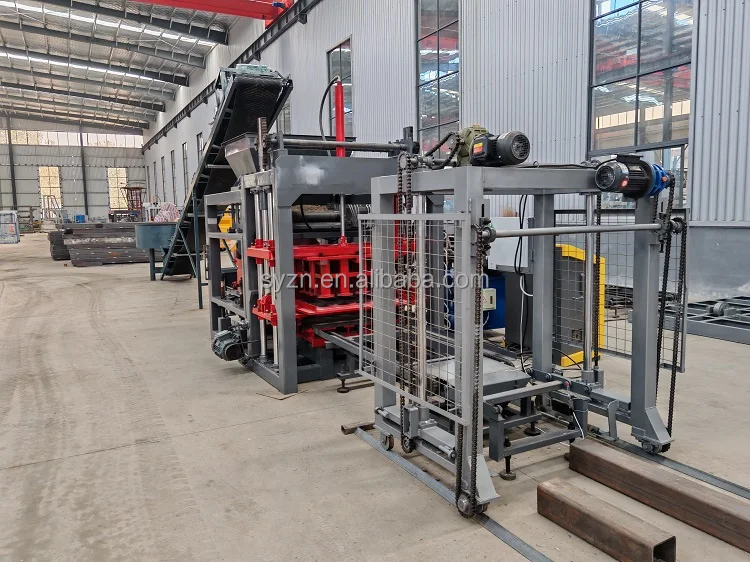

Description
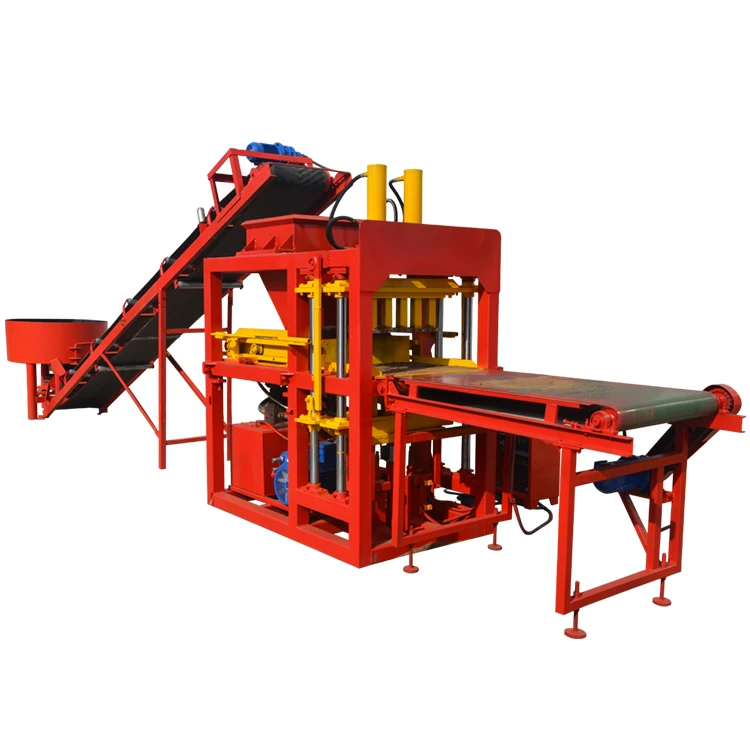
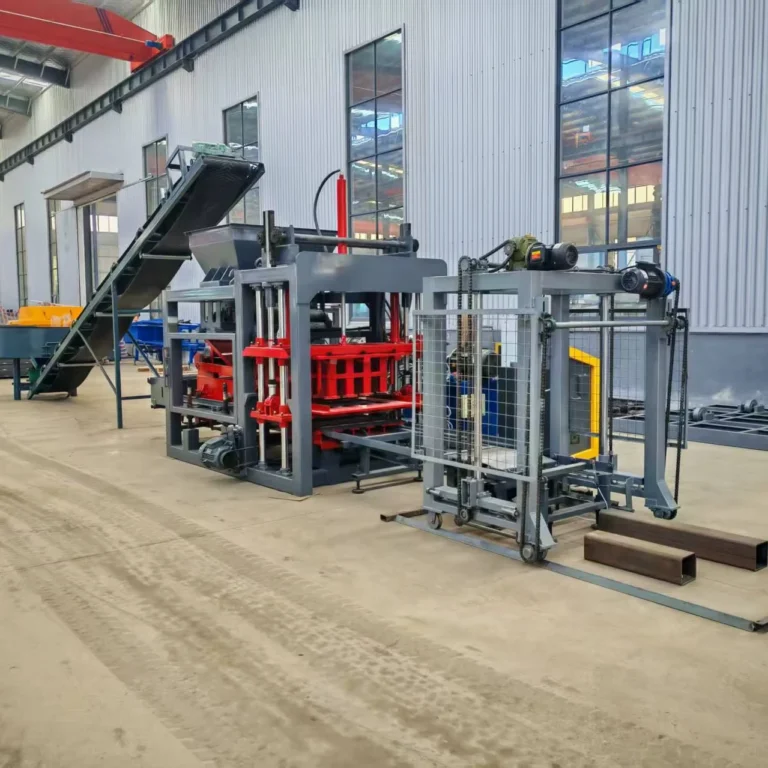
Upgrade-Ready Automation — the QT4-18 leaves a clear path from semi-automatic pressing to full PLC-controlled pallet feeding and stacking, so your line grows without replacing the press.
Technical Specifications
| Parameter | Value |
|---|---|
| Model | QT4-18 |
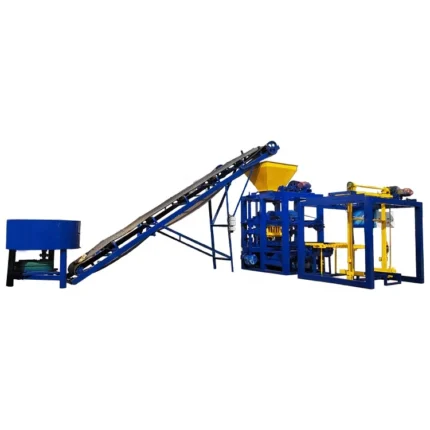
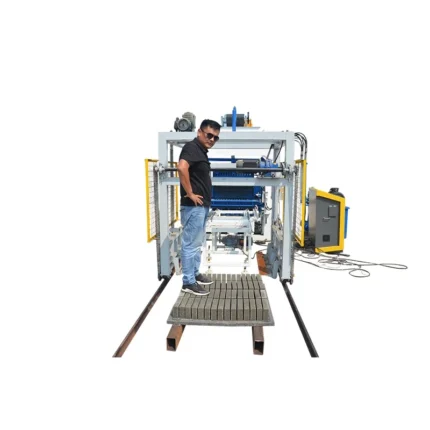
| Product Type | Semi-Automatic Hydraulic Concrete Block Making Machine |
| Overall Dimensions (L×W×H) | 3900 × 1600 × 2300 mm |
| Total Weight | 3 T |
| Rated Power | 24 kW |
| Vibration Force | 40–50 kN |
| Hydraulic Station | Equipped (high pressure, stable operation) |
| Vibration System | Bed mould vertical vibration + upper mould compression vibration |
| Molding Cycle | 15–25 s |
| Pallet Size | 850 × 550 × 25 mm |
| Mixer Model | JQ350 |
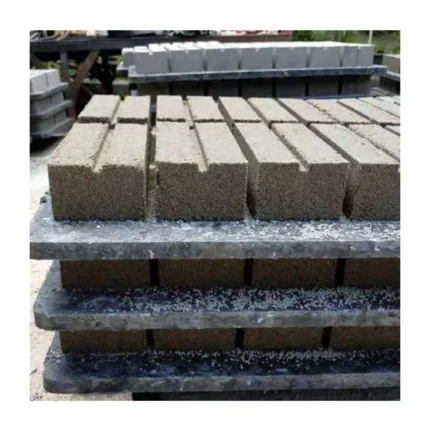
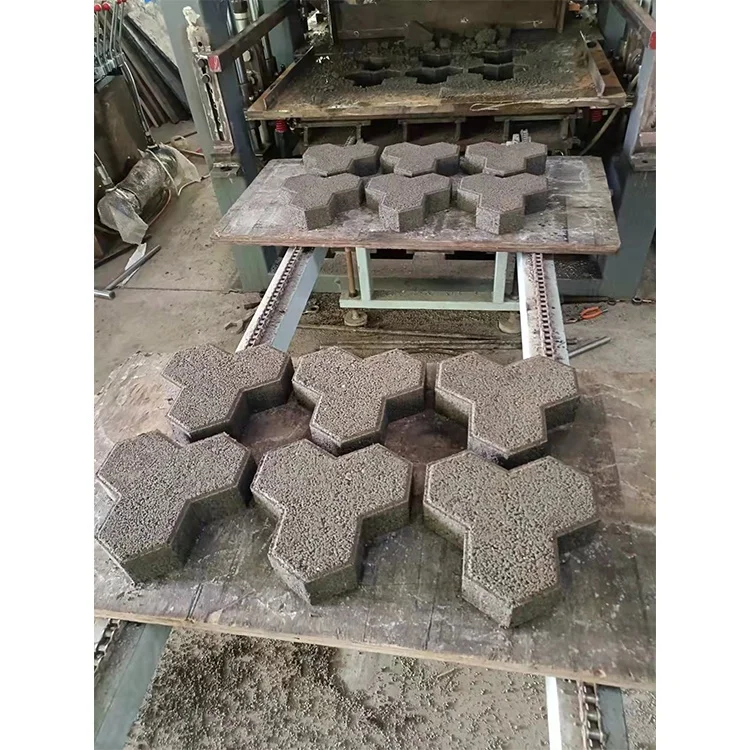
| Applied Products | Hollow block, solid brick, paver, curbstone |
| Raw Materials | Crushed stones, sand, cement, dust, fly ash |
| Output Capacity (Hollow Block) | 9,600–13,440 pcs/8hr (basis: 400×200×200 mm) |
| Output Capacity (Hollow Block) | 14,400–19,200 pcs/8hr (basis: 400×150×200 mm) |
| Output Capacity (Solid Brick) | 16,200–19,440 pcs/8hr (basis: 240×115×53 mm) |
| Automation Level | Semi-automatic |
| Control System | Available with PLC or MCC control (confirm before production) |
| Voltage & Frequency | Configurable to site requirements (confirm before shipment) |
| Language Options | Configurable for operator interface (confirm before shipment) |
| Assembly State | Nude packing in 20GP container |
Application Suitability
| Application | Material or Output |
|---|---|
| Hollow block production for wall construction | Crushed stone, sand, cement, fly ash mixes |
| Solid brick manufacturing for load-bearing structures | Sand, cement, stone dust blends |
| Paving block production for walkways and yards | Aggregate-rich mixes with pigment options |
| Curbstone forming for road and boundary edging | High-density concrete with coarse aggregate |
| On-site block production for housing projects | Locally sourced sand and crushed stone |
| Small to medium block plant operations | Multi-format output from a single press |
What "Cycle Time" Actually Means for Your Daily Output
The automatic QT4-18 block machine quotes 15–25 seconds per cycle, but your real shift output depends entirely on which block format sits in the mould.
Buyers often see a single headline number and assume it applies across every product they plan to sell. In reality, a 400×200×200 mm hollow block takes a longer cycle and fills a pallet differently than a 240×115×53 mm solid brick. When the format changes, the cycle time shifts within that 15–25 second range, and the pieces-per-pallet count changes with it. [NEED_CITE: block format impact on actual daily output in semi-automatic plants] I have watched plant owners arrive at commissioning expecting one output figure, only to discover the number they were shown assumed a format their market does not buy.
PLC Control Language: The Detail That Delays Commissioning by Weeks
The control interface on this PLC controlled block machine upgrade can be configured to your operator’s language before it leaves the factory, but only if someone asks. Voltage, frequency, and display language are the three settings that must match your site before the machine ships. When they are not confirmed in writing, the machine arrives with defaults that may not match your local grid or your operator’s reading language. I spent two weeks on a factory floor in West Africa while a commissioning engineer translated menu screens one line at a time — the operator had been staring at unfamiliar characters since day one. The automatic QT4-18 block machine performs identically regardless of language, but the person running it cannot work confidently if they cannot read the screen. [NEED_CITE: PLC display language configuration requirements for exported machinery]
Semi-Automatic Today, Full Line Tomorrow
The QT4-18 ships as a semi-automatic press, meaning pallet handling and stacking are done manually at this stage. The machine architecture, however, leaves space for automatic pallet feeding, stacking, and cubing to be added later without replacing the press itself. This phased approach matters for plant owners who want consistent pressing quality now but are not ready to invest in full line automation at once. The hydraulic station and dual vibration system — bed mould vertical vibration paired with upper mould compression vibration — deliver the same batch-to-batch density whether pallets are fed by hand or by an automated conveyor. When you are ready to add the PLC controlled block machine upgrade with automatic handling, the press does not need to change.
Matching Vibration Force and Hydraulic Pressure to Your Mix
The 40–50 kN vibration force and equipped hydraulic station work together to compact the concrete mix during the 15–25 second molding cycle. Vertical vibration from the bed mould settles the aggregate downward, while upper mould compression vibration locks the surface density. This dual-direction approach addresses a common problem: block strength that varies from batch to batch because only one vibration axis was applied. The hydraulic station maintains consistent pressing pressure across every cycle, so the block that comes off the press in hour seven matches the one from hour one — provided the mix design matches what the machine was configured for. [NEED_CITE: relationship between vibration force and hydraulic pressure in concrete block density] Pallet size at 850 × 550 × 25 mm should align with your existing curing racks and forklifts; a mismatch here means buying new handling equipment you did not plan for.
The Cost of Skipping the Configuration Conversation
When voltage and frequency are assumed rather than confirmed, the machine may arrive with a motor wound for a grid it will never connect to. Rewinding or replacing a motor on site adds days to commissioning and costs that were never in the budget. When the control language is left as a factory default, operators work slowly and make errors because they are guessing at menu labels. [NEED_CITE: common commissioning delays caused by unconfirmed electrical specifications] These are not machine defects — they are configuration gaps that could have been closed with a single confirmation sheet before production started.
Why Buyers Source This Machine Here
Block machinery is the single focus of this operation, so the QT4-18 is specified as part of a matched system — press, mould, pallet, and handling — rather than assembled from unrelated suppliers. Machine configuration is set against your actual mix design and local aggregate, not pulled from a catalogue default. Mould design covers the formats your market sells, including custom drawings when standard options do not fit. The automation level is selectable, allowing you to start with the semi-automatic press and add handling automation on your own timeline. Installation support includes operator training so the crew running the machine on day one understands mould changes, cycle settings, and maintenance intervals.
Documentation & Verification
- Line layout and capacity calculation stating the block format and cycle time assumed
- Machine specification sheet with confirmed voltage, frequency, and control language
- Mould drawing and format list covering hollow, solid, paver, and curbstone options
- Hydraulic and electrical schematic matching the shipped configuration
- Factory test record demonstrating cycle performance before dispatch
- Operation and maintenance manual in the confirmed operator language
Installation, Commissioning & Support
- Foundation preparation based on the 3900 × 1600 mm footprint and 3 T operating weight
- Dedicated power circuit sized for 24 kW rated load at the confirmed voltage and frequency
- Machine arrives nude-packed in a 20GP container for straightforward unloading and positioning
- Commissioning includes cycle timing verification against the JQ350 mixer output rate
- Operator training covers mould change procedure across hollow, solid, paver, and curbstone formats
- Wear parts and mould maintenance schedule provided at handover
Before You Send the Inquiry
To configure the QT4-18 correctly, share the block formats your market actually sells and the daily output you need for each one. Confirm your site voltage, frequency, and the language your operators read on a screen. If you already have pallets, curing racks, or forklifts in place, send the dimensions so the 850 × 550 mm pallet size can be verified against your existing handling setup.
Frequently Asked Questions
Q: How is output capacity verified per block format, and what cycle time does each figure assume?
A: Output figures for the QT4-18 are stated with a specific block dimension as the basis. For example, 9,600–13,440 pieces per 8-hour shift assumes a 400×200×200 mm hollow block. Different formats change both the cycle time within the 15–25 second range and the number of pieces per pallet, so each product you plan to run should have its own capacity line in the proposal.
Q: Can the QT4-18 be upgraded to full PLC control with automatic pallet feeding and stacking later?
A: Yes. The semi-automatic base is designed so that automatic pallet feeding, stacking, and cubing modules can be added without replacing the press. The hydraulic station and dual vibration system remain in place. This allows you to invest in automation on your own schedule while keeping consistent pressing quality from the start.
Q: What voltage, frequency, and control language options are confirmed before shipment?
A: All three must be confirmed in writing before production begins. The QT4-18 control system is available with PLC or MCC options, and the display language is set to match your operators. Voltage and frequency are wound and wired to your local grid specification so the machine is ready to connect on arrival.
Q: How does the dual vibration system affect block density consistency across different mix designs?
A: The bed mould applies vertical vibration at 40–50 kN to settle aggregate, while upper mould compression vibration densifies the surface. Combined with stable hydraulic pressure, this addresses the common problem of inconsistent block strength. The mix design and local aggregate must still be matched to the machine configuration for best results.
Q: What is the mould change procedure, and how does it impact daily production scheduling?
A: The QT4-18 accepts moulds for hollow block, solid brick, paver, and curbstone formats from a single press. Mould change time varies by procedure and operator familiarity. If you plan to run multiple formats in one shift, confirm the estimated change time during commissioning so you can schedule production runs without losing half a shift to changeovers.