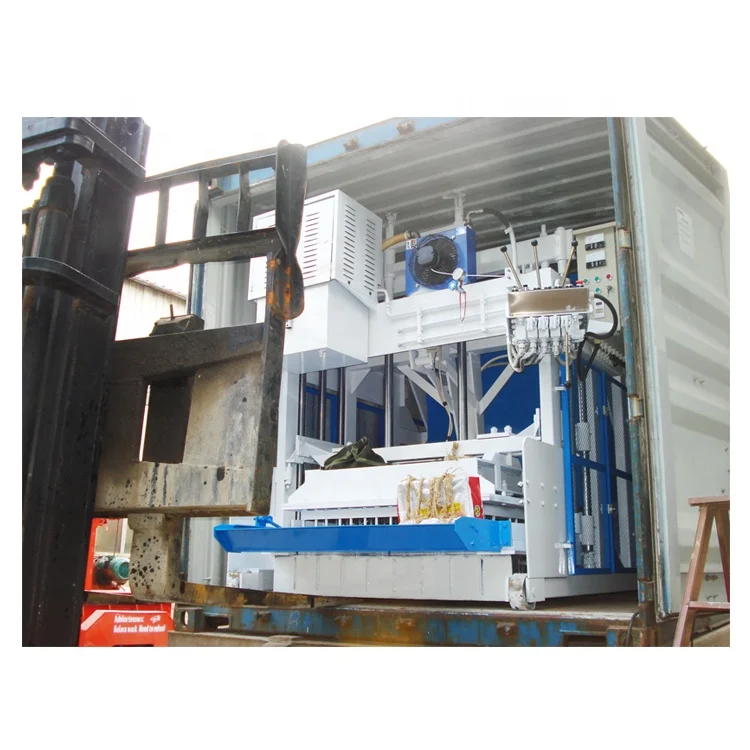
Description
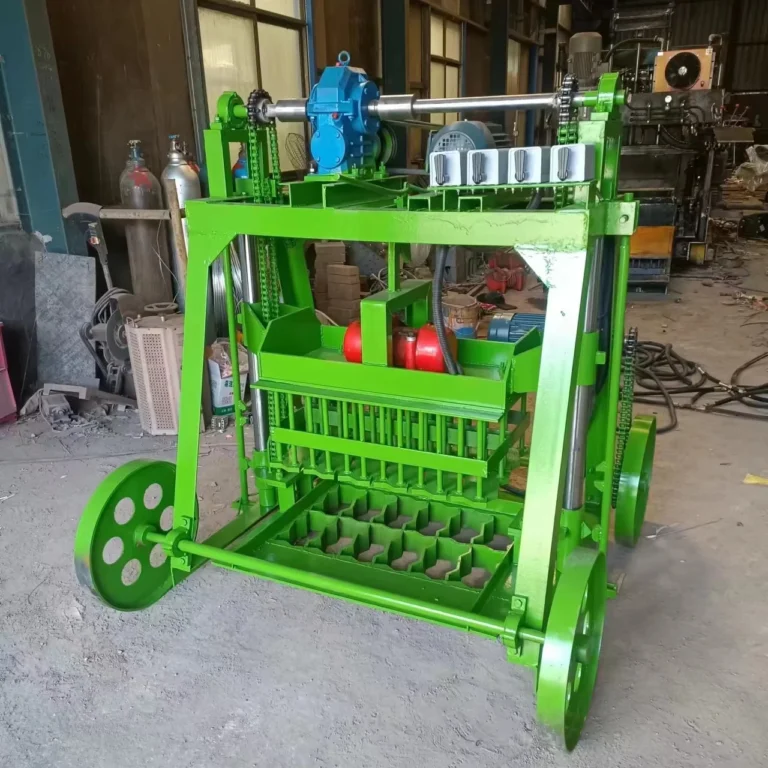
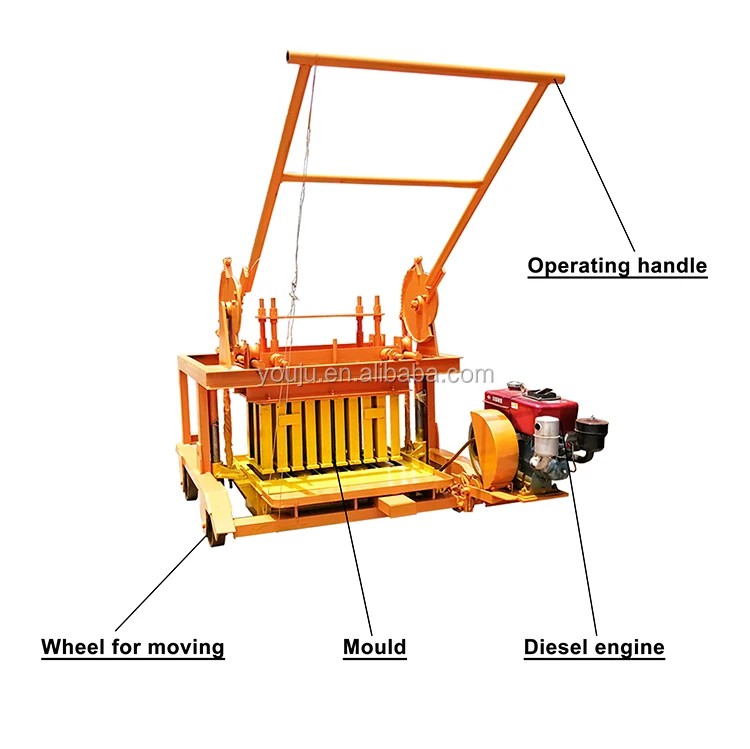
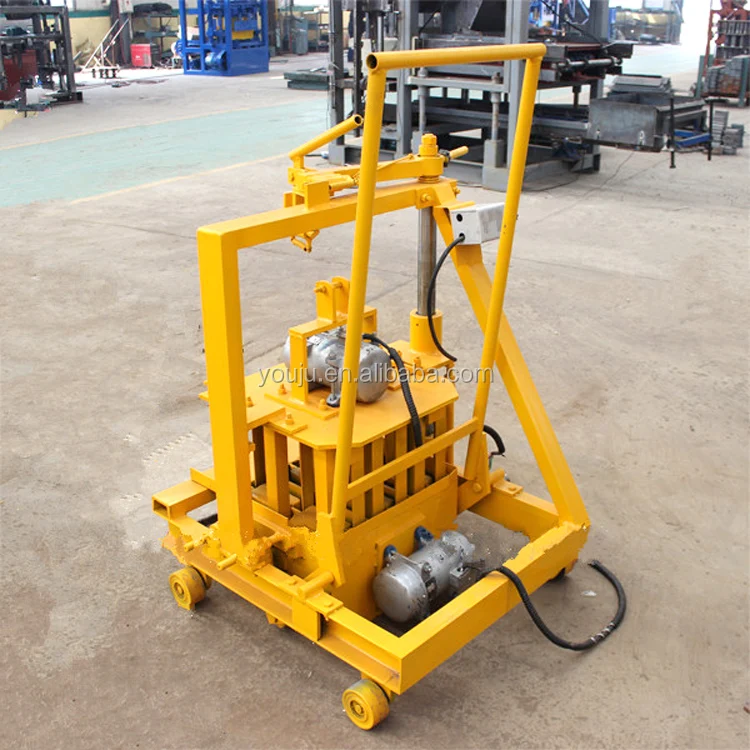
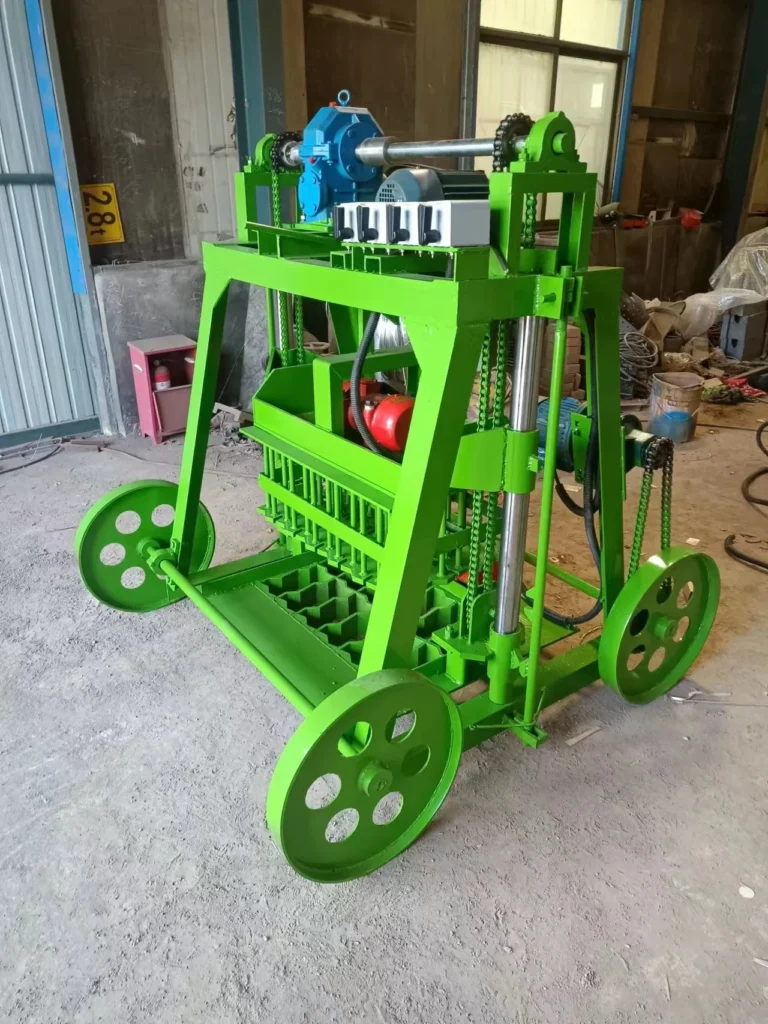
Hydraulic-Vibration Match — the QMY10-15 pairs upper/lower hydraulic demould control with dual vibration motors so block density stays consistent when local aggregate moisture or grading shifts on a live construction site.
Technical Specifications
| Parameter | Value |
|---|---|
| Model | QMY10-15 |
| Product Type | Mobile Concrete Block Making Machine |
| Molding Capacity | 10 pcs/mold |
| Molding Cycle | 10s–15s (basis not stated in source — confirm block format / material / thickness) |
| Output Capacity | 11,000 pcs/day over 8 hours (basis not stated in source — confirm block format / material / thickness) |
| Total Installed Power | 16 kW |
| Walking System | Electric walking |
| Steering System | Hydraulic steering |
| Vibration System | Dual vibration motors |
| Hydraulic System | Controls upper and lower demould; equipped with heat dissipator for oil cooling |
| Pallet Requirement | No pallets needed (egg-laying / mobile production) |
| Mould Change | Interchangeable moulds for multiple brick formats |
| Basic Equipment Line | QMY10-15 host machine, JS7500 concrete mixer, dump truck |
| Optional Equipment | PL1200 batching machine, cement silo, screw conveyor, loader |
| Standards | CE declaration where applicable |
Application Suitability
| Application | Material or Output |
|---|---|
| On-site hollow block production for housing projects | Crushed stone, sand, cement, water — no fixed plant footprint |
| Remote-site solid block manufacturing | Local aggregate and cement, laid directly on a level concrete slab |
| Paving and interlocking brick runs for access roads | Colour-pigmented concrete mixes via mould change |
| Contractor-led kerb and channel production | Semi-dry zero-slump concrete, egg-laid without pallets |
| First-plant entrepreneur startups | Low-capex entry with mixer and dump truck basic line |
What "11,000 Pieces per Day" Actually Means for a Mobile Plant
Daily output only holds true when the block format, mix design, and local aggregate match the calculation sheet — not the brochure cover.
I once watched a mobile hollow block machine, signed off on standard sand-gravel trials, lose close to half its quoted output the week it landed in West Africa. The local laterite had a clay fraction the trial never saw, and every cycle needed extra vibration seconds to reach demould strength. With a mobile unit that lays directly on the ground, there is no conveyor to hide behind — each block sits where it drops, and a weak cycle is visible before the operator walks ten metres. That is why the 11,000 pcs/day figure on the QMY10-15 automatic mobile block making machine data sheet carries a "basis not stated" note. [NEED_CITE: effect of clay content in aggregate on vibration time and cycle length] Buyers who treat the number as a guarantee, rather than a starting point for their own mix trial, are the ones who end up blaming the PLC.
Automation That Removes the Operator from the Cycle
The intelligent side of this machine is not a touchscreen — it is the way PLC-ready control coordinates hydraulic demould with the dual vibration motors so the operator does not decide, by feel, when to lift the mould box. On a manual mobile press, the same worker who steers the machine also judges release timing, and after three hundred cycles his judgement drifts. With the QMY10-15, the hydraulic circuit handles upper and lower demould on a fixed sequence, while the heat dissipator keeps oil viscosity inside the working window through a full shift. The result is block-to-block consistency that does not depend on who is holding the steering lever, which matters when a site crew rotates every few weeks.
Pallet-Free Production and the Hidden Labour It Replaces
Eliminating pallets sounds like a cost line removed from a quotation, but the real saving is the handling chain that never has to exist. No pallets means no pallet return conveyor, no pallet brushing station, no curing rack loader, and no forklift dedicated to pallet circulation. The QMY10-15 lays each block directly on a level slab and drives forward, so the curing area is simply the floor behind the machine. [NEED_CITE: pallet handling labour share in small block plants] For a contractor producing blocks on a housing site where floor space is already occupied by rebar and formwork, removing the pallet loop is often worth more than the press cycle itself.
How Vibration, Pressure, and Mix Design Intersect on a Mobile Unit
The QMY10-15 uses dual vibration motors rather than a single eccentric shaft, which spreads the vibrating force more evenly across the ten-cavity mould and reduces the density difference between the block closest to the motor and the one at the far corner. Hydraulic pressure then locks that density in by controlling both the upper punch and lower mould release — if the pressure is too low for a stiff, low-slump mix, the top face tears on demould; if it is too high for a wetter mix, the block slumps before the next cycle. Total installed power of 16 kW has to cover both vibration motors, the hydraulic pump, and the electric walking drive simultaneously, so the electrical panel must be sized for the combined starting current rather than the running figure. Mould change is mechanical and uses interchangeable tooling, which keeps format flexibility realistic on a site where the foreman may decide mid-week to switch from 200 mm hollow blocks to solid pavers. Cycle time of 10s–15s is achievable only when the mix is tuned to the vibration amplitude and the operator has a flat, cured slab to lay on — soft ground adds repositioning time that no spec sheet can predict.
When a Mismatched Configuration Catches Up On Site
A mobile press that arrives with the wrong voltage or an unconfirmed PLC language does not fail dramatically — it simply sits under a tarp while the site electrician re-orders components, and the project schedule slips by weeks. Moulds specified for a block format the local market does not actually buy leave the buyer running one size all year, while the "interchangeable mould" promise in the brochure gathers dust. [NEED_CITE: commissioning delays caused by voltage and language mismatches in exported machinery] And a machine quoted without the JS7500 mixer or PL1200 batching unit forces the contractor to improvise mixing with a tractor bucket, which then becomes the real bottleneck the press is blamed for.
Why Source This Mobile Press Through a Single-Focus Builder
Block machinery is the only product line here, so the QMY10-15 host machine, the JS7500 mixer, and the optional PL1200 batching unit are specified as one matched system rather than assembled from separate catalogues. Configuration is set against the buyer’s actual mix design and local aggregate, not a default sand-gravel trial. Mould drawings and format lists are issued before production, showing exactly which brick types are in scope and which need custom tooling. Automation level is selectable, so a buyer can start with the basic electric-walking setup and add batching and silo later without replacing the press. Installation support includes on-site commissioning and operator training, which is where cycle time is finally validated against the real material.
Documentation & Verification
- Line layout and capacity calculation stating the exact block format behind the 11,000 pcs/day figure.
- Machine specification sheet covering the 16 kW total power, hydraulic circuit, and dual vibration motors.
- Mould drawing and format list for every interchangeable cavity included in the quotation.
- Voltage, frequency, and PLC display language confirmation sheet signed before production starts.
- Factory test record showing cycle time and demould behaviour on the buyer’s submitted mix sample.
- Operation and maintenance manual with wear parts list and hydraulic oil cooling interval schedule.
Installation, Commissioning & Support
- A level, cured concrete slab of sufficient length is required for egg-laying production with the QMY10-15 electric walking system.
- A dedicated three-phase supply matching the confirmed voltage and 16 kW total load, with separate breaker for the JS7500 mixer.
- Host machine ships partly dismantled for container loading; hydraulic steering and walking drive are reconnected on site.
- First-run commissioning verifies mould release timing and dual vibration motor balance against the buyer’s local aggregate.
- Operator training covers mould change procedure, hydraulic heat dissipator inspection, and daily oil level checks.
- Wear parts and spare mould cavities list issued at handover for the first replacement cycle.
What We Need to Quote the Right Line
Before a proposal goes out, we ask for the exact block formats the site will run, the local aggregate source and its typical moisture range, and the daily volume the project schedule actually demands. We also need the site’s confirmed voltage, frequency, and preferred PLC display language so the control panel is built correctly before the container is booked. If an existing mixer or loader is already on site, tell us — the optional PL1200 batching machine and cement silo can then be scoped to fill only the real gaps.
Frequently Asked Questions
Q: How is the 11,000 pcs/day figure verified, and which block format does it assume?
A: The 11,000 pcs/day value is marked "basis not stated in source" because it depends on block size, wall thickness, and mix design. Before order confirmation, a capacity calculation sheet is issued that states the exact format used, the cycle time assumed, and the aggregate grading behind it. Site trials on the buyer’s own material then validate or adjust the figure.
Q: What automation level does the QMY10-15 ship with, and how does it grow later?
A: The base configuration covers PLC-ready hydraulic demould, dual vibration motors, and electric walking with hydraulic steering. Buyers can add the PL1200 batching machine, cement silo, and screw conveyor later as production volume grows, because the host machine control panel is specified with spare I/O from the start.
Q: How does the hydraulic demould system handle different mix designs?
A: Upper and lower demould are controlled by the hydraulic circuit rather than mechanical cams, so release pressure and timing can be adjusted when the mix changes — for example, from a dry hollow block mix to a wetter paver mix. The heat dissipator keeps oil temperature stable through a full shift so response does not drift.
Q: What voltage, frequency, and PLC language options are available?
A: Voltage and frequency are confirmed against the buyer’s site supply before production, and the PLC display language is locked in on the same confirmation sheet. This avoids the common commissioning delay where a machine arrives with a menu language the operator cannot read. [NEED_CITE: PLC language and voltage confirmation practices in exported block machinery]
Q: How does pallet-free production change the curing workflow?
A: With no pallets, blocks are laid directly on a level concrete slab and left in place to cure. There is no pallet return loop, no brushing station, and no curing rack system to move. The operator simply walks the QMY10-15 forward after each cycle, and the curing area is the floor immediately behind the machine.