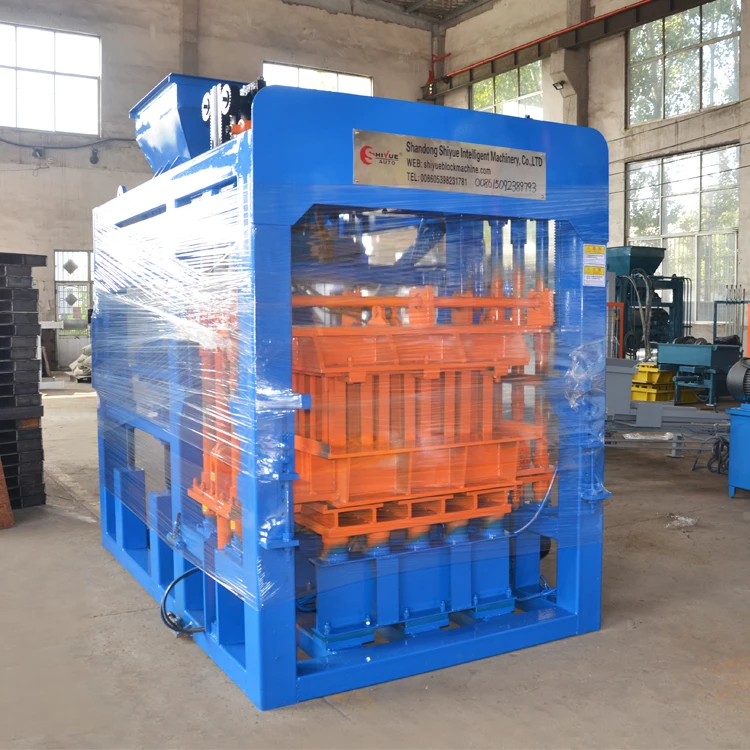
Description
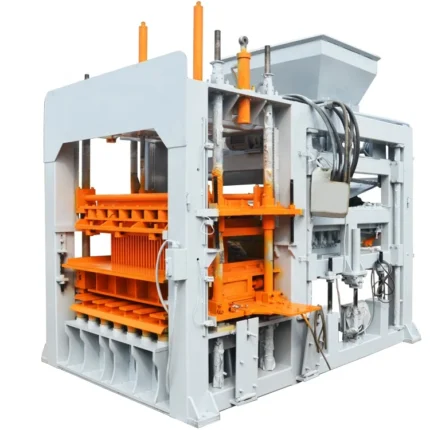
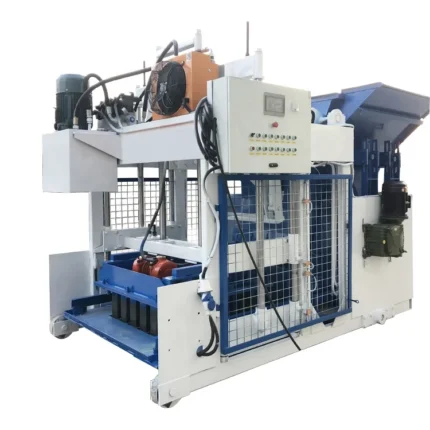
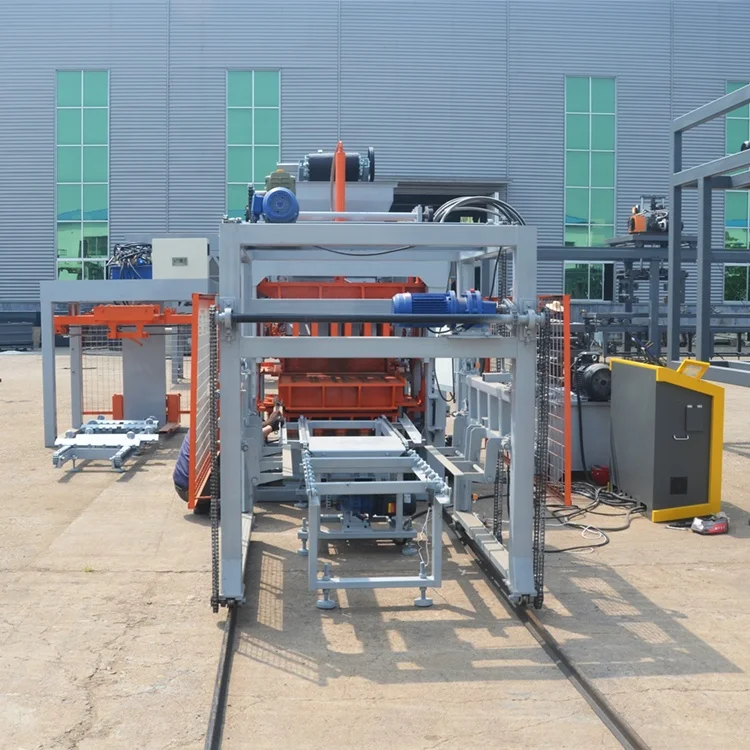
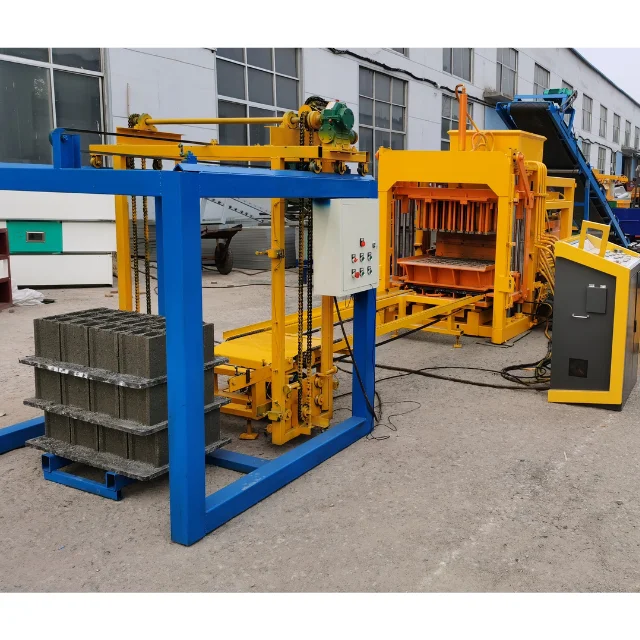
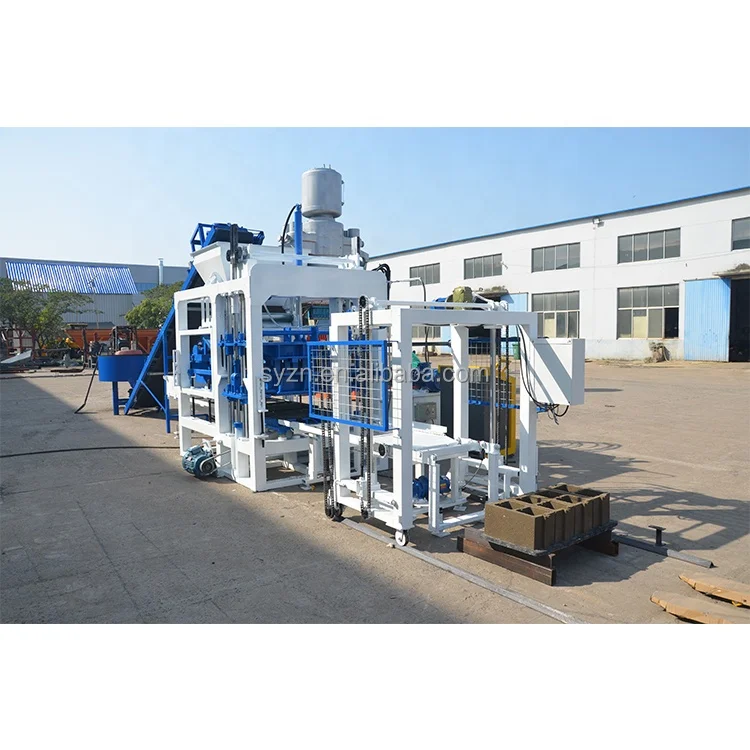
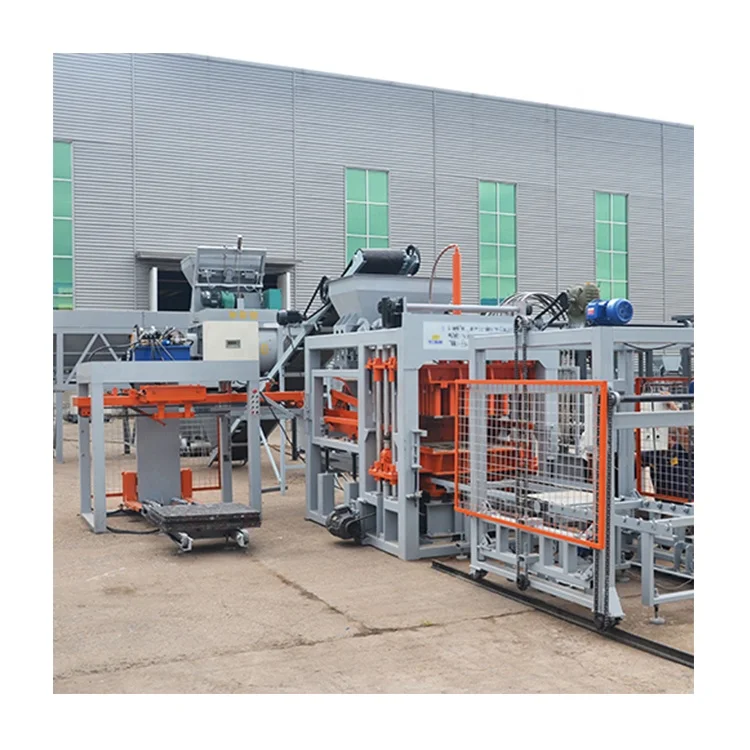
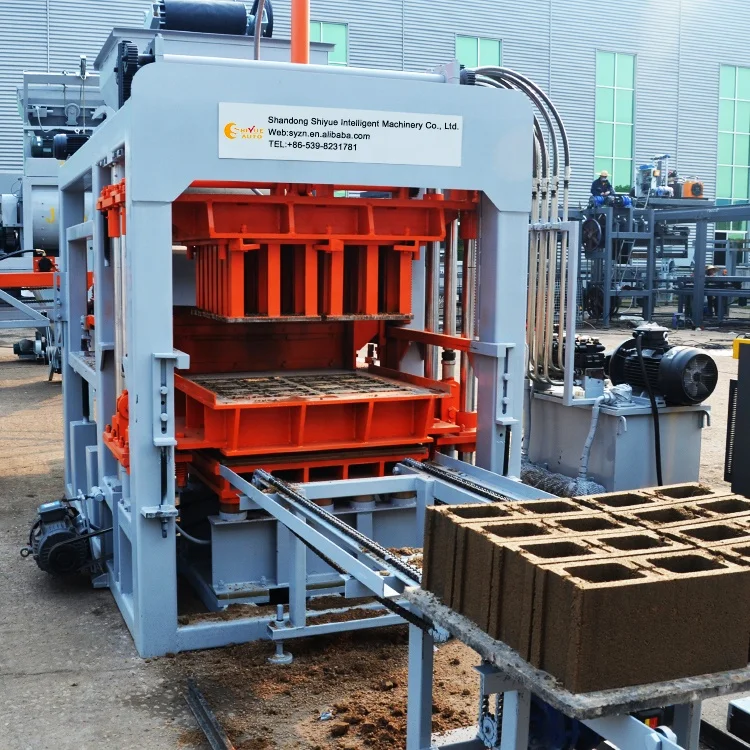
Integrated Press Cycle — the QT6-15 ships with pallet feeder, brick conveyor and block sweeper matched to the PLC-managed 15–25 s molding cycle, so the automation boundary is defined before contract signature.
Technical Specifications
| Parameter | Value |
|---|---|
| Model | QT6-15 |
| Product Type | Automatic Concrete Block Making Machine |
| Overall Dimensions (L×W×H) | 7400×1900×2660 mm |
| Molding Cycle | 15–25 s |
| Vibration Frequency | 4600 r/min |
| Exciting Force | 40–50 kN |
| Rated Power | 31.25 kW |
| Mixer Model | JQ350 |
| Pallet Size | 850×550×25 mm |
| Total Weight | 7 T |
| Control System | PLC control system |
| Hydraulic Station | Included |
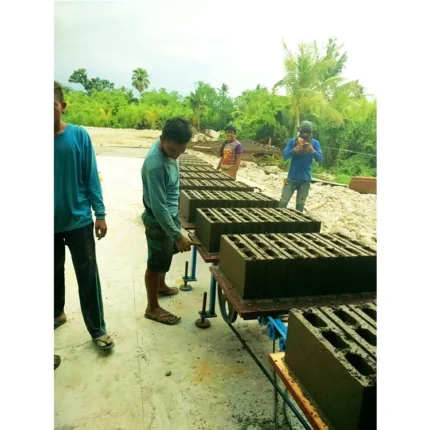
| Output Capacity (Hollow Block 400×200×200 mm) | 9600–13440 pcs/8hr |
| Output Capacity (Hollow Block 400×150×200 mm) | 14400–19200 pcs/8hr |
| Output Capacity (Solid Brick 240×115×53 mm) | 16200–19440 pcs/8hr |
| Included Equipment | Block making machine, hydraulic station, PLC control system, pallet feeder, brick conveyor, block sweeper |
| Free Accessories | Manual hydraulic trolley, spare parts and tools |
| Standards | CE (where applicable) |
Application Suitability
| Application | Material or Output |
|---|---|
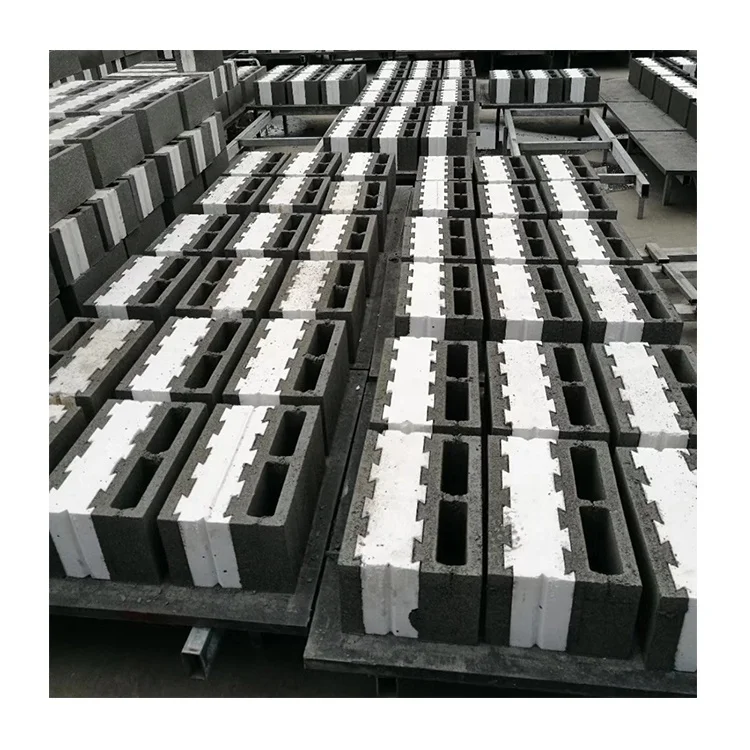
| Hollow block production for masonry walls | Crushed stone, sand, cement, fly ash |
| Solid brick manufacturing for load-bearing structures | Sand, cement, stone dust |
| Paver production for walkways and yards | Crushed stone, sand, cement |
| Curbstone forming for road and kerb projects | Coarse aggregate, cement, sand |
| On-site block production for housing developments | Locally sourced aggregate and cement |
| Format expansion for existing concrete product plants | Multiple mix designs via PLC recipe management |
Why the Voltage Question Should Come Before the Price on the Automatic QT6-15 Block Making Machine PLC Controlled
Mismatched voltage and PLC language are the two most common reasons commissioning stalls after the container is unpacked.
When a machine arrives with a 380 V / 50 Hz motor and the site runs 440 V / 60 Hz, the hydraulic pump spins at the wrong speed and the PLC transformer overheats within the first shift. I once watched a West African plant sit idle for three weeks because the HMI displayed only Chinese characters and no local electrician could navigate the menus. These are not warranty issues; they are specification gaps that should have been closed before production started [NEED_CITE: voltage and frequency standards by export market]. Confirming voltage, frequency and PLC display language in writing is the first checkpoint, not an afterthought.
What the PLC Actually Manages Across Every Pallet
The automatic QT6-15 block making machine PLC controlled configuration centralises the pressing sequence into a single cycle timer. The PLC triggers the pallet feeder, doses the material feed, engages vibration at 4600 r/min, ramps hydraulic pressure to the set point and holds it for the programmed dwell time before the sweeper clears the mould face. Each step is interlocked, so a pallet that does not reach its sensor stops the press before a half-formed block is produced. This removes operator pacing from the equation and keeps the 15–25 s cycle repeatable whether the format is a 400 mm hollow block or a smaller solid brick.
Recipe Recall and Format Changeover
Switching from hollow block to paver mould involves more than lifting one mould out and dropping another in. The PLC stores a recipe for each format: vibration duration, pressure hold time, feed shuttle passes and demould lift speed. When the operator selects the recipe on the HMI, the next cycle runs with those parameters automatically. Without this recall function, every mould change requires manual adjustment of the hydraulic relief valve and vibration timer — a process that can consume the better part of a shift if the settings are lost. Consistent recipe management is what keeps multi-format plants producing within the stated output ranges rather than drifting outside them [NEED_CITE: PLC recipe management in concrete block presses].
Reading the Numbers That Matter
The 40–50 kN exciting force and 4600 r/min vibration frequency are not independent figures; they work together to compact the mix against the mould walls. A higher vibration frequency without sufficient hydraulic pressure leaves air pockets in the block core, while high pressure with low vibration produces a dense but brittle block that chips during pallet transfer. The 850×550×25 mm pallet size determines how many cavities fit per cycle and must align with the curing rack spacing and forklift tine width the buyer already uses. The 31.25 kW rated power covers the main motor, hydraulic pump and vibrator; the supply circuit should allow for starting inrush without tripping adjacent equipment. Understanding these relationships helps the buyer match the machine to a specific aggregate gradation rather than treating the spec sheet as a standalone brochure.
The Cost of Skipping the Automation Audit
A buyer who selects a press without confirming what is automated versus what remains manual often discovers that pallet return, block stacking and curing rack handling were never in the quotation. The wet blocks then sit on pallets waiting for someone to carry them by hand, and the press cycle slows to whatever pace the manual crew can sustain. I have seen plants where the press was capable of a 20 s cycle but the actual throughput settled at double that because the pallet feeder was absent and each pallet was placed by a worker with gloves. The gap between quoted capacity and daily output is almost always an automation boundary problem, not a machine problem [NEED_CITE: automation scope gaps in block plant quotations].
Why Source This Configuration Here
Block machinery is the sole product focus, so the QT6-15 press, mould, pallet and handling equipment are specified as a matched set rather than assembled from separate suppliers. The configuration is built around the buyer’s actual mix design and local aggregate, not a catalogue default, which is why requesting a material sample before finalising the vibration and pressure settings is standard procedure. Mould design covers the formats the buyer’s market sells, including custom drawings when a standard cavity layout does not match local block dimensions. The automation level is selectable, meaning a buyer can begin with the included pallet feeder and conveyor and later integrate automatic stacking without replacing the press. Installation and commissioning include operator training so the PLC recipes are loaded and verified on the buyer’s own raw materials before the engineering team leaves site.
Documentation & Verification
- Line layout showing pallet flow from feeder through press to conveyor exit
- Capacity calculation per block format with molding cycle assumption stated
- PLC I/O mapping and hydraulic schematic for local electrical maintenance
- Voltage, frequency and HMI language confirmation record before production
- Factory test video documenting actual cycle times on buyer’s specified format
- Wear parts list with mould cavity insert dimensions and hydraulic seal codes
Installation, Commissioning & Support
- Foundation pad sized to the 7400×1900 mm footprint with anchor bolt plan
- Dedicated 31.25 kW supply circuit with breaker rating for motor starting inrush
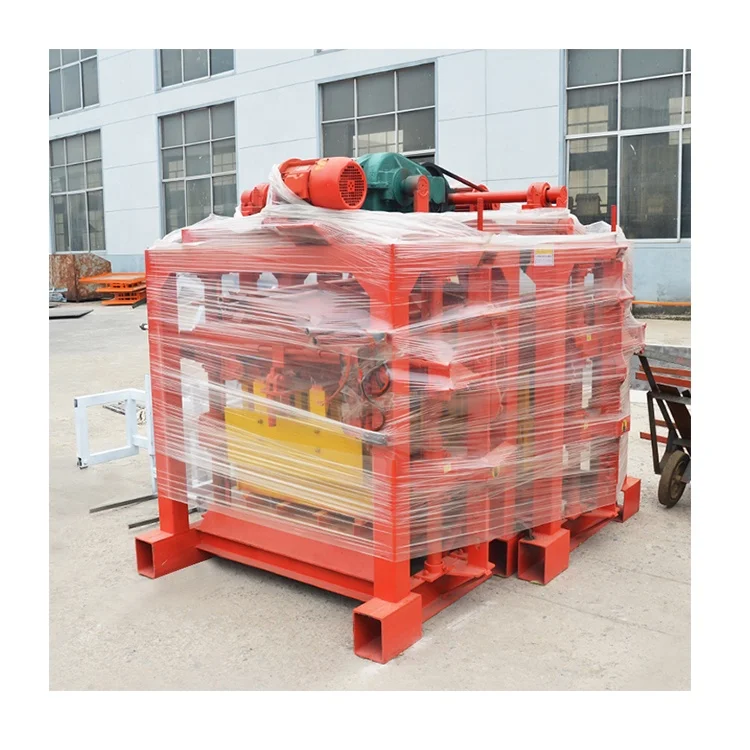
- Machine shipped dismantled with hydraulic station and PLC cabinet as separate crates
- First-day commissioning covers PLC recipe loading and vibration tuning on site aggregate
- Operator training on mould change procedure, recipe selection and daily greasing points
- Hydraulic hose and seal kit included in free accessories for first-year maintenance
What to Prepare Before Requesting a Quotation
Share the exact block formats you intend to produce, including dimensions and target daily output per format. Specify your local voltage and frequency, the language you need on the PLC display and the aggregate type available within hauling distance of the plant. If you already operate curing racks or forklifts, send the pallet dimensions and rack spacing so the 850×550 mm pallet configuration is confirmed compatible before the order is placed.
Frequently Asked Questions
Q: What automation is included versus what remains manual on the QT6-15?
A: The package includes a PLC-controlled press cycle, automatic pallet feeder, brick conveyor and block sweeper. Pallet return from the curing area back to the feeder, block stacking on the pallet and curing rack handling are manual unless an automatic stacker and cubing system is added to the line.
Q: How is PLC display language confirmed, and can it be changed after delivery?
A: Display language is confirmed in writing before production starts and programmed into the HMI. Changing the language after delivery requires a software update from the supplier, which can usually be done remotely but may require an on-site visit if the PLC firmware needs rewriting.
Q: How does the PLC manage cycle timing when switching between hollow block and paver moulds?
A: Each mould format has a stored recipe containing vibration duration, pressure hold time, feed shuttle passes and demould speed. Selecting the recipe on the HMI applies those parameters automatically to the next cycle, keeping output consistent across format changes.
Q: What is the upgrade path if I start with this configuration and later add automatic stacking?
A: The press, pallet feeder and conveyor remain in place. An automatic stacker and cubing unit is installed at the conveyor exit, and the PLC program is extended with stacking logic. The original control cabinet typically has reserved I/O channels for this expansion.
Q: How do voltage and frequency differences between markets affect the PLC and hydraulic station?
A: The main motor, hydraulic pump and PLC transformer are all selected for the buyer’s confirmed voltage and frequency. Running a 50 Hz motor on 60 Hz increases pump speed and vibration frequency, altering the molding cycle and potentially overloading the motor, which is why written confirmation before production is essential.