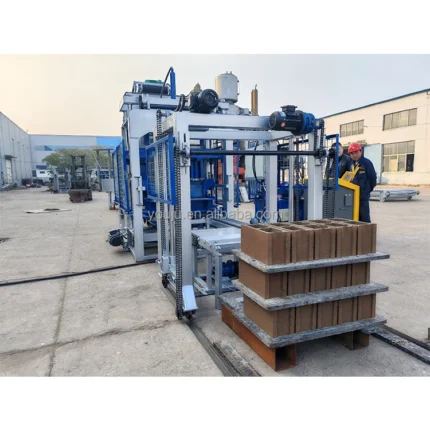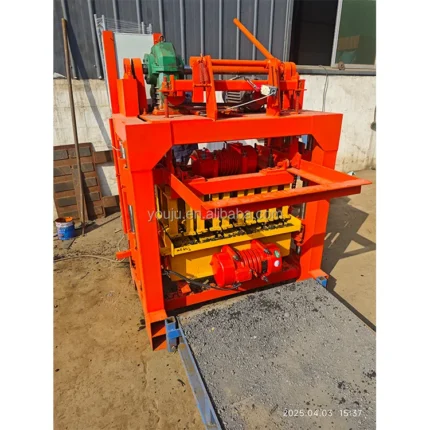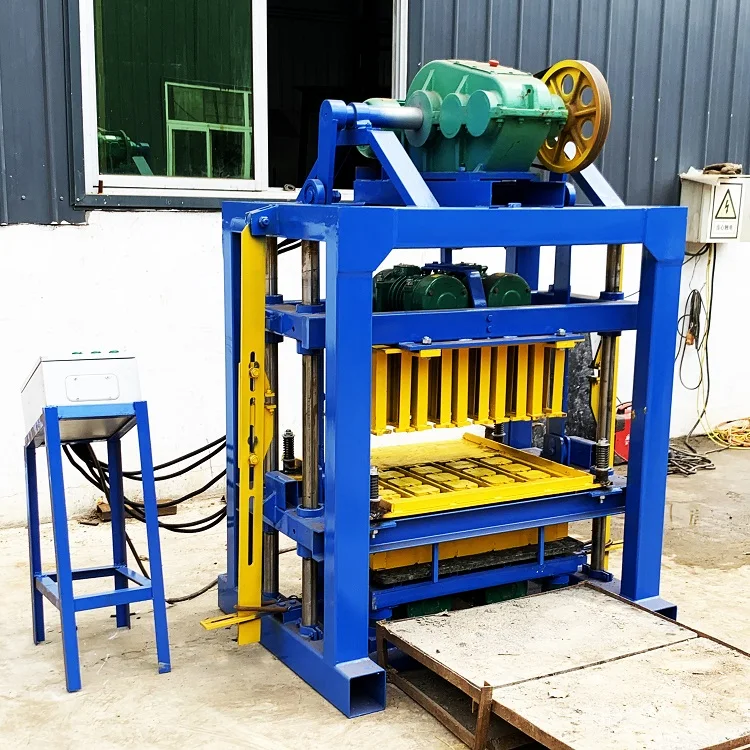
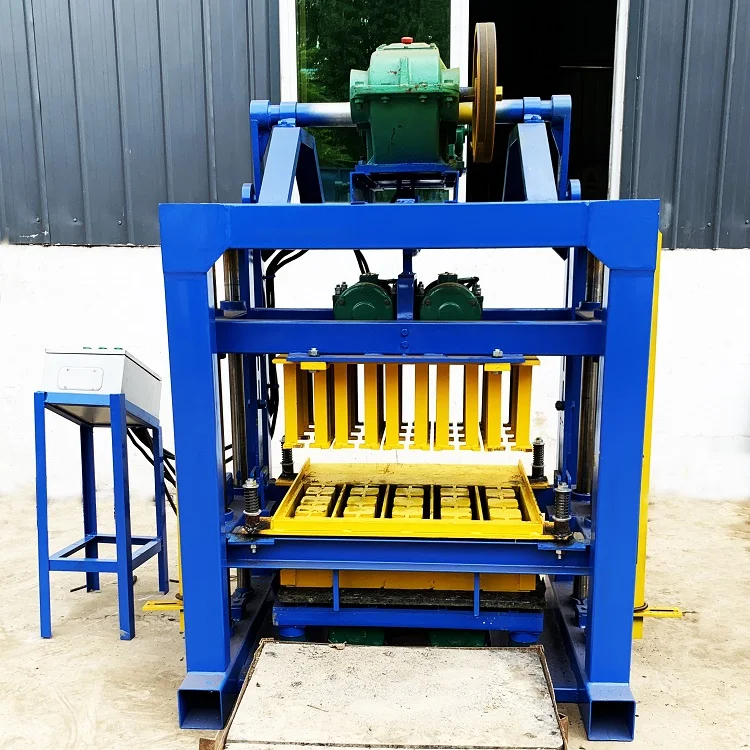

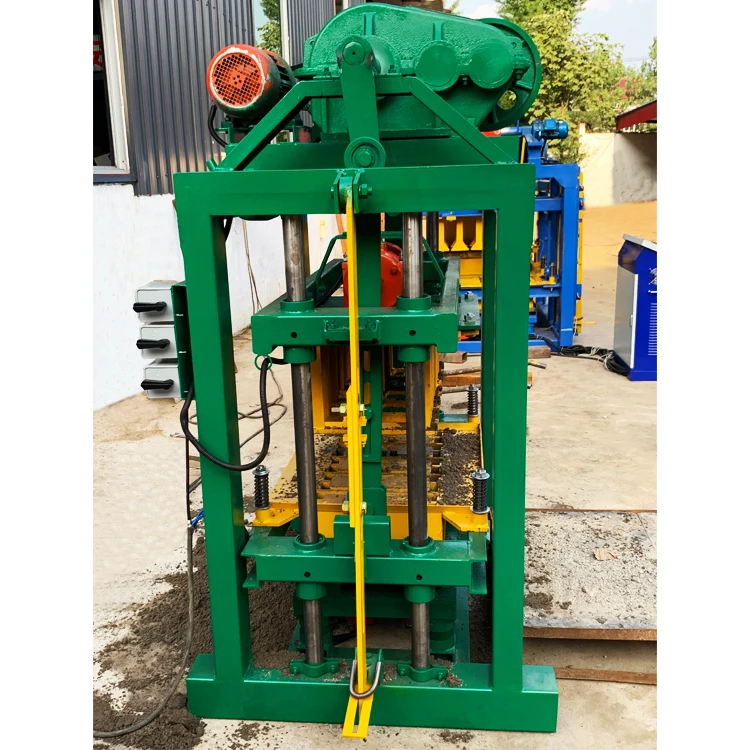
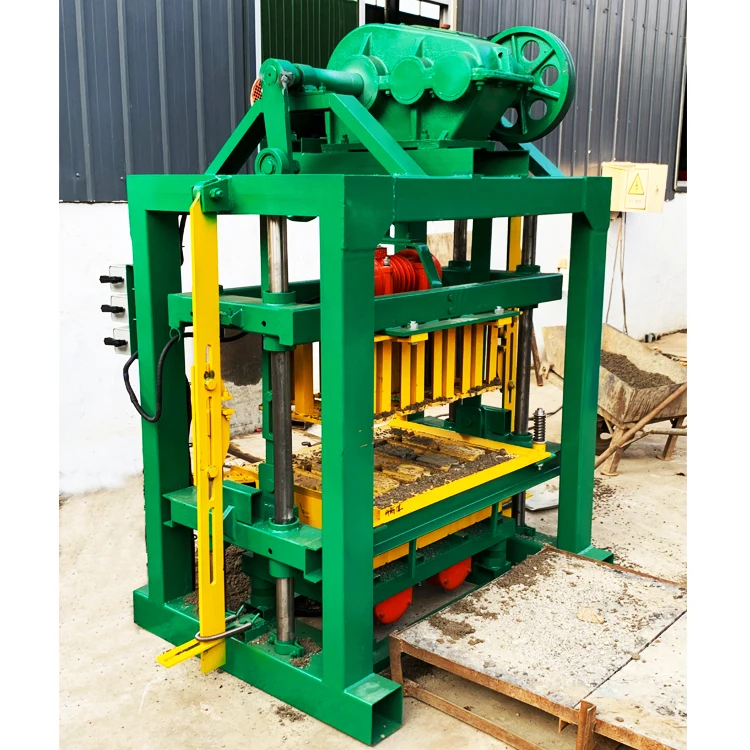
Description
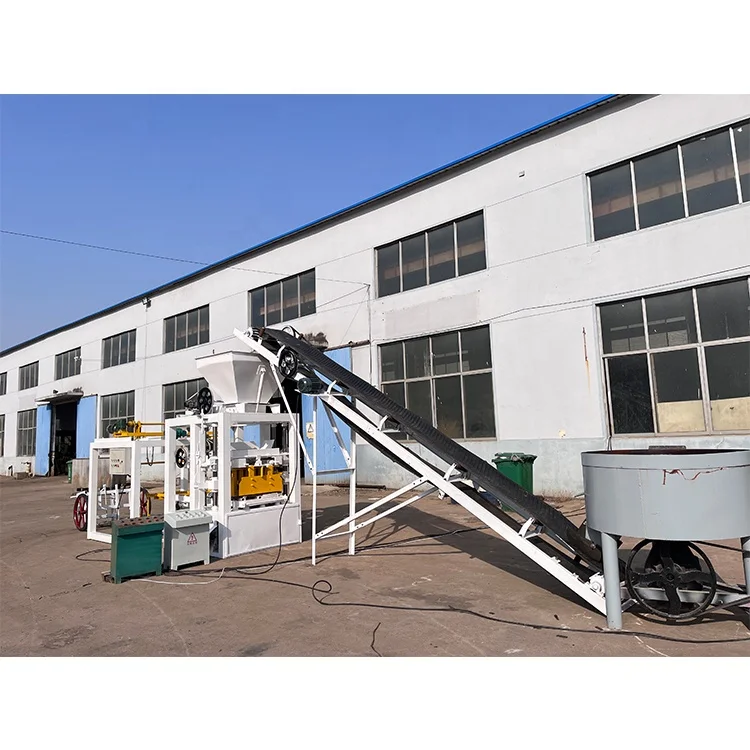
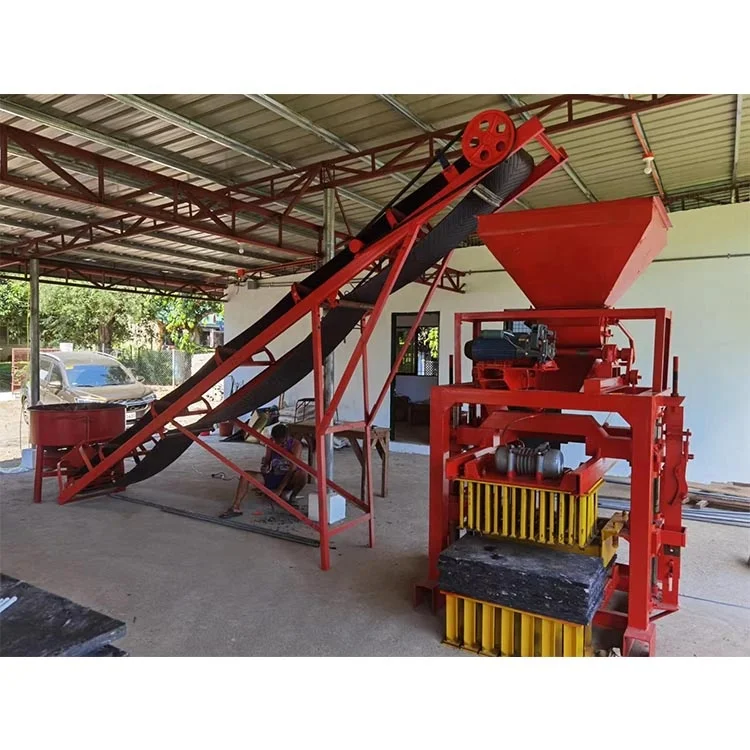
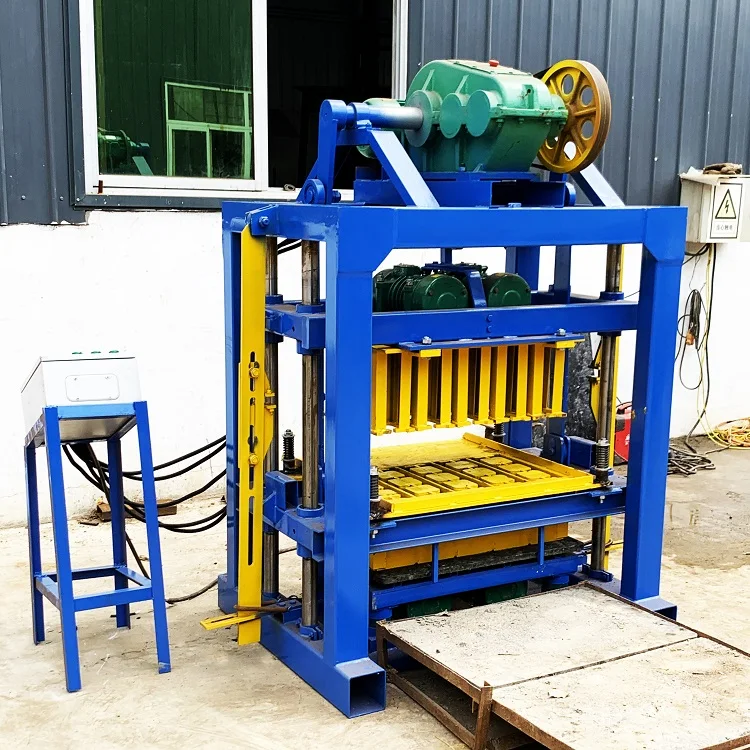
Intelligent Control Integration — QTJ4-40 manual block production configured with voltage, frequency and PLC display language confirmed against your site conditions before the machine leaves the factory.
Technical Specifications
| Parameter | Value |
|---|---|
| Product Type | Manual Cement Brick Making Machine |
| Model | QTJ4-40 / QTJ4-40 |
| Per Hour Output (400×200×200mm hollow block, 4 pcs/mould) | 360 pcs |
| Per Hour Output (400×150×200mm hollow block, 5 pcs/mould) | 500 pcs |
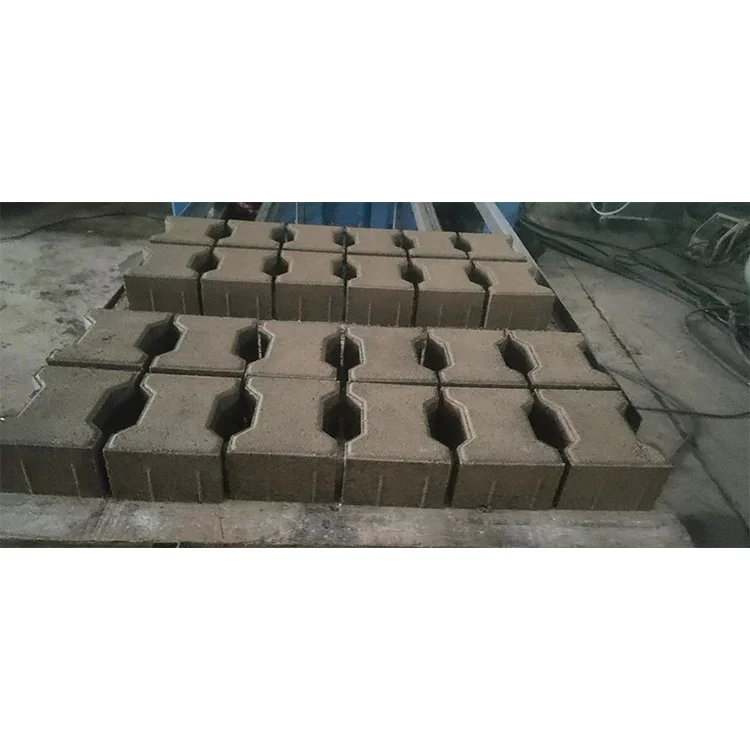
| Per Hour Output (225×112.5×60mm interlocking/paver, 9 pcs/mould) | 900 pcs |
| Per Day Output (8 hours, 400×200×200mm hollow block) | 2880 pcs |
| Per Day Output (8 hours, 400×150×200mm hollow block) | 4000 pcs |
| Per Day Output (8 hours, 225×112.5×60mm interlocking/paver) | 7200 pcs |
| Main Vibration Form | Platform Vibration |
| Vibration Frequency | 2800 r/min |
| Pallet Size | 850×450 mm |
| Raw Material Ratio (approx.) | Cement 8%-10%, Sand 30%-40%, Stone 50%-60% (1:4:5) |
| Machine Weight | 1 T |
| Overall Dimensions | 1350×1460×1800 mm |
| Worker Requirement | 1-3 people |
| Automation Level | Manual / Semi-automatic (top die push and pull, automatic scraper) |
| Mould Format Capacity | 4, 5, or 9 pcs per mould depending on block size |
| Voltage & Frequency | Configurable to buyer’s site requirements (must be confirmed) |
| Control System Language | Configurable (must be confirmed before dispatch) |
| Factory Area Requirement | 200 m² |
| Applied Products | Concrete blocks, hollow/solid blocks, pavers, interlocking blocks, curbstone, colored pavers |
| Raw Material Compatibility | Concrete, cement, fly ash, crushed stone, sand, dust, gravel, slag |
| Certification | CE |
Application Suitability
| Application | Material or Output |
|---|---|
| Small-scale hollow block plant | Crushed stone, sand, cement producing 400×200×200mm blocks |
| On-site building contractor production | Concrete and gravel mix for 400×150×200mm solid blocks |
| Paver and interlocking brick workshop | Cement, sand, fly ash forming 225×112.5×60mm pavers |
| First-time entrepreneur block yard | Mixed aggregate producing hollow and solid formats on 850×450mm pallets |
| Building material distributor adding manual formats | Slag, dust, gravel across multiple mould configurations |
Why the Control Language Must Be Settled Before the Crate Is Nailed
A PLC controlled manual block making machine is only as useful as the operator who can read its screen.
I once stood on a job site outside Lima watching a three-man crew stare at a brand-new press whose entire control interface was in a language none of them could read. The machine was mechanically sound — the platform vibration engaged, the scraper cycled, the top die pushed and pulled exactly as designed. But because the display language and the local voltage had never been formally confirmed before the crate left the factory, the crew could not navigate fault codes or adjust cycle timers. The press sat idle for an entire week while new firmware was flashed remotely [NEED_CITE: PLC language and firmware configuration for export machinery]. That week of lost production on a small block yard cost far more than the fifteen-minute confirmation call that should have prevented it.
How Automation Layers Build on the QTJ4-40 Press
The QTJ4-40 ships with platform vibration, automatic scraper travel, and top-die push-and-pull actuation — three movements that remove the heaviest manual intervention from every cycle. The operator still loads pallets and removes finished blocks by hand at this base tier. A PLC controlled manual block making machine at this level keeps the crew at one to three people, which suits a first-time yard where labour cost is not yet the primary constraint.
The Upgrade Path Without Replacing the Press
When volume grows and pallet handling becomes the bottleneck, the line can accept semi-automatic pallet feeding and stacking modules that bolt onto the existing frame. The press itself does not change — the cycle timer, vibration frequency, and mould clamp points stay identical. What changes is that pallets advance on a conveyor and finished blocks are lifted by a stacker, moving the operator role from physical handler to line supervisor. This upgrade path is the reason many first-time buyers choose the automatic QTJ4-40 block machine upgrade route rather than jumping straight to a full automatic line they are not yet ready to staff or maintain [NEED_CITE: semi-automatic to automatic block line upgrade considerations].
Vibration, Pressure and What Actually Determines Block Density
Platform vibration at 2800 r/min drives aggregate particles into tight arrangement while the top die applies downward mechanical force — the two actions together set the density and therefore the compressive strength of every block that leaves the mould. If the vibration frequency were lower, fine sand and fly ash would not consolidate properly and block corners would crumble during de-moulding. The pallet size of 850×450 mm was chosen to match the mould cavity layout across the 4-cavity hollow, 5-cavity hollow and 9-cavity paver formats, meaning a single pallet fleet serves the entire product range. The 1 T machine weight provides the mass needed to absorb platform vibration without transmitting it into the workshop floor, which matters when the press sits on a simple concrete pad rather than a poured foundation. The raw material ratio of approximately one part cement to four parts sand to five parts stone is a starting point; actual proportions must be adjusted to the aggregate grading available locally.
What Happens When the Pallet Specification Is Ignored
Every pallet the operator feeds into the QTJ4-40 must match the 850×450 mm bed and carry the vibration load without warping. When a buyer sources pallets locally without confirming thickness tolerance, the mould bottom seal degrades after a few hundred cycles, and green blocks emerge with ragged edges that fail visual inspection. Pallet material — whether bamboo, PVC or steel — also determines how the curing yard forklift grips them, and a mismatch there means pallets are handled by hand well beyond the point where the line volume justifies mechanical stacking [NEED_CITE: block machine pallet material and curing yard handling compatibility]. The cost of replacing a full pallet fleet after the first month of production routinely exceeds the price difference between a correct and an incorrect pallet specification in the original quotation.
Why Procurement Starts with Site Conditions, Not a Catalogue
Configuration for the QTJ4-40 begins with your actual mix design and the aggregate sources within hauling distance of your yard, not a default recipe. Machine, mould, pallet and handling equipment are specified as one matched system so that cycle times at every station align and the press is never left waiting. Mould design covers the specific formats your local market purchases, with custom drawings available when a regional block dimension falls outside the standard cavity list. The automation level is selectable — you can commission at manual and add pallet feeding or stacking modules later without swapping the press. Installation support includes on-site commissioning and operator training that covers cycle adjustment, mould changeover, and daily maintenance routines [NEED_CITE: block machine installation and commissioning best practices].
Documentation & Verification
- Factory test record running your specified block format before dispatch
- Voltage and control language written confirmation sheet signed before crating
- Mould drawing and cavity format list matched to your local block dimensions
- Hydraulic and electrical schematic with component identifiers for local servicing
- Wear parts and mould list with part numbers for reorder reference
- Operation and maintenance manual in the confirmed control language
Installation, Commissioning & Support
- 200 m² factory area requirement with level concrete pad for the 1350×1460×1800 mm frame footprint
- Dedicated electrical circuit matching confirmed voltage and frequency for the vibration motor and control panel
- Machine ships as a single 1 T unit; forklift or gantry required for unloading and positioning
- On-site commissioning includes vibration frequency verification and cycle timer calibration to your mix
- Operator training covers top die adjustment, scraper timing and mould changeover procedure
- Wear parts list provided for platform springs, scraper blades and mould liners with reorder intervals
Before You Request a Quotation
Send your target block format with the exact dimensions your market sells, along with the daily output you need to meet on a single shift. Confirm the voltage and frequency available at your yard, the control display language your operators read, and the aggregate materials you can source locally. Tell us whether your curing racks and forklift are already on site so pallet size and handling equipment can be matched to what you own, not what a catalogue assumes.
Frequently Asked Questions
Q: How is daily output verified per block format rather than per generic cycle?
A: Every capacity figure we quote names the exact block dimension and mould cavity count behind it — for example, 360 pieces per hour based on a 400×200×200mm hollow block at four cavities per mould. We never issue a single cycle-per-hour number without stating the format it assumes, because the difference between a 4-cavity hollow and a 9-cavity paver changes daily output significantly.
Q: What automation level does the machine ship with, and what can be upgraded later?
A: The base configuration includes automatic scraper travel and top-die push-and-pull with manual pallet handling, keeping crew size at one to three. Pallet feeding conveyors and block stacking modules can be added later on the same frame, moving the operator role from physical handler to line supervisor without replacing the press.
Q: Which voltage, frequency and control-language options are confirmed before dispatch?
A: Voltage and frequency are written to your site supply specification, and the PLC display language is confirmed to match your operator crew. Both items are signed off on a configuration sheet before crating — this prevents the situation where a machine arrives with an unreadable interface or an incompatible motor supply.
Q: How does platform vibration frequency affect block strength consistency?
A: Platform vibration at 2800 r/min compacts aggregate particles against the mould walls while the top die applies simultaneous downward force. This combination determines the density of every block, and consistent density across every cycle is what gives blocks uniform compressive strength when tested after curing.
Q: What pallet size does the line require, and can it match existing curing racks?
A: The press uses 850×450 mm pallets across all mould formats. Before shipment, we confirm that this pallet dimension matches your existing curing racks and forklift fork spacing so that pallets move from press to curing yard without manual re-handling or a full fleet replacement.