Description
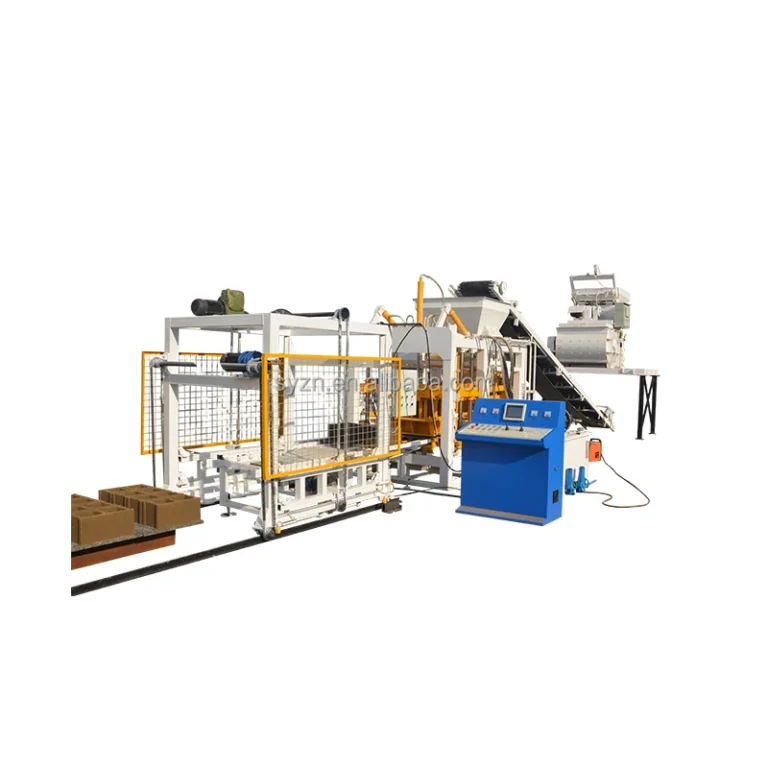
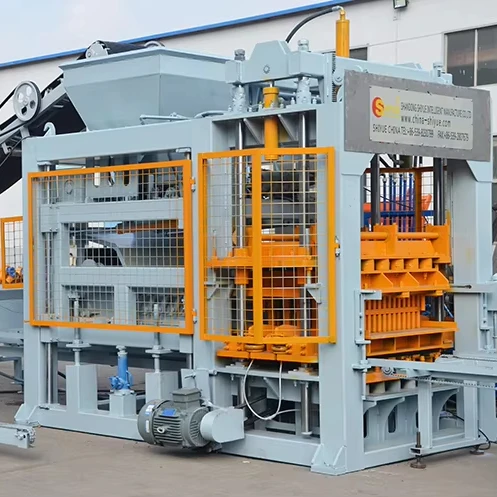
Integrated Control Architecture — The QT8-15 pairs a Siemens PLC with a custom-developed block machine control program, letting one operator manage pallet feeding, molding, and stacking from a single HMI screen rather than coordinating three separate stations.
Technical Specifications
| Parameter | Value |
|---|---|
| Model | QT8-15 |
| Product Type | Automatic Cement Interlocking Block Making Machine |
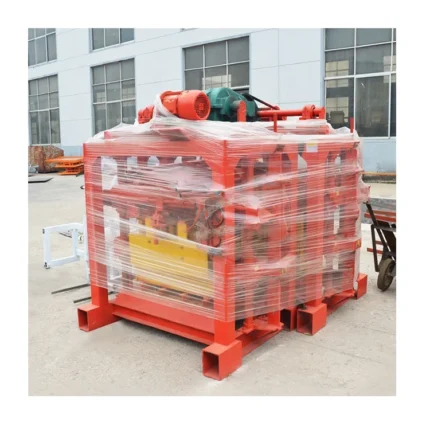
| Dimension of Host Machine | 5870 × 2220 × 2850 mm |
| Weight of Host Machine | 10 Tons |
| Molding Area | 950 × 900 mm |
| Pallet Size | 950 × 900 × 25 mm |
| Host Machine Power | 47 kW |
| Vibration Force | 100 kN |
| Vibration Method | Hydraulic + Platform Vibration |
| Vibration Frequency | 2800–4500 cycles/minute |
| Molding Period | 15 seconds (basis to be confirmed per block format) |
| Control System | Siemens PLC with independently developed control program |
| Motor | Germany SIEMENS brand or CE standard brand |
| Travel Switch | France Schneider / Japan Omron |
| Mould Heat Treatment | Carburizing, 54–58 HRC, lifespan over 100,000 cycles |
| Welding | Carbon dioxide protection welding |
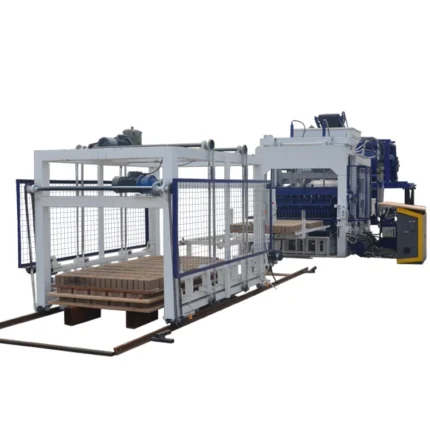
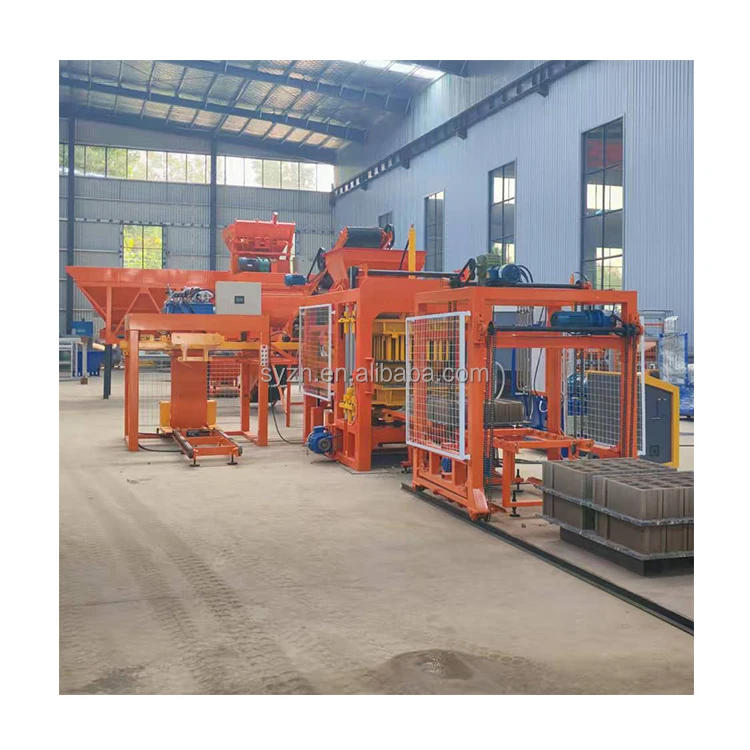
| Grouped Equipment | PLD1200 Batching Machine, JS750 Mixer, Conveyor, Hydraulic Station, Pallet Feeder, Brick Receiver, Hydraulic Trolley, SY-8 Stacker (3 kW, 600 kg) |
| Batching Machine Capacity | 1200 L weigh-batching hopper, 4 × 2.5 m³ storage hoppers |
| Mixer Charging / Discharging Volume | 1200 L / 750 L |
| Mixer Production Capacity | 35 m³/h |
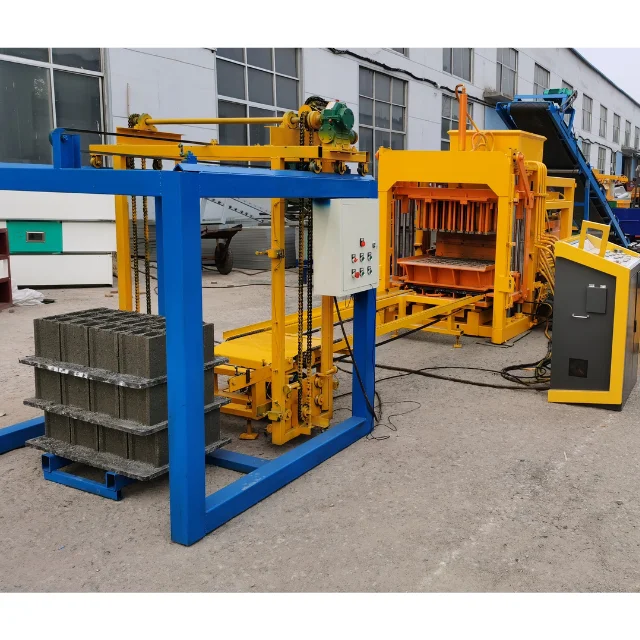
| Stacking Method | Automatic mobile pallet stack (SY-8 stacker) |
| Voltage | 220 / 380 / 415 / 440 V (customizable) |
| Standards | CE |
Application Suitability
| Application | Material or Output |
|---|---|
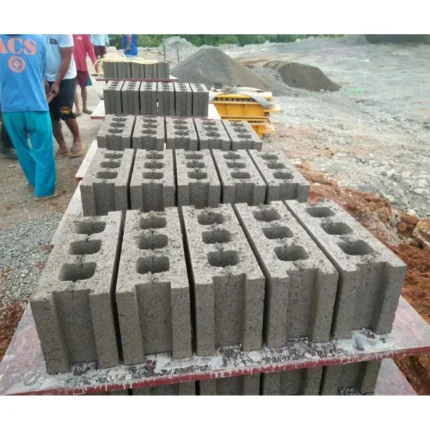
| Interlocking brick production | Crushed stone, cement, sand blends for load-bearing and non-load-bearing walls |
| Hollow block manufacturing | Lightweight aggregate or standard concrete mixes for structural blockwork |
| Paving brick and color paver | Fine aggregate base mix with optional color feeding system for surface layer |
| Solid brick for masonry | Dense concrete mixes for foundation and boundary wall applications |
What the PLC Actually Controls on an Automatic Block Making Machine PLC Controlled
A programmable logic controller replaces the operator’s timing judgment with repeatable cycle logic, so every pallet receives the same vibration duration, hydraulic pressure, and feed volume regardless of shift length or operator fatigue.
I have spent years commissioning lines across West Africa and South Asia, and the pattern is consistent: plants running semi-automatic presses lose output to manual pallet handling long before the press itself becomes the bottleneck. When a buyer upgrades to an automatic block making machine PLC controlled, the gain is not just fewer workers on the floor — it is the removal of timing variation that causes soft blocks at the start of a shift and cracked blocks at the end [NEED_CITE: field observations on block consistency across semi-automatic versus automatic operations]. The QT8-15 addresses this by tying pallet indexing, feed drawer travel, vibration start-stop, and hydraulic head pressure into a single sequence managed by the Siemens PLC.
Sequence Logic That Removes Operator Timing Errors
The independently developed control program sequences each station — pallet feeder, feed drawer, vibration, hydraulic press, brick receiver — so that no station advances until the previous one confirms position. This matters most on interlocking brick formats where a half-second feed drawer overlap leaves excess material on the mould edge and produces dimensionally inconsistent units. With the QT8-15, the PLC holds the feed drawer retraction until the limit switch confirms full travel, preventing that overlap.
Stacking Automation and the Labour Equation
The SY-8 stacker lifts cured pallets up to 600 kg and places them onto a hydraulic trolley for transport to the curing area. In a semi-automatic setup, two workers typically handle wet pallets between press and curing rack, and their pace sets the effective line speed. Removing that manual link means the automatic block making machine PLC controlled system runs at its own cycle rate rather than the pace of the slowest manual station [NEED_CITE: labour allocation studies in small-to-medium block plants].
Vibration and Hydraulic Pressure Tuned Through the HMI
The PLC allows vibration frequency adjustment across the 2800–4500 cycles/minute range and hydraulic pressure modulation from the operator screen. Different block formats — a thin paving brick versus a tall hollow block — demand different energy profiles. Rather than changing mechanical stops or relief valves, the operator selects the stored recipe for each format, and the automatic block making machine PLC controlled system applies the matching parameters on the next cycle.
Reading the Mould, Pallet, and Press as One System
The 950 × 900 mm pallet defines how many blocks fit per cycle and how the curing racks must be spaced. The 100 kN vibration force must reach every cavity uniformly, which depends on mould weight and cavity count. The 47 kW host machine power must cover vibration motors, hydraulic pump, and feed drawer drive simultaneously without voltage sag tripping the PLC. These three parameters — pallet size, vibration force, and installed power — were specified together for the QT8-15, so the press does not starve the stacker or overload the mixer circuit. The JS750 mixer discharges 750 L per batch at 35 m³/h, which must keep pace with the press consumption rate; if the mixer falls behind, the PLC pauses the cycle rather than feeding a short batch that produces weak blocks. Mould carburizing to 54–58 HRC keeps cavity dimensions stable across production runs, so the PLC recipe that worked on day one still produces blocks within tolerance at cycle 80,000.
The Hidden Cost of Skipping PLC Language and Voltage Confirmation
A press arriving with a PLC display in a language the local operator cannot read sits idle while a translator is sourced, and a 415 V machine wired into a 380 V supply without transformer adjustment will trip breakers on every hydraulic pump start. These are not theoretical issues — they consume the first week of what should be production time [NEED_CITE: commissioning delay reports from African block plant installations]. The cost is not the transformer; it is the idle crew, the delayed project handover, and the buyer’s lost credibility with their own customer.
Why Sourcing the Press and the Line From One Supplier Matters
Block machinery is our single focus, which means the QT8-15 press, the PLD1200 batcher, the JS750 mixer, and the SY-8 stacker arrive specified as one matched system rather than assembled from separate purchase orders. The mould formats are designed for the blocks the buyer’s market actually sells, including custom drawings when a local specification calls for a non-standard interlocking profile. Automation level is selectable — a buyer can start with automatic pallet feeding and stacking, then add full cubing later without replacing the press. Installation support includes operator training on the specific PLC program loaded onto that machine, not a generic manual.
Documentation & Verification
- Line layout drawing showing QT8-15 footprint within your 200 m² workshop allocation
- Capacity calculation table stating output per block format with mould cavity count
- PLC program language and HMI display language confirmed in writing before production
- Factory test record logging vibration force, hydraulic pressure, and cycle time on your mix
- Mould drawing and format list matching your target block dimensions
- Voltage and frequency confirmation sheet signed before electrical panel assembly
Installation, Commissioning & Support
- Foundation plan matching the 5870 × 2220 mm host machine footprint and 10-ton operating weight
- Dedicated 47 kW circuit with voltage confirmed at 220/380/415/440 V before panel energization
- Siemens PLC commissioning with recipe setup for each block format in your production schedule
- SY-8 stacker integration with your existing curing rack spacing and forklift transport route
- Operator training on PLC fault codes, mould change procedure, and daily lubrication points
- Wear parts list covering mould liners, hydraulic seals, and vibration motor bearings
Before You Request a Quote
Tell us which block formats your market demands — interlocking, hollow, paving, or solid — along with the target daily output for each format. Share your local aggregate type, cement grade, and available water source, because the PLC recipes and mixer configuration depend on the mix design. Confirm your site voltage, frequency, and preferred PLC display language so the electrical panel is built correctly the first time.
Frequently Asked Questions
Q: How is the PLC configured for my local voltage, frequency, and operator language?
A: Before production starts, we confirm your supply voltage, frequency, and the language your operators read. The Siemens PLC panel is then wired and programmed to match. The HMI displays cycle status, fault codes, and recipe selection in that language, so commissioning does not stall waiting for translation.
Q: What automation level does the QT8-15 include, and what is the upgrade path?
A: The standard configuration includes automatic pallet feeding, brick receiving, and SY-8 stacking. The PLC architecture supports adding full cubing and curing rack handling later without replacing the press controller, so you can scale automation as your production volume grows.
Q: How is vibration force and hydraulic pressure matched to my local aggregate and block format?
A: We ask for your aggregate gradation, cement type, and target block strength before finalizing the machine setup. The factory test then runs your actual mix through the QT8-15, logging vibration frequency and hydraulic pressure settings that produce consistent density, and those values ship as the baseline PLC recipes.
Q: What does the automatic stacking system handle, and how does it integrate with my curing area?
A: The SY-8 stacker lifts loaded pallets up to 600 kg and places them onto a hydraulic trolley. We confirm your curing rack height and forklift aisle width during the layout stage so the stacker output height matches your existing transport and curing workflow.
Q: How are cycle times verified per block format before shipment?
A: Each mould format you order is tested at the factory with a mix matching your specification. The test record documents actual cycle time, block weight, and dimensional measurement for that format, giving you a realistic daily output figure rather than a single generic rating.