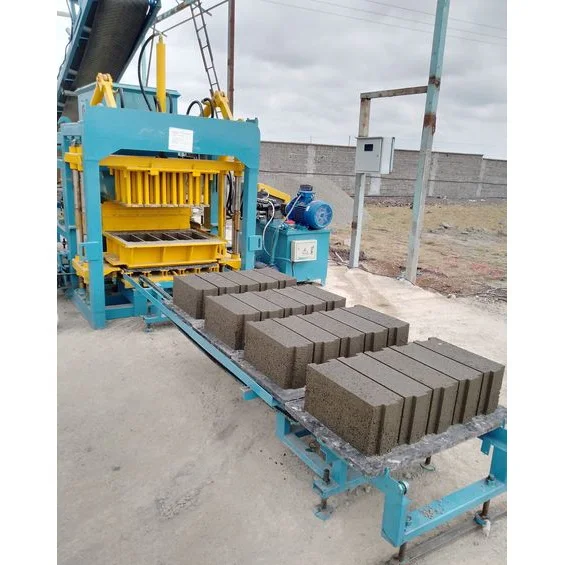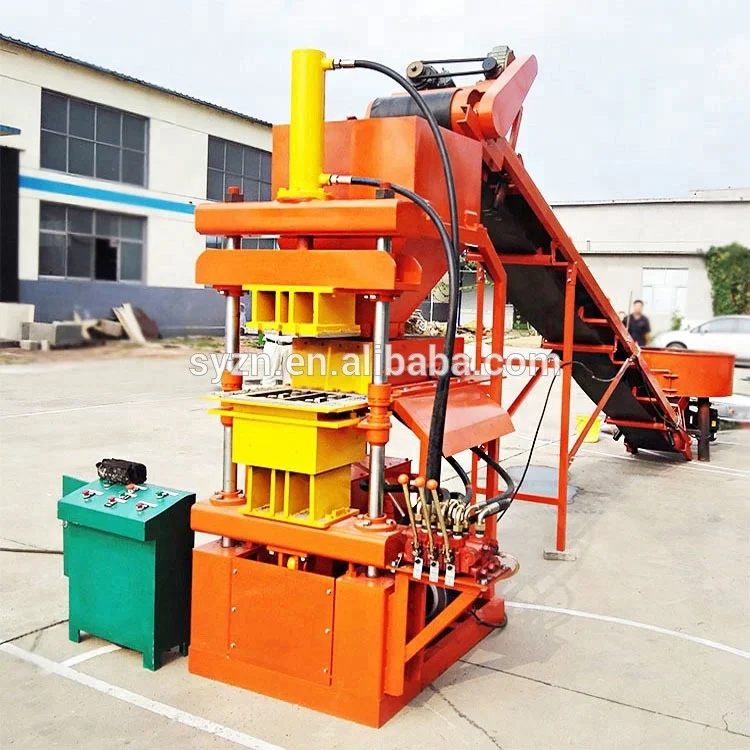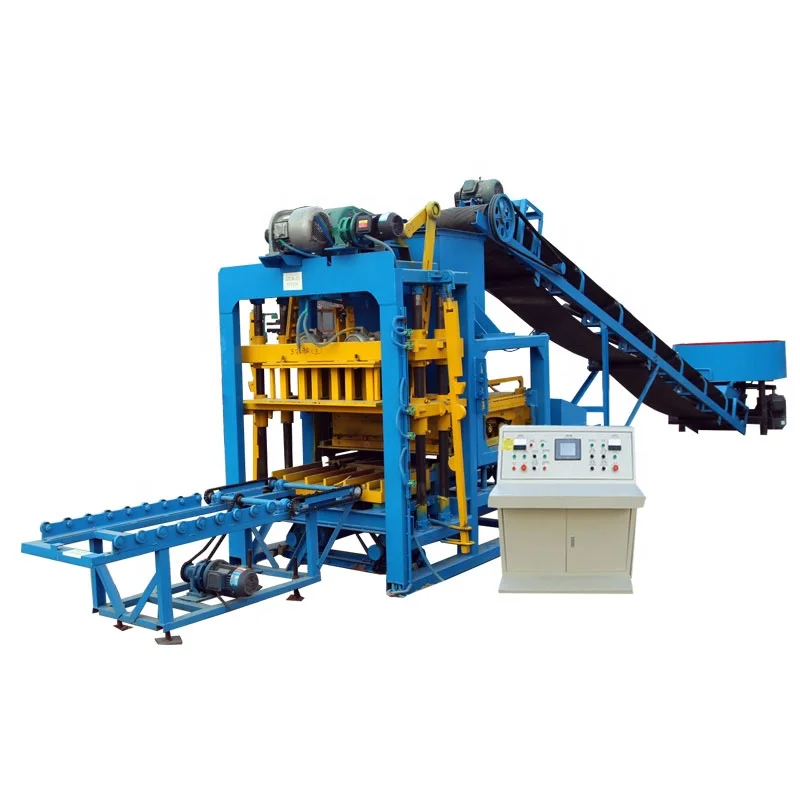


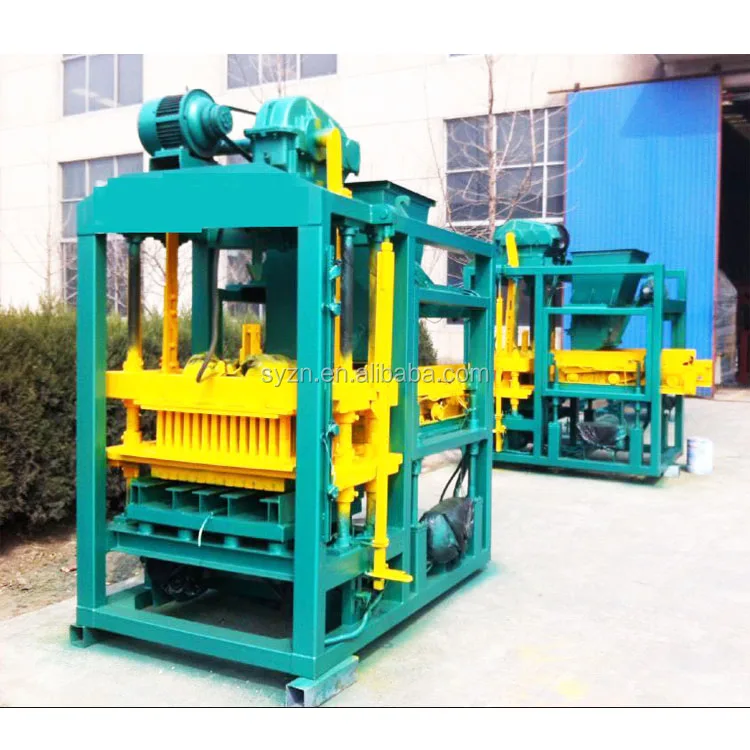

Description
Matched Control Logic — the PLC sequence holds vibration frequency and molding time constant across every cycle, removing the batch-to-batch density drift that manual timing introduces on hollow and solid block runs.
Technical Specifications
| Parameter | Value |
|---|---|
| Model | QTJ4-25 |
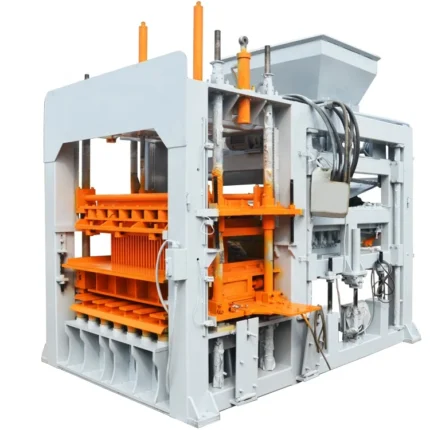
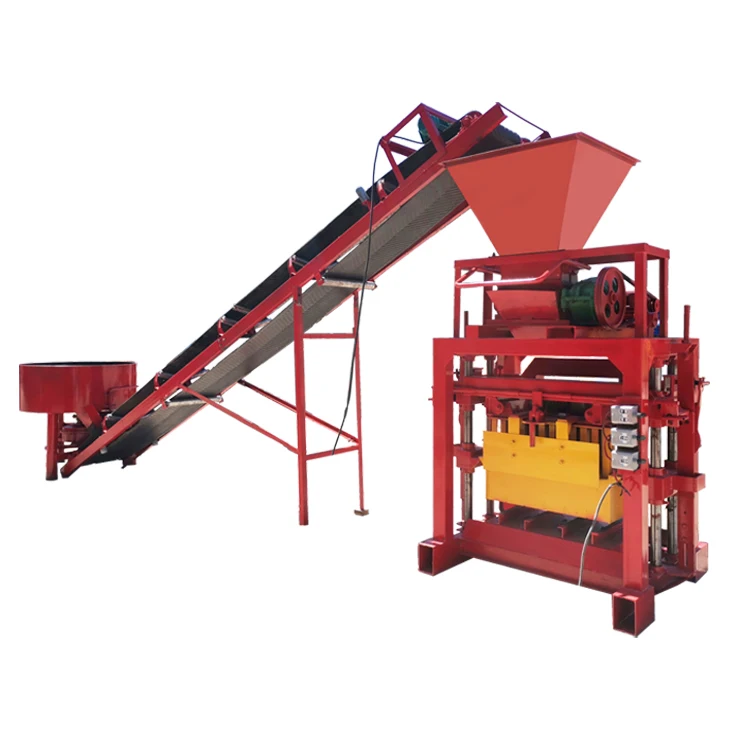
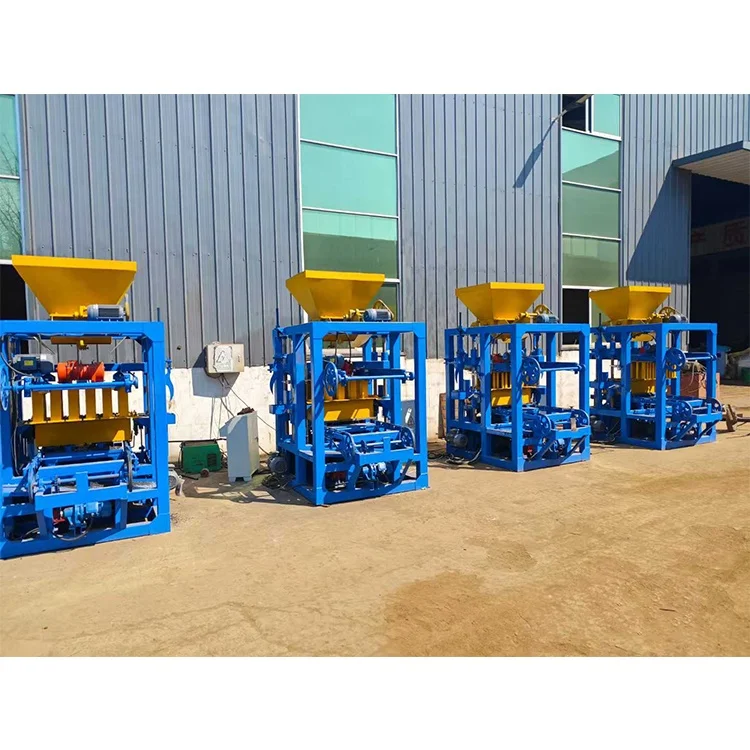
| Product Type | Automatic Concrete Block Making Machine |
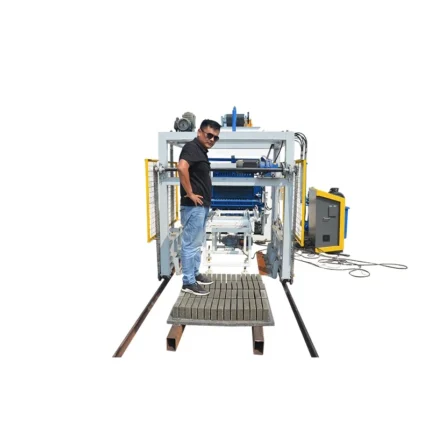
| Overall Dimensions (L×W×H) | 6400×1500×2700mm |
| Molding Cycle | 25 seconds |
| Vibration Frequency | 2800-5100 r/min |
| Exciting Power (Vibration Force) | 60 KN |
| Rated Power | 17.9 kW |
| Mixer | JQ350 |
| Pallet Size | 850×550×20mm |
| Net Weight | 2500 kg |
| Control System | PLC control |
| Automation Features | Automatic plate-supplying, material-disturbing, and brick-discharging |
| Applied Products | Concrete blocks, hollow block (8 inch, 6 inch), solid brick |
| Raw Materials | Crushed stones, sand, cement, dust, fly ash |
| Output Capacity (Hollow Block 390×190×190mm) | 480 pcs/hr, 3800 pcs/8hr (basis: 4 pcs/mould) |
| Output Capacity (Hollow Block 400×150×200mm) | 600 pcs/hr, 4800 pcs/8hr (basis: 5 pcs/mould) |
| Output Capacity (Solid Brick 240×115×53mm) | 2100 pcs/hr, 17000 pcs/8hr (basis: 18 pcs/mould) |
| Voltage & Frequency | Configurable to target market (basis to be confirmed before production) |
| Standards | CE declaration where applicable |
Application Suitability
| Application | Material or Output |
|---|---|
| Small business block plant start-up | Hollow and solid blocks from crushed stone, sand, and cement |
| On-site construction block production | 8-inch and 6-inch hollow blocks for masonry walls on housing projects |
| Existing plant adding format variety | Solid brick 240×115×53mm alongside hollow formats on one pallet size |
| Fly ash block manufacturing | Blocks incorporating fly ash as partial cement replacement in the mix |
Why the PLC Language Question Should Come Before the Price
A PLC screen displaying instructions in a language your operators cannot read turns an automatic machine back into a manual one.
I watched a Peruvian contractor lose three weeks on a commissioning schedule because the control panel arrived in a language the crew could not parse. The machine was mechanically sound, but every parameter adjustment required a phone call and a translation step. When you source a PLC controlled QTJ4-25 block making machine, the display language and the local voltage standard must be locked in writing before the control cabinet is wired, not after it lands on site [NEED_CITE: voltage and frequency standards by export market].
What the Control System Actually Takes Over
The PLC on this machine governs three handling sequences that would otherwise depend on operator timing: plate-supplying, material-disturbing, and brick-discharging. Each sequence runs on a fixed timer within the 25-second molding cycle, so the pallet arrives, the mix is distributed, and the finished block is released at the same interval regardless of shift length or crew fatigue. For a first-time plant operator, this means the PLC controlled QTJ4-25 block making machine produces its first acceptable block on the same cycle logic it uses on day three hundred.
Vibration Frequency as a Tuning Dial
The 2800-5100 r/min vibration range paired with 60 KN exciting power gives the PLC a variable to adjust when the mix design changes. A denser aggregate blend may require the upper end of the range to achieve full compaction, while a lighter fly ash mix performs better at lower frequency to avoid segregation. This adjustability means the machine can be re-tuned when local material sources shift, rather than forcing the buyer to reformulate the mix around a fixed vibration setting [NEED_CITE: vibration compaction principles in concrete block forming].
Reading the Pallet and Cycle Numbers Honestly
The 850×550×20mm pallet size sets the physical limit on what mould formats fit in a single press stroke. A four-cavity hollow block mould fills that pallet with 390×190×190mm units, yielding a rated 480 pieces per hour on a 25-second cycle (basis: 4 pcs/mould). Switch to an eighteen-cavity solid brick mould and the same cycle produces 2100 pieces per hour (basis: 18 pcs/mould). The cycle time stays constant; only the cavity count changes the hourly figure. Buyers comparing machines on a single headline capacity number miss this relationship and end up with output expectations that do not match their actual product mix.
The Cost of Skipping the Voltage Confirmation
Sending a 17.9 kW machine to a site where the supply voltage or frequency does not match the motor winding specification does not just delay commissioning. It can burn out the mixer motor or trip the main breaker repeatedly, damaging the PLC board through repeated inrush current events. The rated power draw assumes a stable supply at the confirmed voltage and frequency. Confirming these parameters before the control cabinet leaves the factory avoids a scenario where the machine sits idle while a local electrician sources a transformer or rewinds a motor [NEED_CITE: CE machinery directive requirements for industrial equipment].
Why Source This Configuration Here
Block machinery is the single production focus, so the press, mould, pallet, and handling stations are specified as one system rather than assembled from separate suppliers. The QTJ4-25 configuration is set against the buyer’s actual mix design and local aggregate, not pulled from a catalogue default. Mould design covers the formats the buyer’s market sells, with custom drawings available for non-standard dimensions. Automation level is selectable, meaning a buyer can start with the automatic plate-supplying and brick-discharging functions and add stacking automation later. Installation support includes on-site commissioning and operator training so the PLC parameters are tuned to the confirmed block format before the crew takes over.
Documentation & Verification
- Machine specification sheet listing confirmed voltage, frequency, and PLC display language
- Mould drawing and format list showing cavity count per pallet for each block size
- Capacity calculation stating the block format and mould basis for each output figure
- Factory test record on the buyer’s specified block format before dispatch
- Hydraulic and electrical schematic for on-site troubleshooting
- Wear parts and mould list with part numbers for first replacement order
Installation, Commissioning & Support
- Foundation must support 2500 kg static load plus dynamic vibration across the 6400×1500mm footprint
- Dedicated circuit rated for 17.9 kW continuous draw at the confirmed voltage and frequency
- Machine ships dismantled for container loading with reassembly on prepared slab
- PLC parameters set to buyer’s confirmed block format and mould during commissioning
- Operator training covers mould change sequence and pallet handling workflow
- Wear parts list supplied so hydraulic seals and vibration components can be reordered before depletion
- Daily maintenance schedule tied to molding cycle count logged by the PLC
What to Include in Your Inquiry
To size the QTJ4-25 correctly for your production line, specify the block formats your market demands and the daily volume you need for each. Confirm your site voltage and frequency so the motor and PLC are wound and programmed before assembly. If you already have a curing area and forklift, share the pallet dimensions you are currently using so the 850×550×20mm pallet size can be validated or adjusted. Finally, note the PLC display language your operators require so the interface is set before the control cabinet ships.
Frequently Asked Questions
Q: How do I confirm the PLC display language matches my operators before the machine ships?
A: Specify the required language during the inquiry stage. The language is programmed into the PLC before the control cabinet is assembled and tested at the factory. A photo of the live screen displaying your chosen language is included in the factory test record so you can verify it before the machine is packed for shipment.
Q: What voltage and frequency does my site need, and how is this confirmed before production starts?
A: Your local utility or electrician provides the supply voltage and frequency at the connection point. Share these values during the quotation stage so the motor winding and PLC power supply are matched to your grid. This confirmation is recorded on the specification sheet and checked again during the factory test.
Q: How is daily output calculated per block format, and why does the quoted figure change with mould selection?
A: Output is the number of cavities per mould multiplied by the number of cycles per hour. The 25-second cycle stays constant, so a four-cavity hollow block mould yields a different hourly figure than an eighteen-cavity solid brick mould. Every capacity line in the specification states the format and cavity count it is based on.
Q: What does the PLC control actually automate, and which steps still require an operator?
A: The PLC automates plate-supplying, material-disturbing, and brick-discharging within each 25-second cycle. An operator still loads raw material into the mixer, monitors the pallet supply, and moves cured blocks from the stacking area. Adding automatic stacking and cubing equipment later can reduce those remaining manual steps.