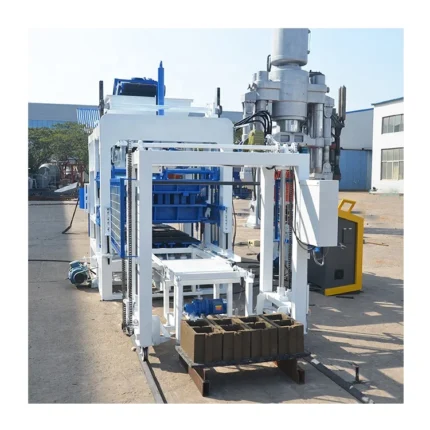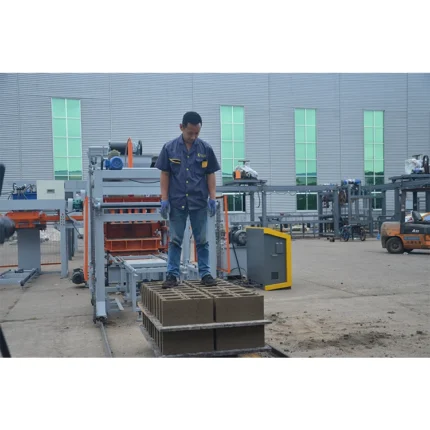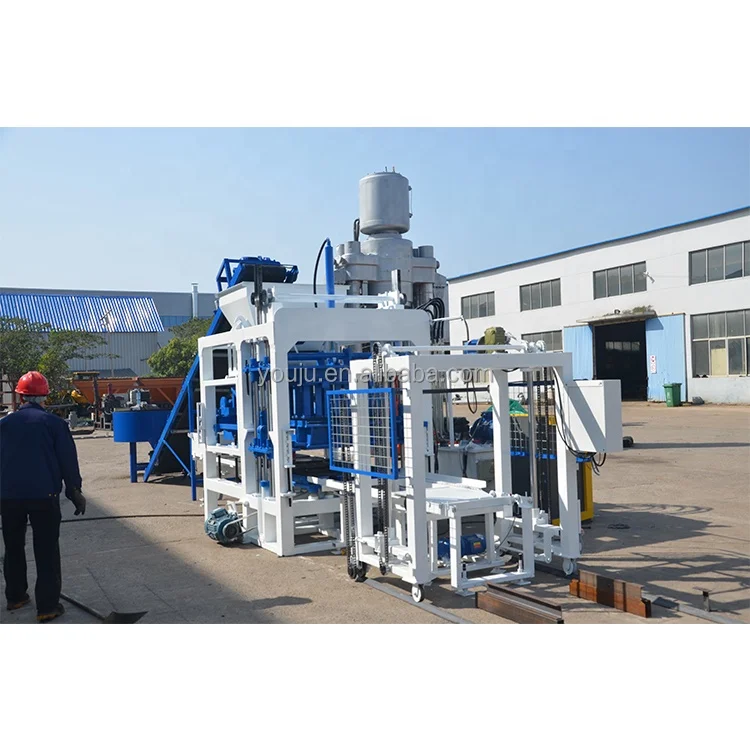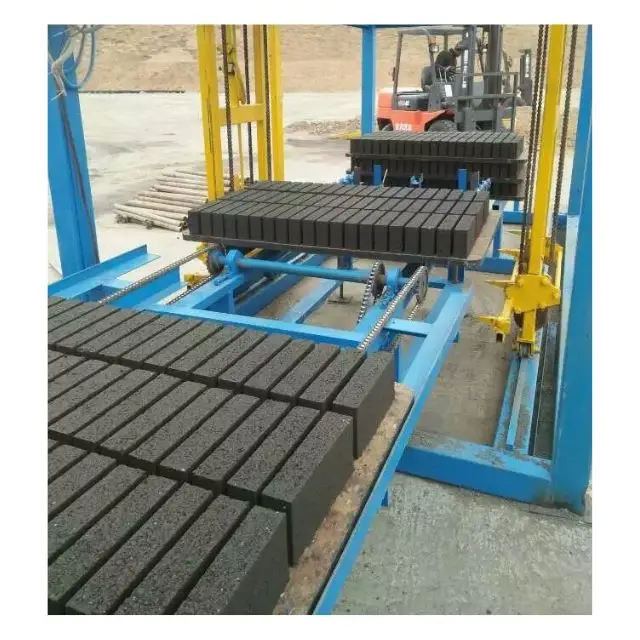


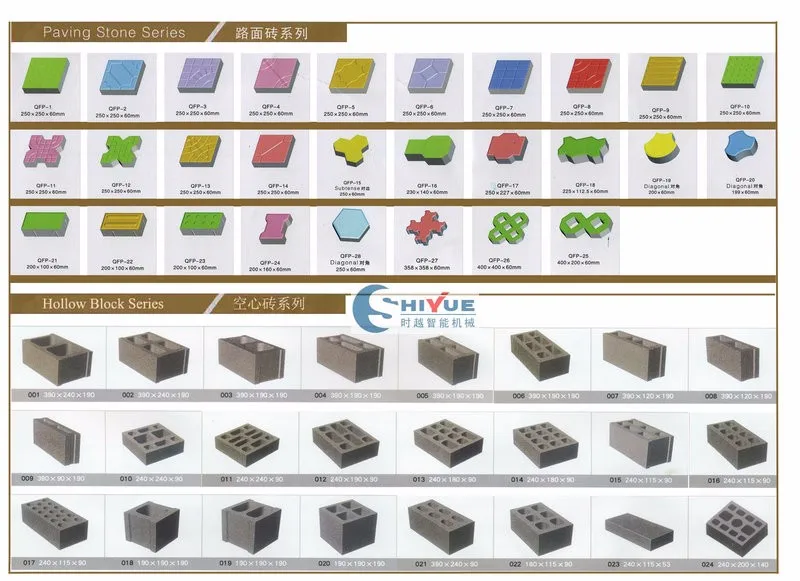
Description
Voltage-Locked Commissioning — the QTF3-20 leaves our facility with PLC language, frequency, and motor winding matched to your site supply, so the first power-on is also the first production run.
Technical Specifications
| Parameter | Value |
|---|---|
| Model | QTF3-20 |
| Product Type | Semi-Automatic Concrete Block Making Machine |
| Control System | PLC with customizable display language |
| Automation Level | Semi-automatic, upgrade path to pallet feeder, stacker, and cuber |
| Hydraulic System | Yes |
| Vibration System | Yes |
| Voltage & Frequency | Configurable to buyer’s local grid standard |
| Mould: 200×100×60 mm paving block | 15 pcs/mould, 2,700 pcs/h, 21,600 pcs/8h (theoretical capacity) |
| Mould: 400×200×200 mm hollow block | 3 pcs/mould, 540 pcs/h, 4,320 pcs/8h (theoretical capacity) |
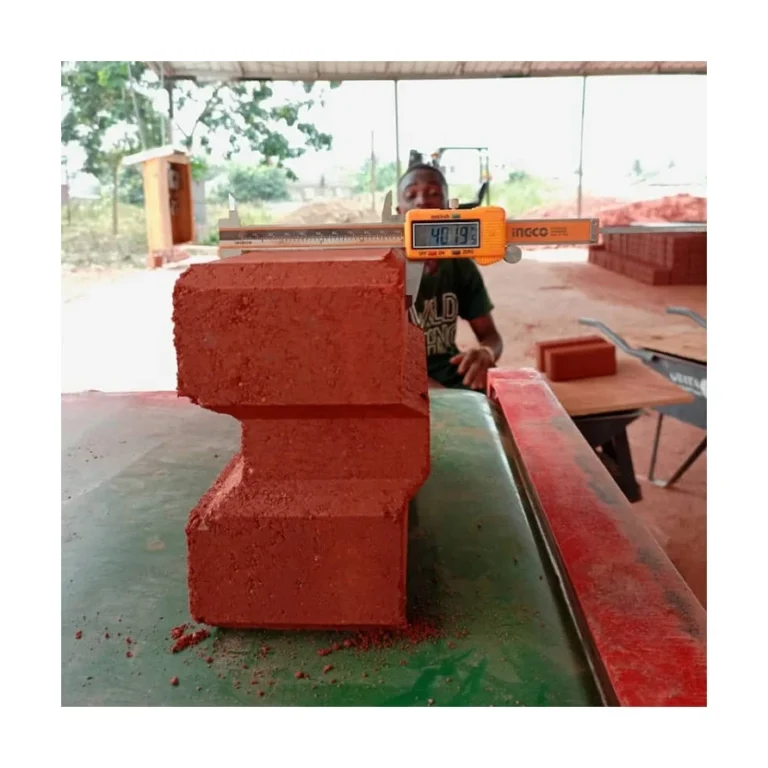
| Mould: 225×112.5×60 mm interlocking brick | 8 pcs/mould, 1,440 pcs/h, 11,520 pcs/8h (theoretical capacity) |
| Warranty | 1 year (excluding wearing parts) |
Application Suitability
| Application | Material or Output |
|---|---|
| Cement concrete color paving blocks | Crushed stone, sand, cement, pigment |
| Hollow blocks for wall construction | Lightweight aggregate or standard concrete mix |
| Interlocking bricks for landscaping | Cement-stabilized local soil or sand-cement blend |
| Kerbstone and solid bricks | Dense aggregate concrete |
| On-site contractor production | Mobile or fixed semi-automatic plant setup |
Why the Voltage Question Should Come Before the Price
A PLC controlled semi-automatic block machine is only as reliable as the power agreement behind it.
In my years moving between sites across the Middle East, the most expensive delays never came from the press itself. A QTF3-20 once sat in a Dubai municipal yard for three weeks because the local transformer delivered a frequency the PLC could not reconcile with the motor VFD. The operator stood next to a silent machine, watching a project deadline pass. That kind of loss is invisible in a catalogue quotation but shows up immediately on a site schedule [NEED_CITE: voltage and frequency standards by export market]. Locking voltage, frequency, and control language before production removes that class of failure entirely.
What the Operator Actually Controls
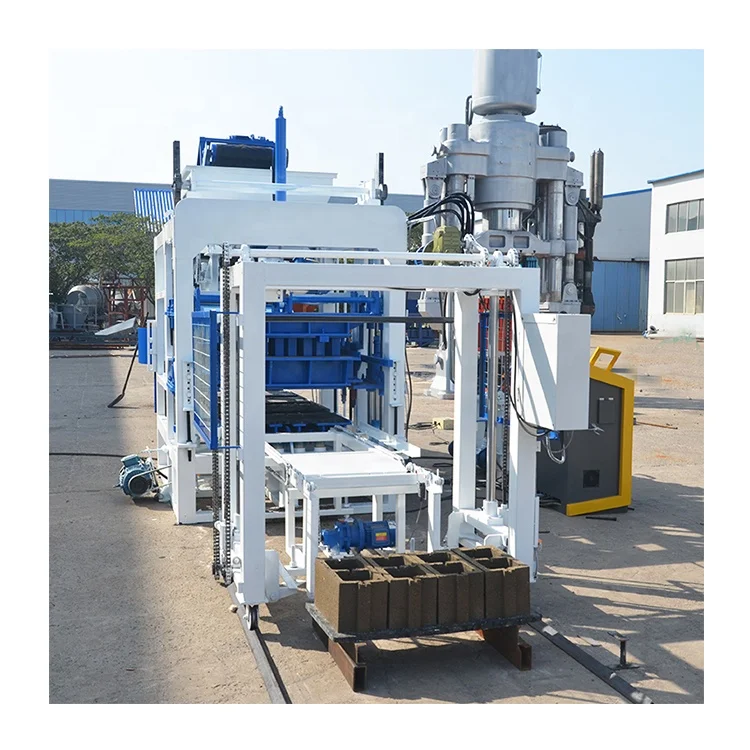
On a PLC controlled semi-automatic block machine, the press cycle runs automatically — vibration, hydraulic pressure, and dwell time execute without manual intervention. What remains in the operator’s hands is pallet handling: feeding empty pallets into the press and removing loaded pallets to the curing area. This split is deliberate. The press cycle stays consistent across shifts and operators, while the manual section keeps the initial investment staged. When production volume justifies it, a pallet feeder and stacker can be added to the same QTF3-20 frame without replacing the press or rewiring the PLC.
The Upgrade Path That Does Not Require a New Press
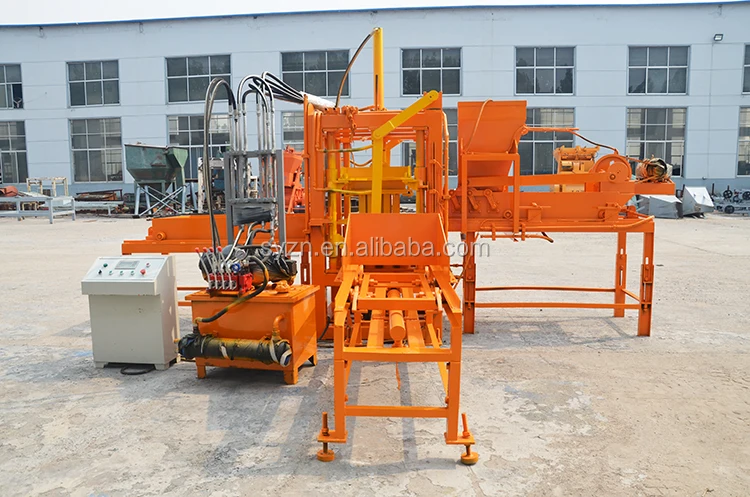
Semi-automatic operation is often the correct starting point for a first block plant or a contractor producing on-site. Labour is available, formats change frequently, and volume has not yet justified full automation. The QTF3-20 is wired so that automatic pallet feeding, stacking, and cubing modules connect to the existing PLC I/O. The control cabinet reserves terminal positions for these additions. When the buyer decides to upgrade, the field wiring connects to pre-labeled terminals, and the PLC program is updated to include the new sequence. The press, moulds, and hydraulic system remain unchanged.
How Pressure and Vibration Shape Block Density
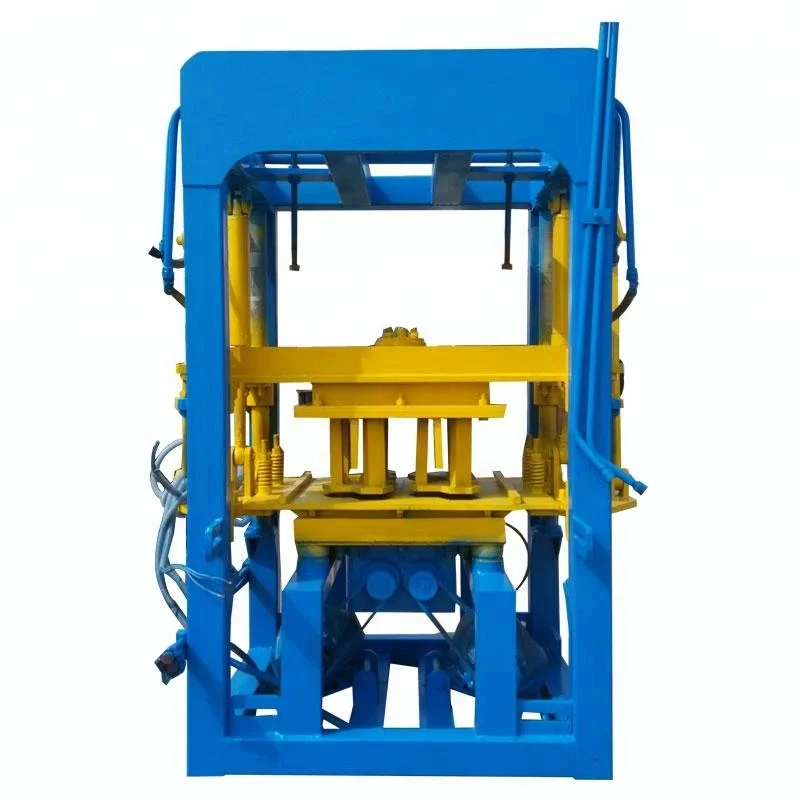
Hydraulic pressure and vibration force are not independent settings — they work together to compact the concrete mix into the mould cavity. On the QTF3-20, the vibration frequency is tuned to settle aggregate into position while hydraulic pressure applies the final compaction from above. If the vibration force is too low for the buyer’s local aggregate size, voids remain in the block wall regardless of how high the pressure is set. If pressure is too high without adequate vibration, the mix locks in place before filling the mould corners, producing blocks with weak edges [NEED_CITE: concrete block compaction standards]. The settings must be calibrated against the specific mix design and aggregate gradation the buyer will actually use, not a default from a testing laboratory.
When Mould Change Cancels Format Flexibility
A buyer purchases multiple moulds to serve different market segments — hollow blocks for structural work, pavers for landscaping, interlocking bricks for driveways. If the mould change procedure requires partial disassembly of the press frame or extended PLC reprogramming, the format flexibility exists on paper but not on the production floor. On the QTF3-20, the time spent swapping moulds determines how many formats can realistically be produced in a single shift. A plant running three formats per day needs a changeover measured in minutes, not hours. If the quoted scope does not include quick-release mould clamps and a documented changeover procedure, the operator will default to the single most profitable format and leave the others on the shelf.
Why We Specify Before We Build
Every QTF3-20 is configured against the buyer’s confirmed site conditions rather than a default catalogue build. The line layout includes capacity calculation stated per block format, so the buyer sees what 400×200×200 mm hollow blocks actually yield in an 8-hour shift versus 200×100×60 mm pavers. Moulds are designed for the formats the buyer’s local market actually purchases, including custom drawings when standard formats do not match regional dimensions. Voltage, frequency, and PLC display language are confirmed in writing before the machine enters production, eliminating the commissioning delay that comes from discovering a mismatch after the container arrives. The automation level is selectable, so a buyer can start semi-automatic and add pallet feeding or stacking modules as production volume grows without replacing the press.
Documentation & Verification
- Line layout with capacity calculation per confirmed block format
- Machine specification sheet matching buyer’s voltage and frequency
- Mould drawing and format list for all ordered moulds
- PLC language confirmation and electrical schematic
- Factory test record on buyer’s specified pallet size before dispatch
- Operation and maintenance manual with wear parts list
Installation, Commissioning & Support
- Foundation plan matched to QTF3-20 hydraulic vibration load and footprint
- Dedicated power circuit sized to confirmed voltage and rated current draw
- Machine assembled on-site with pallet track alignment verified under load
- PLC parameters calibrated against buyer’s local aggregate and mix design
- Operator training covering mould change procedure and daily maintenance checkpoints
- Wear parts and mould supply chain confirmed before first production run
Before You Request a Quotation
To configure the QTF3-20 for your site, we need your target block formats with dimensions, the local aggregate type and maximum particle size, and your existing curing area layout with pallet dimensions. Confirm your site voltage, phase, and frequency, along with the preferred PLC display language. If you plan to stage automation, specify which modules — pallet feeder, stacker, cuber — are in the initial scope and which are planned for later addition.
Frequently Asked Questions
Q: How is QTF3-20 capacity verified per block format on site?
A: Theoretical capacity figures assume continuous operation with no pallet handling delay. On a semi-automatic line, the operator’s pallet feed and removal speed sets the real cycle time. We provide a capacity calculation per block format showing theoretical output alongside a realistic estimate based on semi-automatic pallet handling pace and your confirmed mould configuration.
Q: What automation modules can be added after initial installation?
A: The QTF3-20 control cabinet reserves PLC I/O for automatic pallet feeding, stacking, and cubing. These modules connect to pre-labeled terminals without replacing the press or rewriting the base program. Buyers typically add modules as daily volume increases and labour cost justifies the investment.
Q: How are voltage, frequency, and PLC language confirmed before production?
A: We require written confirmation of your site supply specifications — voltage, phase, frequency — before the electrical panel is built. PLC display language is set during programming and verified during the factory test. This eliminates post-arrival commissioning delays caused by power or language mismatches.
Q: Which mix designs work with the QTF3-20 vibration and pressure settings?
A: Hydraulic pressure and vibration force must match your local aggregate size and cement content. We calibrate settings against your confirmed mix design during commissioning rather than applying a catalogue default. This ensures block density and strength meet your local standard without requiring a material change.
Q: What does the 1-year warranty cover, and how are moulds supplied?
A: The warranty covers mechanical and electrical components for one year, excluding wearing parts such as mould liners and hydraulic seals. Moulds and wear parts are listed in the delivery documentation with part numbers, and replacements are supplied against confirmed drawings to match your production formats.