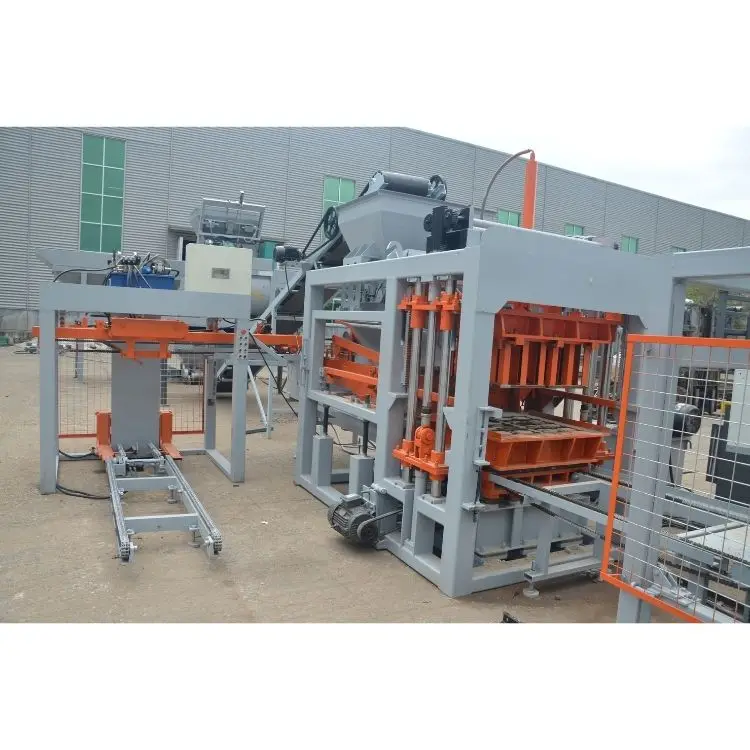
Description
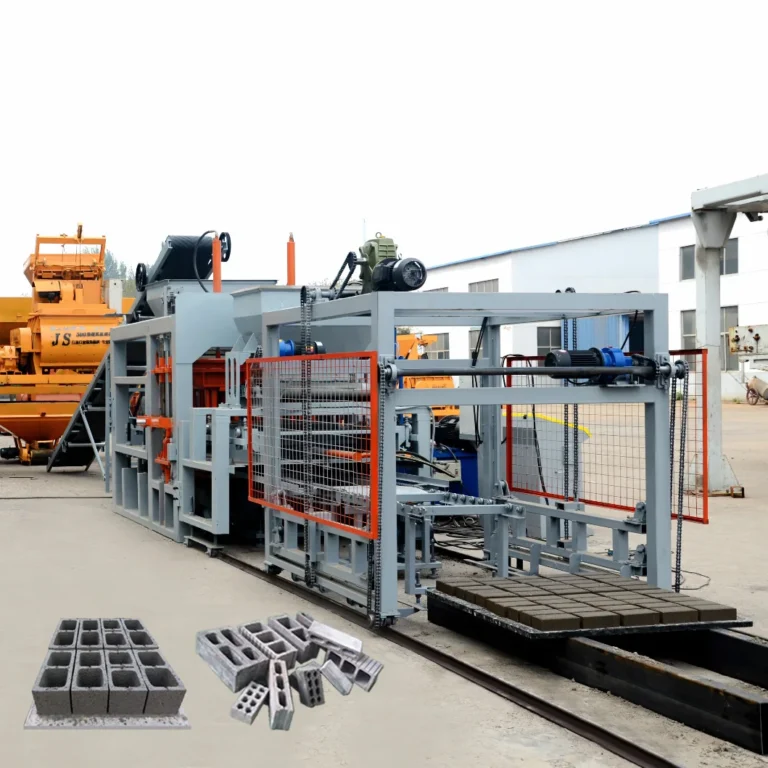
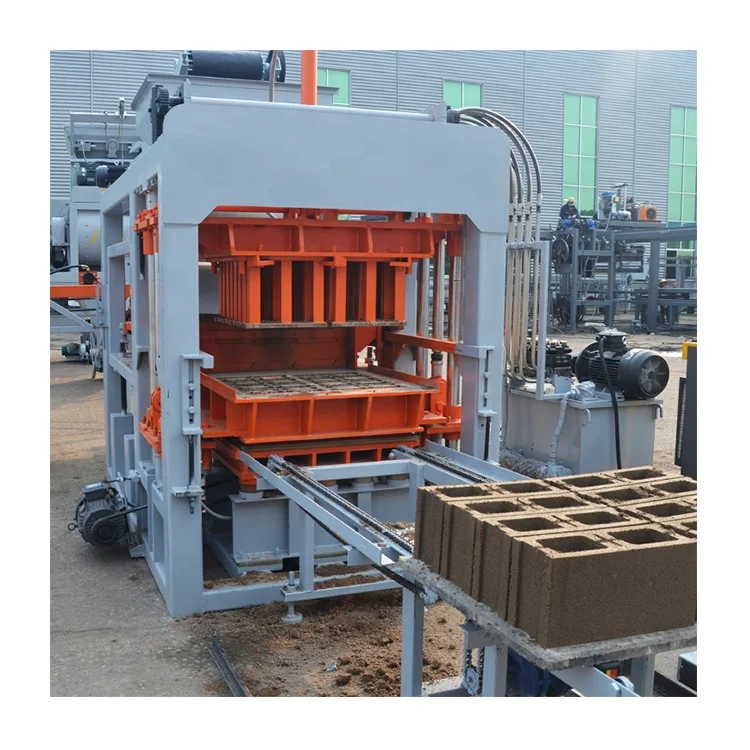
Mould Change System Matched to Line Automation — the QT6-15 automatic QT6-15 block machine PLC controlled is configured so that the automation level, pallet handling stations and mould change method are specified together against your actual product mix, not quoted as a standalone cycle time.
Technical Specifications
| Parameter | Value |
|---|---|
| Model | QT6-15 |
| Product Type | Fully Automatic Hydraulic Concrete Block Making Machine |
| Molding Way | Vibration and hydraulic pressing |
| Rated Pressure | 21 MPa |
| Molding Cycle | 15s–20s (basis not stated in source — confirm block format and material) |
| Pallet Size | 900×700 mm |
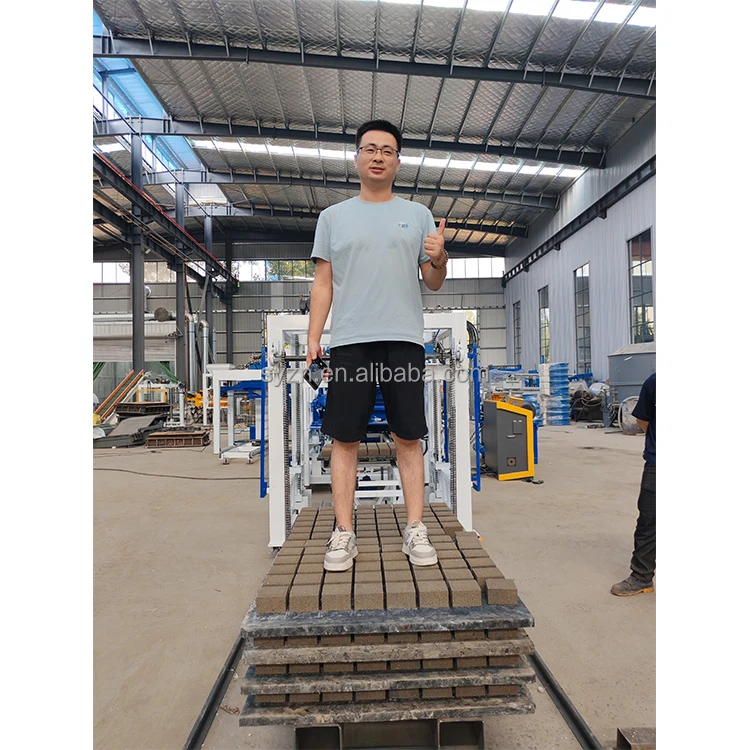
| Main Machine Weight | 6000 kg |
| Control System | PLC (language and display configurable) |
| Automation Level | Fully automatic, with upgrade path from semi-automatic |
| Voltage & Frequency | Customizable to local supply |
| Assembly State | Top cylinder removed for container loading; reassembled on site |
| Raw Materials | Cement, sand, fly ash, stone powder, slag |
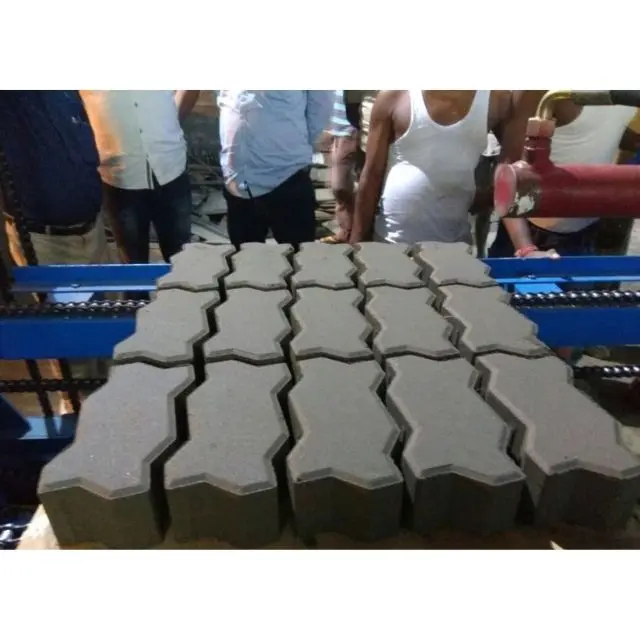
| Mould Formats | Hollow block, paving brick, solid brick, curbstone (interchangeable) |
| Supporting Equipment Options | JS500 mixer, 8 m conveyor, automatic stacker, cement silo, screw conveyor, pallet loader, block and pallet separator |
| Warranty | 1 year (excluding wearing parts) |
Application Suitability
| Application | Material or Output |
|---|---|
| Block production plants | Hollow blocks from cement, sand and crushed stone aggregate |
| Paver and kerbstone manufacturing | Interlocking and solid paving bricks from stone powder and fly ash |
| Fly ash recycling facilities | Solid bricks and building units using fly ash as primary filler |
| On-site construction block making | Masonry units produced locally at project sites with portable pallet circuits |
What the PLC Panel Language Means for Your First Shift
The automatic QT6-15 block machine PLC controlled arrives with the control language, voltage and frequency confirmed in writing before the machine enters production, so commissioning starts on day one instead of waiting for a translator.
I once stood in a workshop watching a fully automatic line sit idle because the PLC defaulted to a language the local operators could not read. The machine was technically ready, the pallets were stacked, the mixer was running — but no one could navigate the menu to start the cycle. That kind of delay has nothing to do with the press itself and everything to do with the configuration conversation that should happen weeks before shipment [NEED_CITE: common commissioning delays caused by control language mismatch in exported machinery].
How Automation Level Shapes the Rest of the Line
When a buyer moves from semi-automatic to fully automatic operation, the change is not limited to the press. The pallet loader, automatic stacker, block and pallet separator and curing rack handling all need to be timed to the same cycle. With the QT6-15, the automation level is selectable, which means a plant can start with manual pallet handling at the discharge end and add the stacking and cubing stations later without replacing the press.
Matching Vibration and Pressure to Your Aggregate
A 21 MPa rated hydraulic pressure combined with vibration pressing is the forming principle behind this machine. However, the force only produces consistent block density when it is matched to the specific aggregate, moisture content and cement ratio arriving at the hopper. A mix designed around local crushed stone behaves differently from one built on fly ash and stone powder, and the vibration frequency and pressure hold time must reflect that difference. We set these parameters against the buyer’s sample mix during factory testing, not from a catalogue default [NEED_CITE: effect of aggregate grading on vibration compaction in concrete block production].
Reading the Capacity Figures Correctly
The QT6-15 is listed with cycle times of 15s–20s and output figures that vary significantly by format: hollow blocks at 400×200×200 mm are produced at a different rate than 200×100×60 mm paving bricks or 240×115×53 mm solid bricks. Each format loads a different number of pieces per 900×700 mm pallet, which changes the pieces-per-hour figure even when the press cycle remains the same. A capacity calculation that only quotes cycles per hour without naming the block format will mislead any production plan.
The Hidden Cost of Skipping the Pallet Conversation
Pallet size is one of the most frequently overlooked specifications in a block machine quotation. The QT6-15 uses 900×700 mm pallets, and that dimension determines the curing rack spacing, the forklift tine width and the floor area needed for the curing zone. If the buyer’s existing curing racks were built for a different pallet size, every pallet from the new line will need to be restacked by hand before it enters the curing area — a labour bottleneck that cancels out the automation investment upstream [NEED_CITE: pallet handling mismatches in concrete block plant layouts].
Why Configuration Conversations Happen Before Quotation
Block machinery is the single focus of this supply chain, so the press, mould, pallet and handling equipment are specified as one matched system. Mould design covers the formats your market actually sells, including custom drawings when standard formats do not apply. The configuration is set against your local aggregate and target block format, not pulled from a default list. Factory test records, hydraulic schematics and electrical diagrams are issued before shipment, and on-site installation includes operator training in the language your team works in.
Documentation & Verification
- Line layout with capacity calculation stated per block format
- Machine specification sheet with confirmed voltage and frequency
- Mould drawing and format list issued with the quotation
- Pallet specification matched to your curing area dimensions
- Hydraulic and electrical schematic before shipment
- Factory test record on your material mix
Installation, Commissioning & Support
- Main machine arrives with top cylinder removed; reassembled on your foundation during installation
- 6000 kg main unit weight requires a level concrete pad with adequate curing rack clearance for 900×700 mm pallets
- PLC panel language, voltage and frequency confirmed before production begins
- JS500 mixer and 8 m conveyor belt positioned to feed at a rate matching the press cycle
- Operator training covers mould change procedure, pallet loading sequence and daily maintenance points
- Wear parts list and mould maintenance schedule provided at handover
What We Need to Configure Your Line
To build an accurate quotation for the automatic QT6-15 block machine PLC controlled, we need your target block formats and daily output requirement, the raw materials available locally including aggregate type and grading, and your site voltage and frequency. If you already have curing racks or forklifts on site, share those dimensions so pallet size and handling stations are matched from the start.
Frequently Asked Questions
Q: How is output capacity calculated, and which block format does the cycle time assume?
A: The 15s–20s cycle applies across formats, but pieces per hour depend on how many units fit on a 900×700 mm pallet. Hollow blocks, paving bricks and solid bricks each load a different count. Our quotation states output per format, not a single aggregate number, so your production plan matches reality.
Q: What is the upgrade path from semi-automatic to fully automatic?
A: The QT6-15 platform supports starting with manual pallet handling and adding a pallet loader, automatic stacker and block-pallet separator later. The press and PLC do not need replacing — only the upstream and downstream stations are added to close the automation loop.
Q: Is the PLC display language confirmed before shipment?
A: Yes. The control language, voltage and frequency are confirmed in writing during the quotation stage, not left as defaults. This prevents commissioning delays when operators cannot navigate the menu on day one.
Q: How are vibration force and hydraulic pressure matched to local materials?
A: The 21 MPa rated pressure and vibration parameters are set against your specific mix design and aggregate during factory testing. A fly-ash-heavy mix requires different hold times than one based on crushed stone, and the settings reflect that difference.
Q: How long does a mould change take under production conditions?
A: Mould change time depends on the format switch and whether the machine was configured with quick-change tooling. We specify the mould change system alongside the automation level so that format flexibility is realistic, not theoretical, in daily operation.