Description
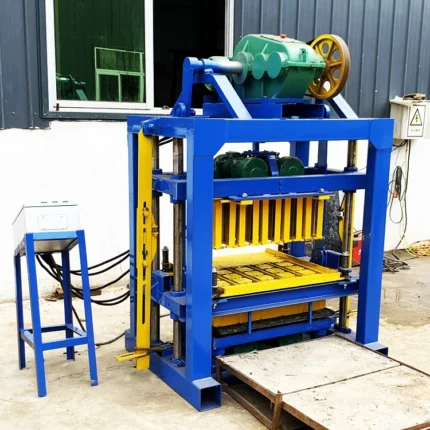
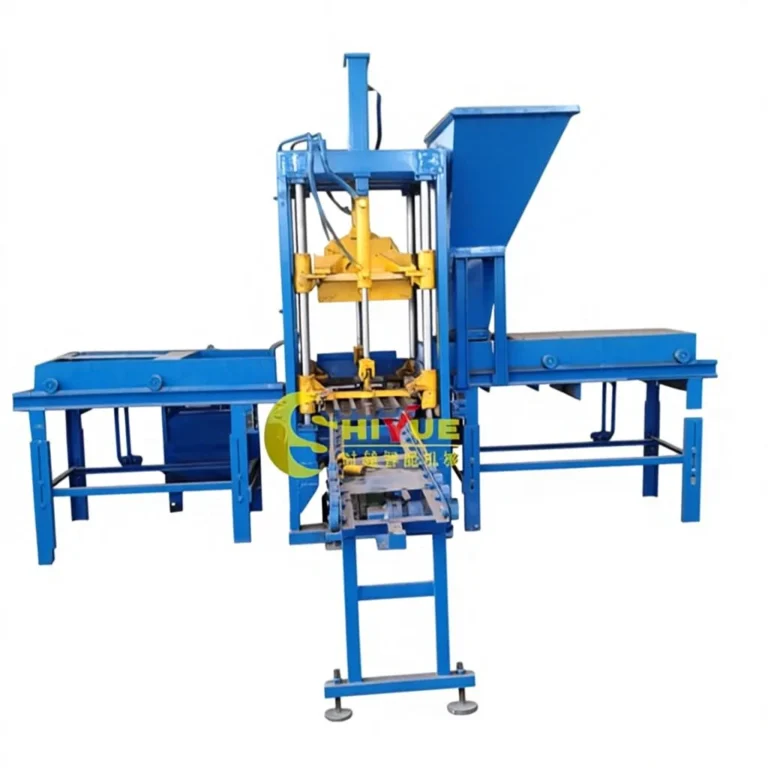
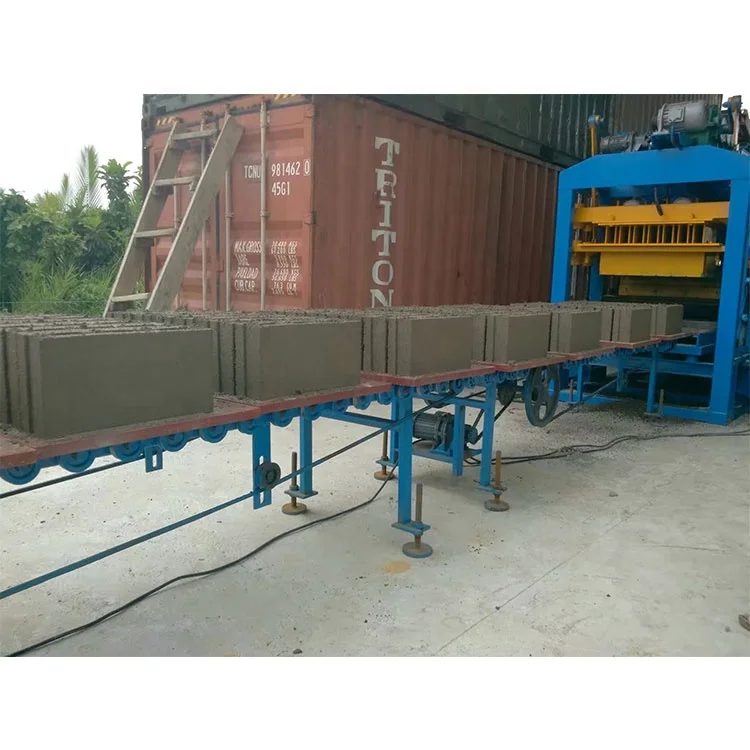
Selectable automation path — start with manual pallet handling on the QTJ4-26, then add an auto stacker as volume grows, keeping the same press and mixer throughout.
Technical Specifications
| Parameter | Value |
|---|---|
| Model | QTJ4-26 |
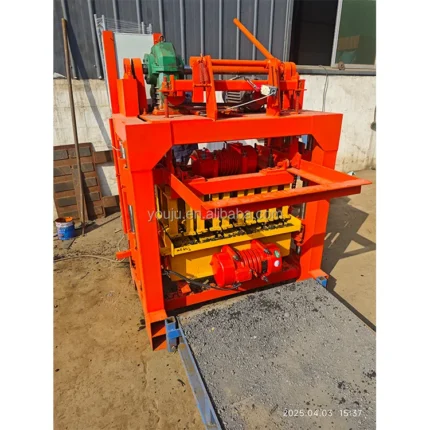
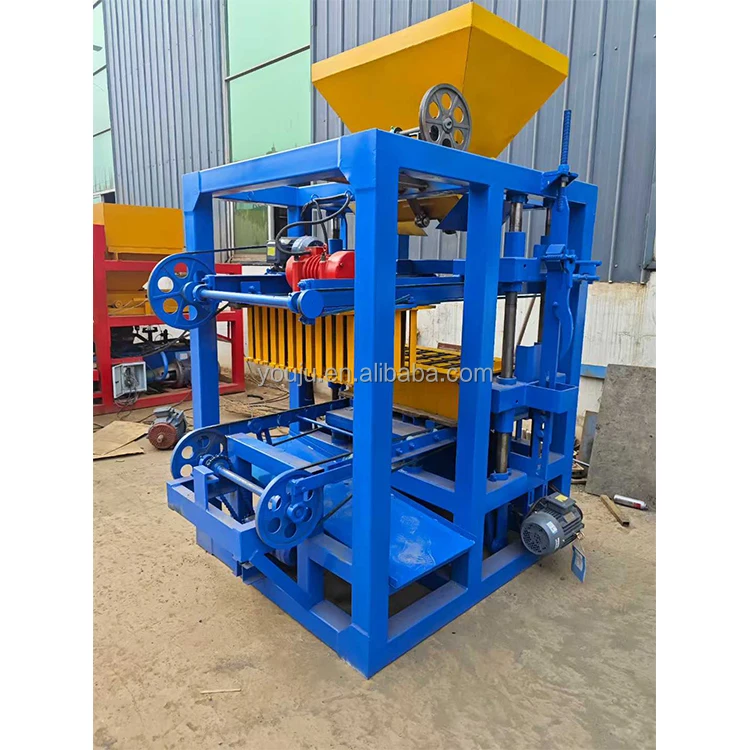
| Product Type | Semi-Automatic Concrete Block Making Machine |
| Molding Type | Platform Vibration |
| Overall Dimensions (L×W×H) | 3600 mm × 1700 mm × 2560 mm (working state) |
| Total Mass | 1750 kg |
| Overall Power | 14.25 kW |
| Pallet Size | 850 mm × 450 mm |
| Vibration System | Lower platform (2 × 3 kW motors) + Upper attached device (1.5 kW) |
| Elevating System | Cone-shape motor with JZQ250 speed reducer, V-belt drive |
| Delivery Device | Cycloidal pin wheel speed reducer, chain and V-belt drive |
| Control System | Electronic controlling part (PLC or relay logic to be confirmed) |
| Voltage & Frequency | To be confirmed against destination grid |
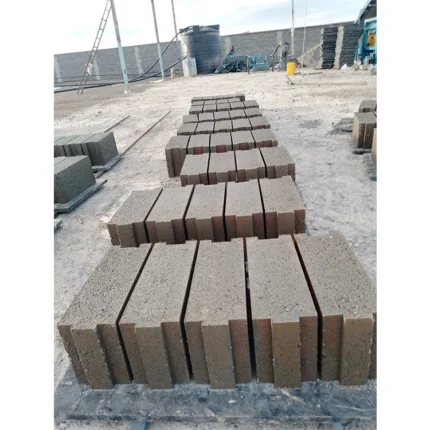
| Mould Formats | 390 × 190 × 190 mm (4 pcs/mould); 240 × 115 × 53 mm (21 pcs/mould) |
| Hydraulic Pressure | Not applicable (mechanical vibration type) |
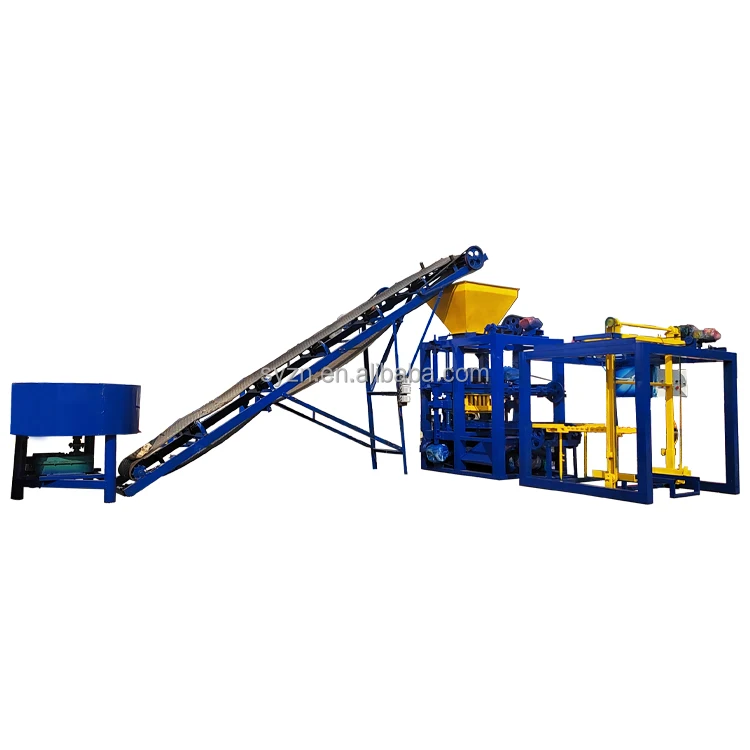
| Supporting Equipment (basic) | JQ350 pan mixer, 6 m belt conveyor, trolley |
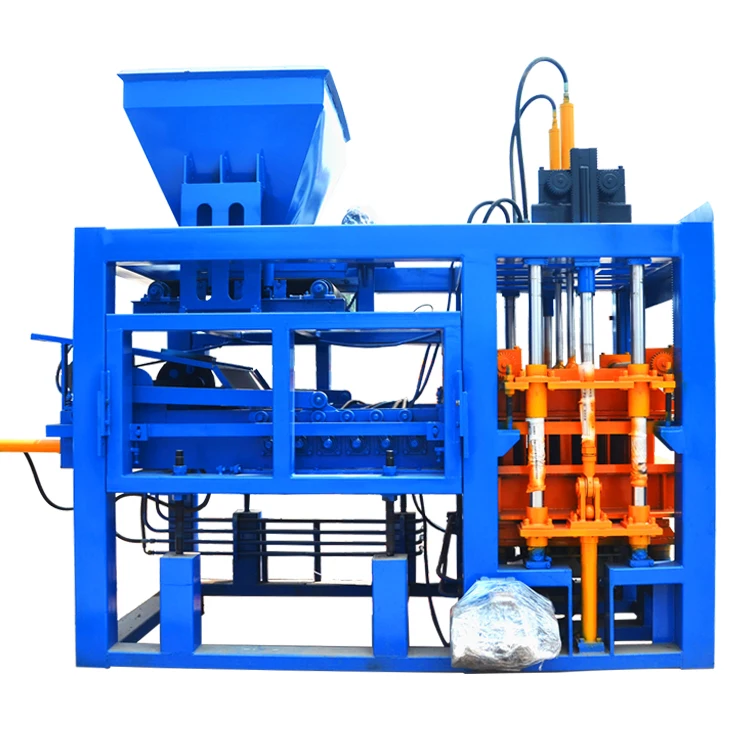
| Supporting Equipment (optional) | Auto stacker (3–6 layers depending on block height) |
Application Suitability
| Application | Material or Output |
|---|---|
| Hollow block production (390×190×190 mm) | Crushed stone, sand, cement, fly ash, slag |
| Solid brick production (240×115×53 mm) | Sand, cement, stone dust, industrial waste |
| Small-scale block plant start-up | Low-investment entry with trolley curing |
| On-site contractor production | Workshop or project-site fixed installation |
| Format expansion on existing line | Mould change to add paver or kerb formats |
Why the Voltage Question Should Come Before the Price
A PLC controlled semi-automatic block machine that arrives with the wrong voltage rating sits idle for weeks while control panels are rebuilt on-site.
I once watched a shipment reach a West African port, get trucked to the plant, connected to the local grid, and immediately throw every breaker in the cabinet. The variable frequency drives and contactors were spec’d for a grid that did not match the destination country’s standard. The commissioning crew waited while replacement components were air-freighted, turning a planned two-day start-up into a multi-week delay [NEED_CITE: voltage and frequency standards by export market]. That is why the confirmation sheet we send before production locks in voltage, frequency, and control language as contractual line items, not assumptions.
What Automation Actually Removes from the Operator
The QTJ4-26 sits at the boundary between manual and automatic operation. The press itself cycles under electronic control, but pallet feeding, wet-block transport, and stacking default to manual trolley work. When an auto stacker is added, the operator no longer lifts loaded pallets off the delivery table, which is where most repetitive strain and dropped-block losses occur. The PLC controlled semi-automatic block machine therefore lets a plant owner measure exactly which task justifies the next automation investment.
Where the Upgrade Path Leads
Starting with manual pallet handling keeps the initial capital outlay low. As daily throughput climbs and curing rack turnover accelerates, the same press can be paired with an automatic stacker that cubes output three to six layers high, matching the forklift mast height already in the yard. Further additions such as automatic pallet return conveyors close the loop, converting the line into a continuous circuit without replacing the core press or mixer. This staged approach is what makes an automatic block machine upgrade realistic for plants that cannot fund a fully robotic line on day one [NEED_CITE: CE machinery directive requirements for industrial equipment].
Reading the Vibration and Drive Specs
The lower platform carries two 3 kW vibration motors while a 1.5 kW upper device adds downward compaction. This dual arrangement means the mould fill is settled from both directions, which matters when the mix contains coarse aggregate that tends to segregate under single-axis vibration. The elevating system uses a cone-shape motor with a JZQ250 reducer and V-belt, a layout that provides smooth deceleration and avoids the abrupt stop that cracks freshly pressed hollow blocks. Pallet size at 850 mm × 450 mm must be checked against the curing rack spacing and forklift tine width the buyer already operates; a mismatch here forces a costly rack rebuild or a custom pallet order. Cycle time and daily output vary with block format, local aggregate grading, and curing temperature, so any capacity figure must be calculated per specific product before the line is finalized.
The Cost of Skipping Configuration Confirmation
When pallet dimensions are chosen from a catalogue default rather than measured against the buyer’s curing area, the first production run ends with pallets jammed on racks designed for a different size. When control language is left unspecified, the operator cannot read fault codes, turning a simple sensor reset into an international phone call. When cycle time is assumed rather than tested with the buyer’s actual mix, the quoted daily tonnage never materializes and the business plan collapses before the second month [NEED_CITE: typical commissioning delays caused by unconfirmed specifications]. These are not engineering failures; they are communication gaps that a single pre-production checklist prevents.
Why Source the Line from a Single-Focus Builder
Block machinery is the only product category we configure, so the press, mould, pallet, and handling equipment are specified as one matched system. Mould cavities are laid out for the formats the buyer’s local market actually purchases, not a generic sample set. Automation level is selectable, allowing a semi-automatic start with a documented upgrade path to full stacking and cubing. Voltage, frequency, and PLC display language are confirmed before the cabinet is wired, eliminating post-arrival rewiring. Factory testing runs the exact pallet size and block format that will ship, so the test record reflects real production conditions.
Documentation & Verification
- Line layout showing JQ350 mixer, 6 m conveyor, press, and optional stacker positions
- Capacity calculation per block format with cycle time assumptions stated
- Mould drawing listing cavity count and wear-plate material
- Pallet specification matched to buyer’s rack spacing and forklift tine width
- Voltage, frequency, and control language confirmation sheet signed before production
- Factory test record on buyer’s chosen block format before crating
Installation, Commissioning & Support
- Foundation pad leveled to ±3 mm over 3600 mm × 1700 mm footprint to prevent frame twist
- Dedicated 14.25 kW circuit with correct voltage and frequency confirmed before cable pull
- V-belt tension and JZQ250 oil level checked before first dry cycle
- Mould alignment verified with buyer’s first production pallet to avoid edge chipping
- Operator training covers fault-code reading in confirmed display language
- Wear parts list for vibration motor bearings and reducer seals included in manual
What to Send with Your Inquiry
Tell us the block formats your market moves fastest, the daily volume you need to sustain, and the local aggregate you can source consistently. Include the voltage and frequency at your site, the control language your operators read, and the curing rack dimensions you already own or plan to build. If you have an existing mixer or forklift, note its model so the line can be matched around it.
Frequently Asked Questions
Q: What is the actual daily output for each block format?
A: Output depends on cycle time, which in turn depends on block height, mix design, and curing conditions. The mould holds 4 hollow blocks or 21 solid bricks per cycle, but daily throughput can only be stated once cycle time is measured with your specific aggregate and cement ratio on the production floor.
Q: Is the control system PLC-based or relay-based?
A: The electronic controlling part can be configured as either PLC or relay logic depending on buyer preference and budget. The display language is confirmed before the cabinet is assembled so operators can read fault codes and adjust parameters on arrival.
Q: What voltage and frequency does the machine require?
A: Voltage and frequency are not fixed at catalogue level; they must match the destination grid. We confirm the exact rating on the pre-production sheet so that variable frequency drives, contactors, and transformers are sourced correctly before wiring begins.
Q: How does the auto stacker reduce labour?
A: The optional stacker cubes blocks three to six layers high on the pallet, eliminating manual lifting at the delivery table. One operator replaces two or three manual handlers, and stacking height matches standard forklift mast limits already in the yard.
Q: Can I add automation after the initial installation?
A: Yes. The press and mixer remain in place while an auto stacker, pallet return conveyor, or batching upgrade is bolted on. The mechanical interfaces are pre-drilled, so the addition does not require structural modification to the existing frame or foundation.