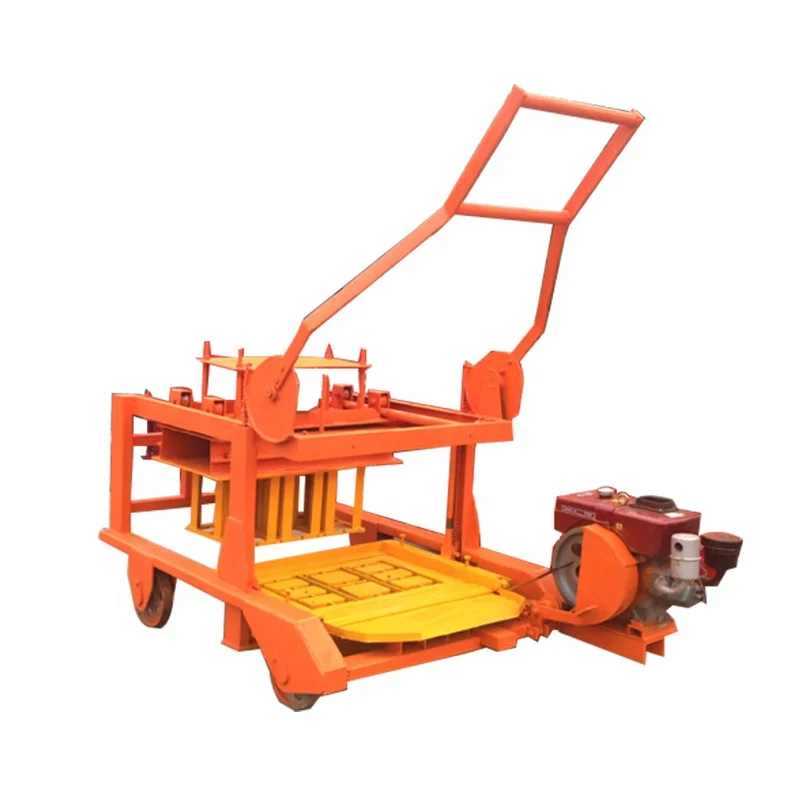
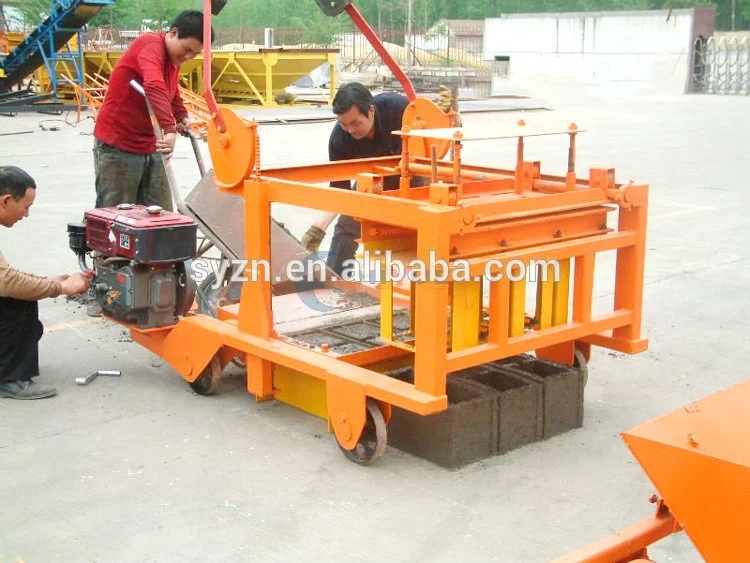
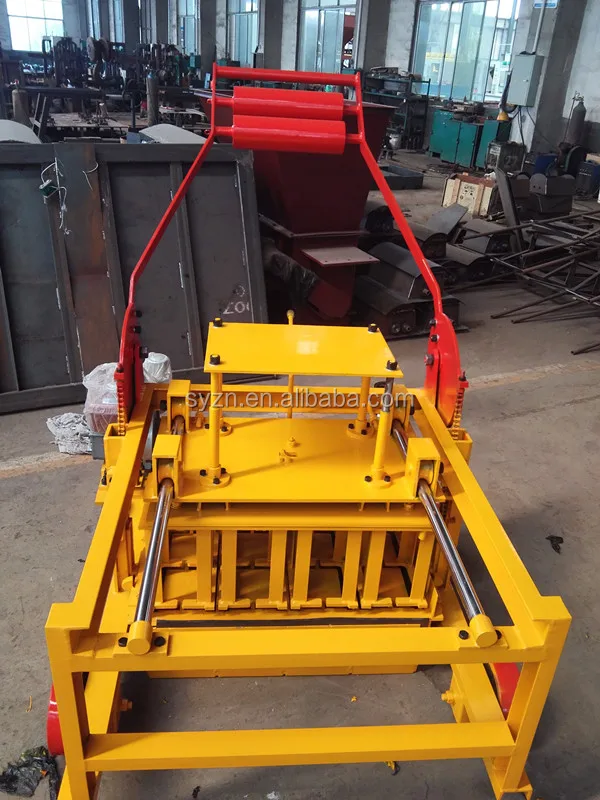

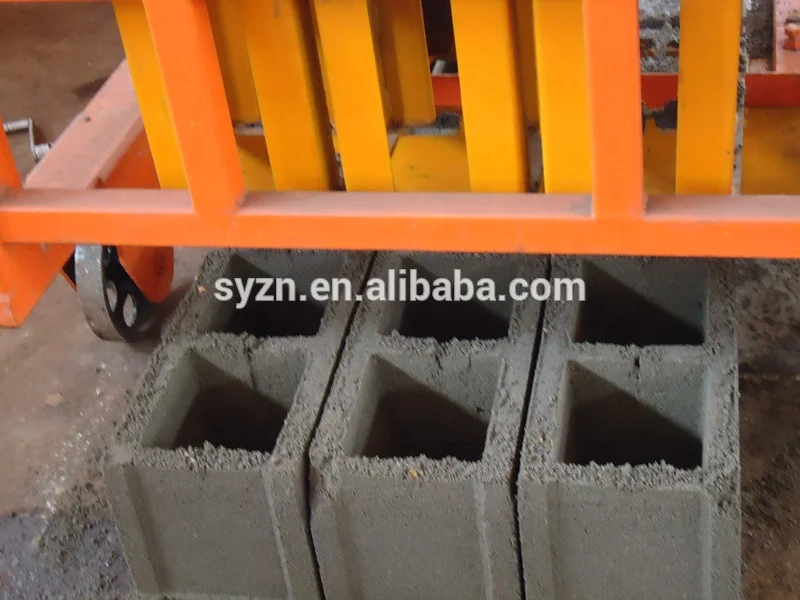
Description
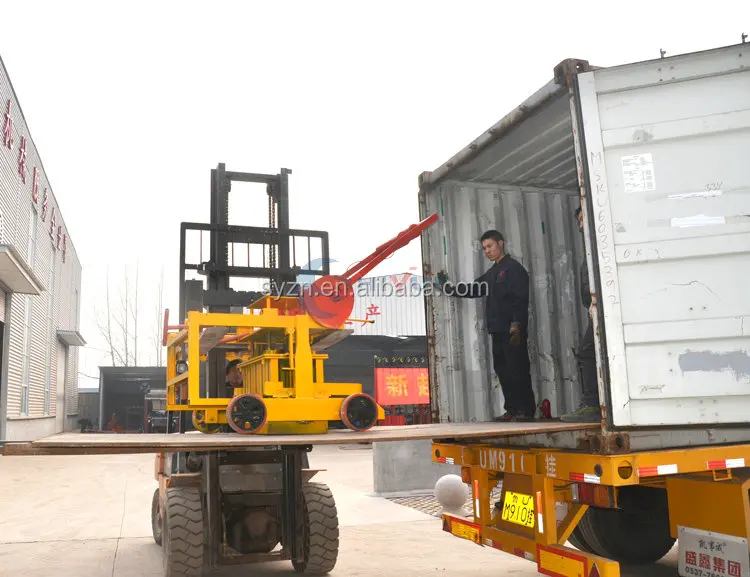
Configuration matched to your upgrade path — the QMR4-45 mobile block machine starts as a no-pallet egg-layer and can grow into a PLC-controlled line, so your automation level follows your demand instead of locking you into a fixed setup on day one.
Technical Specifications
| Parameter | Value |
|---|---|
| Model | QMR4-45 |
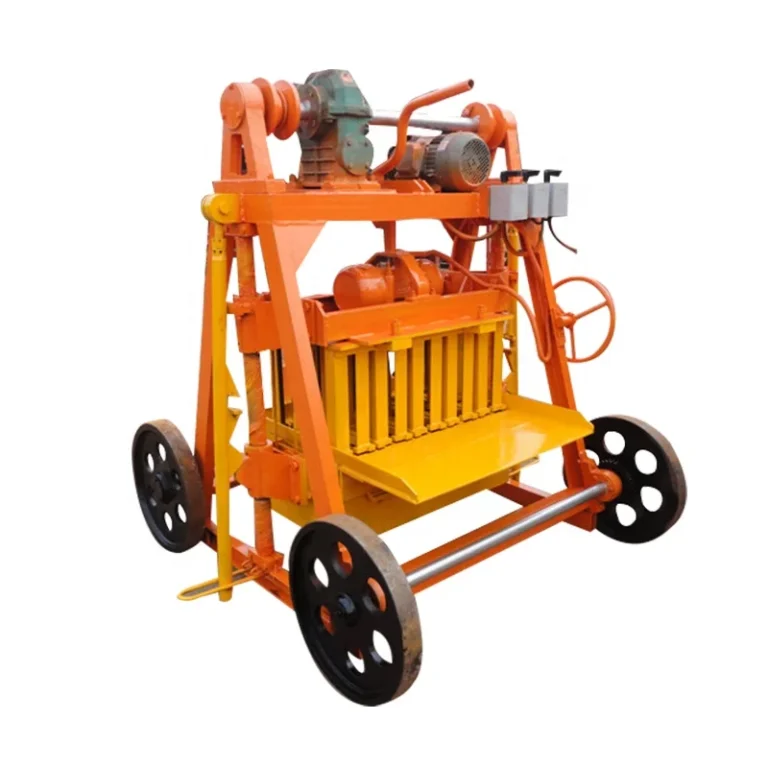
| Product Type | Mobile Egg-Laying Block Making Machine |
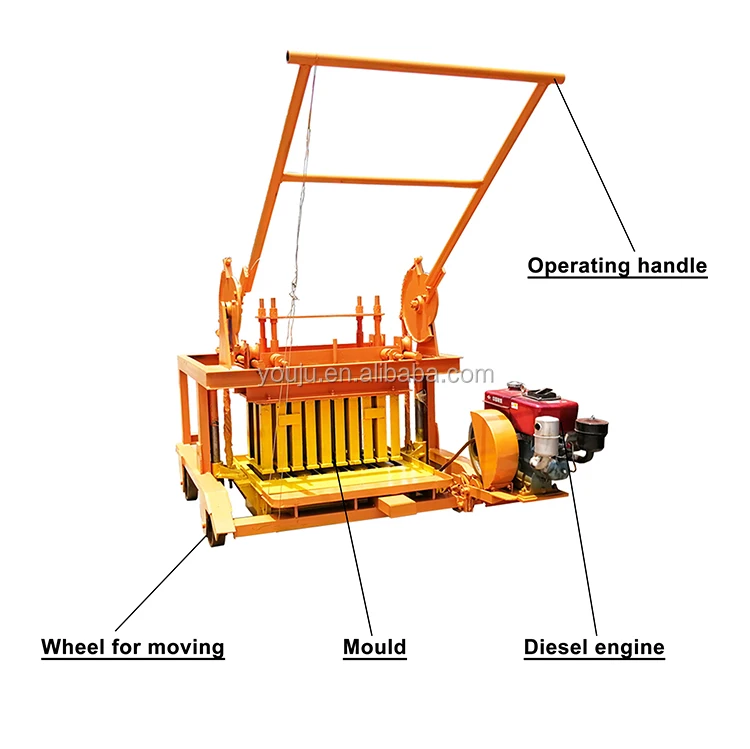
| Power Source | Diesel Engine (electric motor option available) |
| Rated Power | 8 hp (basis not stated in source — confirm if diesel or electric variant) |
| Molding Cycle | 45 s (basis not stated in source — confirm block format / material / thickness) |
| Molding Form | Vibration and Pressure |
| Vibration Force | 60 kN |
| Overall Dimensions (L×W×H) | 2420 × 1320 × 1650 mm |
| Net Weight | 800 kg |
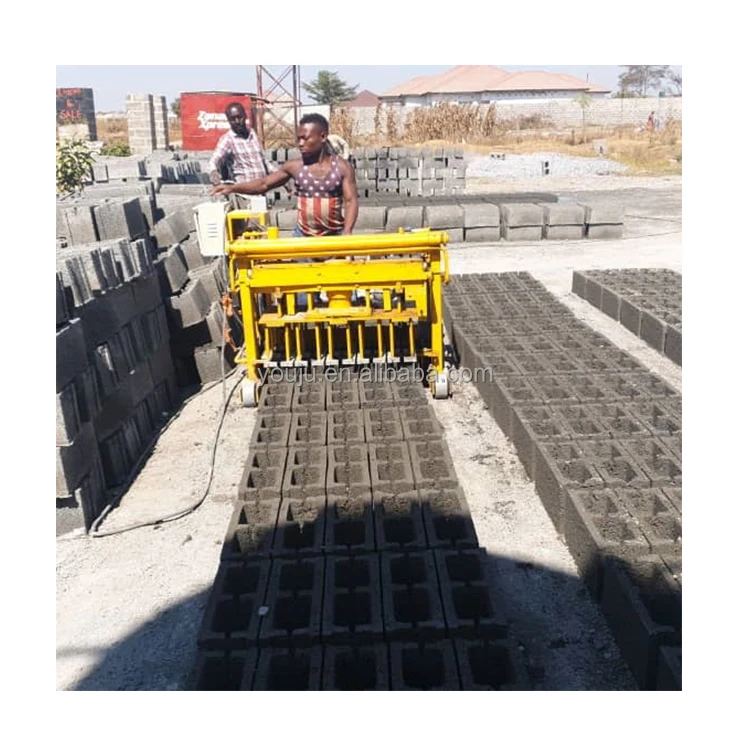
| Pallet Requirement | No pallet required (egg-laying / mobile type) |
| Mould Format | Paver brick, hollow block, concrete block, solid brick, fly ash brick (mould change time not stated in source) |
| Automation Level | Manual operation with mobile chassis; PLC upgrade path available |
| Basic Equipment Included | JZC350 Diesel Concrete Mixer or JQ350 Diesel Concrete Mixer (Electric Generating Unit); Trolley |
| Control System | Manual relay standard; PLC-controlled option available |
| Voltage & Frequency | Configurable upon confirmation for electric variant |
| Language Options | Control panel language configurable before dispatch |
Application Suitability
| Application | Material or Output |
|---|---|
| On-site block production for housing projects | Hollow blocks and solid bricks from crushed stone, sand, and cement |
| Small-scale paver manufacturing | Interlocking paver bricks from fine aggregate and cement |
| Remote or off-grid construction sites | Diesel-powered concrete block and fly ash brick production |
| Entrepreneur-level first plant | Multiple block formats with a single machine and interchangeable moulds |
| Contractor self-supply on infrastructure jobs | Concrete blocks produced directly on the ground without pallet logistics |
Why the Control Language Must Be Confirmed Before the Crate Is Nailed Shut
A PLC-controlled egg-laying block machine that speaks the wrong language on site costs you days, not hours.
I once watched an automatic mobile block machine sit idle in an Indonesian yard for four full working days. The operator only read Bahasa, the screen was in English, and the local electrician was afraid to touch the parameters. By the time the language pack was swapped and shipped, the project foreman had already lost a week of block output and was hand-ordering from a competitor. That delay had nothing to do with the press and everything to do with a checkbox that was never ticked before the machine left the factory [NEED_CITE: PLC display language confirmation before dispatch].
When you choose a PLC-controlled variant of the QMR4-45, the display language, voltage, and frequency must be locked in during the order stage. Retrofitting language packs in the field means waiting on firmware files, finding a local technician who can flash a panel, and hoping the mould does not need recalibration in the meantime. The intelligent side of this machine only delivers consistency when the operator actually reads what the screen is telling them.
How PLC Control Removes Guesswork from the Molding Cycle
Manual mobile machines rely on the operator to judge when the mix is ready, when to trigger vibration, and how long to hold pressure. Every batch varies slightly, and block strength drifts across the shift. When you move to a PLC-controlled automatic mobile block machine, the cycle timing, vibration duration, and pressure hold are stored as recipes. The operator selects the block format and the controller handles the rest, which means the last block of the day matches the first.
Where the Upgrade Path Actually Matters
The QMR4-45 starts as a manual egg-laying machine, but the frame and mould interface are designed so you can add PLC-controlled batching and stacking later without replacing the press. This matters when your first year is about proving the market and your second year is about keeping up with orders. Instead of selling a perfectly good machine to buy a larger one, you add automation modules around the existing press. The investment follows your actual sales curve rather than a projection you made before the first block was laid [NEED_CITE: modular automation upgrade paths for mobile block machines].
Reading the Specs That Actually Determine Block Strength
The 60 kN vibration force is one half of the compaction equation. Vibration reorganizes the aggregate particles into a denser arrangement, but without matched hydraulic pressure, the particles settle loosely and the block crumbles at the edges. The QMR4-45 uses a vibration-and-pressure molding form, meaning both forces are applied during the 45-second cycle. The practical result is a denser block wall and sharper paver edges compared to vibration-only egg-layers of similar weight class. The 800 kg net weight also contributes — a heavier machine chassis transmits more of the vibration energy into the block rather than losing it to frame resonance. For the electric motor variant, the voltage and frequency must match the local grid exactly; a 50 Hz motor running on 60 Hz power spins faster, overheats, and shortens bearing life. Always confirm the site power supply before the motor is wound.
What Happens When the Pallet Question Is Skipped Entirely
The QMR4-45 lays blocks directly on the ground, which eliminates pallet cost and pallet-handling labor. But if your curing area is soft soil or uneven gravel, the blocks settle unevenly during the first hours and develop hairline cracks. Buyers who skip the ground preparation step discover this after the first day of production, when half the output is rejected on site. A simple concrete floor or compacted sand bed costs a fraction of the machine and prevents the waste.
Why Buyers Source the Intelligent Side Here
Block machinery is the single focus at our facility, so the QMR4-45 press, moulds, mixer, and trolley are specified as one matched system rather than assembled from separate suppliers. Configuration is set against your actual mix design and local aggregate, not a catalogue default. The mould formats included are chosen for the blocks your market actually sells, and custom mould drawings are available for formats outside the standard list. Automation level is selectable, so you can start with manual operation and add PLC-controlled batching when demand justifies it. Installation includes operator training on the exact control interface your team will use, with the display language confirmed before the machine ships [NEED_CITE: matched block machine system specification versus assembled components].
Documentation & Verification
- Factory test record showing the QMR4-45 running under load with your chosen mould format
- Capacity calculation sheet stating which block format the cycle time assumes
- Mould drawing and format list confirming included and optional block sizes
- Voltage, frequency, and PLC display language confirmation sheet for electric variants
- Hydraulic and electrical schematic for local maintenance reference
- Operation and maintenance manual in your confirmed operator language
Installation, Commissioning & Support
- Ground preparation for egg-laying: level concrete or compacted sand bed matching the 2420 × 1320 mm machine footprint
- Dedicated circuit for electric motor variant sized to the confirmed voltage and frequency
- Diesel engine variant arrives fueled and tested; JZC350 mixer paired and matched to the press feed height
- First-day commissioning includes mould change demonstration between hollow block and paver formats
- Operator training covers PLC recipe selection, cycle parameter adjustment, and emergency stop procedures
- Wear parts and mould replacement list provided with part numbers for local reordering
Before You Request a Quote, Get These Details Ready
To size the QMR4-45 correctly for your site, share the block formats you plan to produce and the daily output you need per format. Confirm your local voltage and frequency if you are considering the electric motor variant, and specify the control panel language your operators will use. Let us know whether the site is grid-connected or off-grid, and describe the raw materials you can source locally — the aggregate type and cement grade shape the vibration and pressure settings we dial in during commissioning.
Frequently Asked Questions
Q: How is daily output calculated for the QMR4-45, and which block format is the cycle time based on?
A: The 45-second molding cycle is a reference value that varies with block format, mix design, and material thickness. We provide a capacity calculation sheet that states exactly which block size the cycle assumes — for example, a standard hollow block versus a thinner paver — so your expected daily output is based on the format you will actually produce, not a best-case scenario.
Q: What automation upgrade options are available from the manual mobile configuration?
A: The QMR4-45 can be equipped with a PLC-controlled automatic mobile block machine package that adds recipe-based cycle control, automatic batching accuracy, and integration with stacking systems. You can start with manual operation and add these modules later, so the automation investment follows your production growth rather than requiring a full upfront commitment.
Q: Can the control system be configured for my local voltage, frequency, and operator language?
A: Yes. For the electric variant, voltage and frequency are confirmed before the motor is wound. The PLC display language is locked in during the order stage so the screen reads in the language your operators use. This prevents the costly on-site delay of retrofitting language packs after the machine arrives.
Q: How does vibration force match my local aggregate for consistent block strength?
A: The 60 kN vibration force and hydraulic pressure must both be suited to your aggregate size and cement ratio. Coarse aggregate needs different vibration duration than fine sand. During commissioning we adjust cycle parameters to your specific mix design so block strength stays consistent batch after batch.
Q: What is the mould change procedure on the QMR4-45?
A: The moulds are bolted to the vibration table and can be swapped between hollow block, paver, and solid brick formats. We provide a mould format list and change procedure during commissioning. The exact change time depends on the operator’s familiarity, which is why we include hands-on training as part of the installation process.