

Description
Matched System Sizing — we specify the LY2-40 and its future automation stations against your soil-cement mix, target interlocking format, and site curing capacity, not a generic catalogue default.
Technical Specifications
| Parameter | Value |
|---|---|
| Model | LY2-40 |
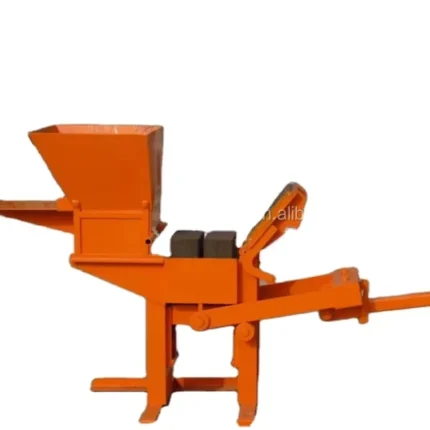
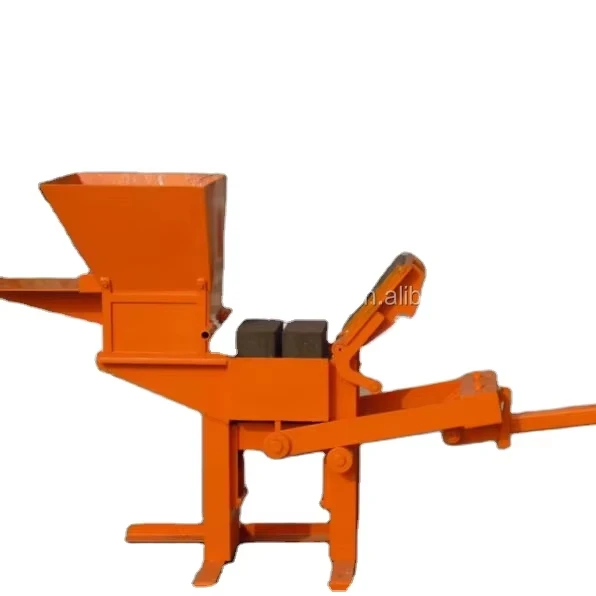
| Product Type | Manual Clay Interlocking Brick Making Machine |
| Rated Power | No Power, Completely Manual |
| Voltage & Frequency | N/A (manual operation) |
| Control System | Manual mechanical operation (gear and bearing system) |
| Overall Dimensions (L×W×H) | 1600 × 700 × 1200 mm |
| Net Weight | 200–240 kg |
| Output Capacity | 400–1000 pcs/day (basis not stated in source — confirm block format, material, thickness) |
| Cycle Time | 30–40 s per moulding stroke (basis not stated in source — confirm block format) |
| Mould Format | Interlocking clay/earth brick, changeable moulds for various blocks |
| Mobility | Steel wheels for on-site repositioning |
| Optional Mixer | JFA-1 Mixer or JQ350 Mixer |
| Warranty | 1 Year |
Application Suitability
| Application | Material or Output |
|---|---|
| Off-grid rural housing projects | Locally sourced soil mixed with cement, no grid power required |
| Community building in unreliable-power regions | Earth-based interlocking bricks produced on-site with hand labour |
| Small-scale ecological brick enterprises | Low-volume clay brick runs where capital investment must stay minimal |
| Contractor-run site production | Interlocking earth blocks for walls, foundations, and partitions |
What a Manual Press Reveals About Your Automation Path
An automatic manual clay interlocking brick making machine PLC controlled upgrade only removes operator dependency when the starting baseline is measured honestly.
I once watched an entrepreneur in West Africa buy a hand-press on the assumption that 400–1,000 pieces per day would cover his first housing contract. What the quotation did not say was that the figure assumed a free-flowing sandy loam. His local laterite clay swelled after each stroke, cracked on demoulding, and forced his crew to rework half the output. Daily saleable volume dropped well below expectation, and the mould liners wore through in weeks [NEED_CITE: soil plasticity index effect on manual brick compaction]. The lesson is simple: before you invest in PLC-controlled batching and automatic stacking, you must know exactly what the manual press produces with your own soil, because automation amplifies what you feed it — good or bad.
The Floor of the Automation Ladder
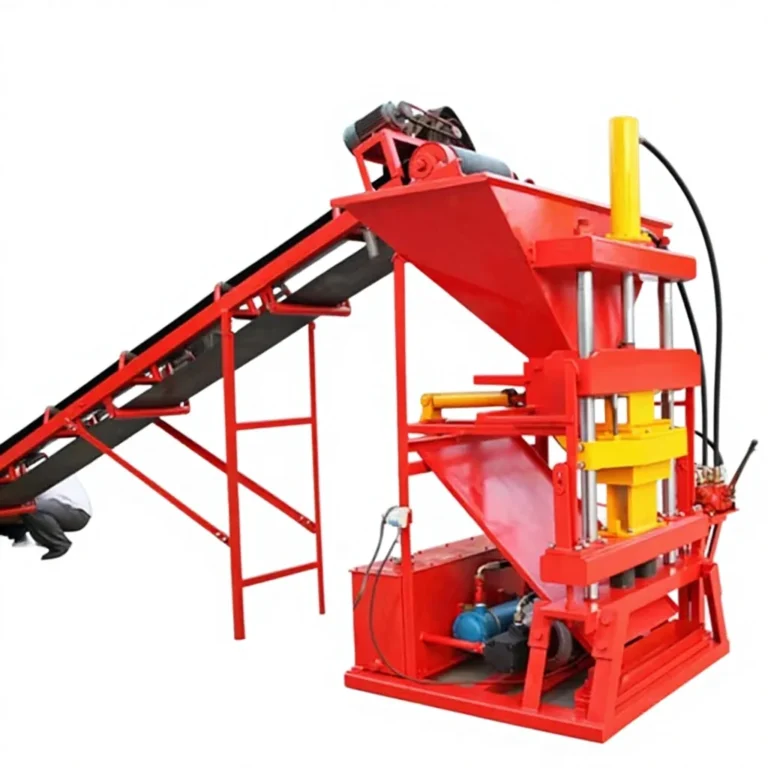
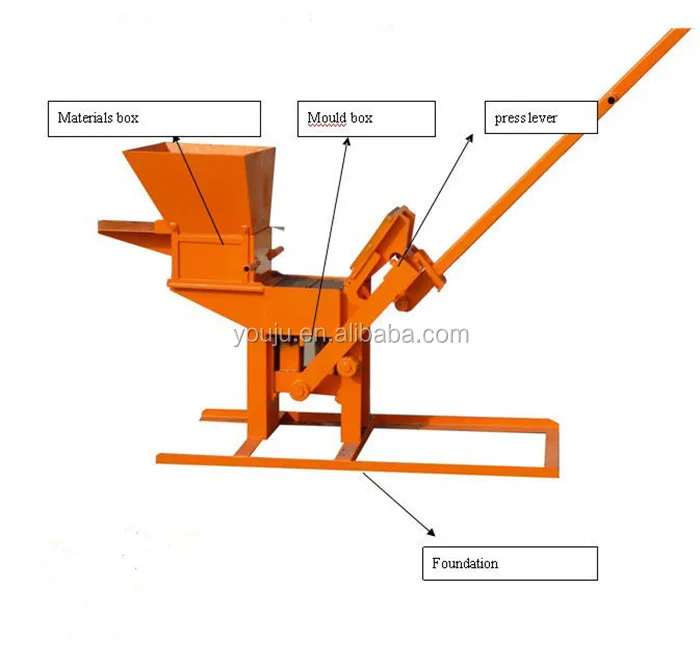
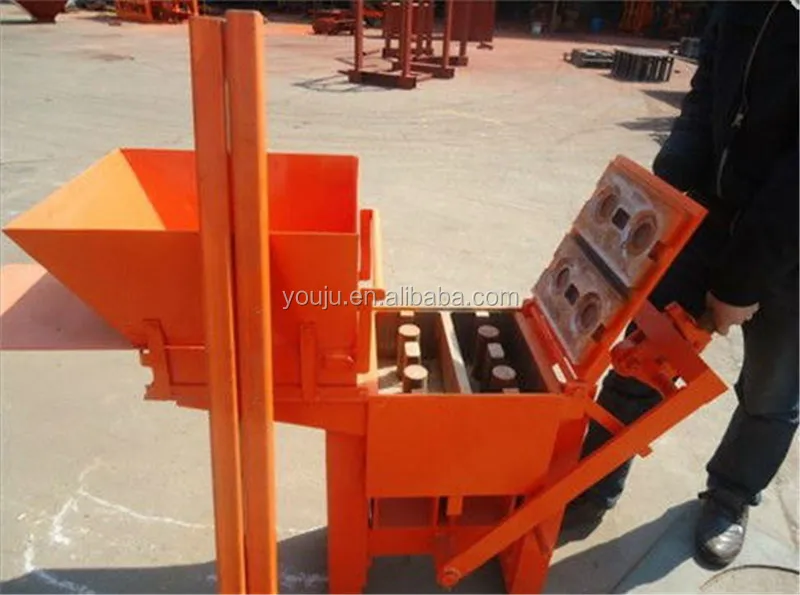
The LY2-40 sits at the absolute base of the production ladder. No motor, no hydraulic pack, no PLC — just a gear-and-bearing lever system that lets two operators compress soil into an interlocking cavity. Its value is not volume; it is diagnostic. Running this press with your local clay and cement ratio tells you whether the mix holds shape, what demoulding force your crew can sustain, and how fast the mould surfaces degrade. Once those facts are documented, the jump to semi-automatic batching or a full automatic manual clay interlocking brick making machine PLC controlled line becomes a calculation, not a guess.
Where Operator Variability Becomes the Real Bottleneck
Every stroke on a manual press depends on the operator’s arm strength, timing, and judgement of when the mix is "ready." That variability is invisible in short trials and devastating over a full production season [NEED_CITE: batch-to-batch consistency in manual versus PLC-controlled brick production]. Semi-automatic configurations remove the lifting and pallet handling, while PLC-controlled lines add batching accuracy, vibration force, and hydraulic pressure that no human arm can match. The question is never whether automation is better — it is whether your volume justifies the step, and that answer comes from running the manual tier first.
Reading the Numbers That Actually Matter
The 30–40 second cycle time is a mechanical ceiling: one stroke, one brick, one demould. On a PLC-controlled line with automatic pallet feeding, the press cycles independently of the operator, and the real constraint shifts to mixer throughput and curing rack capacity. Mould changeability on the LY2-40 is manual — bolts, liner swaps, alignment by eye — whereas an automatic mould change system can cut format swaps to a documented routine. The 200–240 kg net weight and steel-wheel mobility mean the press can be pushed across a site, but a fixed automatic line requires a concrete slab, pallet conveyors, and curing racks laid out before the press arrives [NEED_CITE: plant layout requirements for automatic block lines].
The Hidden Cost of Skipping the Baseline
Buyers who skip the manual tier and order a PLC-controlled line straight away often discover that their local aggregate was never tested at production scale. The PLC delivers exact batching, but if the soil-cement ratio is wrong, every brick that rolls off the automatic stacker is consistently wrong. Mould wear on a hydraulic press is also different from a hand press — harder steels, tighter tolerances — and if the mix design was never validated, those expensive mould liners wear just as fast. The financial hit comes not from the machine price but from weeks of commissioning delays while the mix is re-engineered on a live production line [NEED_CITE: commissioning delays caused by untested mix designs].
Why Sourcing Here Changes the Conversation
Block machinery is our single focus, so the LY2-40 is specified alongside the pallets, curing racks, and future hydraulic stations as one system. We configure the machine against your actual mix design and local aggregate, not a catalogue default. Mould design covers the interlocking formats your market sells, including custom drawings. The automation level is selectable: you can start with the LY2-40 and upgrade to semi-automatic or PLC-controlled tiers without replacing the entire line. Installation and commissioning support includes operator training so the crew that learns on the manual press carries that knowledge into the automatic line.
Documentation & Verification
- Line layout and capacity calculation stating the interlocking brick format assumed
- Machine specification sheet with manual gear-and-bearing system detail
- Mould drawing and format list for every interlocking profile offered
- Factory test record on your local soil-cement sample before dispatch
- Operation and maintenance manual covering gear, bearing, and mould liner service intervals
Installation, Commissioning & Support
- Level compacted-earth base sufficient for the 200–240 kg frame, no concrete slab required at manual tier
- No electrical connection needed; future PLC upgrade requires voltage, frequency, and HMI language confirmed before shipment
- Arrives assembled; steel wheels allow immediate on-site repositioning by two operators
- First production run supervised to validate soil-cement ratio against the 30–40 second cycle time
- Gear, bearing, and mould liner wear parts listed with recommended stock quantities for first-year operation
Tell Us What Your Soil Actually Does
Send us a sample of your local clay or laterite, the cement ratio you plan to use, and the interlocking brick format your market demands. Tell us whether grid power is available now or planned for later, and what your curing area looks like. With that information, we calculate what the LY2-40 produces with your mix and map the exact point where a semi-automatic or PLC-controlled line becomes justified.
Frequently Asked Questions
Q: How is the 400–1,000 pcs/day capacity verified, and which interlocking brick format does it assume?
A: That range is quoted without a stated block format, material, or thickness, so it must be recalculated against your specific interlocking profile and soil-cement mix before you rely on it for contract planning. We run your sample and document the actual daily output.
Q: What does each automation level actually remove from the operator?
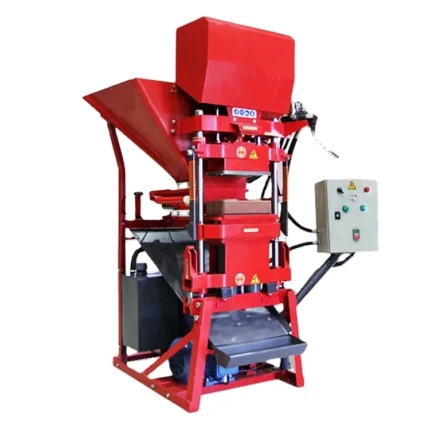
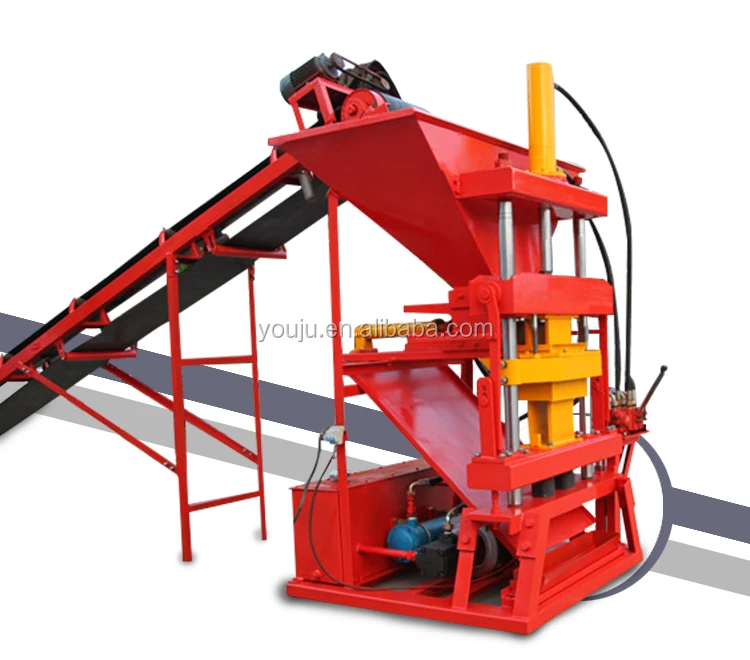
A: The manual tier leaves every variable — mixing, pressing, pallet handling — to human judgement. Semi-automatic removes lifting and pallet movement. A full automatic manual clay interlocking brick making machine PLC controlled line adds batching accuracy, hydraulic pressure, and automatic stacking, leaving the operator to supervise.
Q: How should the batching station be configured before upgrading to PLC-controlled accuracy?
A: Your local soil must be tested for plasticity, moisture retention, and cement compatibility at the volume the future line will demand. PLC-controlled batching is precise, but precision applied to a wrong mix produces consistently weak bricks. We validate the mix on the manual tier first.
Q: What voltage, frequency, and PLC display language must be confirmed before an automatic upgrade?
A: Your site voltage, frequency, and the language your operators read must be locked in before the PLC panel is built. Retrofitting a control cabinet after arrival causes commissioning delays that stop production for weeks.
Q: Which manual press wear parts are replaced by hydraulic and automatic components at higher tiers?
A: The gear and bearing system is replaced by a hydraulic pack and vibration motor. Mould liners move to harder tool steels to withstand hydraulic pressure. Pallets change from manual handling to conveyor-fed, and the entire frame scales up to accept automatic stacking stations.