

Description
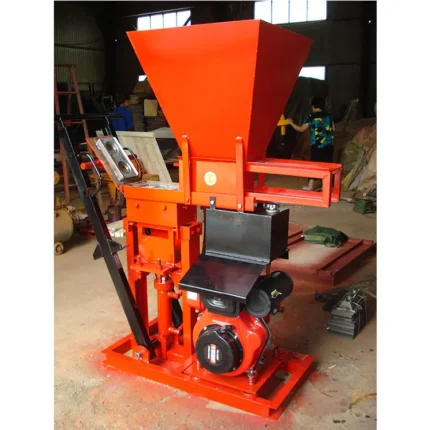
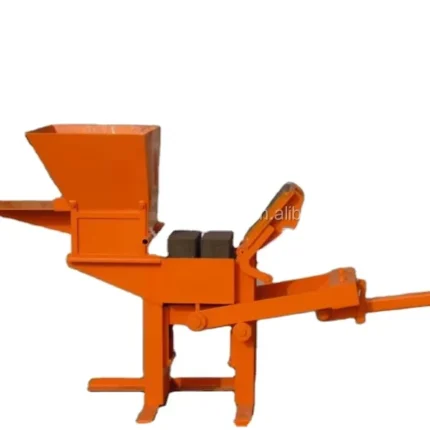
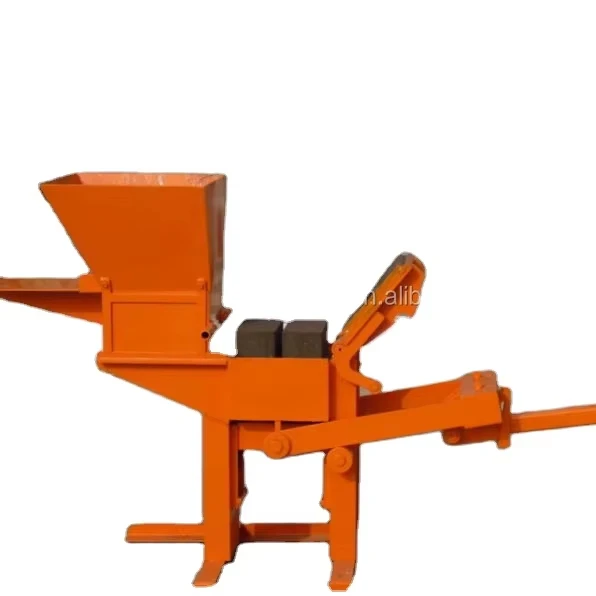
Mould Interface Carries Over — The LY2-40 manual clay interlocking brick machine shares the same mould mounting geometry as higher-tier automated presses, so a buyer who invests in format tooling today keeps those assets when the line later moves to PLC-controlled batching and stacking.
Technical Specifications
| Parameter | Value |
|---|---|
| Model | LY2-40 |
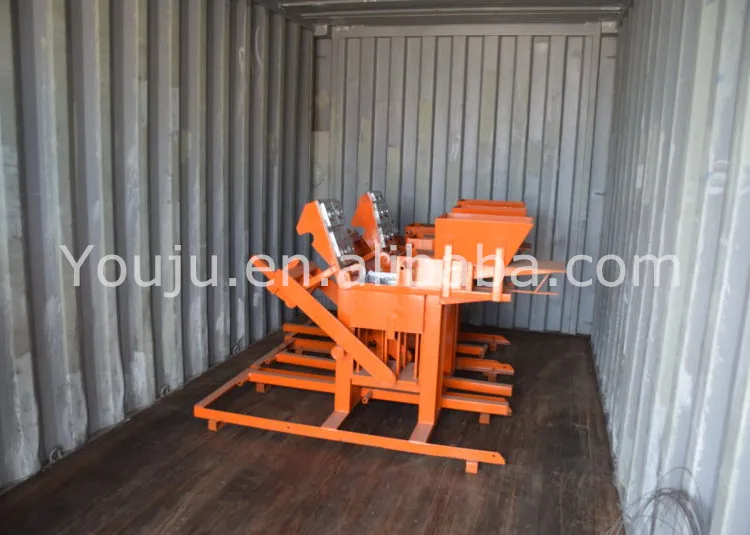
| Product Type | Manual Clay Interlocking Brick Making Machine |
| Total Power | No Power, Completely Manual |
| Overall Dimensions (L×W×H) | 1600 x 700 x 1200 mm |
| Total Mass | 200–240 kg |
| Molding Cycle | 30–40 s per press |
| Output Capacity | 400–1000 pcs/day (basis not stated in source — confirm block format, material, and shift length) |
| Lifting System | Manual |
| Mobility | Steel wheels, mobile |
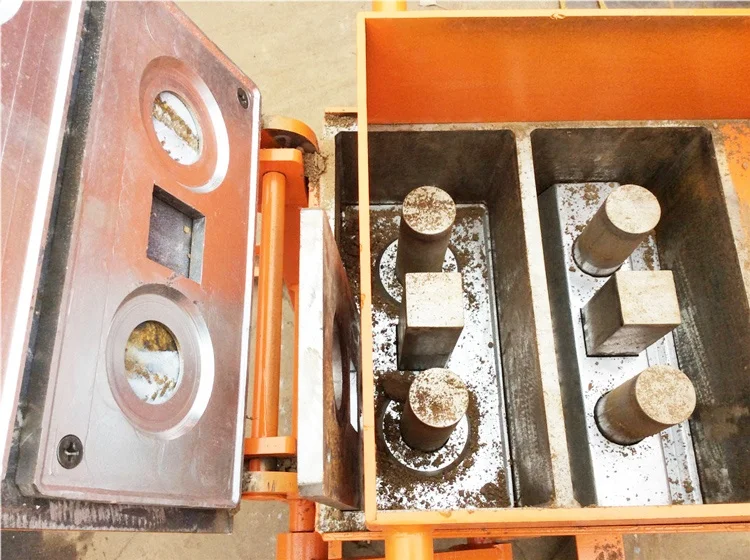
| Mould Change | Moulds changeable for various block formats |
| Basic Mixer Options | JFA-1 Mixer or JQ350 Mixer; Eco Mix Force line mixer available for automatized mixing |
| Automation Level | Fully manual; upgrade path to semi-automatic and PLC-controlled configurations |
| Warranty | 1 Year |
Application Suitability
| Application | Material or Output |
|---|---|
| On-site interlocking brick production for housing projects | Soil-cement mix using locally excavated clay |
| Off-grid or no-power-area block making | Unstabilized or lightly cement-stabilized soil |
| Small-scale ecological brick manufacturing | Clay-soil blends with minimal binder addition |
| Format testing before committing to an automated cell | Interlocking profiles in standard and custom dimensions |
What "400 to 1000 Pieces a Day" Actually Means on the Ground
Cycle time only tells half the story — the block format you run determines whether you hit the top or the bottom of that range.
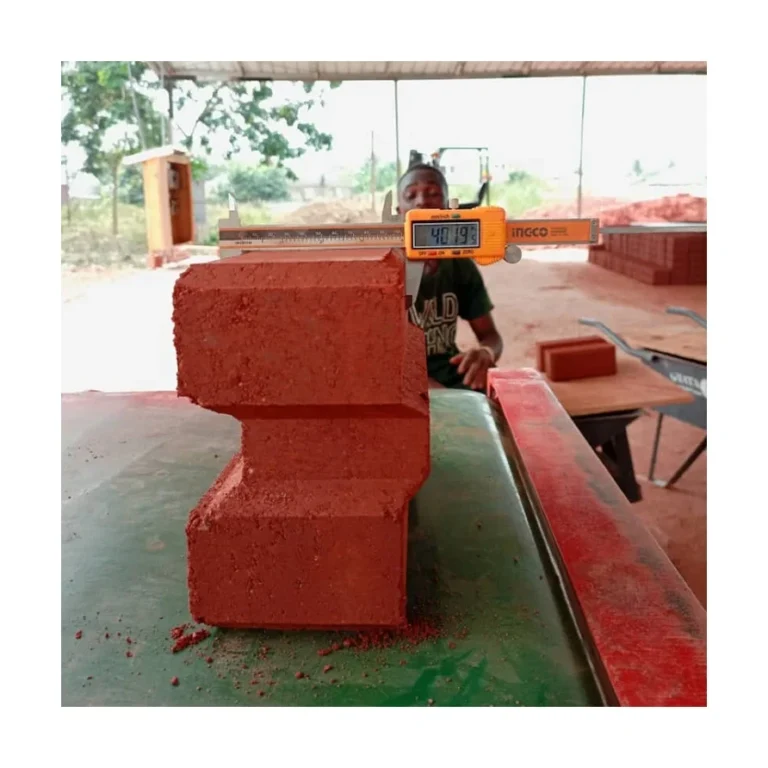
When a manual clay interlocking brick machine quotes a daily output spread as wide as 400 to 1000 pieces, the variable hiding inside that bracket is the brick profile. A thin, flat interlocking paver cycles fast because the soil-cement mix travels a short distance into the mould and the operator can strip it without hesitation. A tall, deeply keyed interlocking block takes longer to fill, needs more tamping passes, and demands a careful release so the interlocking lips do not chip. In the Pearl River Delta, I once watched a contractor plan a wall build around the assumption of 900 bricks a day, only to discover that the specific interlocking profile his architect specified pulled the real number closer to 500. That gap between expectation and reality is where project schedules break [NEED_CITE: capacity calculation methods for manual block machines across different brick formats].
Where the LY2-40 Sits on the Automation Ladder
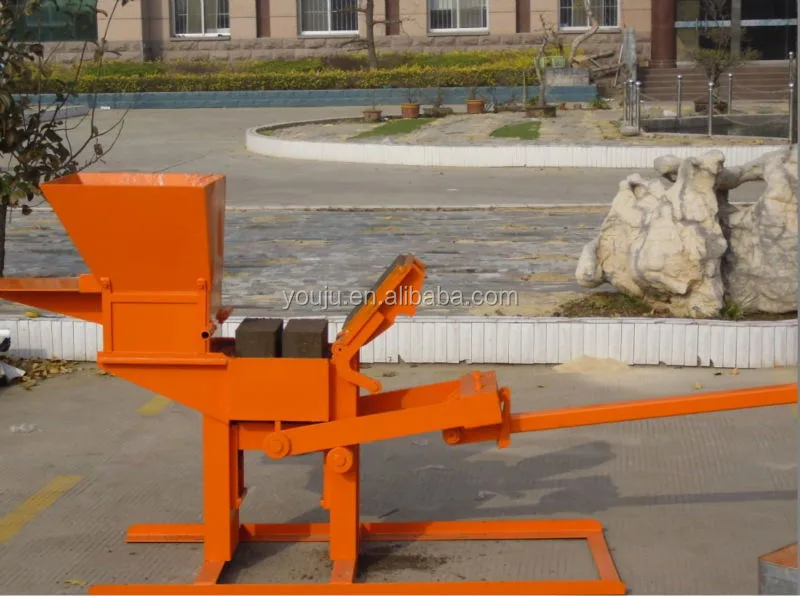
Starting block production without any electrical dependency removes a major barrier for remote sites and first-time entrepreneurs. The LY2-40 is a completely manual press, which means an operator can run it on a plot of land with no grid connection and no generator. For buyers who intend to grow, the relevance of this machine extends beyond its current output. The mould interface it uses is compatible with the same tooling formats that later mount on a PLC controlled block making machine, protecting the buyer’s investment in custom profiles as production scales.
The Control Upgrade That Changes Batch Consistency
Once daily demand moves past what two operators can sustain on a manual press, the bottleneck shifts from pressing speed to mix consistency. A PLC controlled block making machine takes over moisture dosing, binder weighing, and mixing time, so every batch that reaches the mould has the same water content and the same cement ratio. On a manual setup, the operator judges moisture by feel — and on a humid morning in Guangdong that feel is very different from a dry afternoon [NEED_CITE: moisture variability in soil-cement block production]. The automatic clay interlocking brick machine tier removes that judgement call, which is where most of the consistency gain actually comes from.
Reading the Specs That Matter for Interlocking Clay Brick
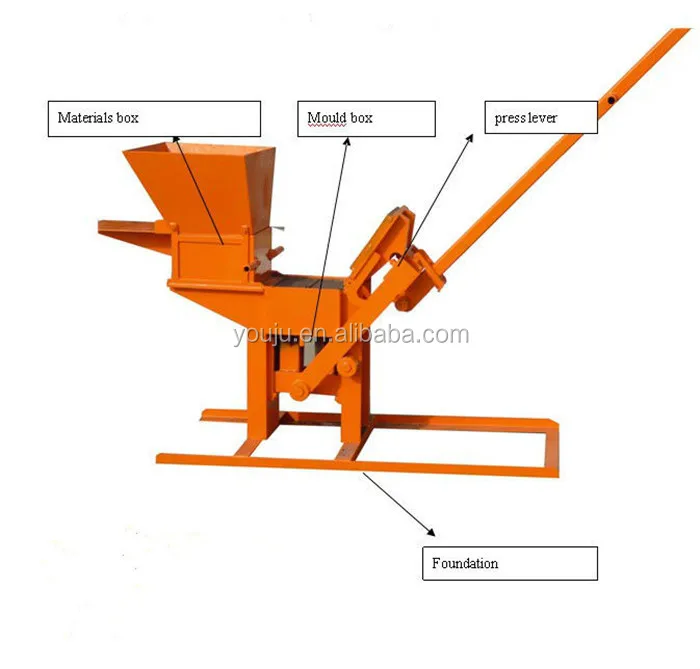
The 30–40 second molding cycle on the LY2-40 reflects a hand-tamped soil-cement mix in a standard interlocking cavity. In practice, the cycle stretches when the operator is learning the release technique or when the clay fraction in the local soil is high and the brick wants to stick. Total mass of 200–240 kg gives the frame enough inertia to resist rocking during tamping, but the machine remains mobile on its steel wheels — one person can reposition it across a curing yard. The overall dimensions of 1600 x 700 x 1200 mm mean the press fits through a standard doorway and can work inside a semi-open shelter. Mixer selection matters: the JQ350 pan mixer handles a soil-cement batch with enough agitation to break clay lumps, while the Eco Mix Force line mixer adds a degree of automation that prefigures a full PLC-controlled batching station later on.
When Staying Manual Costs More Than You Realize
A buyer who runs the LY2-40 for six months and then discovers that the local housing authority now requires certified compressive strength faces a painful choice. The manual press cannot guarantee the density uniformity that a test lab needs to see across a sample set. Every brick is slightly different because every tamping pass is slightly different. Retesting, rejecting, and repressing batches erodes the cost advantage of running without power [NEED_CITE: compressive strength variance in manually pressed soil-cement bricks]. At that point, moving to a semi-automatic or fully automatic configuration with PLC-controlled pressure and vibration is not an upgrade for prestige — it is a compliance requirement.
Why Source This Machine Through a Single-System Supplier
Block machinery is the only product line here, which means the LY2-40 is not sold as a standalone press with the mixer, pallets, and curing racks left to the buyer to source elsewhere. The mould that ships with the machine is designed for the interlocking format the buyer’s market actually sells, and custom mould drawings are supported from the start. Configuration is set against the buyer’s local clay and aggregate, not a generic catalogue assumption. If the buyer later adds a PLC controlled block making machine to the same site, the pallet size, mould interface, and curing rack spacing have already been planned for that transition. Operator training covers the manual workflow first and maps directly onto the automated sequence, so the same team can run both tiers [NEED_CITE: integrated block line planning across manual and automatic tiers].
Documentation & Verification
- Line layout showing the LY2-40 footprint alongside mixer and curing area allocation
- Capacity calculation sheet stating the specific interlocking brick format used for the 400–1000 pcs/day range
- Mould drawing and format list confirming interlocking profile dimensions and key depth
- Factory test record with molding cycle measured on the buyer’s specified soil-cement mix
- Operation and maintenance manual covering mould release technique and steel wheel upkeep
Installation, Commissioning & Support
- The 1600 x 700 mm footprint requires a level, compacted ground surface rather than a poured foundation
- No electrical connection needed for the LY2-40 itself; mixer circuit requires confirmation of local voltage and frequency
- Machine ships assembled on steel wheels; unload and position directly on the production area
- First-run commissioning includes mix ratio tuning with locally sourced clay and cement
- Operator training covers tamping rhythm, mould release, and cycle pacing for the chosen interlocking format
- Wear parts list includes mould liner, tamping plate, and pivot pins with replacement intervals
What We Need to Know Before Quoting
Send the exact interlocking brick profile drawing or a sample brick so the mould can be matched to the format your market sells. Confirm the type of clay or soil available on site and whether any stabilization with cement or lime is planned. Let us know the target daily output and the number of working hours per shift so the capacity calculation reflects your real schedule rather than a generic assumption.
Frequently Asked Questions
Q: How do I verify the real daily output of the LY2-40 and what block format is it based on?
A: Request a capacity calculation sheet that names the exact interlocking brick dimensions, mix design, and shift length used to derive the output figure. The quoted 400–1000 pcs/day range spans multiple formats, so the number you will actually achieve depends entirely on the profile you choose to run.
Q: At what production volume does upgrading from manual to PLC-controlled automation pay off?
A: The shift usually becomes necessary when daily demand exceeds what two operators can sustain on a single manual press across a full shift, or when a certification body requires compressive strength uniformity across a sample batch. At that point, PLC-controlled batching and pressing deliver the consistency that manual tamping cannot guarantee.
Q: What does automation add and what does it remove from the operator?
A: A PLC-controlled configuration takes over moisture dosing, binder weighing, mixing time, and pressing force, removing the judgement calls that cause batch-to-batch variation. The operator shifts from controlling every variable by feel to monitoring the control panel and handling finished bricks.
Q: Can I start with the LY2-40 and later integrate it into a semi-automatic or fully automatic line?
A: Yes. The mould interface on the LY2-40 shares geometry with higher-tier presses, so tooling investments carry over. When you add an automatic clay interlocking brick machine later, pallet size and curing rack spacing can be planned from the start to accommodate both tiers.
Q: Which voltage, frequency, and PLC language options are available when I upgrade?
A: The automation tier supports configurable voltage and frequency to match the local grid, and the PLC display language is confirmed before production. Specify your site’s electrical standard and preferred operator language during the inquiry so commissioning is not delayed after arrival.