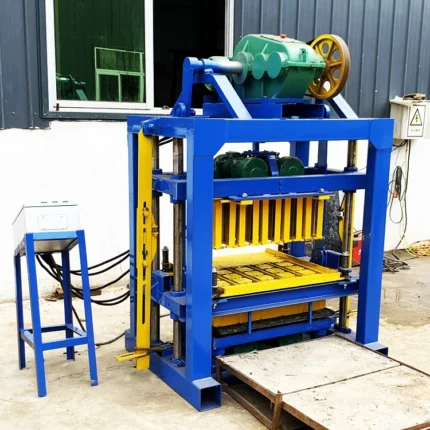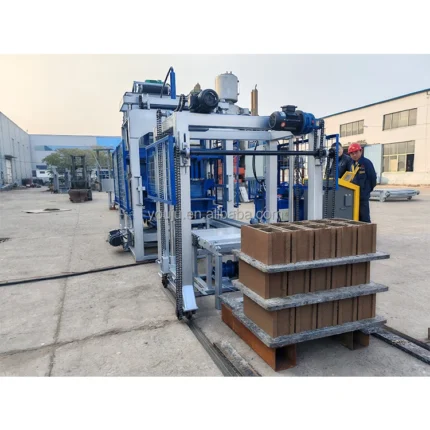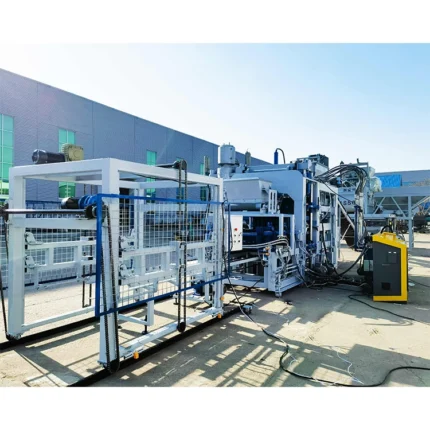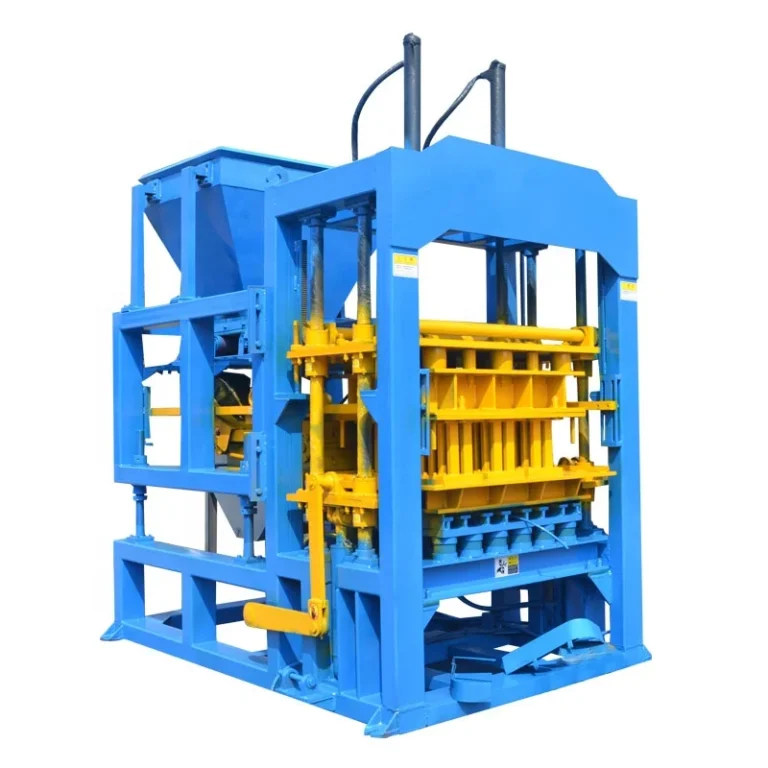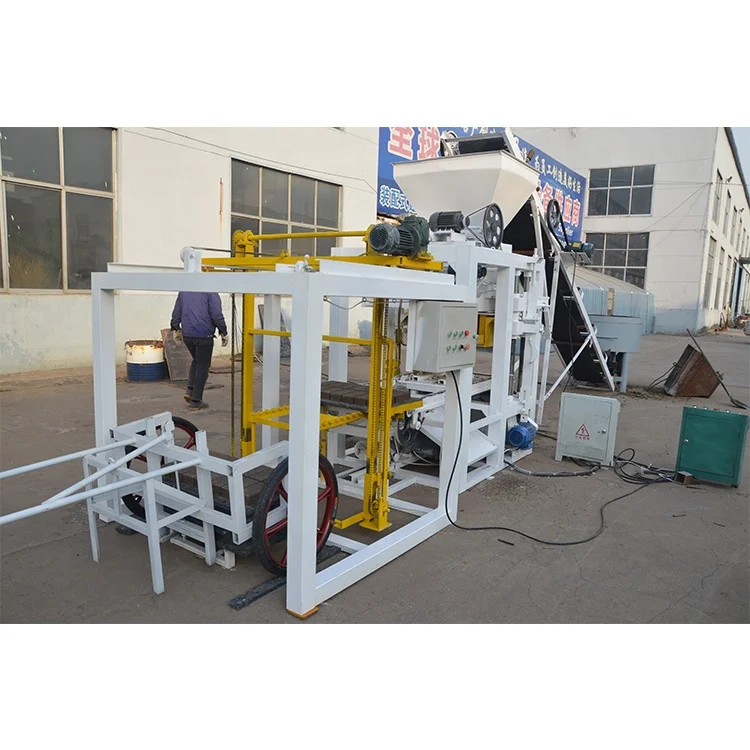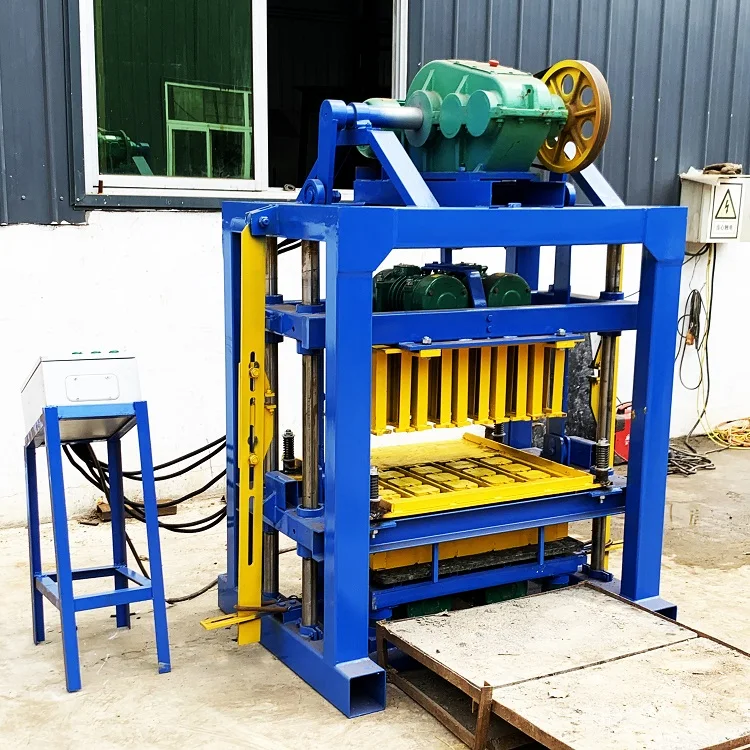
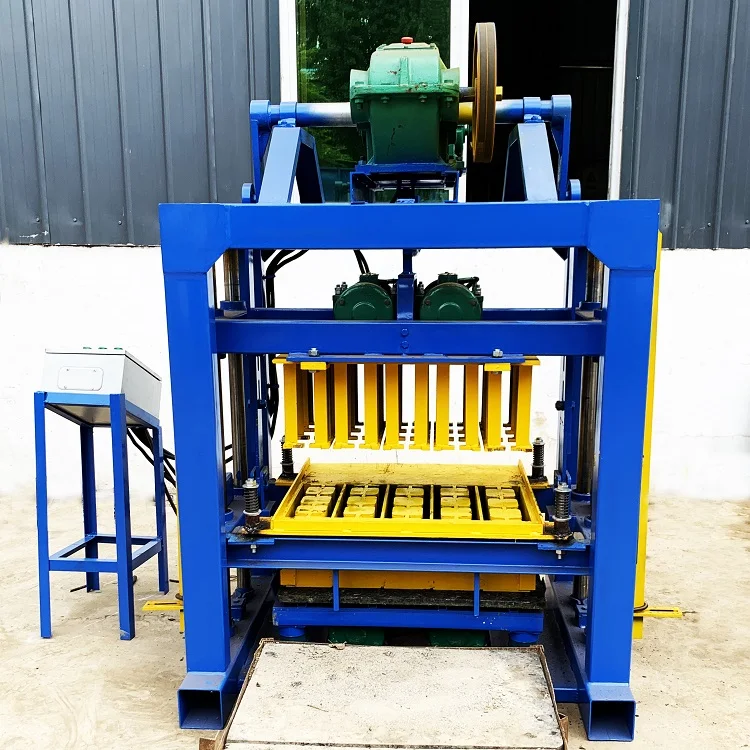
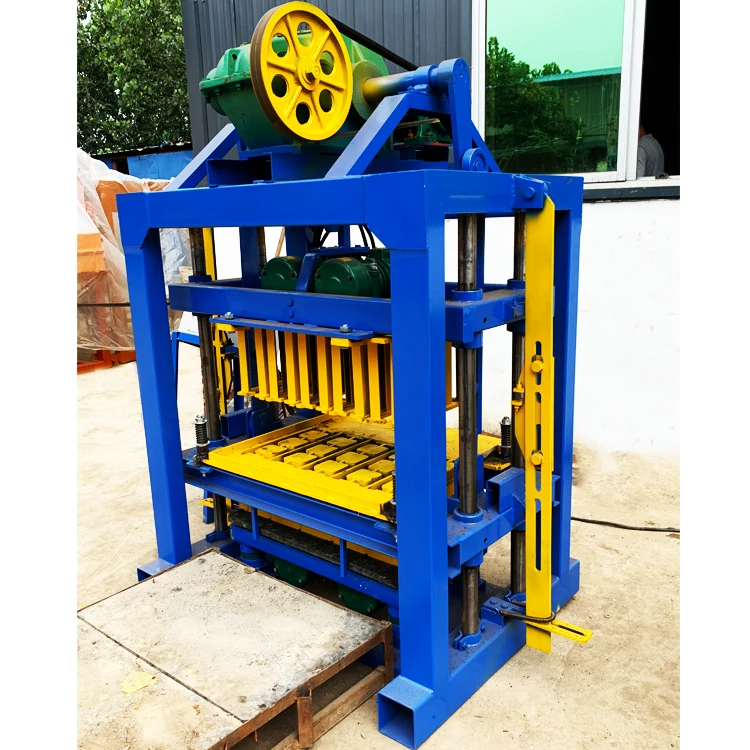
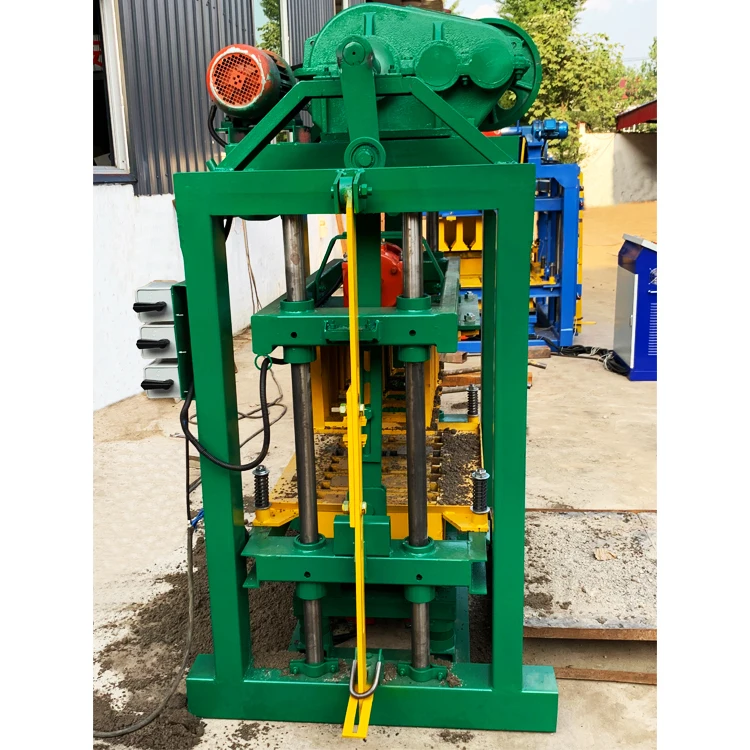
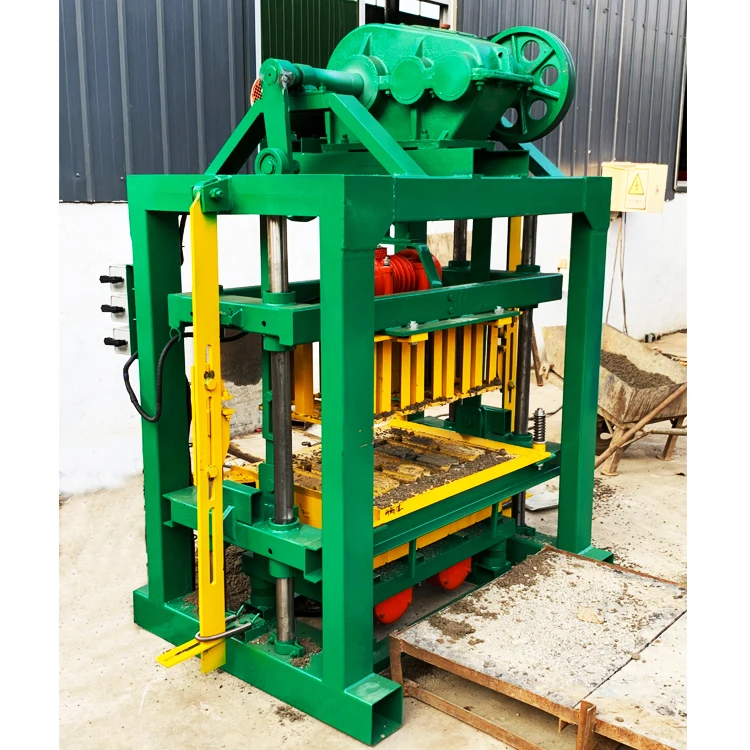
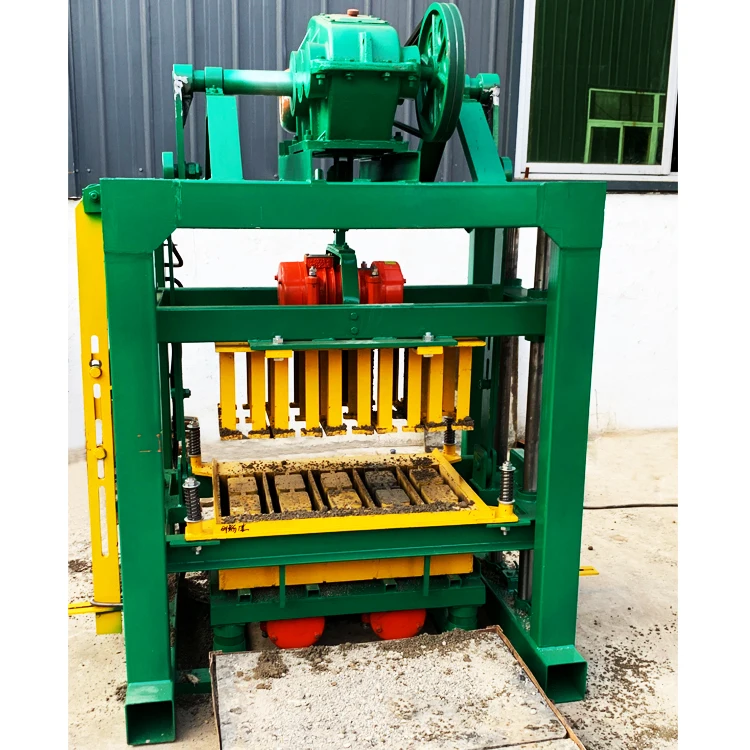
Description
Configured System Match — vibration force, pallet size and control language verified against your site conditions before the QTJ4-40 leaves the factory.
Technical Specifications
| Parameter | Value |
|---|---|
| Model | QTJ4-40 |
| Product Type | Manual Concrete Block Making Machine |
| Main Vibration Form | Platform Vibration |
| Vibration Frequency | 2800 r/min |
| Pallet Size | 850×450mm |
| Top Die Mechanism | Push and pull with automatic scraper |
| Motor Option | Diesel and Electric Motor |
| Overall Size | 1350×1460×1800mm |
| Machine Weight | 1T |
| Required Workers | 1-3 people |
| Factory Area | 200m2 |
| Raw Materials | Concrete, cement, fly ash, crushed stone, sand, dust, gravel, slag |
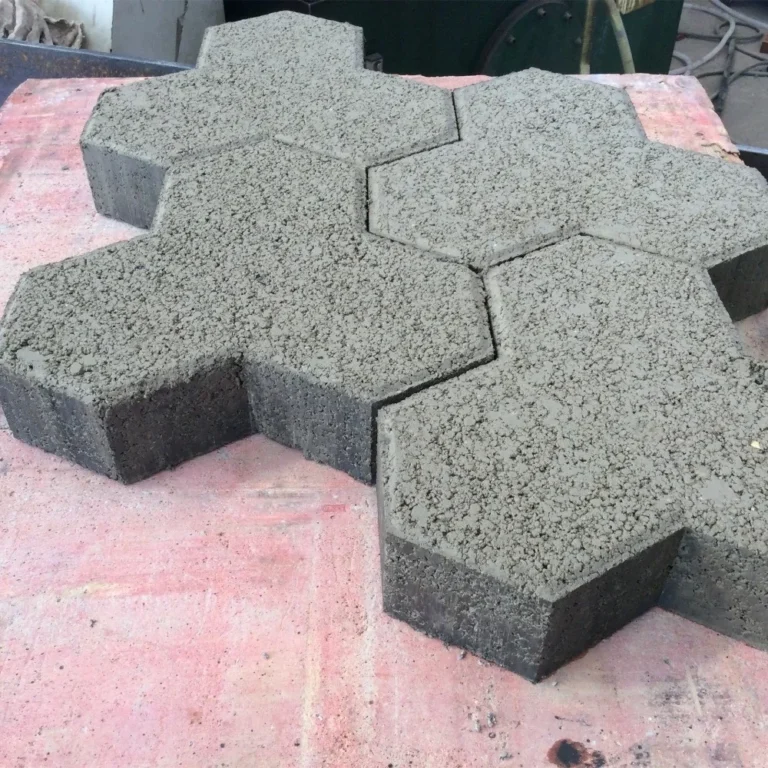
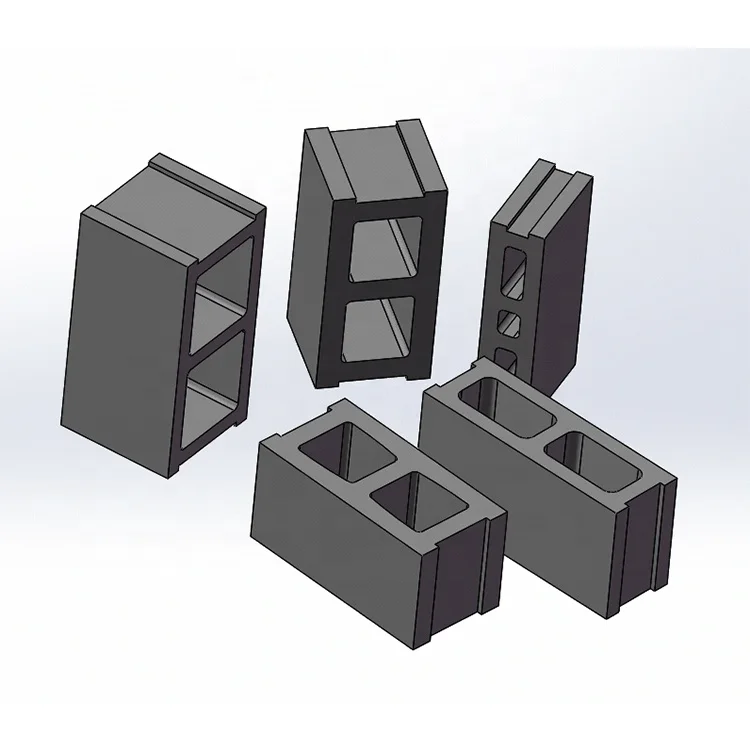
| Applied Products | Concrete blocks, hollow/solid blocks, pavers, interlocking blocks, curbstone, colored pavers |
| Production Capacity (400×200×200mm) | 4 pcs/mould, 360 pcs/hour, 2880 pcs/day |
| Production Capacity (400×150×200mm) | 5 pcs/mould, 500 pcs/hour, 4000 pcs/day |
| Production Capacity (225×112.5×60mm) | 9 pcs/mould, 900 pcs/hour, 7200 pcs/day |
| Capacity (General Claim) | 2800 pcs/8hours (basis not stated in source — confirm block format / material / thickness) |
| Standards | CE |
Application Suitability
| Application | Material or Output |
|---|---|
| Small-scale hollow block plant | Cement, sand, crushed stone (approx. 1:4:5 ratio) |
| On-site construction block manufacturing | Fly ash, gravel, dust mixed with cement binder |
| First block plant for entrepreneurs | Standard concrete hollow and solid blocks |
| Paver and interlocking brick production | Colored concrete mixes, slag, fine aggregate |
| Curbstone and solid block formats | High-cement-content mixes for structural density |
Why the Voltage Question Must Come Before the Price
Confirming voltage, frequency and PLC display language before shipment prevents a multi-day standstill on your site.
A PLC controlled manual block machine arriving with the wrong voltage configuration or an interface in an unreadable language will sit idle while transformers are sourced or technicians are flown in. I have watched commissioning stall for days because the operator could not navigate the control screen. The automatic QTJ4-40 block machine upgrade path only works when the electrical foundation is correct from day one [NEED_CITE: voltage and frequency standards by export market].
From Manual Pallet Handling to Semi-Automatic Circulation
The QTJ4-40 is designed as an entry-level platform that accepts automated pallet feeding and stacking modules as the operation grows. Starting with manual pallet handling keeps initial investment low, and the same press frame later integrates with a pallet circulation system without replacement. This PLC controlled manual block machine approach lets a first-time plant owner scale output without scrapping the original equipment.
Consistency Through Platform Vibration Control
Platform vibration at 2800 r/min delivers uniform compaction across the mould cavity, which matters when block strength requirements vary between load-bearing and non-load-bearing formats. The automatic QTJ4-40 block machine upgrade integrates batching accuracy and cycle timing so that every block in a production run meets the same density target. Batch-to-batch consistency depends on the control system managing vibration duration precisely rather than relying on operator judgment [NEED_CITE: concrete block density standards for structural applications].
Reading the Specs That Actually Matter
Vibration frequency at 2800 r/min provides the compaction energy needed for hollow and solid block formats, but that frequency must be matched to the mix design and aggregate size available locally. The 850×450mm pallet size dictates what curing racks and forklifts are compatible — choosing a different pallet dimension after installation means replacing the entire curing area inventory. The top die push-and-pull mechanism with automatic scraper reduces the manual effort per cycle, which becomes significant when operators run multiple shifts. Capacity figures such as 360 pcs/hour apply specifically to 400×200×200mm hollow blocks; switching to a smaller interlocking format changes the pieces-per-mould count and the hourly output accordingly.
The Hidden Cost of Skipping Configuration Verification
When a block machine arrives without confirmed voltage and frequency, the buyer either sources a transformer locally or rewinds motors — both options delay production and add unbudgeted expense. An interface in the wrong language forces the owner to hire a translator for training or risk operators guessing at alarm messages. These problems are entirely preventable with a pre-shipment checklist, yet they remain among the most common reasons commissioning extends beyond the planned window [NEED_CITE: common causes of block machine commissioning delays].
Why Source This Platform Here
Block machinery is the single focus of this operation, meaning the QTJ4-40 press, mould, pallet and handling equipment are specified as one matched system. Configuration is set against your actual mix design and local aggregate rather than a catalogue default. Mould design covers the formats your market sells, with custom drawings available for non-standard shapes. The automation level is selectable — start semi-automatic and add pallet circulation or stacking later. Installation support includes operator training so the team understands mould change procedures and daily maintenance from the first shift.
Documentation & Verification
- Line layout and capacity calculation stating the block format assumed for your target output
- Machine specification sheet with pallet dimensions and vibration frequency confirmation
- Mould drawing and format list matching your market’s hollow, solid and paver requirements
- Voltage and control language confirmation signed off before production begins
- Factory test record on your specified block format before dispatch
Installation, Commissioning & Support
- 200m2 factory area required with level concrete slab and drainage for curing runoff
- Electric motor variant requires confirmed voltage and dedicated circuit breaker rated for startup current
- 1T machine weight allows standard forklift unloading; dismantled for container shipment and reassembled on site
- First-run commissioning includes vibration duration tuning to match your local aggregate gradation
- Operator training covers mould change procedure, top die scraper adjustment and daily lubrication points
- Wear parts and mould list provided with recommended replacement intervals per production volume
What to Include in Your Inquiry
Provide your target block format and daily output requirement so the capacity calculation reflects what you will actually produce. Specify your local voltage and frequency, and confirm the language your operators read. Describe your available raw materials — cement type, aggregate size, and whether fly ash or slag is part of your mix — so the machine configuration matches what you can source.
Frequently Asked Questions
Q: The 2880 pcs/day figure — which block format does it assume?
A: That capacity applies specifically to 400×200×200mm hollow blocks at 4 pieces per mould, yielding 360 pieces per hour over an 8-hour shift. Switching to a different format changes both pieces-per-mould and cycle assumptions. Always request a capacity calculation tied to your actual target block size.
Q: How do I plan an upgrade from manual pallet handling to automatic stacking?
A: The QTJ4-40 platform accepts pallet feeding and stacking modules as add-on stations. The press frame remains the same; the surrounding equipment is what changes. Plan the floor layout early so space is reserved for the circulation path and stacking area when you are ready to add them.
Q: What PLC display language options are available for the control interface?
A: The control display language is confirmed during the quotation stage to match your operator team. This must be settled before production so the interface ships in the correct language. Changing the language after arrival may require a replacement HMI unit and additional commissioning time.
Q: How do I confirm voltage and frequency for my destination market?
A: State your site voltage, phase configuration and frequency in the inquiry. The motor and control panel are built to that specification and verified during factory testing. Arriving with the wrong electrical configuration can delay commissioning by days while local transformers or motor replacements are sourced.
Q: How should mixer output and pallet circulation match the press cycle?
A: The mixer must deliver a fresh batch before the press completes its current cycle, otherwise the press waits and throughput drops. Pallet circulation speed must also keep pace so finished blocks move to curing without blocking the mould area. These station timings are calculated during line layout design.