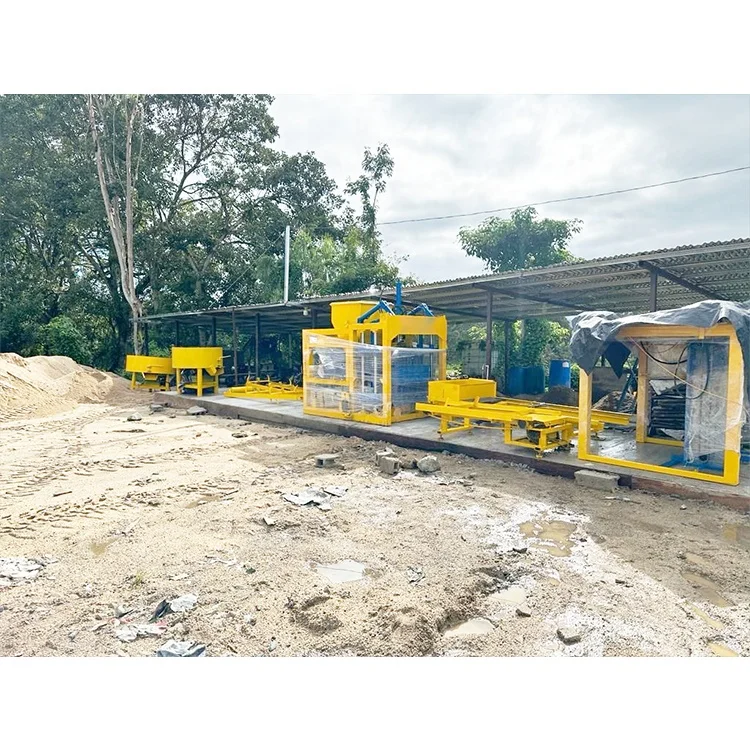

Description
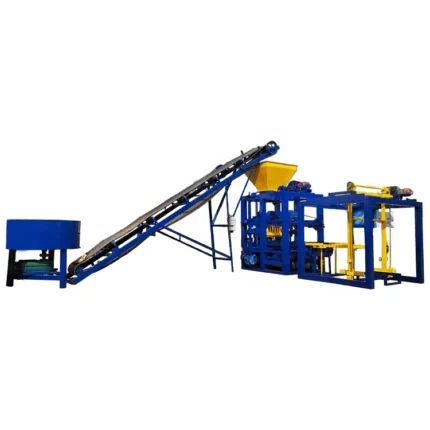
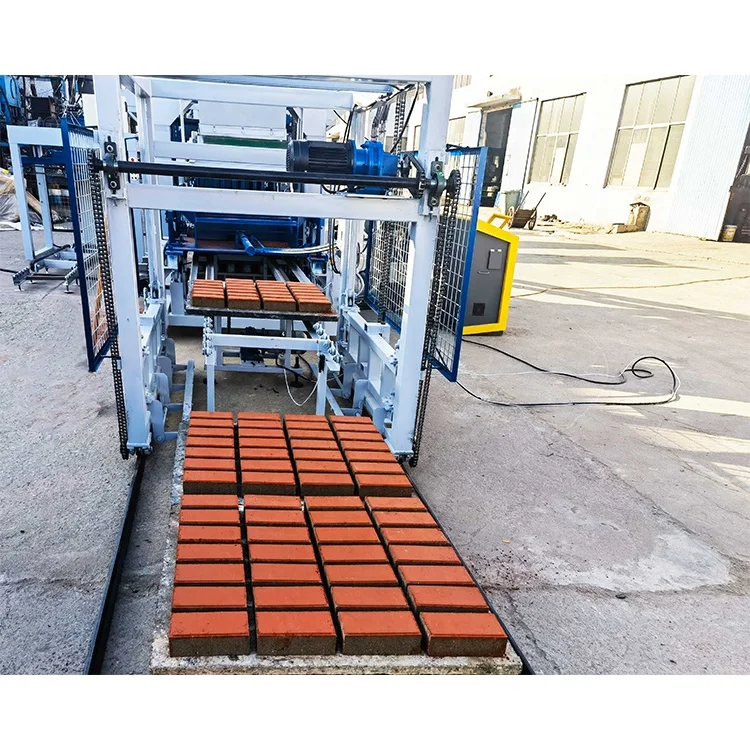
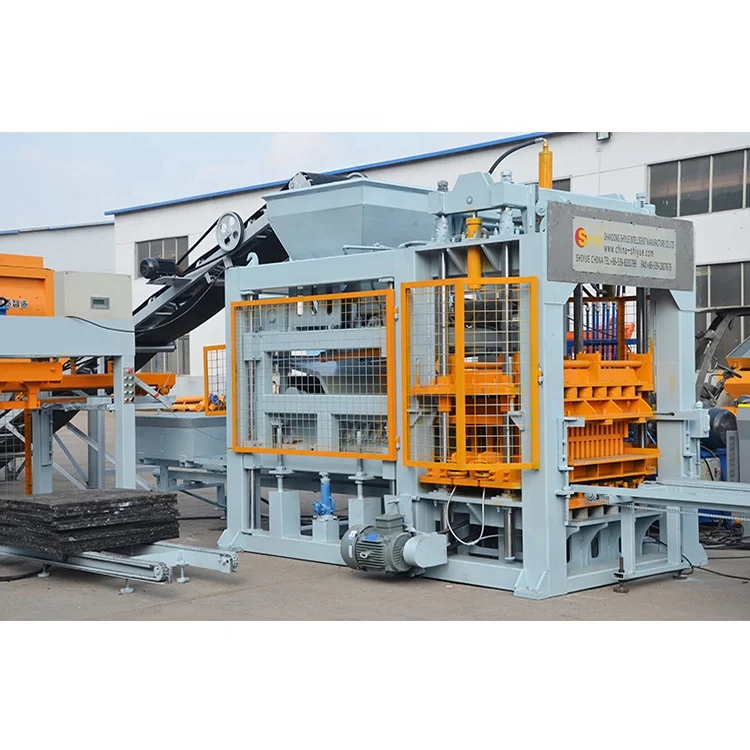
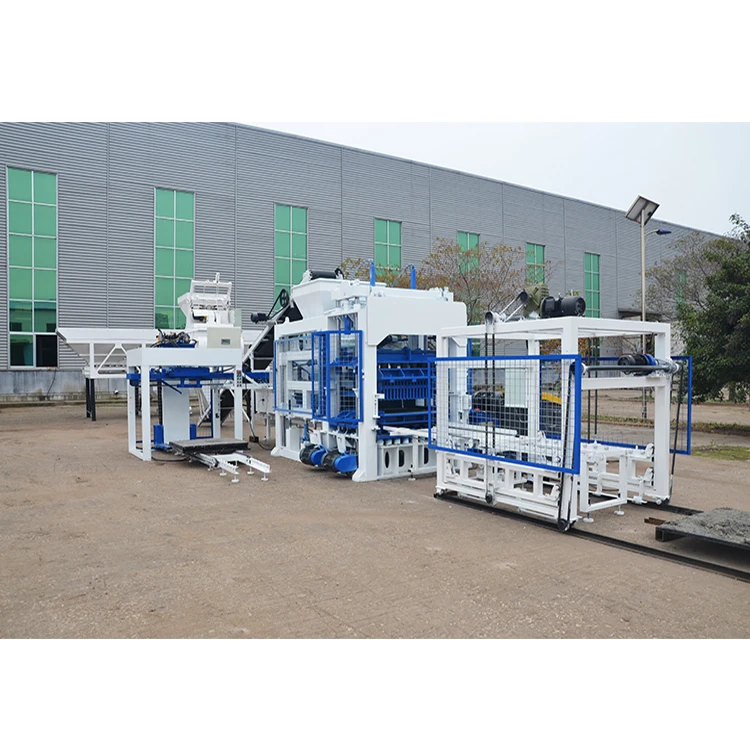
Matched System Configuration — the QT4-15A is specified as one coordinated line where the PLC, hydraulic station, pallet feeder, brick conveyor and block sweeper are timed to the press cycle so upstream and downstream stations never leave the machine waiting.
Technical Specifications
| Parameter | Value |
|---|---|
| Model | QT4-15A |
| Product Type | Automatic Concrete Block Making Machine |
| Overall Dimensions (L×W×H) | 7100×1600×2610 mm |
| Molding Cycle | 15–25 s (basis not stated in source) |
| Vibration Frequency | 4600 r/min |
| Vibration Force (Exciting Power) | 40–50 kN |
| Total Power | 18.45 kW |
| Mixer Model | JQ350 |
| Pallet Size | 850×550×25 mm |
| Net Weight | 3 T (source value — verify) |
| Applied Products | Paver, solid block, hollow block, curbstone |
| Raw Materials | Crushed stone, sand, cement, dust, fly ash |
| Control System | PLC control system |
| Hydraulic Station | Included |
| Included Equipment | Block making machine, hydraulic station, PLC control system, pallet feeder, brick conveyor, block sweeper |
| Free Accessories | Manual hydraulic trolley, spare parts, tools |
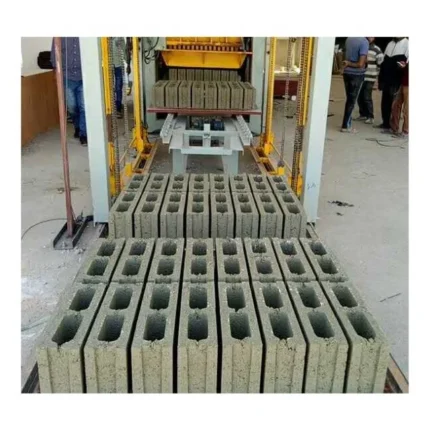
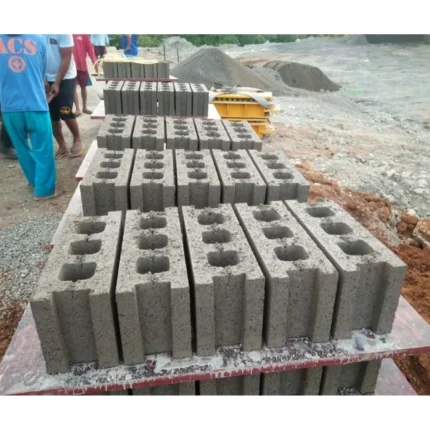
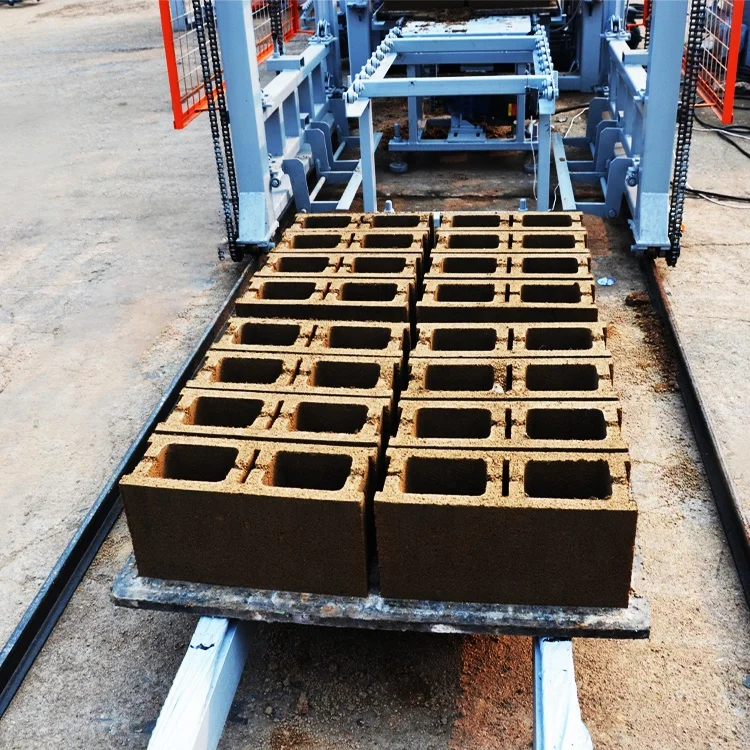
| Output Capacity — Hollow Block 400×200×200 mm | 4 pcs/mould, 408 pcs/h, 3264 pcs/8hr |
| Output Capacity — Hollow Block 400×150×200 mm | 5 pcs/mould, 510 pcs/h, 4080 pcs/8hr |
| Output Capacity — Solid Brick 240×115×53 mm | 18 pcs/mould, 2100 pcs/h, 17000 pcs/8hr |
| Mould Change System | Supported (change time not stated in source) |
| Automation Level | Automatic (pallet feeder, brick conveyor, block sweeper included) |
Application Suitability
| Application | Material or Output |
|---|---|
| Hollow block production for building walls | Crushed stone, sand, cement, fly ash — 400×200×200 mm and 400×150×200 mm formats |
| Solid brick manufacturing | Cement, sand and dust blends — 240×115×53 mm format |
| Paver and curbstone production for infrastructure | Aggregates and cement mixes in paving and kerb formats |
| On-site block production for construction contractors | Local aggregate and cement adapted to project specifications |
| First block plant for entrepreneurs entering concrete products | Range of formats from hollow block to solid brick on one PLC-controlled line |
What "Cycles per Hour" Leaves Out About Your Daily Plan
Every output figure on this page names the exact block format it assumes.
Capacity sheets in this industry frequently quote a single number — cycles per hour or pieces per shift — without revealing which block size was used to calculate it. A buyer expecting one number for hollow blocks then discovers the real daily output is far lower because the quoted figure was based on thin pavers. With the automatic QT4-15A block making machine PLC controlled configuration, output is stated per format: 408 pieces per hour rated on a 400×200×200 mm hollow block, 510 pieces per hour rated on a 400×150×200 mm hollow block, and 2100 pieces per hour rated on a 240×115×53 mm solid brick. These numbers let you plan shifts, curing space and delivery schedules against the product you actually sell. [NEED_CITE: common block machine capacity quoting practices in export markets]
How the PLC Coordinates the Entire Press Cycle
The PLC control system on this machine manages hydraulic pressure, vibration timing and pallet indexing as one sequence rather than as separate operator actions. When the mould descends, the PLC triggers hydraulic pressure and vibration force simultaneously, holding both parameters for the programmed duration before releasing. This coordination is what gives the operator batch-to-batch consistency across every format the machine runs — density does not drift as the shift progresses because the timing is not in human hands.
What Automation Actually Removes From the Operator
On a semi-automatic or mobile machine, the operator feeds pallets by hand, pulls finished blocks off the press and sweeps debris between cycles. The automatic QT4-15A block making machine PLC controlled configuration includes a pallet feeder, brick conveyor and block sweeper, taking those three manual tasks out of the cycle entirely. The operator monitors the PLC display and manages mould changes when the production schedule requires a format switch. Labour on the press side drops from several workers per shift to one or two depending on downstream stacking arrangements. [NEED_CITE: labour requirements for automatic versus semi-automatic block production lines]
Reading the Specs That Determine Real Block Quality
Vibration force at 40–50 kN and vibration frequency at 4600 r/min work together with hydraulic pressure to compact the concrete mix into the mould cavity. Higher vibration force is needed when the mix contains larger aggregate or lower cement content; lower force suits fine sand mixes and thin paver formats. The 15–25 second molding cycle range reflects this — denser blocks with coarser aggregate require the longer end of the range to achieve full compaction. The 850×550×25 mm pallet size determines the maximum mould footprint, which in turn governs how many cavities fit per press cycle for each block format. Pallet thickness at 25 mm must also match the curing racks and forklift tines already in the buyer’s yard.
When the Wrong Configuration Arrives at Your Site
A PLC display that defaults to a language the operator cannot read shuts down production on the first morning — I once saw three days lost because the panel arrived entirely in Chinese and nobody on site could navigate the menus. Voltage and frequency specified wrong means the machine either cannot start or burns out components within the first week. [NEED_CITE: commissioning failures caused by unconfirmed electrical and language specifications] These are not machine defects; they are ordering omissions that surface only after the container has been unpacked and the foundation is already poured.
Why Buyers Source This Machine Here
Block machinery is the single focus of this operation, so the QT4-15A arrives as one matched system rather than a press assembled from separate suppliers. Configuration is set against the buyer’s actual mix design and local aggregate, not pulled from a catalogue default — vibration force and hydraulic pressure are adjusted to the materials available at the buyer’s site. Mould design covers the formats the buyer’s market sells, including custom drawings when standard formats do not match local demand. Automation level is selectable, allowing a buyer to start with this automatic configuration and add stacking and cubing stations later as production volume grows. Documentation covers every verification point from factory test records to electrical schematics.
Documentation & Verification
- Line layout and capacity calculation naming the exact block format behind each output figure
- Machine specification sheet with hydraulic and electrical schematic for the QT4-15A
- Mould drawing and format list showing every cavity layout the buyer has ordered
- Voltage, frequency and PLC display language confirmed in writing before production begins
- Factory test record demonstrating cycle time and block density against the buyer’s mix design
- Packing photographs and customs documentation support for the shipment
Installation, Commissioning & Support
- Foundation plan sized to the 7100×1600 mm footprint and 3 T operating weight of the QT4-15A
- Electrical connection matching confirmed voltage and frequency with dedicated circuit for the 18.45 kW total load
- Machine arrives with hydraulic station, PLC panel, pallet feeder, brick conveyor and block sweeper for on-site assembly
- Commissioning includes PLC language verification, vibration and pressure calibration, and first-cycle test with buyer’s mix
- Operator training covers PLC navigation, mould change procedure and daily maintenance checkpoints
- Wear parts and mould list supplied with recommended replacement intervals for hydraulic and vibration components
Before You Send an Inquiry
To configure the QT4-15A correctly, share the specific block formats you plan to produce, your target daily output per format, and details of your local raw materials including aggregate type and cement availability. Confirm your site’s voltage, frequency and the language your operators need on the PLC display. If you already have curing racks, forklifts or stacking equipment, provide their dimensions so the pallet size and downstream handling can be matched.
Frequently Asked Questions
Q: How is output capacity verified and what block format does each number assume?
A: Every capacity figure on this page is tied to a specific block size. The 408 pieces per hour figure is rated on a 400×200×200 mm hollow block, 510 per hour on a 400×150×200 mm hollow block, and 2100 per hour on a 240×115×53 mm solid brick. The line layout document you receive before production confirms the format behind every number.
Q: What PLC control language options are available and how is the display configured?
A: The PLC display language is confirmed in writing before the machine enters production. I check this line by line because I once shipped a machine that arrived with a Chinese-only panel, costing the buyer three days of lost commissioning. Your operators see the interface in the language they work in.
Q: How is the machine configured to match local aggregate and mix design?
A: Vibration force and hydraulic pressure are set against the buyer’s actual raw materials, not a catalogue default. The buyer provides sample aggregate and mix proportions, and the machine parameters are adjusted so that block density and strength meet the target for that specific blend.
Q: What is the upgrade path from this automatic configuration?
A: The automatic QT4-15A block making machine PLC controlled setup includes pallet feeding, conveying and sweeping. Buyers can add automatic stacking and cubing stations later as production volume increases, without replacing the press or PLC. The control system accommodates the additional stations through its existing architecture.
Q: How does mould change time affect real format flexibility across a shift?
A: The QT4-15A supports mould changes across hollow block, solid brick and paver formats on one machine. The time required for each change depends on the mould design and the operator’s familiarity with the procedure. Training covers the full change sequence so that format switching fits within normal shift planning.