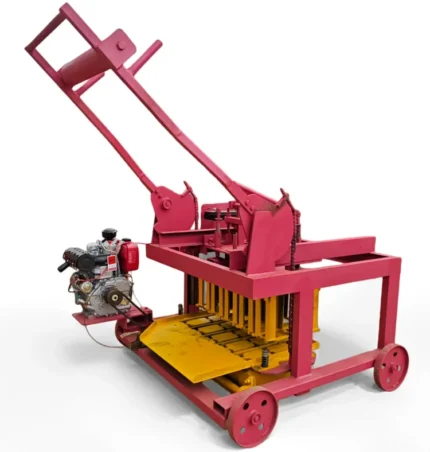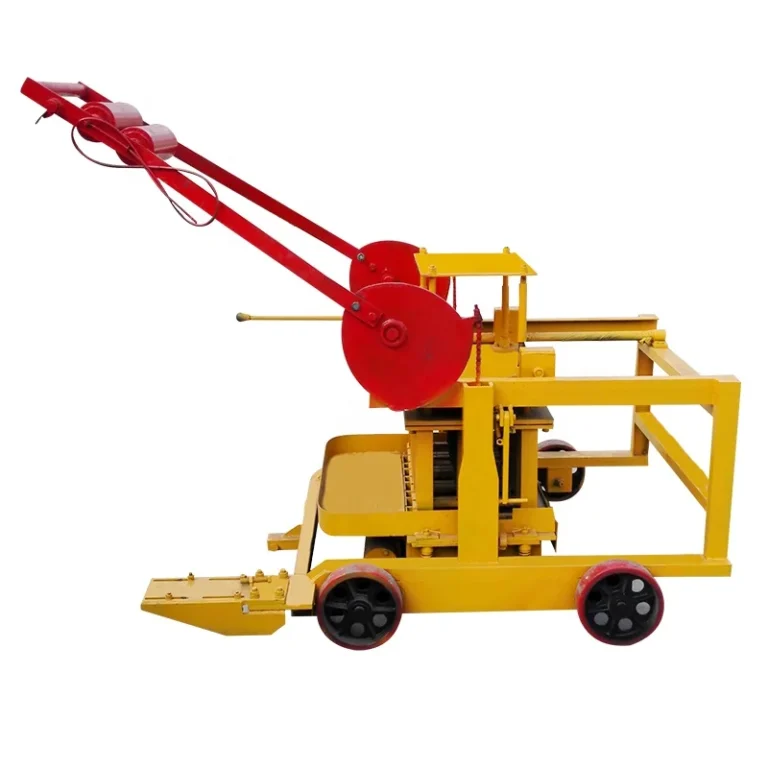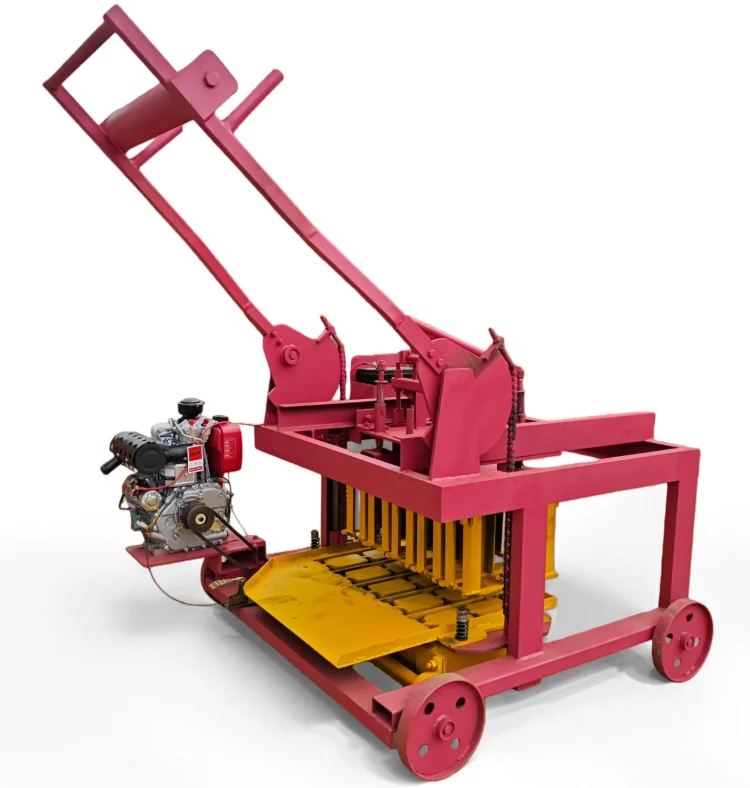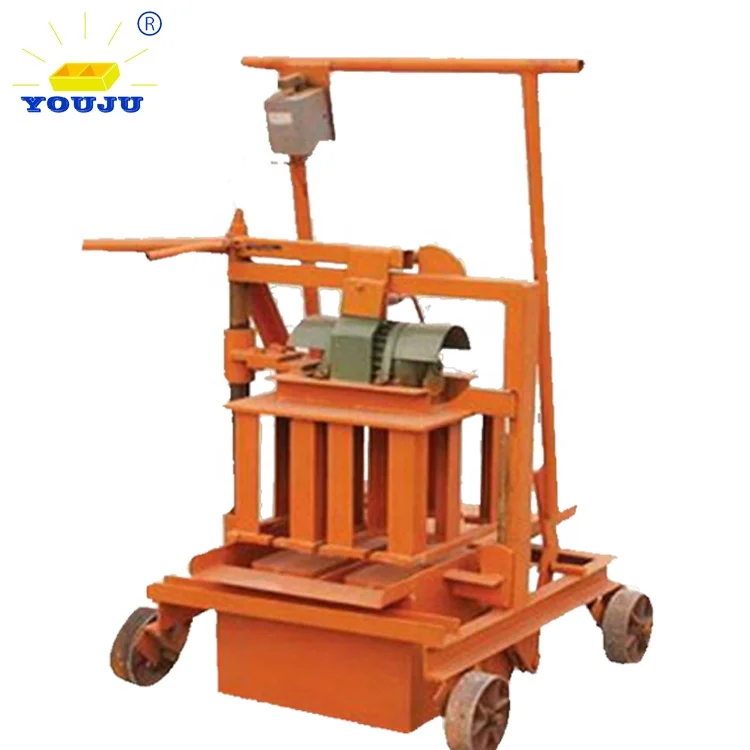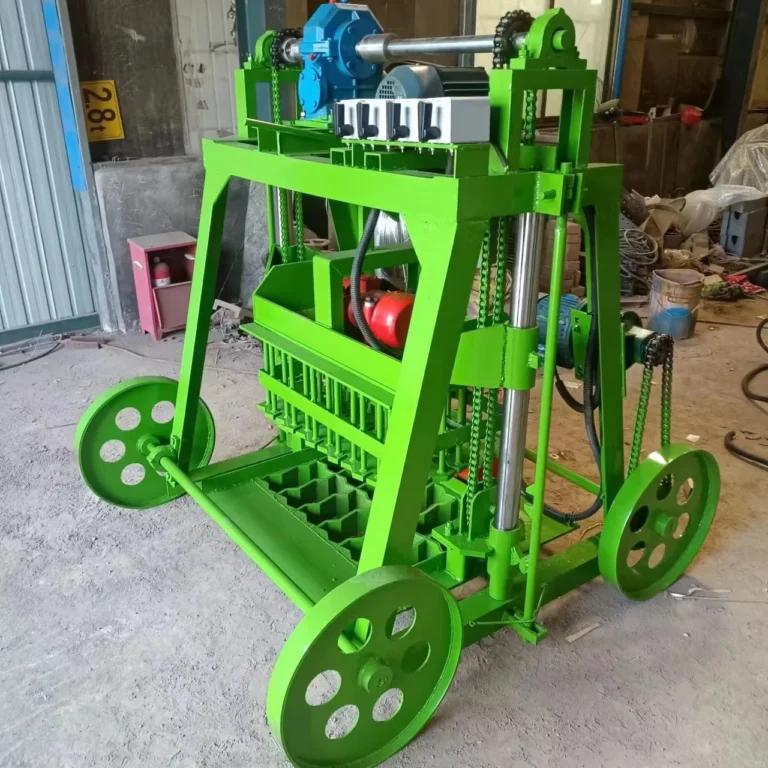
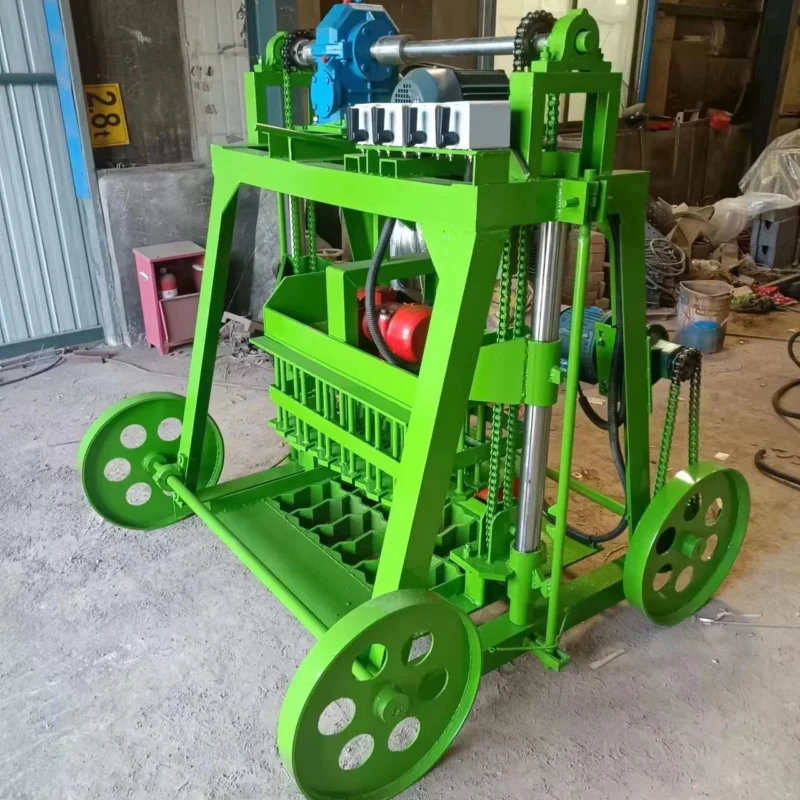

Description
Automation Upgrade Readiness — The QMJ4-45 mobile egg laying block making machine ships as a manual, engine-driven unit but is designed with a defined upgrade path toward PLC-controlled pallet feeding and stacking, letting your operation scale without replacing the press core.
Technical Specifications
| Parameter | Value |
|---|---|
| Model | QMJ4-45 |
| Product Type | Mobile Egg Laying Block Making Machine |
| Molding Capacity | 4 pcs/mould (400×200×200 mm hollow block basis) |
| Vibration Frequency | 2400 r/m |
| Vibration Method | Mold vibration |
| Demold Method | Manual |
| Turning Method | Manual |
| Molding Cycle | 45 S |
| Total Power | 6 KW |
| Power Source | Diesel/Petrol engine |
| Productivity (Hollow 400×200×200 mm) | approx. 3000 pcs/day (8 hours) |
| Productivity (Hollow 400×150×200 mm) | approx. 3500 pcs/day (8 hours) |
| Productivity (Hollow 400×120×200 mm) | approx. 4500 pcs/day (8 hours) |
| Automation Level | Manual / Egg-laying mobile type |
| Warranty | One year guarantee for the whole machine |
Application Suitability
| Application | Material or Output |
|---|---|
| On-site building projects | Hollow blocks laid directly on concrete floor |
| Rural development and housing schemes | Standard bricks and multicellular bricks |
| Low-investment block yards | Paving bricks from crushed stone and cement |
| Remote sites without grid power | Engine-driven operation using diesel or petrol |
| Contractor self-production | Format changes between hollow and solid blocks |
Why "Cycle Time" Means Nothing Without the Block Format Attached
A quoted molding cycle only matters if you know which block dimension it was measured against.
When I first started commissioning block lines across Europe, I saw buyers arrive at the yard expecting 5,000 blocks per shift because the supplier quoted a 45-second cycle — yet the actual daily output fell far short. The reason is simple: a 45-second cycle on a 400×200×200 mm hollow block yields roughly 3,000 pieces in eight hours, while the same cycle on a 400×120×200 mm block yields closer to 4,500 pieces [NEED_CITE: block format and cycle time relationship in egg-laying machines]. Any supplier quoting a single productivity figure without naming the format is asking you to guess. With this automatic mobile egg laying block machine, the capacity is stated per format so your procurement decision matches the product your market actually buys.
Engine Power Removes the Grid Dependency Problem
Many project sites in development zones and rural housing schemes simply do not have three-phase electricity available when block production needs to start. The QMJ4-45 runs on a diesel or petrol engine at 6 KW total output, which means the machine can operate on a freshly cleared plot before any permanent electrical infrastructure is in place. For contractors who need blocks on the same site where they are building, this engine-driven PLC controlled mobile block machine eliminates the delay of waiting for a grid connection or the cost of running a separate generator for the press.
The Automation Path From Manual to PLC-Controlled
The machine ships as a manual egg-laying unit where demolding and turning are handled by the operator. However, the control architecture is specified to accept a future PLC-controlled mobile block machine upgrade covering automatic pallet feeding, stacking, and cubing. This means an entrepreneur starting with a low-investment manual setup can add automation stations incrementally as daily volume and labour costs justify it, without tearing out the press or replacing the core molding assembly [NEED_CITE: incremental automation upgrade in block press systems].
How Vibration Frequency and Molding Cycle Define Block Density
The 2400 r/m mold vibration working inside a 45-second molding cycle is what determines the compressive strength of every block that leaves the press. Higher vibration frequency compacts the concrete mix more densely into the mould cavity, reducing voids and producing a block that meets structural load requirements. On this automatic mobile egg laying block machine, the twice-vibration molding core is tuned for standard cement-aggregate mixes. If your local aggregate is unusually coarse or your mix design uses a high proportion of fine sand, the vibration force must be matched to that specific material before production begins, otherwise block strength will vary from batch to batch.
What Happens When the Control Language Was Never Confirmed
I have walked onto sites where a brand-new mobile block machine sat idle for days because the PLC touchscreen displayed everything in a language the local operator could not read. On an engine-driven base model like the QMJ4-45, this may seem irrelevant today — but the moment you add a PLC-controlled mobile block machine automation package, the display language and control logic must already be specified. Buyers who skip this confirmation step end up paying for an engineer visit just to re-flash the HMI, delaying production and eroding the project timeline [NEED_CITE: PLC language configuration for exported machinery].
Why This Machine Is Sourced Through a Single-System Approach
Block machinery is the sole focus here, so the press, mould, pallet specification, and future handling equipment are matched as one system rather than assembled from unrelated suppliers. The configuration is set against your actual mix design, local aggregate, and target block format — not pulled from a catalogue default. Mould design covers the formats your market sells, and custom drawings are accepted. The automation level is selectable, so a buyer can start manual and add PLC control later. Installation support includes operator training, and wear parts availability is confirmed before the first replacement cycle is due.
Documentation & Verification
- Machine specification sheet with capacity stated per hollow block format
- Mould drawing and format list matching your target product dimensions
- Voltage and control language confirmation for any future PLC automation
- Factory test record showing molding cycle and block density before dispatch
- Wear parts and mould list included with quotation for replacement planning
Installation, Commissioning & Support
- Level concrete floor required for egg-laying operation with the QMJ4-45 chassis
- Diesel or petrol engine fuel supply and daily inspection routine confirmed on site
- Manual demold and turning procedure trained with your operators during commissioning
- Engine-driven power source eliminates the need for dedicated electrical circuits at project start
- Mould change procedure demonstrated to achieve the stated format swap time
- One-year warranty covers the full machine; wear parts list provided at delivery
Before You Request a Quote
Tell me which hollow block or paving block dimensions your market demands, what local aggregate you can source, and whether grid electricity is available on your project site. If you are planning to add PLC automation within the next two years, specify your preferred control language and any existing upstream mixing equipment so the automatic mobile egg laying block machine can be configured to integrate from the start.
Frequently Asked Questions
Q: How is daily output calculated, and which block format does each figure assume?
A: Every productivity figure on this page is tied to a specific block format and an eight-hour shift. For example, the 400×200×200 mm hollow block yields approximately 3,000 pieces per day at a 45-second cycle. We do not quote a single blanket output number — the capacity calculation in your proposal will name the exact format so you can compare it against your sales plan.
Q: Can the QMJ4-45 be upgraded from manual to PLC-controlled automatic operation later?
A: Yes. The machine is designed with an upgrade path that allows PLC control, automatic pallet feeding, and stacking to be added as your volume grows. The mechanical press core remains in place; automation stations are installed around it, reducing labour requirements and improving batch-to-batch consistency without a full machine replacement.
Q: What control system and display language options are available if I add automation?
A: When you add PLC control, the system language and HMI display are confirmed before production. We specify the control language that matches your operators, so there is no post-delivery reconfiguration. This confirmation step is part of the standard sales process for any automatic mobile egg laying block machine upgrade package.
Q: How do I match the machine’s vibration force to my local aggregate and mix design?
A: We configure the vibration parameters based on your local aggregate type, cement ratio, and target block strength. A mix that is too coarse or too fine for the default setting will produce inconsistent density. Providing a sample of your raw materials or a detailed mix sheet allows us to adjust the 2400 r/m vibration before the machine ships.
Q: What is included in the one-year warranty, and how are wear parts supplied?
A: The one-year guarantee covers the complete QMJ4-45 machine. A wear parts and mould list is supplied with your quotation so you can confirm availability and pricing before committing. Replacement moulds and hydraulic wear components are manufactured to the same specification as the originals and shipped directly when your first service interval arrives.