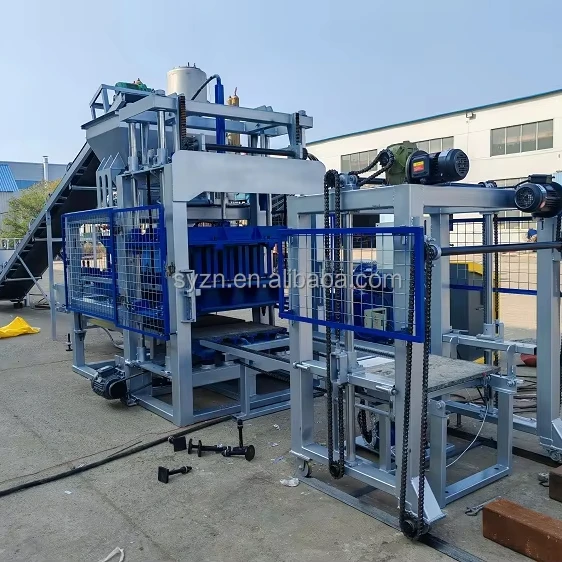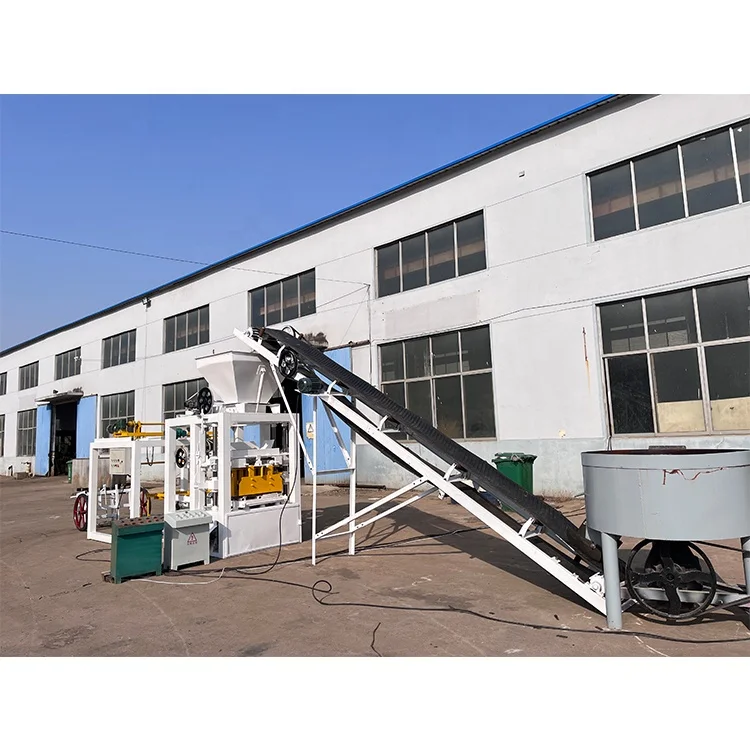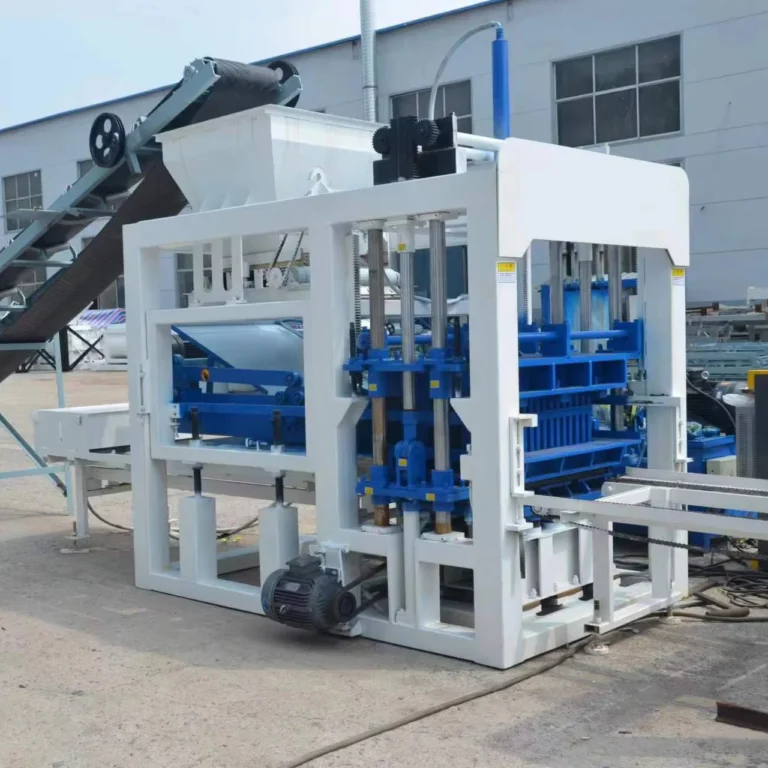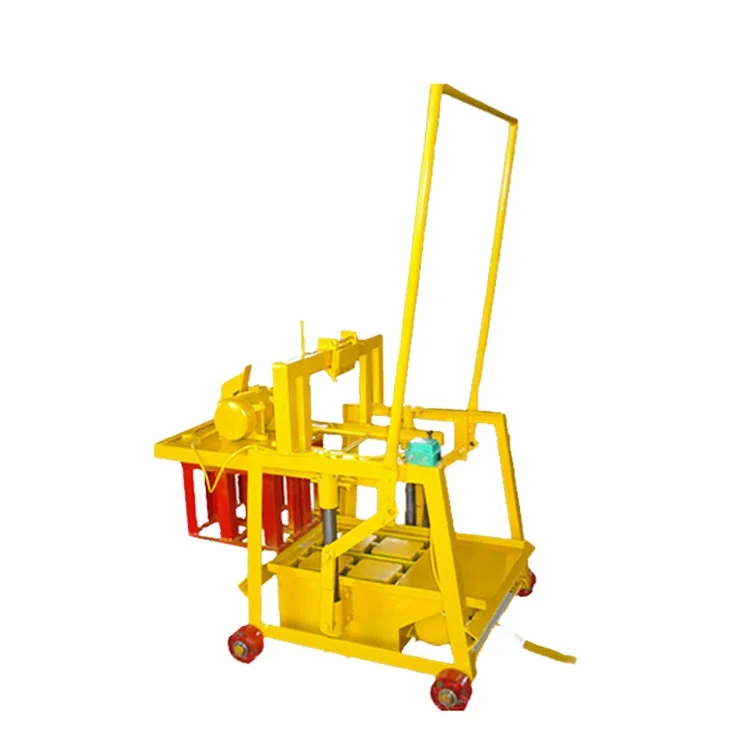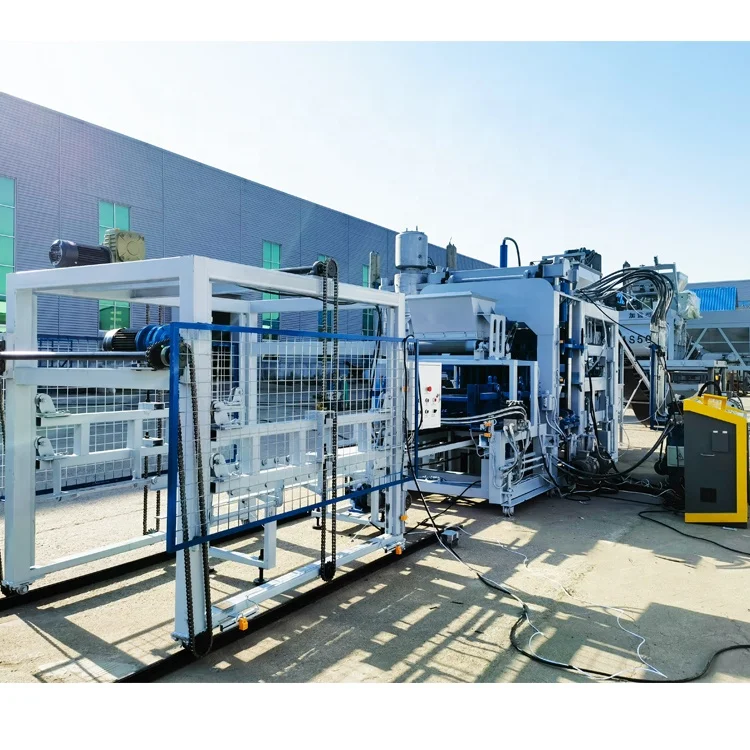


Description
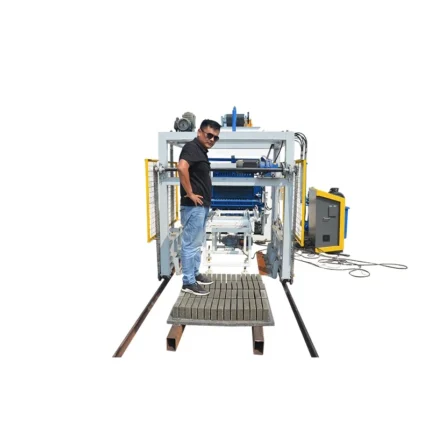
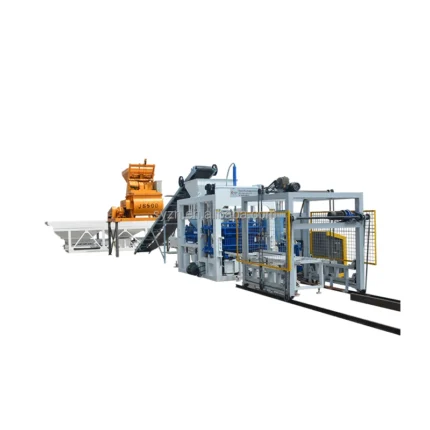
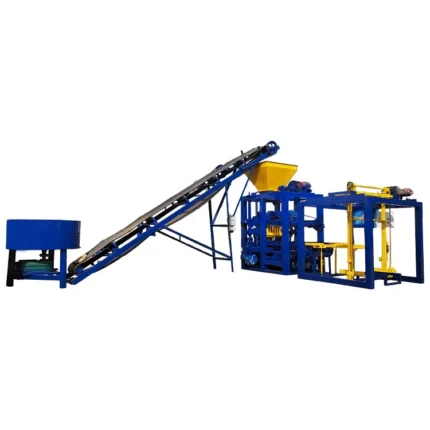
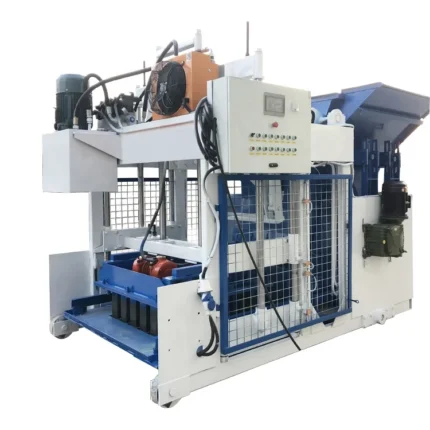
Matched System Configuration — Every QT8-15 build aligns the PLC cycle logic, hydraulic station output, pallet dimensions and mould design to your specific mix and block format, not to a default catalogue setting.
Technical Specifications
| Parameter | Value |
|---|---|
| Model | QT8-15 |
| Product Type | Automatic Hydraulic Concrete Block Making Machine |
| Overall Dimensions (L×W×H) | 8300×1860×3000 mm |
| Molding Cycle | 15-20s (basis not stated in source — confirm block format / material / thickness) |
| Vibration Force | 55 kN |
| Total Power | 37.2 kW |
| Mixer Model | JS750 |
| Pallet Size | 1020×900 mm |
| Total Weight | 8 T |
| Control System | PLC control system |
| Hydraulic Station | Included |
| Automation Level | Automatic |
| Applied Products | Paver, solid block, hollow block, curbstone |
| Raw Materials | Crushed stones, sand, cement, dust, fly ash |
| Included Equipment | Block making machine, hydraulic station, PLC control unit, pallet feeder, block mould, material feeder, block conveyor, block sweeper, spare parts and tools |
| Voltage & Frequency | Configurable — confirm before order |
| PLC Language Options | Configurable — confirm before order |
| Key Features | Hydraulic pressure with vibration forming, PLC-controlled cycle, automatic pallet feeding, material feeder with conveyor |
Application Suitability
| Application | Material or Output |
|---|---|
| Hollow block production for wall construction | Crushed stone, sand, cement, fly ash blends |
| Solid block manufacturing for load-bearing structures | Dense aggregate and cement mixes |
| Paving stone production for roads and walkways | Fine aggregate with cement and dust |
| Curbstone forming for infrastructure projects | Coarse crushed stone with high cement content |
Why Voltage Confirmation Must Precede the Purchase Order
Specifying voltage, frequency and PLC language before production starts prevents weeks of on-site electrical rework after arrival.
I watched a Middle East project stall because the control cabinet arriving on site did not match the local supply standard. The contractor had already booked the installation crew and scheduled the commissioning window. Three weeks of panel modification followed, while the block yard sat idle and daily overhead accumulated. An automatic concrete block making machine PLC controlled from a misconfigured panel is essentially a very expensive static load until the mismatch is resolved. The same risk applies to PLC display language: operators reading alarms in an unfamiliar language slow every troubleshooting decision. [NEED_CITE: voltage and frequency standards by export market]
Cycle Timing That Reflects Your Actual Block Format
The QT8-15 molding cycle is listed at 15-20 seconds, but that range depends entirely on which block format the press is running, the thickness of the product, and the compaction behaviour of your specific aggregate blend. A thin paver completes its press cycle faster than a tall hollow block that requires extended vibration to settle the mix through deep mould cavities. Confirming the cycle time against your primary selling format is the only way to project realistic daily output. This automatic concrete block making machine PLC controlled cycle logic stores recipe parameters so each format recalls its own press sequence.
Where Automation Removes Operator Variability
Semi-automatic lines depend on the operator timing every pallet feed and mould fill by judgement. Fatigue, shift changes and simple distraction introduce inconsistency between the first block of the morning and the last. The QT8-15 automation layer governs material feeding, pallet indexing, press cycling and block conveyance as a coordinated sequence. The PLC stores individual recipes for each mould installed, so switching formats means recalling a saved program rather than recalibrating from memory. [NEED_CITE: PLC programming standards for industrial machinery]
Pressure, Vibration and Density: How the Numbers Translate
The 55 kN vibration force works together with the hydraulic station to compact raw material inside the mould cavity. Vibration alone settles the mix; hydraulic pressure applied from above eliminates voids and sets the final block density. If pressure is too low relative to vibration, blocks emerge with porous cores that fail compressive strength tests. If pressure overwhelms vibration, the mix locks before particles rearrange, trapping air pockets. The QT8-15 pairs both forces so the operator adjusts them as a matched set through the PLC rather than tuning two independent systems by trial and error. Pallet size at 1020×900 mm must also align with your existing curing racks and forklift fork spacing — a mismatch here forces manual re-stacking at the end of the line, negating the automation upstream. Total installed power of 37.2 kW determines the dedicated circuit and transformer capacity your site must provide before the machine arrives.
The Cost of Skipping Configuration Verification
Orders placed on catalogue capacity figures alone lead to two predictable failures. First, the machine arrives and produces fewer blocks per shift than the buyer budgeted for, because the quoted cycle assumed a format the buyer never intended to sell. Second, moulds arrive for formats the local market does not buy, while the formats in demand were never tooled. I have seen pallets specified without checking the curing area dimensions, meaning freshly pressed blocks could not be racked without hand-stacking — exactly the labour the automation was meant to eliminate. These are not warranty issues; they are configuration oversights that surface only on day one of production. [NEED_CITE: common commissioning delays in concrete block plant installations]
What This Supplier Brings to the Configuration
Every QT8-15 is specified against the buyer’s own mix design and local aggregate, not against a generic test formula. Mould drawings are prepared for the formats your market actually trades, with custom designs available from buyer-supplied drawings. The pallet size is chosen to match your curing yard logistics, not pulled from a default list. Automation level is selectable, so a plant can begin with the automatic core and add stacking or cubing modules as volumes justify them. Installation support includes on-site commissioning with operator training on the PLC interface and recipe management.
Documentation & Verification
- Line layout showing QT8-15 station spacing and pallet flow path
- Capacity calculation naming the block format behind each cycle figure
- Mould drawing set covering every format included in the order
- Voltage, frequency and PLC language confirmation sheet signed before production
- Factory test record run against buyer-supplied mix proportions
- Packing photographs documenting machine condition at container loading
Installation, Commissioning & Support
- Foundation plan matched to the QT8-15 footprint of 8300×1860 mm with anchor bolt layout
- Dedicated power circuit sized for 37.2 kW total load at confirmed voltage and frequency
- Machine dismantled for container loading with reassembly guided on site
- PLC parameter set loaded and verified against each mould format during commissioning
- Operator training covering recipe selection, alarm response and daily lubrication points
- Wear parts list identifying hydraulic seals, vibration springs and mould liners by part number
What We Need to Quote Accurately
Provide your primary block formats with dimensions, your target daily output per format, and the raw materials available locally with a sample mix proportion if possible. Confirm your site voltage, phase configuration and supply frequency along with the preferred PLC display language. Share your curing area dimensions and existing forklift specifications so pallet size can be matched before the order is finalised.
Frequently Asked Questions
Q: How is the QT8-15 output capacity verified and what block format is the cycle time based on?
A: The 15-20 second molding cycle varies by block format, wall thickness and aggregate behaviour. We confirm cycle time against your primary product format during the configuration stage and provide a written capacity calculation that names the exact block dimensions assumed. This prevents ordering a machine rated for a format you never plan to produce.
Q: What automation does the QT8-15 include and can I add stacking later?
A: The standard configuration covers automatic pallet feeding, material distribution, press cycling and block conveyance under PLC control. Stacking and cubing modules can be added as separate stations when your volume justifies them. The PLC architecture accommodates these additions without replacing the main controller.
Q: How is the PLC language and display confirmed before the machine ships?
A: We collect your preferred operator language during the specification phase and confirm it on a signed sheet alongside voltage and frequency. The PLC display, alarm messages and recipe labels are set to that language before factory testing. Any changes after production require panel reprogramming, so early confirmation avoids commissioning delays.
Q: How are vibration force and hydraulic pressure matched to my raw materials?
A: The 55 kN vibration force and hydraulic station pressure are adjusted as a pair based on your local aggregate gradation and mix proportions. We run a factory test with your confirmed mix design before dispatch, documenting block density and compressive strength results so you know the pressure-vibration balance is correct for your materials.
Q: What is the mould change procedure on the QT8-15?
A: The operator releases the mould clamps, lifts the current mould with the overhead crane or forklift, lowers the new mould into position and re-secures the clamps. The PLC recipe for the new format is then recalled, which adjusts press parameters automatically. Exact changeover time depends on mould weight and your site lifting equipment.