

Description
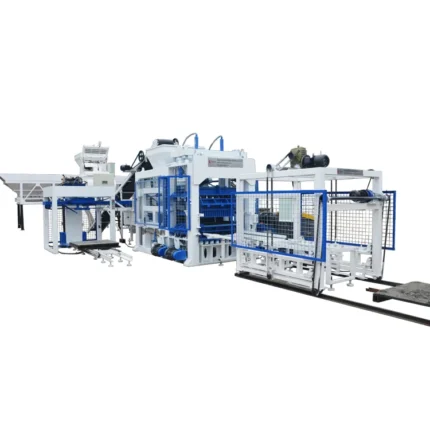
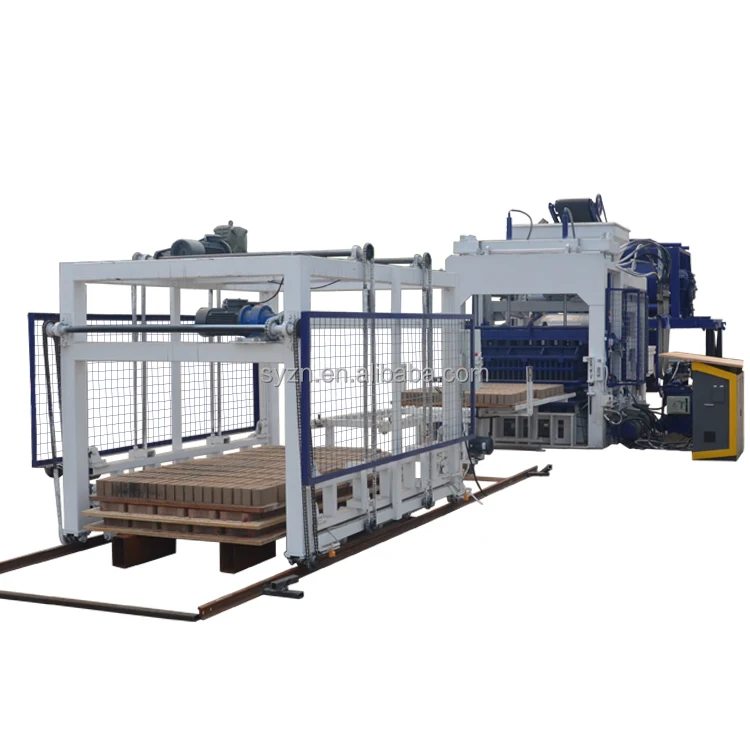
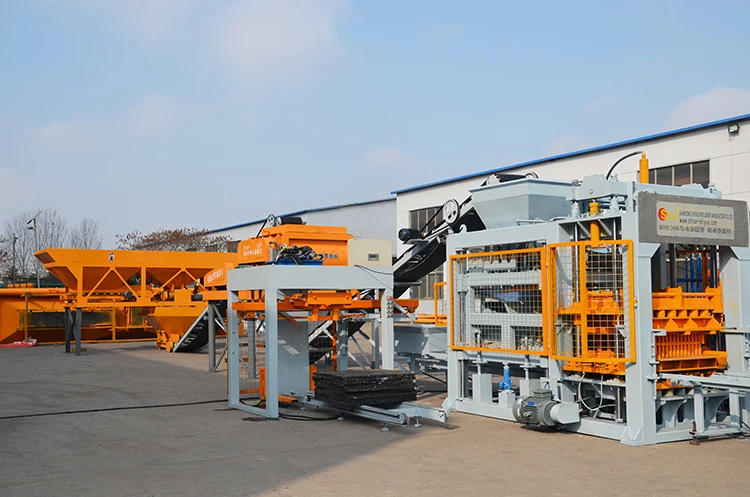
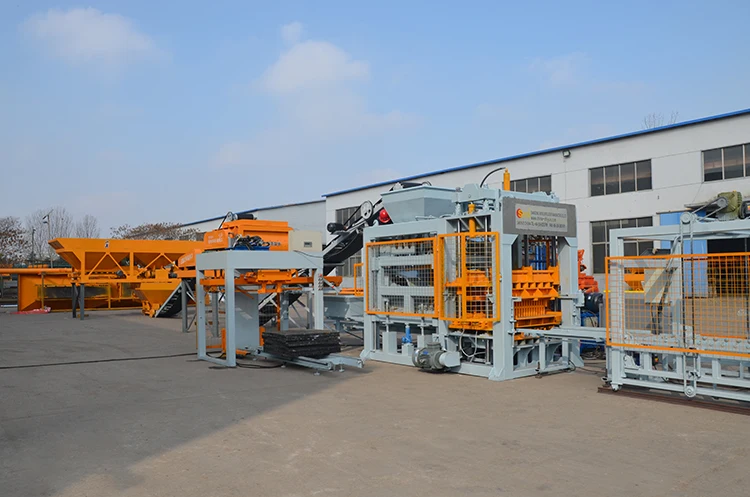
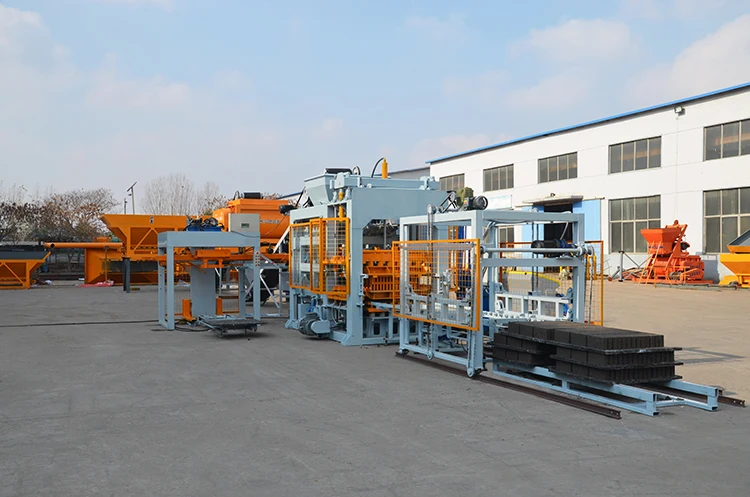
Matched System Engineering — PLC, hydraulic station, pallet cycling and stacking specified as one integrated control loop rather than separate vendor assemblies.
Technical Specifications
| Parameter | Value |
|---|---|
| Model | QT8-15 |
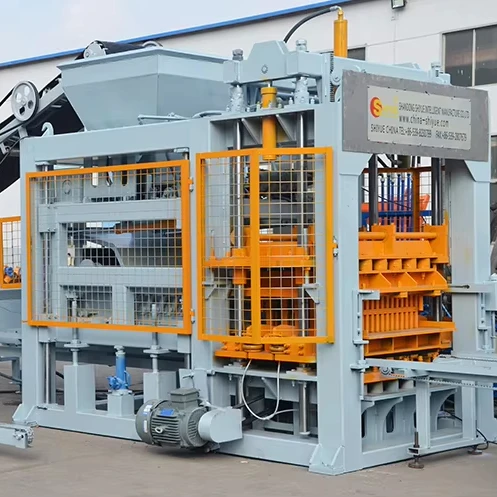
| Product Type | Automatic Hydraulic Block Making Machine |
| Overall Dimensions (L×W×H) | 8300 x 1860 x 3000 mm |
| Rated Hydraulic Pressure | 21 MPa |
| Vibration Form | Platform Vibration |
| Vibration Frequency | 2800–4500 RPM |
| Pallet Size | 950 x 900 mm |
| Moulding Cycle | 15–25 s (basis not stated in source — confirm block format and material) |
| Overall Power | 46 kW |
| Control System | PLC with touch screen HMI, manual and automatic selectable |
| Block Comprehensive Strength | Up to 15 MPa |
| Hydraulic System | Independent integrated hydraulic station |
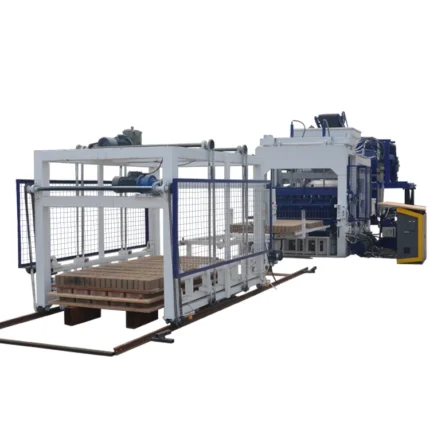
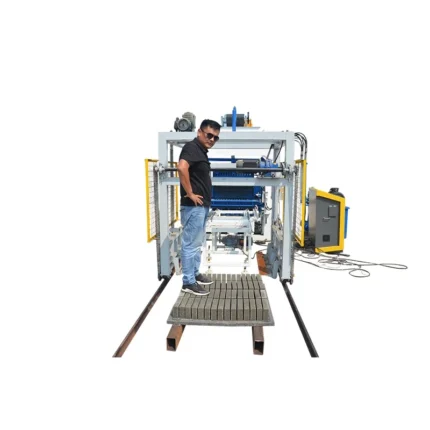
| Supporting Equipment | JS750 mixer, 8 m belt conveyor, automatic stacker (two pallets per lift, 3–6 layers) |
| Included Mould | One hollow mould supplied as standard |
| Voltage & Frequency | Configurable to target market (to be confirmed before production) |
| PLC Display Language | Selectable per buyer requirement (to be confirmed) |
Application Suitability
| Application | Material or Output |
|---|---|
| Hollow block production for structural walls | Crushed stone, cement, and sand blends compacted under 21 MPa hydraulic pressure |
| Solid block manufacturing for load-bearing courses | Dense aggregate mixes requiring extended vibration dwell on platform |
| Paving block and interlocking brick runs | Fine-graded sand and cement with colour oxide pigments |
| On-site contractor production for housing projects | Locally sourced river sand or mountain sand adjusted through mix verification |
| Format expansion in existing concrete product plants | Quick mould exchange across hollow, solid, and paver geometries |
What "One Moulding Cycle" Actually Means for Your Daily Plan
The automatic QT8-15 block making machine PLC controlled quotes 15–25 seconds per cycle, but that window shifts depending on the block format, mix viscosity, and target density you run.
Capacity figures on quotation sheets often collapse every format into a single cycle number. A hollow block, a solid paver, and a porous brick do not share the same vibration dwell or hydraulic hold time, so the daily output you plan your curing yard around must be stated per format. When the number on paper does not match the pallet count at the stacker, the gap is almost always a mismatch between assumed and actual block geometry. [NEED_CITE: block cycle time variation by format and aggregate type] I have watched plant owners base their labour shifts on a cycle figure that assumed a lightweight hollow block, only to find their solid paver recipe needed several more seconds of vibration to reach strength targets.
How PLC Logic Ties the Press to the Pallet Feeder
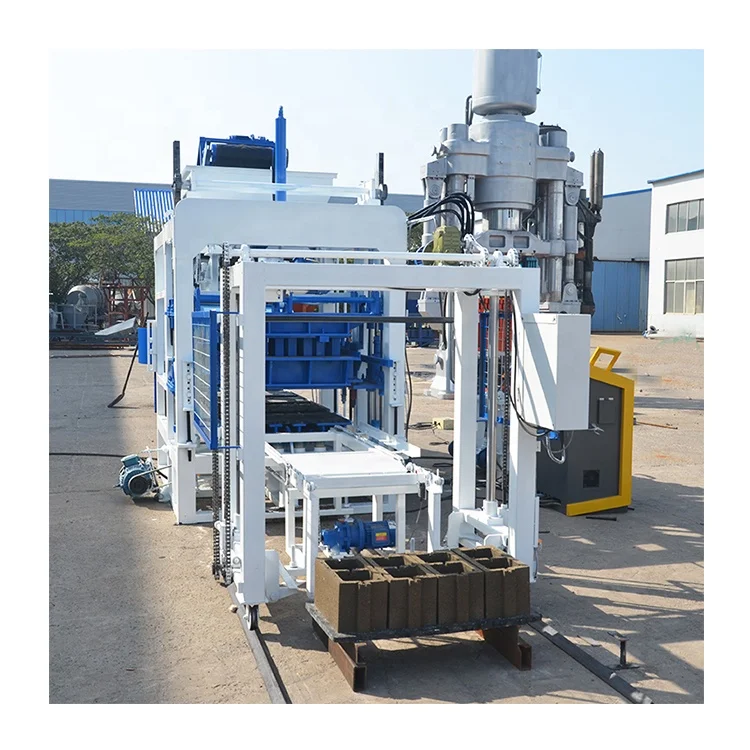
The touch screen HMI on this automatic QT8-15 block making machine PLC controlled governs every station in sequence: mould box descent, material feed shoe travel, vibration onset, hydraulic press head advance, demoulding lift, and pallet indexing. Each action waits for a limit switch confirmation before the next fires, so a jammed pallet at the feeder holds the press rather than letting it cycle empty. Operators can switch between full automatic and manual mode on the screen to adjust individual timers during format changeover.
Remote Diagnostics and Recipe Storage for Repeat Runs
Stored PLC recipes let an operator recall the exact vibration duration, hydraulic hold pressure, and feed shoe passes used for each block format the plant has run before. When a repeat order comes in weeks later, the same parameters load without manual dial adjustment, keeping batch-to-batch density consistent. The touch screen also surfaces fault codes tied to specific sensors, so an electrical technician can trace a stopped line to a single proximity switch without walking the entire 8.3-metre frame. [NEED_CITE: PLC fault tracing methodology in block production lines]
Vibration Frequency and Hydraulic Pressure Working in Tandem
Platform vibration at 2800–4500 RPM settles the aggregate into the mould cavity, while the 21 MPa hydraulic press head compresses from above to lock particle-to-particle contact. The combination is what pushes comprehensive block strength toward 15 MPa; vibration alone leaves voids, and pressure alone on a dry mix cracks the green block on demoulding. The 950 x 900 mm pallet must be rigid enough to transmit that vibration without damping it, which is why pallet material and thickness are confirmed against the curing rack spacing and forklift capacity already on site. Mould exchange across formats is handled through a bolt-on system, and the PLC stores the corresponding cycle parameters so the changeover does not erase the previous recipe.
When the Wrong Automation Level Costs More Than the Machine
A plant that adds an automatic stacker but keeps manual pallet return creates a bottleneck the PLC cannot solve — the press waits for an operator to hand-feed pallets while the stacker sits idle. Equally, specifying full automation on a line where the curing yard is too small for the output rate means pallets pile up on the floor, blocks cure unevenly, and the automatic stacker has nowhere to place its lifts. [NEED_CITE: automation bottleneck analysis in concrete block plants] These mismatches show up weeks after commissioning, long after the installation crew has left, and the fix usually involves concrete work and rewiring rather than a parameter change.
Why a Matched Line Matters at This Automation Tier
Block machinery is the single focus here, so the QT8-15 press, JS750 mixer, belt conveyor, and stacker arrive as one control loop with timing already coordinated. Configuration starts from the buyer’s actual mix design and target block format rather than a catalogue default, meaning the vibration frequency window and hydraulic pressure are validated against a sample of local aggregate before production begins. Automation level is selectable: a buyer can commission with semi-automatic pallet handling and add the full stacker and cubing system later without replacing the press or rewriting the PLC programme. Mould design covers the formats the buyer’s market actually sells, and custom drawings are accepted when a standard cavity does not match. Factory testing runs the complete sequence — mixer through stacker — so the dispatch record reflects real cycle behaviour, not a bench test of the press alone.
Documentation & Verification
- Line layout showing station spacing and pallet flow path for the 8300 mm frame
- Capacity calculation per block format with stated cycle time assumptions
- Hydraulic and electrical schematic matching the shipped integrated station
- PLC display language and voltage confirmation sheet signed before production
- Factory test record covering full automatic sequence with your chosen mould
- Wear parts list identifying hydraulic seals and vibration motor bearings
Installation, Commissioning & Support
- Foundation pad sized for the 8300 x 1860 mm footprint with anchor bolt template
- Dedicated 46 kW circuit with voltage and frequency matched to local grid
- Hydraulic station filled and bled on site before first automatic cycle
- PLC touch screen calibrated and language verified during commissioning week
- Operator training on recipe storage, manual override, and fault code response
- First replacement hydraulic seals and mould wear strips identified before dispatch
What to Include in Your Enquiry
Share the specific block formats your market moves and the daily pallet count you need to hit so the cycle calculation can be built around real numbers. Confirm local voltage, frequency, and the PLC display language your operators read. A sample of your aggregate — river sand, mountain sand, or crushed dust — lets us validate the vibration and pressure settings before the machine enters production.
Frequently Asked Questions
Q: How is daily output calculated per block format on the QT8-15?
A: Each format — hollow, solid, paver — has its own vibration dwell and hydraulic hold time within the 15–25 second window. The capacity sheet you receive states the assumed block dimensions and the resulting pallets per hour for that specific geometry, so the number you plan against matches what the stacker actually produces.
Q: What PLC display languages are available, and is the screen set before shipment?
A: The HMI language is confirmed during the order stage and loaded before the factory test runs. Operators see fault codes, recipe names, and cycle timers in the language they read, eliminating guesswork on the first production shift after commissioning.
Q: Can I start semi-automatic and add full stacking later?
A: Yes. The press and PLC are specified to accept the automatic stacker and pallet return system as a future addition. The control programme already contains the logic for those stations; adding them later requires mechanical installation and a parameter unlock rather than a new controller.
Q: How are vibration and pressure matched to my local aggregate?
A: A sample of your sand or crushed stone is tested to confirm particle size and abrasiveness. Vibration frequency within the 2800–4500 RPM band and the 21 MPa hydraulic pressure are then set to achieve target density without excessive mould wear, and the settings are stored as a named recipe in the PLC.
Q: Which parameters can the operator change on the touch screen?
A: Cycle timers, vibration duration, feed shoe passes, and mould box travel limits are all adjustable from the HMI in manual mode. Changes to motor wiring or hydraulic valve thresholds require electrical isolation and are handled by a technician following the schematic provided with the machine.