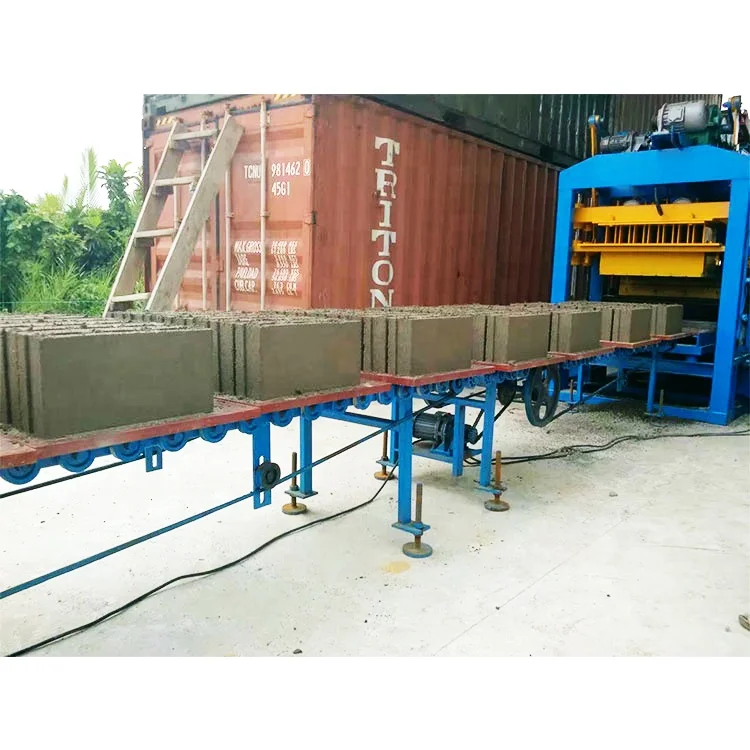


Description
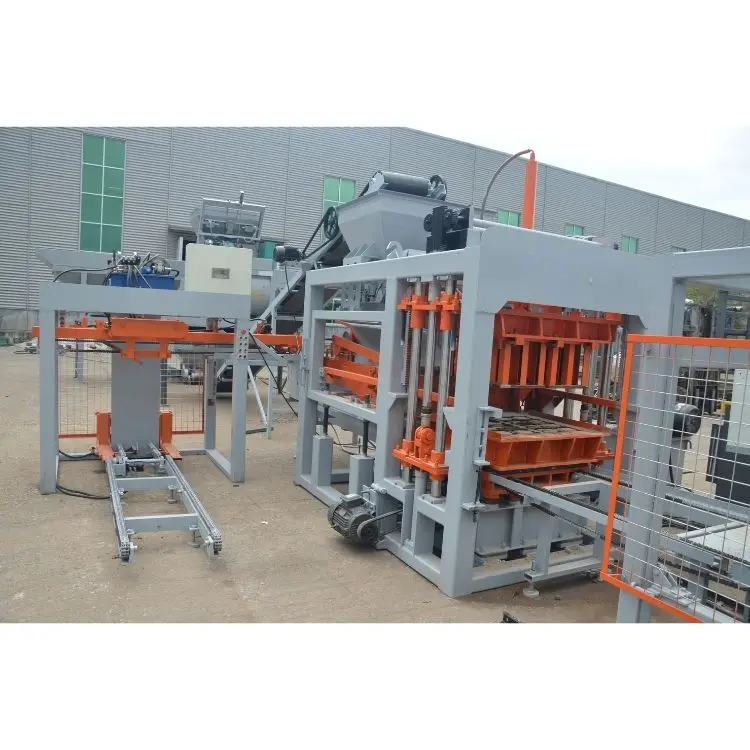
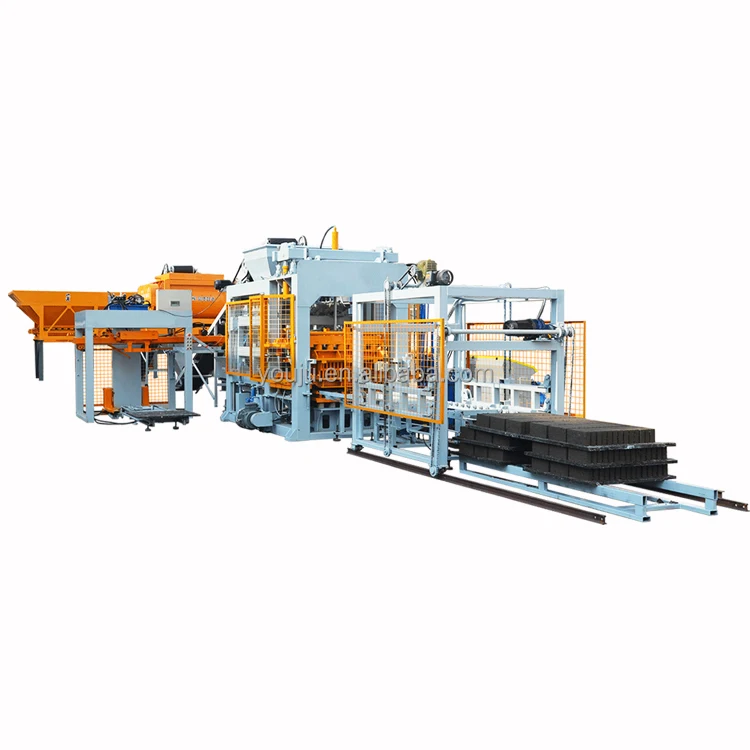
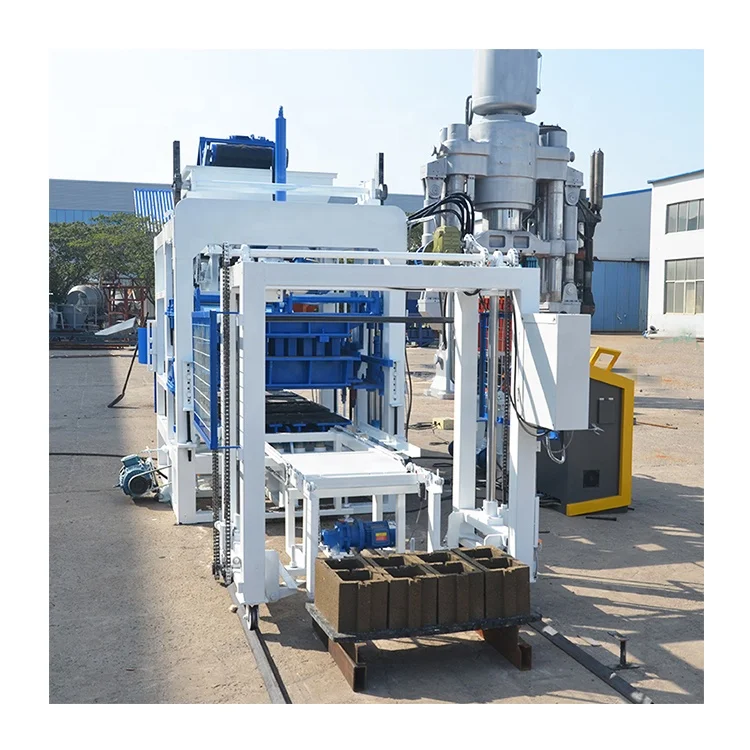
Defined upgrade path — the QTJ4-25 starts as a semi-automatic press with electric control and a clear route to automatic pallet feeding, stacking and cubing when your output demands grow, so you invest once and scale without replacing the core machine.
Technical Specifications
| Parameter | Value |
|---|---|
| Model | QTJ4-25 |
| Product Type | Semi-Automatic Concrete Hollow Block Making Machine |
| Overall Dimensions (L×W×H) | 3060×1730×2580 mm |
| Total Weight | 4T |
| Vibration Force | 45 KN |
| Cycle Time | 25 s per mould |
| Pallet Size | 850×550 mm |
| Block Height Range | 40–280 mm |
| Workshop Area | 50–150 m² |
| Material Storage Area | 300–500 m² |
| Belt Conveyor Length | 8 m |
| Mixer Model | JQ500 |
| Motor Brand | Siemens or ABB |
| Control System | Electric control (PLC upgrade available) |
| Voltage & Frequency | 380 V, 3-phase, 50 Hz (customizable to local voltage) |
| Output — 400×200×200 mm hollow block | 480 pcs/h (4 pcs/mould) |
| Output — 400×150×200 mm hollow block | 600 pcs/h (5 pcs/mould) |
| Output — 400×100×200 mm hollow block | 840 pcs/h (7 pcs/mould) |
| Output — 240×115×53 mm solid brick | 2880 pcs/h (24 pcs/mould) |
| Mould Formats | Hollow, solid, interlocking, paver, curbstone, grassed brick, revetment brick |
| Warranty | 1 year (excluding wearing parts) |
| Assembly State | Full production line, shipped by full container |
Application Suitability
| Application | Material or Output |
|---|---|
| Small to medium block production plants | Hollow and solid blocks from cement, fly ash and local aggregate |
| On-site block production for construction contractors | Hollow blocks and pavers produced directly at project locations |
| First-time block plant investors | Semi-automatic entry with future automation upgrade path |
| Existing producers adding formats | Interlocking pavers, curbstones and grassed bricks via mould change |
What the Cycle Time Figure Actually Means for Your Daily Output
A 25-second cycle only holds if the vibration force, mix design and pallet handling keep pace — otherwise the press sits idle between strokes.
I spent years running QTJ4-25 factory tests before moving into full-line automation work, and the most common complaint I hear from plant owners is that their daily output never reaches the brochure number. The automatic QTJ4-25 block machine PLC controlled upgrade path exists precisely because a quoted cycle time means nothing when the operator is still fetching pallets by hand or waiting for the mixer to catch up. Every capacity figure on this page is tied to a specific block format and mould cavity count, so you can calculate your real shift output instead of guessing [NEED_CITE: block machine capacity calculation standards for concrete masonry units].
From Electric Control to Full PLC — What Changes on the Operator Side
The QTJ4-25 ships with electric control as standard, which keeps the initial investment accessible for a first block plant. The automatic QTJ4-25 block machine PLC controlled upgrade path replaces manual relay logic with programmable sequences that lock in vibration duration, pressure hold and mould lift timing. Once those parameters are set and saved, batch-to-batch consistency no longer depends on one experienced operator remembering the rhythm.
What Automation Removes and What It Adds
Semi-automatic operation means the operator loads pallets, triggers the cycle and moves cured blocks by hand. Each of those tasks introduces timing variation that stretches the real cycle beyond 25 seconds. Adding automatic pallet feeding and stacking removes the heaviest manual loops and lets the press run at its mechanical rhythm. The consistency gain shows up in block density readings across a shift, not just in pieces per hour [NEED_CITE: effect of pallet handling automation on concrete block density consistency].
Reading the Specs Against Your Actual Production Plan
The 45 KN vibration force must be matched to your specific mix design and local aggregate before the machine is configured. I once saw a site in Jordan run volcanic scoria with vibration settings calibrated for standard sand — the press completed its cycles, but block strength fell below spec and the line stopped repeatedly for adjustments. The 850×550 mm pallet size must also align with your curing area dimensions and forklift capacity; ordering the wrong pallet format creates a bottleneck that no amount of automation can fix. Block height range of 40–280 mm covers most structural and paving formats, but the mould change procedure and time should be confirmed before you commit to a multi-format production schedule.
The Hidden Cost of Skipping the Configuration Step
When vibration force and hydraulic pressure are not validated against your actual aggregate, the blocks may pass a visual check but fail compressive strength tests weeks later. Voltage and frequency mismatches delay commissioning after the machine arrives, because the control panel simply will not power on until transformers are sourced locally. A pallet size that does not match your existing curing racks forces you to rebuild the curing area or handle blocks twice [NEED_CITE: common commissioning delays from voltage and frequency mismatch in exported machinery].
Why Buyers Source This Line Here
Block machinery is the single focus of Shandong Shiyue Intelligent Machinery Co., Ltd, which means the press, mould, pallet and handling equipment are specified as one matched system. Configuration is set against your actual mix design and local aggregate, not a catalogue default. Mould design covers the formats your market sells, including custom drawings when standard formats do not fit. The automation level is selectable, so you can start semi-automatic and upgrade the pallet feeding, stacking and cubing stages as volume grows. Installation support includes operator training so the team running the QTJ4-25 on day one understands the upgrade sequence when you are ready to scale.
Documentation & Verification
- Line layout and capacity calculation stating the block format assumed for each output tier
- Machine specification sheet with confirmed voltage, frequency and control language
- Mould drawing and format list showing included and optional cavity configurations
- Factory test record showing cycle time and block strength on your specified mix design
- Hydraulic and electrical schematic for local maintenance and troubleshooting
- Operation and maintenance manual in your required language before dispatch
Installation, Commissioning & Support
- Workshop area of 50–150 m² with level concrete floor for the 4T machine weight
- 380 V 3-phase supply with dedicated breaker sized for Siemens or ABB motor load
- Full container shipment with line dismantled into labelled assemblies for site reassembly
- Vibration force calibrated to your aggregate sample during on-site commissioning
- Operator training on electric control panel and mould change procedure before handover
- Wear parts list and mould inventory for first replacement cycle planning
Before You Request a Quote
Send your target block formats, required daily output per format, and the local aggregate you plan to use so we can validate the 45 KN vibration force against your mix. Confirm your site voltage, frequency and preferred control panel display language to avoid delays once the QTJ4-25 arrives. Let us know your existing curing area dimensions and forklift capacity so the 850×550 mm pallet specification is confirmed before production starts.
Frequently Asked Questions
Q: Does the 25-second cycle time apply to all four listed block formats equally?
A: The 25-second cycle is the mechanical press time. Actual throughput per format depends on mould cavity count — 4 cavities for 400×200×200 mm hollow blocks, up to 24 cavities for solid bricks. Pallet handling and material feed speed also affect real cycle time, which is why each output figure on this page is tied to a specific format and cavity count.
Q: What automation level does the QTJ4-25 ship with, and how does the upgrade work?
A: The machine ships with electric control and semi-automatic pallet handling. The upgrade path adds PLC control, automatic pallet feeding, stacking and cubing in stages. Each stage is designed to integrate with the existing press frame and control cabinet, so you upgrade without replacing the core machine.
Q: How are voltage, frequency and control panel language confirmed before production?
A: These three items are confirmed in writing during the quotation stage, before the machine enters production. The specification sheet you sign off includes your site voltage, frequency and the display language for the control panel and operation manual, preventing commissioning delays after arrival.
Q: How is the 45 KN vibration force matched to my mix design and aggregate?
A: We request a sample of your local aggregate and your target mix proportions before finalising the configuration. A factory test runs your exact mix through the press, and the vibration parameters are adjusted until block strength meets your requirement. The test record ships with the machine.
Q: Is the operation manual available in my language?
A: The operation and maintenance manual language is confirmed during the quotation stage alongside the control panel display language. This ensures both the manual and the machine interface match your operator team’s working language before dispatch.