Description
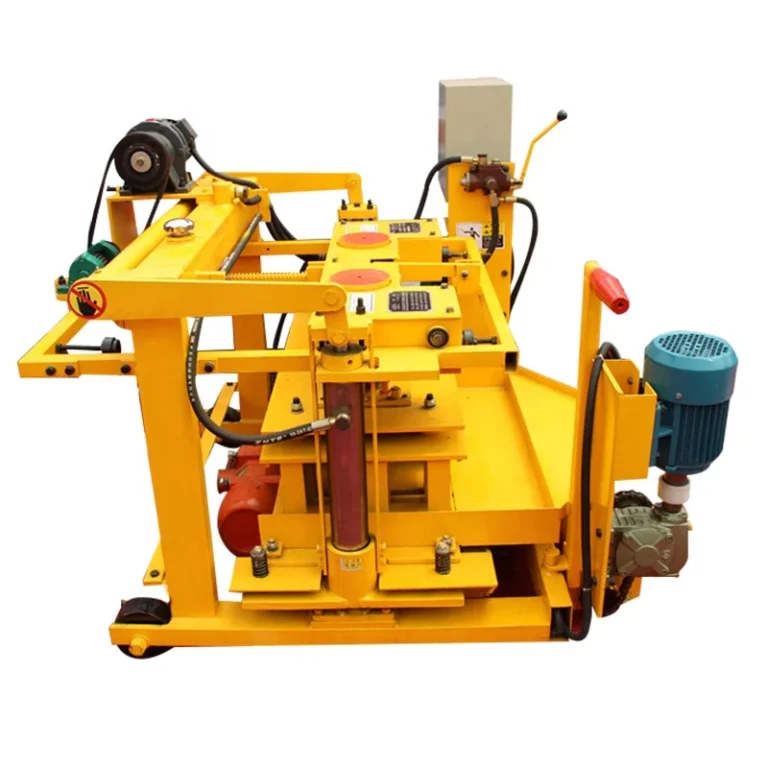
Single Focus on Block Machinery — the QMJ2-45 is specified as a matched system where mould, power source, and operator workflow are configured together rather than sourced from separate suppliers.
Technical Specifications
| Parameter | Value |
|---|---|
| Model | QMJ2-45 |
| Product Type | Manual Mobile Concrete Block Making Machine |
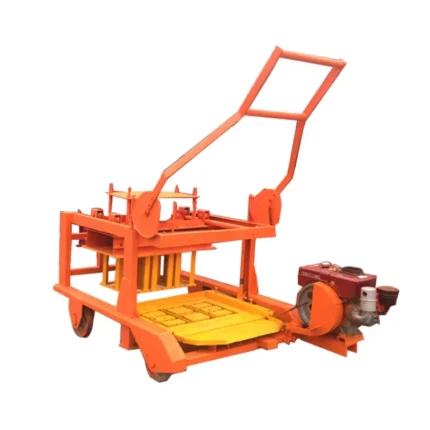
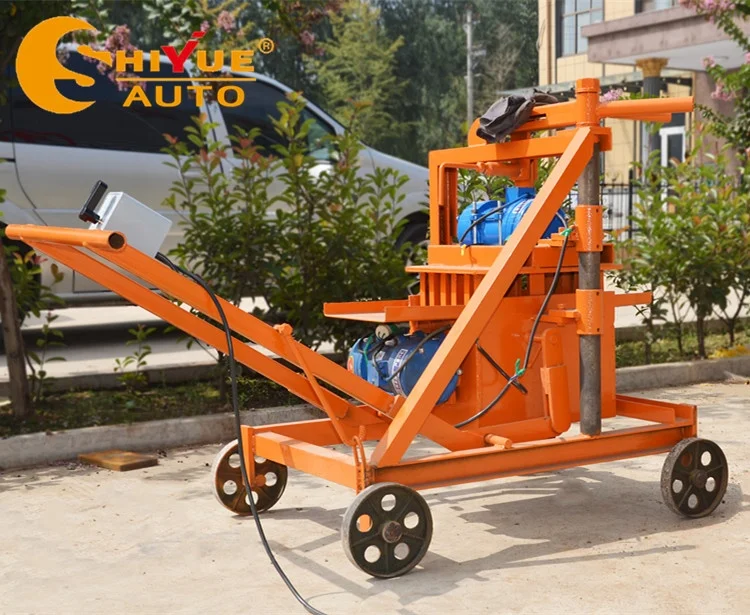
| Machine Type | Manual mobile (egg-laying) block machine |
| Mould Format | Hollow brick |
| Mould Change | Interchangeable moulds for different hollow brick sizes |
| Cycle Time | 25–30s (basis not stated in source — confirm block format / material / thickness) |
| Output Capacity | 160 pcs/h (based on 400×200×200mm hollow brick, 2 pcs/mould) |
| Output Capacity | 240 pcs/h (based on 400×150×200mm hollow brick, 3 pcs/mould) |
| Output Capacity | 320 pcs/h (based on 400×100×200mm hollow brick, 4 pcs/mould) |
| Daily Output (8hr) | 1280 pcs (based on 400×200×200mm hollow brick) |
| Daily Output (8hr) | 2560 pcs (based on 400×100×200mm hollow brick) |
| Pallet Requirement | None (pallet-less egg-laying operation) |
| Power Source | Engine (diesel); no electrical grid dependency stated |
| Labour Requirement | 1–3 workers |
| Mobility | Free-moving on-site, no fixed plant required |
| Space Requirement | Operates in small spaces |
| Automation Level | Manual |
| Control System | Not stated in source |
| Voltage & Frequency | Not applicable (engine-powered) |
Application Suitability
| Application | Material or Output |
|---|---|
| On-site hollow block production for construction contractors | Crushed stone, sand, cement, and water mixed locally |
| Small-scale or startup block production in space-constrained environments | Hollow bricks in 100mm, 150mm, and 200mm thickness formats |
| Remote or off-grid project sites | Diesel-powered operation where stable electrical supply is unavailable |
| Production of multiple hollow brick thicknesses | 400×200×200mm, 400×150×200mm, and 400×100×200mm via mould change |
What "Manual Operation" Really Means for Your Block Consistency
A manual mobile block machine puts every variable — feed timing, vibration duration, mould release — directly in the operator’s hands.
When a plant owner receives a capacity figure like 320 pieces per hour, that number assumes a cycle rhythm an experienced operator can sustain without interruption. In practice, fatigue, material inconsistencies, and the physical effort of moving the QMJ2-45 across uneven ground cause cycle times to drift. Block density varies because vibration force and hydraulic pressure, if present, are not matched to the buyer’s specific mix design and local aggregate. [NEED_CITE: concrete block strength testing standards for masonry units] A PLC controlled mobile block machine removes the operator from that equation, which is precisely why buyers evaluating this class of equipment need to understand what automation adds and what it costs to stay manual.
The Automation Gap Between Manual Egg-Laying and PLC-Controlled Production
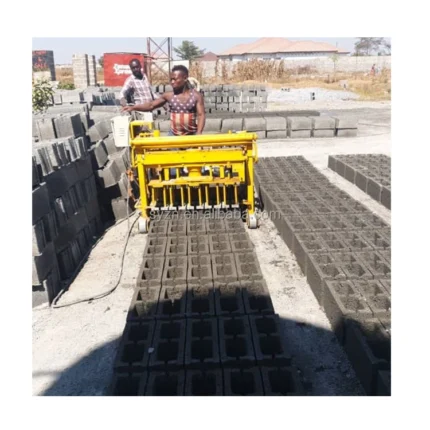
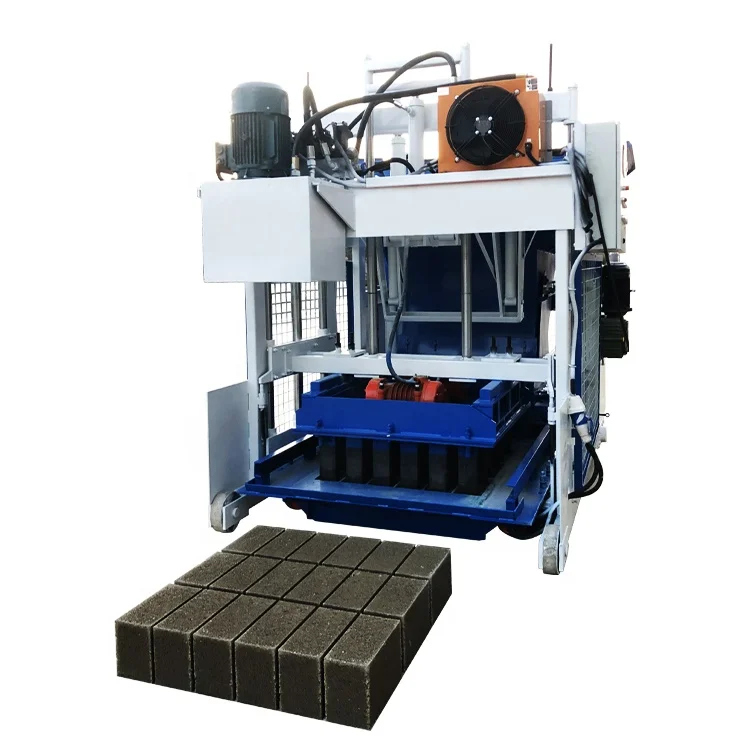
The QMJ2-45 operates as a diesel-powered, pallet-less egg-laying machine. It lays hollow bricks directly on the ground and moves forward under manual control. This design eliminates pallet investment entirely, which matters when a first-time buyer has limited capital and no curing rack infrastructure. The trade-off is that batch-to-batch consistency rests entirely on the operator’s discipline. An automatic mobile block making machine introduces PLC-controlled batching and vibration sequencing so that every cycle delivers the same compression and release pattern regardless of who runs the panel.
Where the Upgrade Path Actually Begins
Most buyers who start with the QMJ2-45 eventually encounter demand that exceeds what one to three workers can sustain over a full shift. The transition to semi-automatic operation typically begins with adding electric power, a fixed vibration table, and pallet feeding. From there, a PLC controlled mobile block machine configuration introduces automatic batching accuracy, timed vibration cycles, and eventually stacking integration. [NEED_CITE: typical automation stages in small-scale concrete block production] The point is not that manual operation is wrong — it is the correct entry point for remote sites and tight budgets — but that the decision to start manual should include a clear picture of what the next step costs and requires.
Reading the Specs That Actually Matter
The cycle time of 25–30 seconds is listed without a stated basis for block format or material thickness. In manual egg-laying operation, the actual cycle depends on how quickly the operator positions the machine, feeds the mix, and releases the mould. For the 400×200×200mm format producing 2 pieces per mould, a sustained rhythm yields 160 pieces per hour. The thinner 400×100×200mm format produces 4 pieces per mould at 320 pieces per hour, but that figure assumes uninterrupted operation across an entire hour — a condition rarely met on a real construction site. Mould interchangeability across three thicknesses gives format flexibility, yet the physical mould change procedure and time required will determine whether that flexibility survives daily production scheduling.
The Hidden Cost of Choosing the Wrong Configuration
When vibration force and pressure are not documented or matched to local aggregate, block strength becomes unpredictable. Contractors who discover this after arrival face rejected batches and rework costs that far exceed the initial machine price. [NEED_CITE: common causes of block rejection in small-scale masonry production] A buyer who selects the QMJ2-45 for a site with stable grid power may later find that diesel fuel costs and engine maintenance outweigh the simplicity of operating without electrical infrastructure. Choosing manual operation without mapping the upgrade path means that when demand grows, the buyer must replace the entire machine rather than add automation modules.
Why Source This Machine Here
Block machinery is a single focus for this supplier, meaning the QMJ2-45 is evaluated alongside its moulds, power source, and handling workflow as one system rather than assembled from separate vendors. Configuration is set against the buyer’s actual mix design and local aggregate, not a catalogue default. Mould design and supply covers the formats the buyer’s market sells, including custom drawings. [NEED_CITE: importance of matched vibration and pressure settings for local aggregate] Automation level is selectable, so a buyer can start manual and plan the upgrade path before placing the first order. Installation support includes operator training so that the crew understands not only how to run the machine but how to identify when consistency is drifting.
Documentation & Verification
- Machine specification sheet confirming diesel engine type and fuel consumption rate
- Mould drawing and format list for all three hollow brick thicknesses included
- Capacity calculation stating the block format assumed for each output figure
- Factory test record on your target mix design before dispatch
- Operation and maintenance manual in your operator’s language
- Voltage and control language confirmation if electric conversion is selected
Installation, Commissioning & Support
- Level compacted ground required for egg-laying operation; no fixed foundation needed for the QMJ2-45
- Diesel engine startup and fuel system check performed before first production run
- Mould change procedure demonstrated for all three hollow brick formats during commissioning
- Operator training covers cycle rhythm, mix consistency recognition, and early fault identification
- Wear parts list and mould replacement schedule provided at handover
- Optional electric conversion assessed for sites with stable power supply availability
What to Include in Your Inquiry
To receive a configuration that matches your actual production conditions, specify the hollow brick format you intend to produce most frequently, your local aggregate type and source, and whether your site has access to stable electrical power. Confirm the daily output you need for that specific format rather than the maximum figure in the catalogue. State your preferred control language and whether you want to evaluate the automation upgrade path at the time of purchase.
Frequently Asked Questions
Q: How do I verify realistic daily output for my specific block format?
A: Request a capacity calculation that states which block format each output figure assumes. The 160 pieces per hour figure applies to the 400×200×200mm format at 2 pieces per mould. Confirm this against your target format, local mix design, and the number of effective working hours your crew can sustain, not the smallest brick in the mould range.
Q: What automation upgrades are available from manual mobile to PLC-controlled operation?
A: The typical path adds electric power, a vibration table with timed cycles, and pallet feeding. From there, a PLC controlled mobile block machine configuration introduces automatic batching and stacking integration. Discussing the upgrade path before purchase ensures that the machine you select today can accept automation modules when demand grows.
Q: How do I match vibration force and pressure to my local aggregate for consistent block strength?
A: Provide your aggregate type, gradation, and cement ratio before the machine is configured. An automatic mobile block making machine allows vibration and pressure settings to be locked in the PLC so that every cycle delivers the same force regardless of operator. Without this control, consistency depends entirely on manual discipline.
Q: What should I confirm about control language when upgrading to electric configuration?
A: Specify the PLC display language your operators read before the control panel is programmed. Machines arriving with a default language the crew cannot read face delays during commissioning. Confirm this alongside voltage and frequency so that electrical and control systems arrive ready for immediate setup.