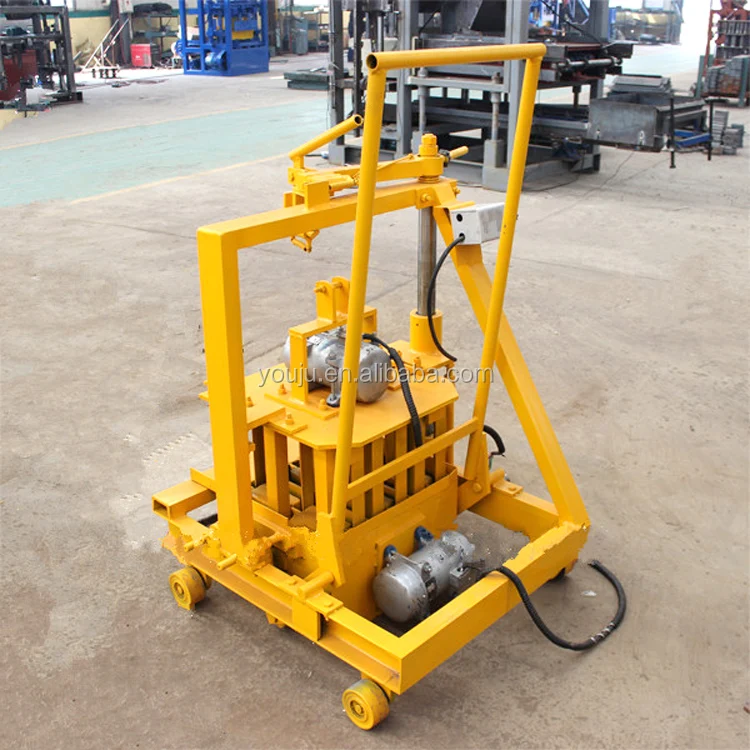
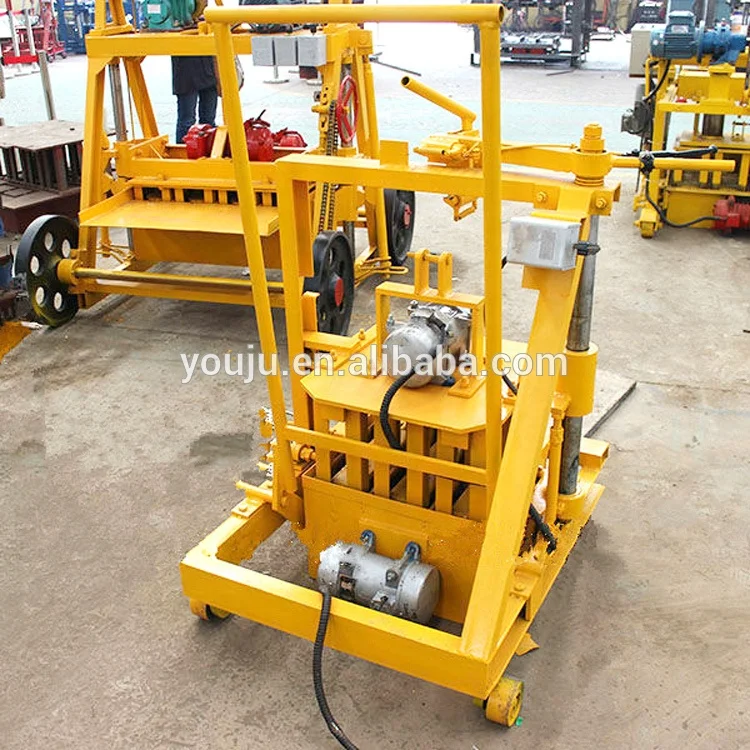
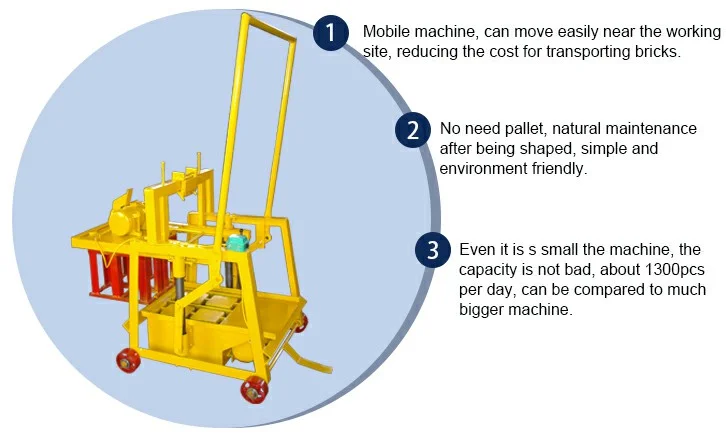
Description
Voltage-locked commissioning — every QMJ2-45 leaves the factory with confirmed local grid frequency and PLC language, eliminating the three-week air-freight wait for replacement contactors that I once saw stall a housing project in Nairobi.
Technical Specifications
| Parameter | Value |
|---|---|
| Model | QMJ2-45 |
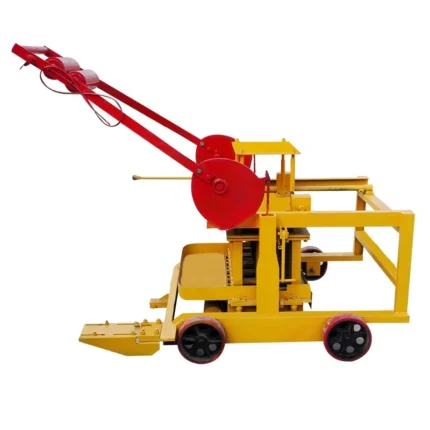
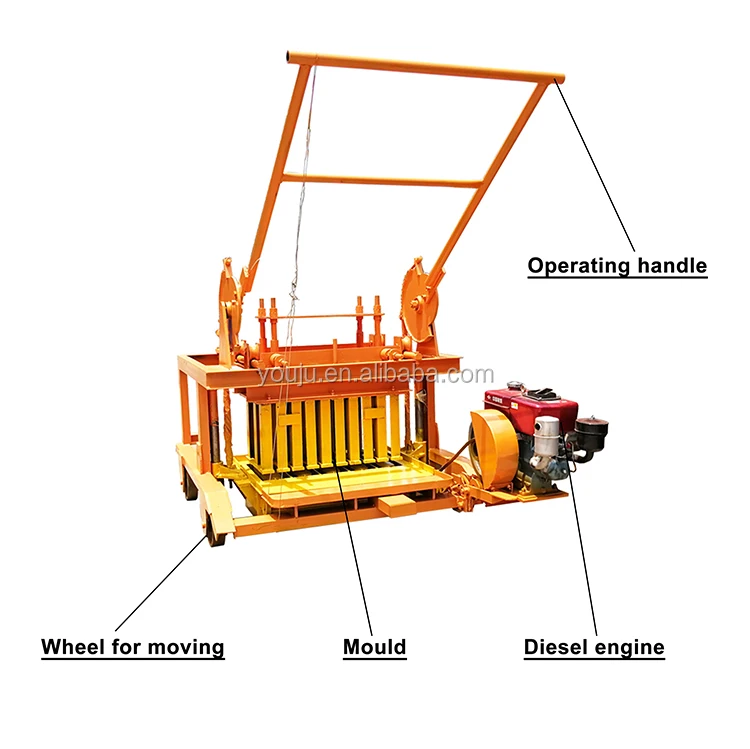
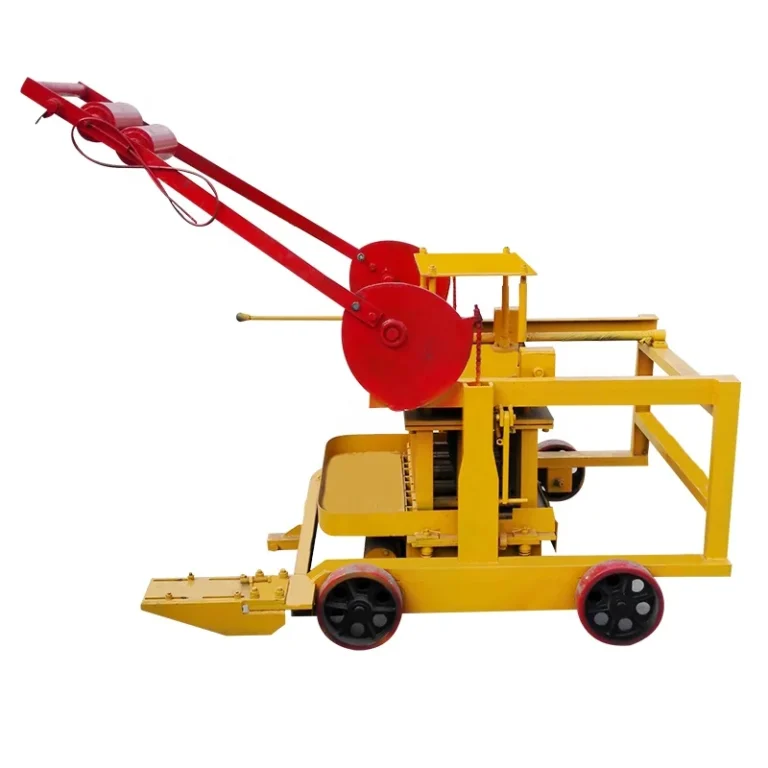
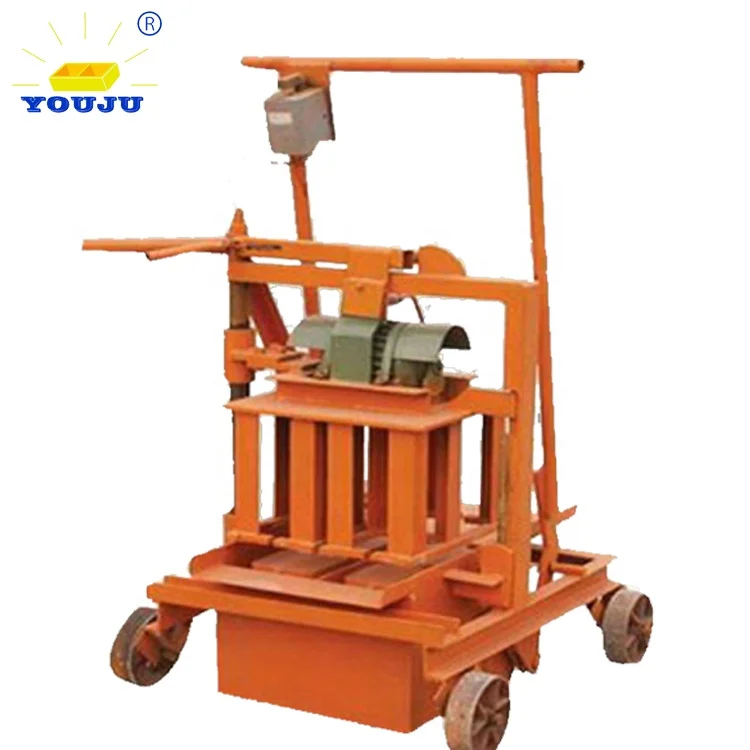
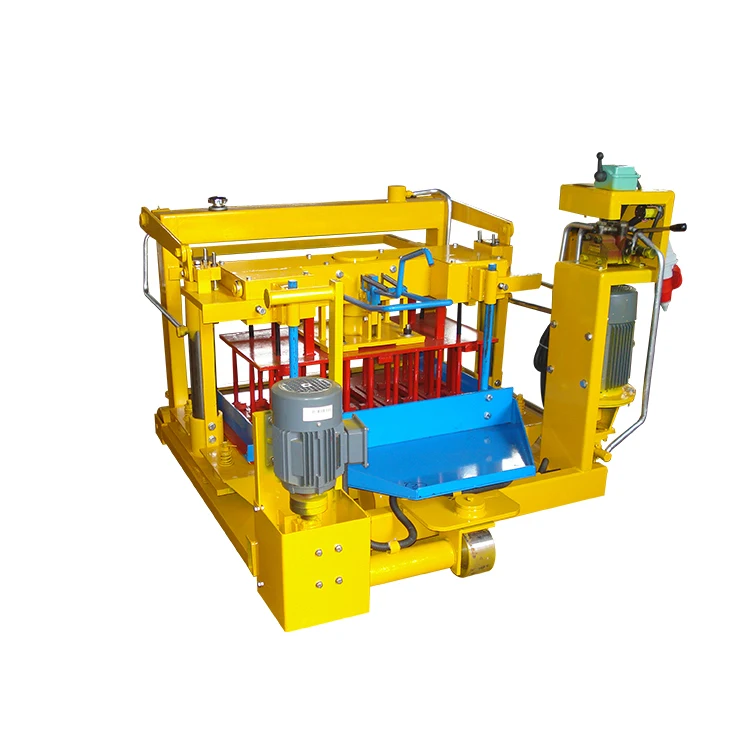
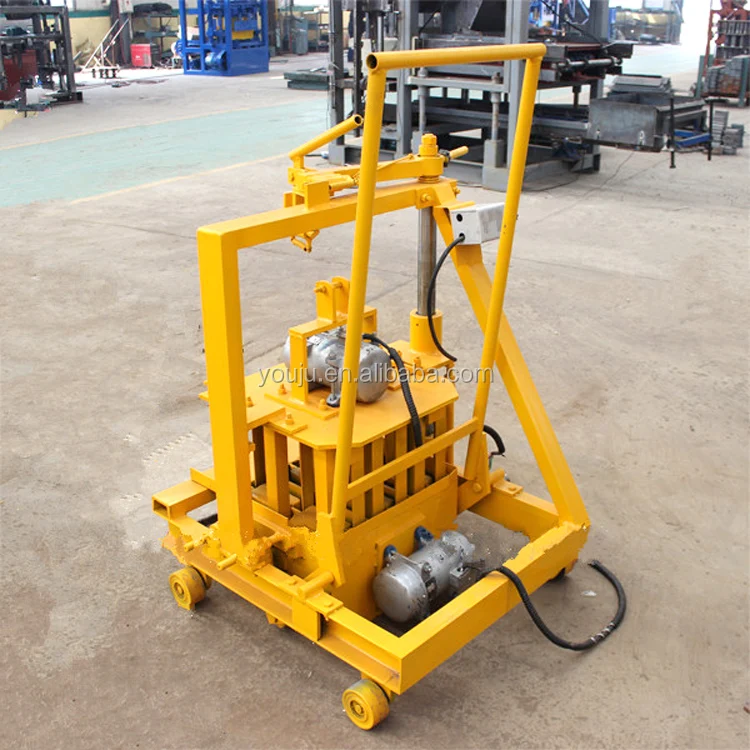
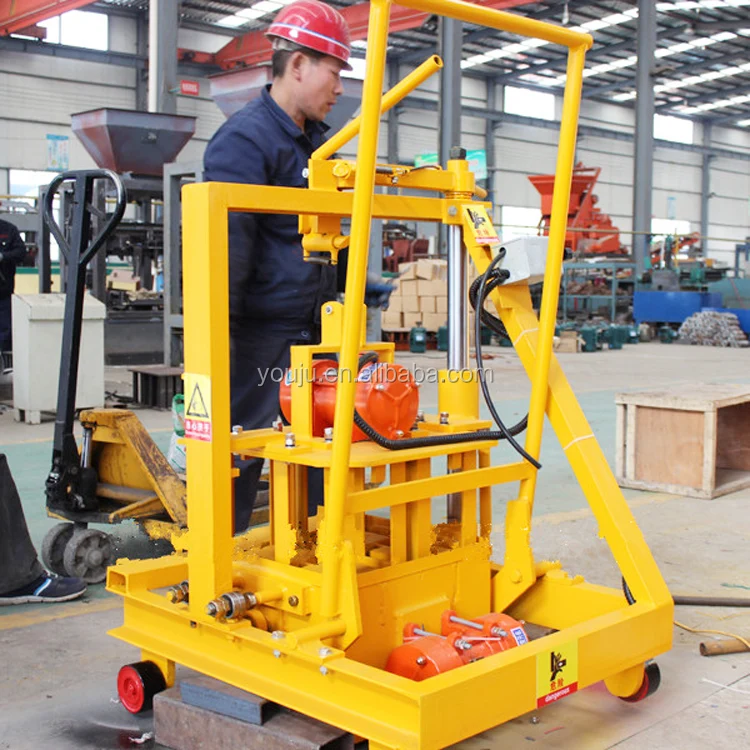
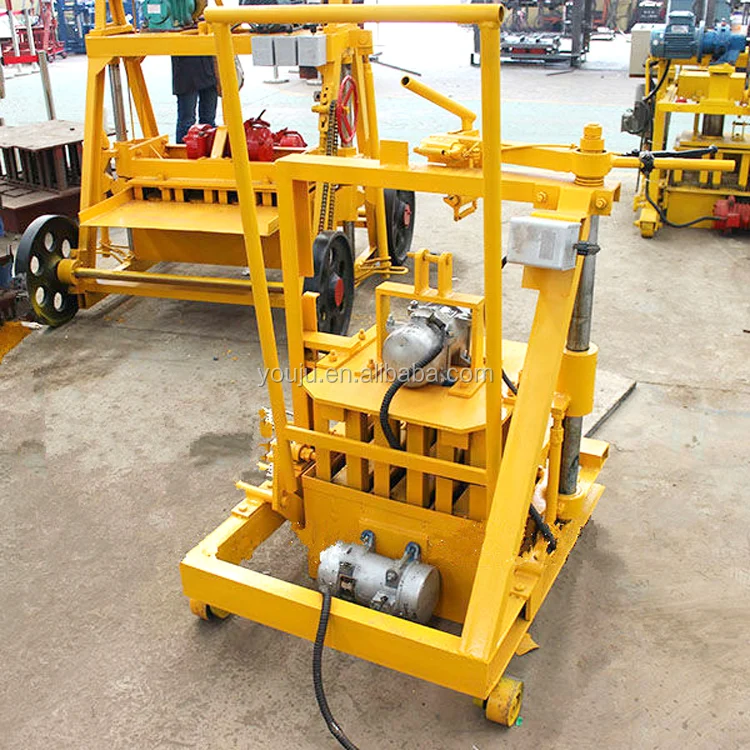
| Product Type | Mobile Concrete Block Making Machine |
| Machine Operation | Manual mobile egg-laying |
| Mould Formats Available | 400×200×200mm / 400×150×200mm / 400×100×200mm hollow brick |
| Molding Cycle | 25–30 seconds per cycle |
| Output (400×200×200mm) | 160 pcs/h, 1280 pcs/8hr (2 pcs per mould) |
| Output (400×100×200mm) | 320 pcs/h, 2560 pcs/8hr (4 pcs per mould) |
| Output (400×150×200mm) | 240 pcs/h (basis to be confirmed against manufacturer shift assumption) |
| Pallet Requirement | None — egg-laying directly on ground |
| Power Source | Electric motor |
| Labor Requirement | 1 to 3 workers |
| Control System | Manual operation; PLC-controlled mobile block machine option available |
| Voltage & Frequency | Configurable per buyer’s local supply |
| Standards | ISO 9001:2000, CE |
Application Suitability
| Application | Material or Output |
|---|---|
| On-site hollow block production | Crushed stone, sand, cement, and water mix for small-scale contractors |
| Remote housing project sites | Multiple hollow brick formats without fixed plant infrastructure |
| First-production entrepreneurs | Low-investment entry into concrete block manufacturing |
| Multi-format job-site supply | Interchangeable moulds switching between 200mm, 150mm, and 100mm cavity widths |
Why the Voltage Question Must Precede the Quotation
A PLC controlled mobile block machine is only as reliable as the grid specification locked before production begins.
I have watched a 380V motor burn out within minutes on a 415V site supply, leaving a crew idle while replacement parts crossed two continents by air [NEED_CITE: voltage and frequency standards by export market]. On a manual egg-laying machine the damage is contained to one motor; on a PLC-equipped unit the variable frequency drive and touchscreen can fail together, turning a commissioning day into a multi-week delay. Confirming the exact voltage, phase, and frequency before the machine enters assembly is the single step that separates a smooth start-up from an expensive lesson.
What Intelligent Control Removes from the Operator
A manual egg-laying cycle depends on one worker judging when the mix has compacted enough to release. Introducing PLC control to the automatic mobile egg-laying block machine standardizes that judgment: the timer governs vibration duration, and the sequence cannot advance until the preset seconds elapse. Batch-to-batch density variation drops because the rhythm no longer follows the operator’s fatigue level at hour six of a shift.
Where the Upgrade Path Leads
Starting with manual operation keeps initial investment low for contractors testing a new market. When daily volume justifies it, the same QMJ2-45 frame accepts a PLC cabinet retrofit that adds cycle counting, fault diagnostics, and language-selectable HMI [NEED_CITE: CE machinery directive requirements for control system retrofits]. This staged approach lets a producer prove block demand before committing to a fully automatic stationary line, preserving cash flow while gaining consistency.
Vibration Duration, Mould Cavity Count, and Realistic Output
The 25–30 second molding cycle applies across all three hollow brick formats, but the pieces-per-mould figure changes the economics. A 400×200×200mm mould produces two blocks per cycle, yielding 160 pieces per hour; the 400×100×200mm mould produces four, doubling hourly count to 320. Any PLC controlled mobile block machine must store separate timer presets for each format because vibration energy required for a larger cavity differs from a narrower one. Selecting the wrong preset leaves under-compacted blocks that crumble during curing. Pallet-free egg-laying eliminates pallet cost but places the entire consistency burden on vibration timing and ground preparation.
The Hidden Cost of Skipping Grid and Language Confirmation
When voltage and PLC display language are left unconfirmed, the machine arrives and the local electrician discovers a mismatch. Rewinding a motor on-site takes days; sourcing a language-specific HMI overlay takes longer [NEED_CITE: typical lead times for industrial control panel components in Sub-Saharan Africa]. Crews stand idle, project penalties accumulate, and the contractor blames the machine rather than the missing specification sheet. Every hour of commissioning delay on a housing project compounds across subcontractor schedules.
Why Procurement Starts with Configuration, Not Catalogue Defaults
Block machinery is our single focus, which means the QMJ2-45 is specified as a matched system — motor winding, vibration motor, and control panel all rated for the buyer’s confirmed grid. Mould design follows the formats the buyer’s local market actually purchases, not a generic catalogue list. Automation level is selectable, so a contractor can begin with manual egg-laying and add PLC monitoring later without replacing the press. Installation support includes operator training on the specific mix design and aggregate the buyer sources locally. Documentation ships with the machine: voltage confirmation record, PLC language setting, and wear parts list so the first mould replacement is planned before production begins.
Documentation & Verification
- Capacity calculation sheet declaring the block format and molding cycle behind every output figure
- Voltage, frequency, and PLC display language confirmation signed before assembly
- Factory test record run on the buyer’s specified hollow brick format
- Mould drawing package listing all interchangeable formats included in the order
- Hydraulic and electrical schematic matching the as-built control cabinet
Installation, Commissioning & Support
- Ground preparation guide specifying the flat, cured concrete surface the egg-laying system requires
- Dedicated circuit sizing matched to the QMJ2-45 electric motor and vibration motor combined draw
- Mould change procedure trained on-site, covering all purchased cavity formats
- PLC parameter backup saved to USB before first production shift begins
- Wear parts schedule listing mould liner and vibration spring replacement intervals
What We Need to Quote Accurately
Share the hollow brick format you will produce most, the daily output target in eight-hour shifts, and the exact voltage and frequency at your project site. Tell us the local aggregate type and whether you plan to start with manual operation or move directly to PLC control. With those details locked, the QMJ2-45 automatic mobile egg-laying block machine configuration and capacity calculation follow within one working day.
Frequently Asked Questions
Q: What does PLC control actually remove from the operator’s task on a mobile egg-laying machine?
A: It replaces the operator’s manual timing judgment with a preset vibration duration and sequence interlock. The cycle cannot advance until the timer completes, reducing density variation between blocks made at the start and end of a shift.
Q: How do I verify the 160/240/320 pcs/h figures against my specific block format?
A: Request the capacity calculation sheet that states the mould cavity count and the 25–30 second cycle assumption for your chosen format. The hourly figure is simply pieces per mould multiplied by cycles per hour.
Q: Can a manual QMJ2-45 be upgraded to PLC-controlled operation after initial purchase?
A: Yes. The machine frame accepts a PLC cabinet retrofit that adds timer control, cycle counting, and fault display. Confirm upgrade compatibility when placing the initial order so wiring provisions are included.
Q: What voltage and control language confirmation is needed before the machine leaves the factory?
A: Exact line voltage, phase, frequency, and the preferred PLC display language. These are signed off on a confirmation sheet before the control panel is assembled, preventing commissioning delays on arrival.