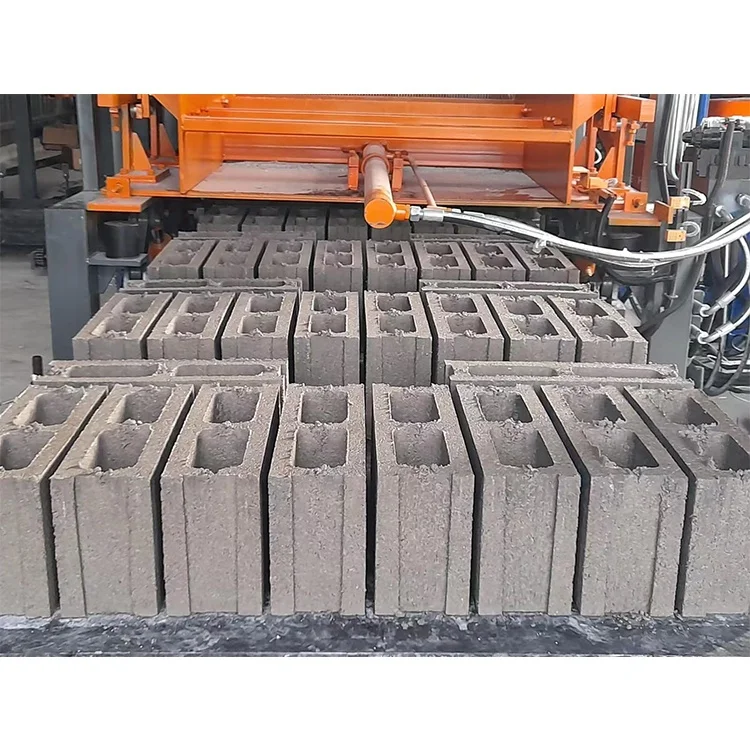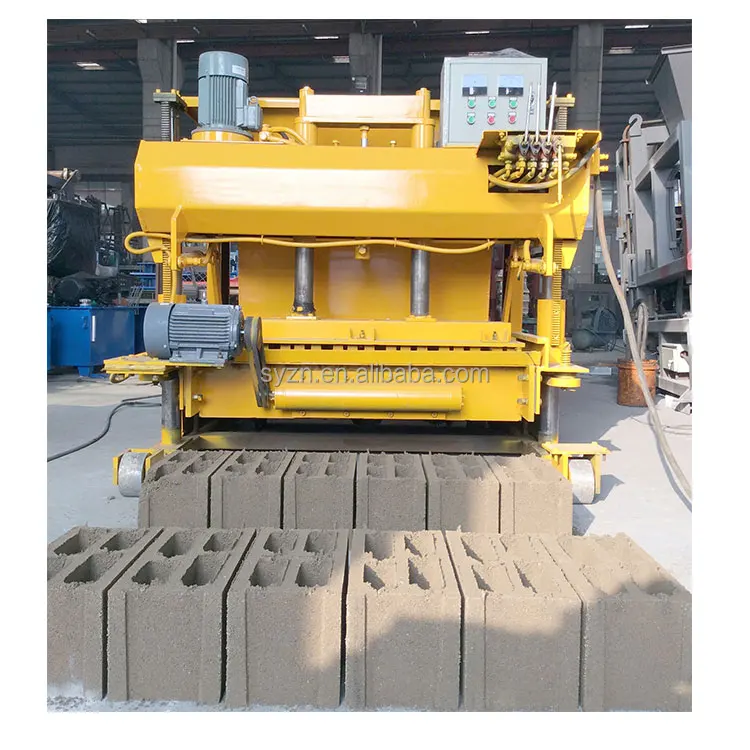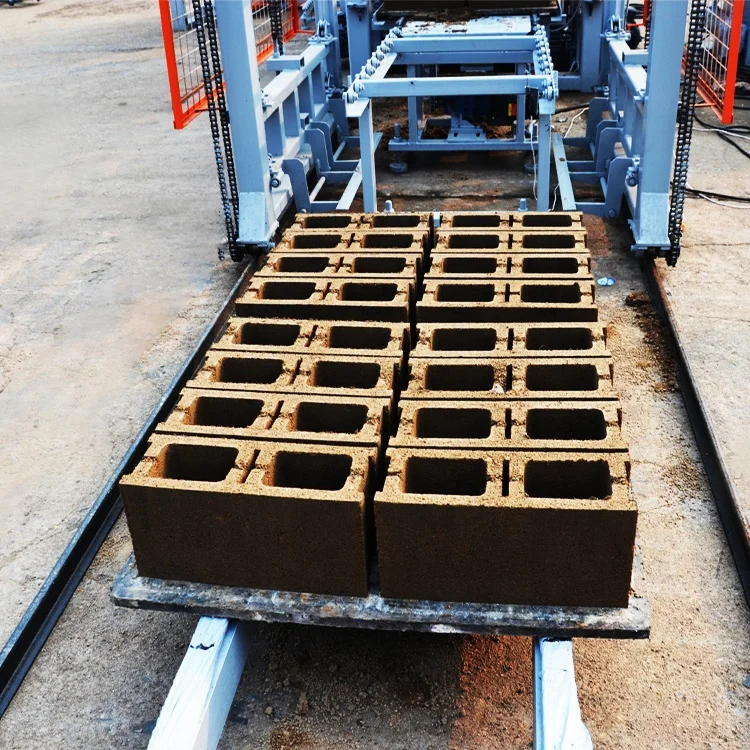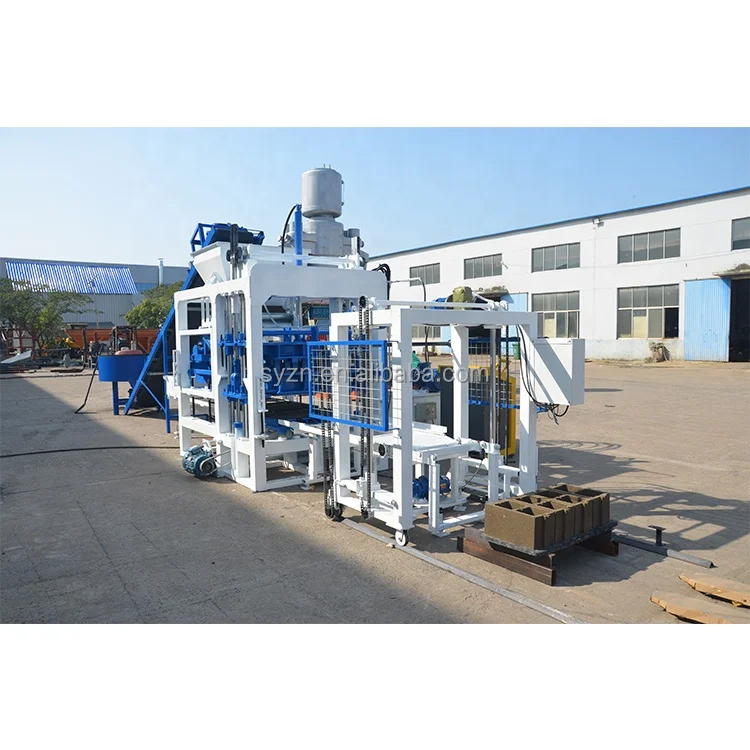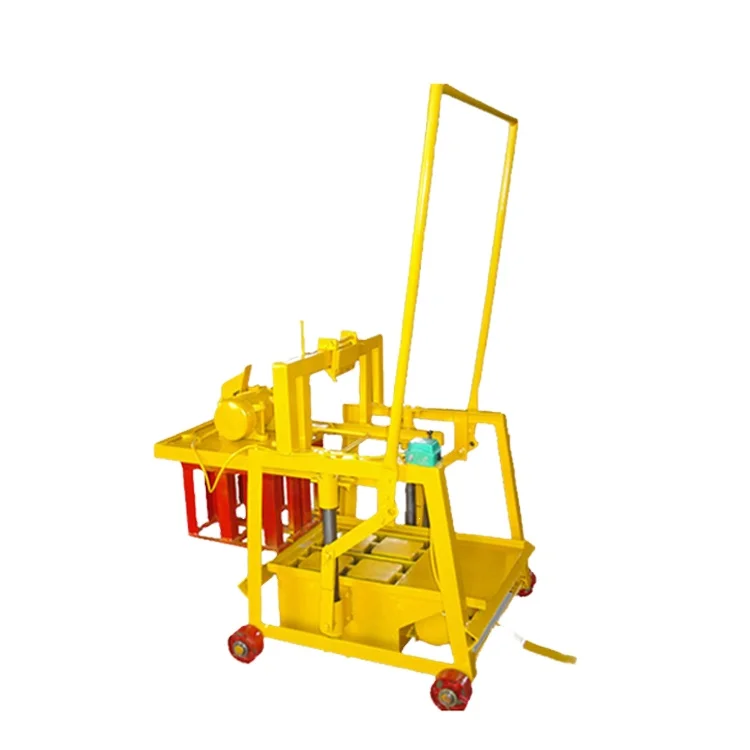
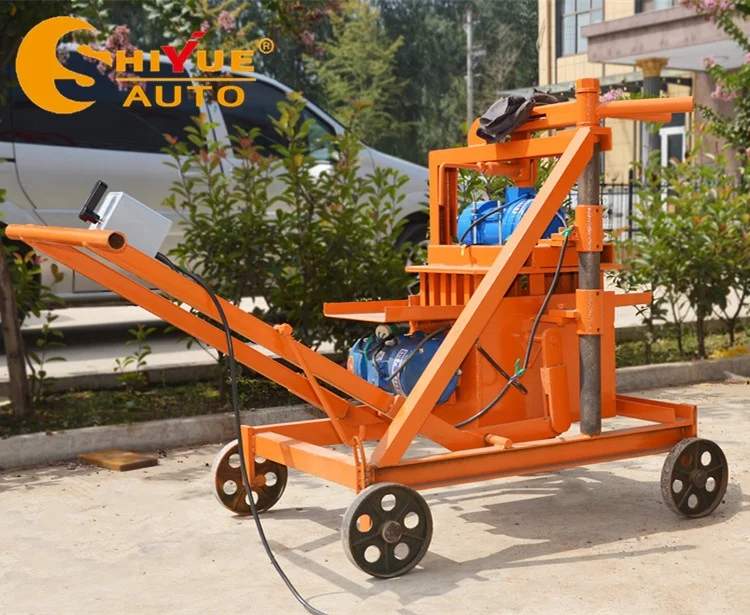
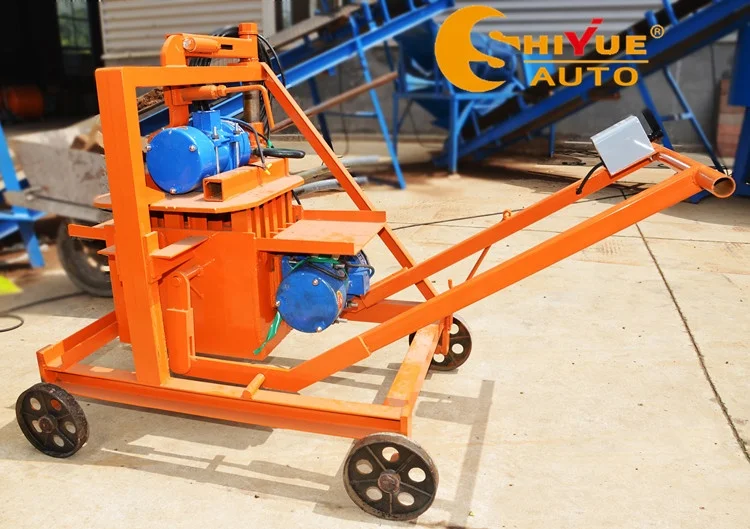

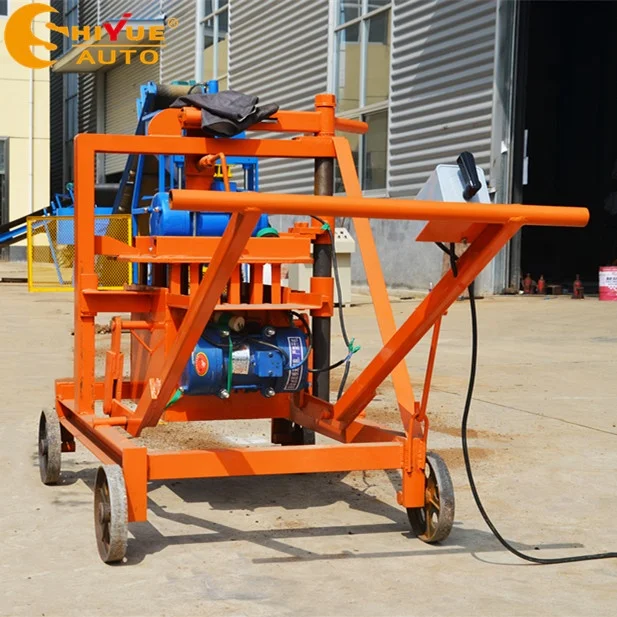

Description
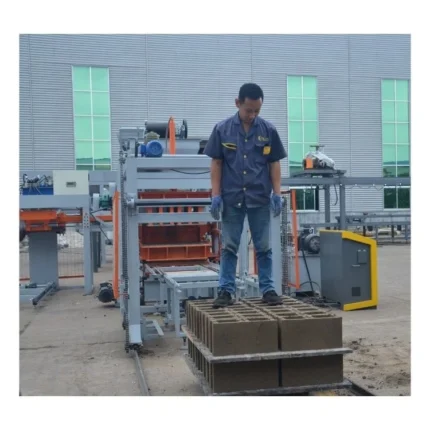
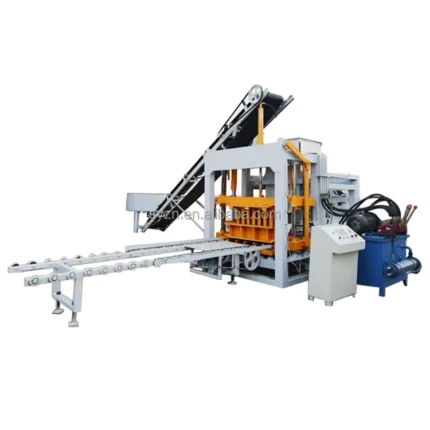
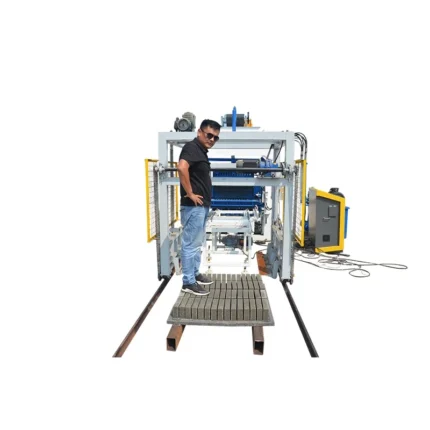
Controlled Vibration Alignment — the QMJ2-45 pairs vertical bed mould vibration with upper mould compression as one matched system, so block density stays uniform across every cycle instead of drifting with material variation.
Technical Specifications
| Parameter | Value |
|---|---|
| Model | QMJ2-45 |
| Product Type | Mobile Brick Making Machine |
| Machine Power | 1.5 kW |
| Molding Cycle | 45 s (basis not stated in source — confirm block format, material, thickness) |
| Capacity | 1,280 pcs / 8 h based on 300×150×100 mm solid block, 2 pcs per mould |
| Output Rate | 160 pcs / h based on 300×150×100 mm solid block, 2 pcs per mould |
| Pieces per Mould | 2 |
| Raw Materials | Concrete, sand, cement |
| Machine Weight | 150 kg |
| Overall Dimensions (L×W×H) | 920×800×1,258 mm |
| Vibration Motors | 2 per mould |
| Voltage | Configurable to buyer local voltage |
| Control System | Semi-automatic |
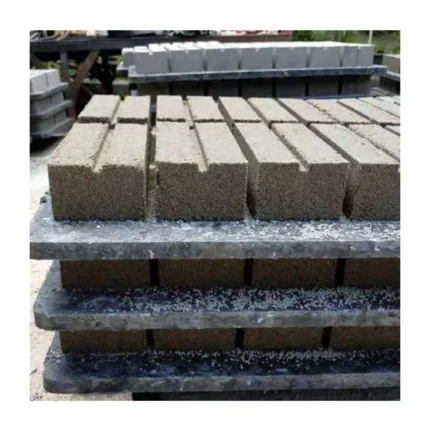
| Mould Format Supplied | 300×150×100 mm solid block |
| Stacking Method | Manual (mobile egg-laying type, no pallet required) |
| Assembly State | Fully assembled mobile unit |
Application Suitability
| Application | Material or Output |
|---|---|
| On-site block production for building contractors | Solid concrete blocks laid directly on prepared ground |
| Small-scale housing and development projects | Cement-sand blocks produced at construction pace |
| First block operation for entrepreneurs | Semi-automatic egg-laying output with minimal infrastructure |
| Remote or temporary construction sites | Portable production eliminating transport from fixed plant |
Why the PLC Language Question Comes Before the Price
An automatic mobile brick making machine PLC controlled in the wrong language is a machine that cannot run on day one.
I spent years on the procurement side of brick plants before moving into field technical support across Shandong. The most frustrating commissioning delays never came from mechanical faults — they came from control interfaces displaying alarm messages in a language the operator could not read. A semi-automatic mobile unit like the QMJ2-45 has fewer control points than a full line, but the PLC still manages vibration timing, mould alignment sequences, and cycle interlocks. When those alerts appear in an unfamiliar script, the operator shuts the machine down and calls for help, turning a simple sensor fault into a multi-day standstill [NEED_CITE: typical commissioning delays caused by unconfirmed PLC language settings].
How Semi-Automatic Control Removes Operator Guesswork
The QMJ2-45 operates at a semi-automatic level, meaning the PLC governs the critical cycle steps — vibration duration, mould head descent, and compression hold — while the operator manages material feeding and machine repositioning. This division keeps labour requirements low without surrendering cycle consistency to human timing. Each press cycle follows the same programmed sequence, so block density does not drift as the shift wears on and fatigue sets in.
The Upgrade Path From Manual to Intelligent Operation
Starting with semi-automatic control does not lock a buyer into that tier permanently. The control architecture on the QMJ2-45 supports incremental automation additions — automatic pallet feeding, sensor-based stacking triggers, and remote diagnostic modules can be integrated as production volume justifies the investment. For an entrepreneur launching a first block operation, this means the initial capital outlay stays manageable while the machine retains the wiring and PLC capacity to accept future upgrades. That forward compatibility is what separates a genuine automatic mobile brick making machine PLC controlled system from a basic manual press with a timer bolted on [NEED_CITE: PLC upgrade paths in mobile block machine platforms].
Reading the Specifications That Actually Matter
The 1.5 kW machine power rating covers both the vibration motors and the compression drive. With two vibration motors assigned per mould, the energy is concentrated across a small mould face area, producing dense compaction for the 300×150×100 mm solid block format. The 45-second moulding cycle governs how fast the machine moves through each press-and-release sequence, but actual throughput depends on how quickly the operator repositions the unit and reloads material — a factor that varies with site conditions and crew experience. The 150 kg weight keeps the machine portable enough for one or two workers to manoeuvre, yet heavy enough that the frame resists walking or shifting during vibration. Voltage is configurable before production, which matters because a 50 Hz market and a 60 Hz market will see different motor speeds and vibration frequencies if the supply is not matched at the factory.
What Happens When Vibration and Compression Are Specified Separately
Buyers who source the press from one supplier and the vibration system from another often discover that the compression force and vibration frequency work against each other rather than together. Too much vibration without adequate upper mould pressure produces blocks that are dense at the base but crumbly at the top. Too much compression without sufficient vibration leaves air pockets trapped in the core. On the QMJ2-45, the vibration motors and the squeeze head are specified as one matched set against the target block format, so the force profile is coherent from the first cycle [NEED_CITE: block density variation from mismatched vibration and compression settings].
Why Procurement Documentation Protects the Buyer
Every QMJ2-45 leaves the factory with documentation tied to the specific machine and the buyer’s confirmed requirements. This is not a generic packet — it reflects the actual configuration shipped.
- Line layout showing the QMJ2-45 operating footprint and repositioning clearance
- Machine specification sheet confirming voltage, frequency, and PLC language as ordered
- Mould drawing for the 300×150×100 mm solid block format with dimensional tolerances
- Factory test record documenting cycle timing and block density on the confirmed mix
- Operation and maintenance manual with vibration motor service intervals
- Packing photographs and customs documentation for shipment tracking
Installation, Commissioning & Support
- The QMJ2-45 arrives fully assembled; no on-site mechanical reassembly is required
- A dedicated circuit matching the confirmed voltage and frequency must be in place before startup
- First-run commissioning includes PLC language verification and vibration timing calibration
- Operator training covers the semi-automatic cycle sequence and mould alignment checks
- Vibration motor bearings and squeeze head wear surfaces are the primary consumable items
- The 920×800×1,258 mm footprint requires a level, compacted ground surface for consistent block laying
What to Prepare Before Requesting a Quotation
Share the exact block format your market sells, including dimensions and required strength grade. Confirm your local voltage, frequency, and the control display language your operators need. Provide the raw materials you plan to use — sand type, cement grade, and any local aggregate — so the vibration and compression settings can be matched before the machine enters production.
Frequently Asked Questions
Q: How is the 1,280 pieces per 8-hour capacity verified, and what block format does it assume?
A: That figure is based on producing 300×150×100 mm solid blocks with two pieces per mould at a 45-second cycle. If your target format is larger or requires a longer compression hold, the actual output will differ. We provide a capacity calculation specific to your block dimensions and mix design before the order is confirmed.
Q: What automation level does the QMJ2-45 operate at, and can it be upgraded later?
A: The machine runs at semi-automatic level, with the PLC controlling vibration timing, mould head movement, and cycle interlocks while the operator handles feeding and repositioning. The control system retains capacity for future automation additions such as automatic stacking triggers and remote diagnostic modules as your production volume grows.
Q: How are vibration force and compression matched to my local aggregate and mix design?
A: The two vibration motors per mould and the upper squeeze head are specified together against your confirmed block format and material composition. We request a sample mix description or local aggregate data so the vibration frequency and compression pressure are tuned as one system rather than defaulted from a catalogue setting.
Q: What voltage, frequency, and control language options are confirmed before shipment?
A: Voltage and frequency are set to match your site supply, and the PLC display language is confirmed with you twice — once at order and once before dispatch. This prevents the situation where operators cannot read alarm messages on the first day of production, which remains one of the most common avoidable commissioning delays.
Q: What mould formats can the QMJ2-45 accept, and how does a changeover work?
A: The standard supply includes the 300×150×100 mm solid block mould. Additional mould formats can be designed to your drawings, and changeover involves releasing the mould mounting bolts and realigning the squeeze head to the new mould profile. We provide the mould change procedure and estimated changeover time for each format so you can plan production schedules accordingly.