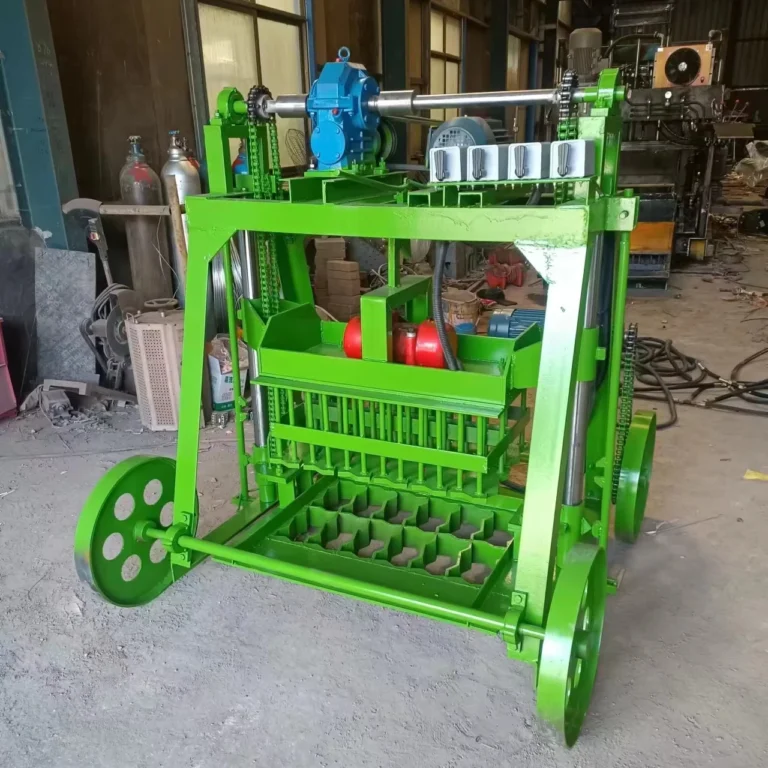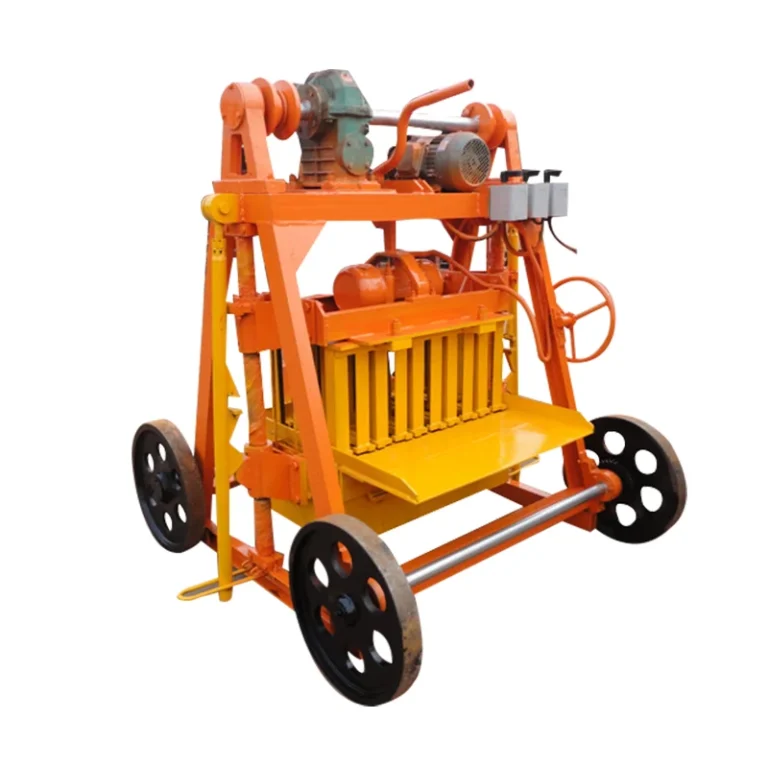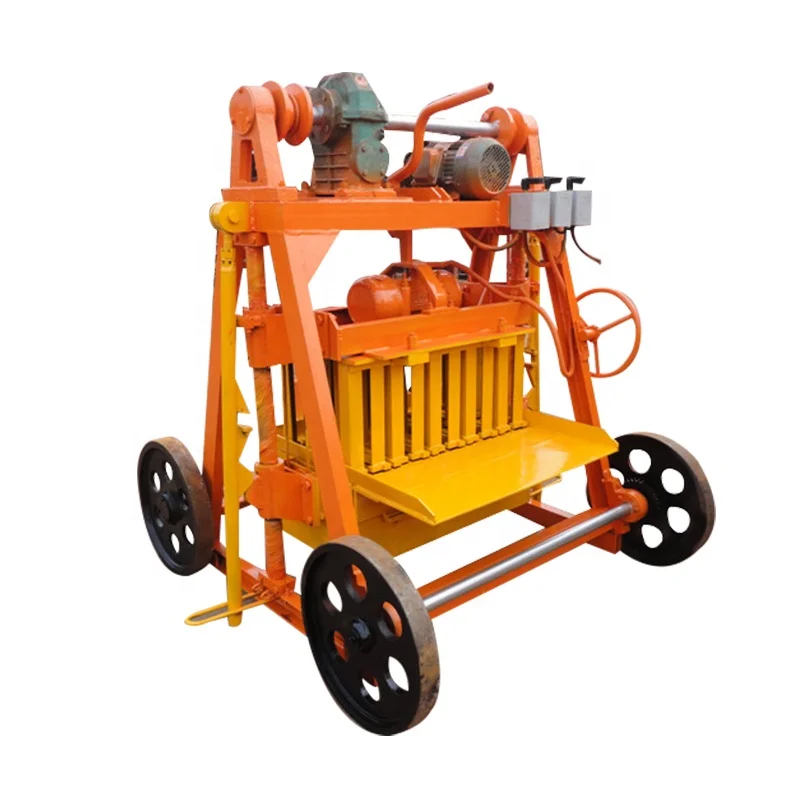
Description
Control system clarity before shipment — every QMJ4-45 leaves the shop with voltage, frequency, and PLC language confirmed against your site, so the first day on the ground is spent making blocks, not translating menus.
Technical Specifications
| Parameter | Value |
|---|---|
| Model | QMJ4-45 |
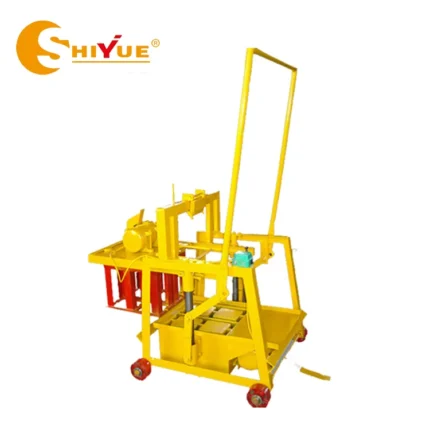
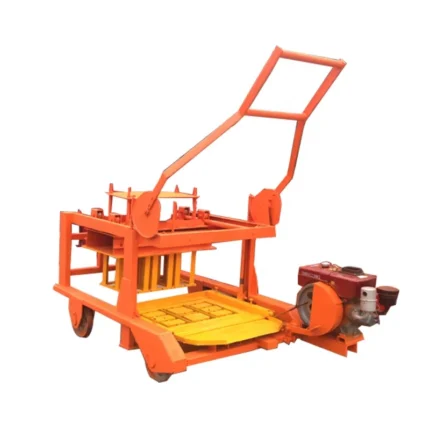
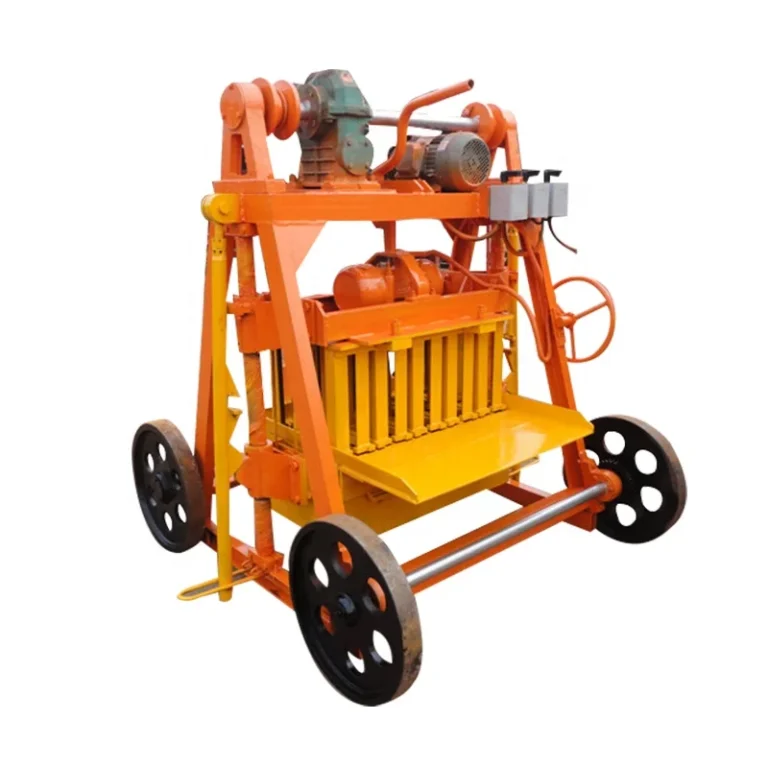
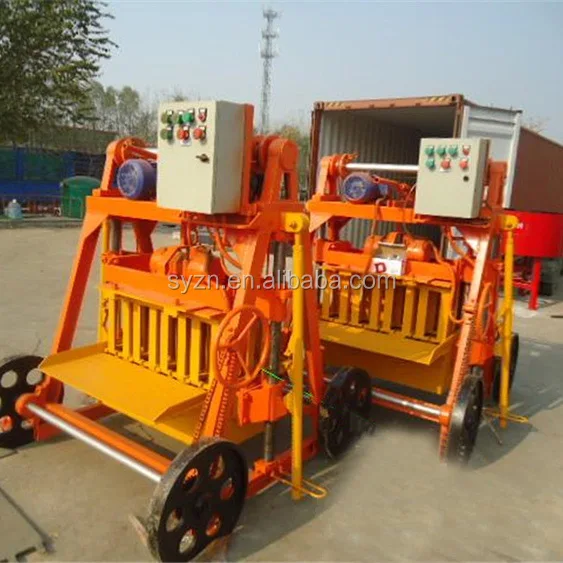
| Product Type | Mobile Egg Laying Block Making Machine |
| Molding Capacity | 4 pcs per mould (basis: 400×200×200 mm hollow block) |
| Molding Cycle | 40–45 s |
| Daily Productivity | 3,000 pcs/day (basis: 400×200×200 mm hollow block, 8-hour shift) |
| Daily Productivity | 3,500 pcs/day (basis: 400×150×200 mm hollow block, 8-hour shift) |
| Daily Productivity | 4,500 pcs/day (basis: 400×120×200 mm hollow block, 8-hour shift) |
| Vibration Frequency | 2,400 r/min |
| Forming Method | Twice-vibration mould system |
| Demold Method | Manual |
| Turning Method | Manual |
| Total Power | 6 kW |
| Power Source | Diesel / petrol engine |
| Automation Level | Manual operation, upgrade-ready to PLC control |
| Pallet Requirement | None — egg laying directly on ground |
| Control System | Relay logic baseline; PLC option available |
| Voltage & Frequency | Configurable to site requirement (confirm before dispatch) |
| Mould Formats Available | 400×200×200 / 400×150×200 / 400×120×200 mm hollow block |
| Warranty | One year on whole machine |
Application Suitability
| Application | Material or Output |
|---|---|
| On-site hollow block production for building contractors | Crushed stone, sand, cement mixes laid directly on compacted ground |
| Small-scale cement block manufacturing | Local aggregate blends with cement ratios suited to manual feeding |
| Remote housing projects without grid power | Diesel-driven operation producing hollow blocks at project site |
| Entry-level block plant for first-time producers | Hollow blocks in three thickness formats without pallet fleet investment |
What "3,000 Blocks a Day" Actually Means on a Job Site
Output only counts if the format, mix, and curing ground match the number on the quote.
When I first started shipping these machines overseas, I noticed buyers would fixate on the headline daily output without asking which block thickness that number assumed. The gap between a 200 mm wall block and a 120 mm partition block is roughly a third of your expected daily volume. That difference only surfaces once the machine is running and your crew is counting stacks at the end of the shift. The automatic QMJ4-45 egg laying block machine quotes three separate productivity figures, each tied to a specific hollow block dimension, so the capacity you plan against is the one your market actually buys. [NEED_CITE: common discrepancy between quoted and realised block output across mobile machine categories]
From Relay Logic to PLC — the Automation Path That Grows With You
Most buyers start with a manual QMJ4-45 because the capital outlay is low and the site has no fixed infrastructure. The relay-controlled baseline keeps things simple: a start button, a vibration timer, and a manual demold lever. But as order volumes climb, operators struggle to hold a consistent cycle time across a full shift. Specifying a PLC-controlled mobile block machine at the outset, or retrofitting one later, locks the vibration duration and mould cycle into a repeatable program, removing the human variance that causes soft blocks in the last hour of production.
Ground Preparation and Curing Reality
Egg laying machines sit directly on the ground, which means the surface you work on becomes part of your curing infrastructure. A compacted, level concrete floor or well-graded gravel pad keeps blocks from tilting as the green concrete sets. If your site is raw earth, budget time for a ground preparation pass before the first production run. I once saw a buyer in West Africa lose an entire day’s output because the soil was still soft from rain and the freshly laid blocks sank on one edge. [NEED_CITE: ground bearing requirements for egg laying block machines on unprepared surfaces]
Reading the Specs That Matter for Block Density
The 2,400 r/min vibration frequency is the number that shapes your block wall. Combined with the twice-vibration mould system, it compacts the mix from two stages rather than one, producing a denser core and sharper arrises on the finished block. The 6 kW total power rating is modest, which is why the engine option matters: a diesel source gives you sustained torque on remote sites where petrol generators tend to drop voltage under continuous load. The three available hollow block formats — 200 mm, 150 mm, and 120 mm wall thickness — share the same 400 mm length and 200 mm height, so switching between them is a mould swap rather than a line rebuild. No hydraulic system is involved here; forming force comes entirely from vibration and manual clamping pressure.
When the Wrong Configuration Arrives at Site
The most common commissioning delay I have seen with mobile machines is not mechanical — it is electrical. A machine wired for 380 V three-phase arrives at a site running 220 V single-phase, and the motor will not start. Similarly, a control panel defaulted to a language the crew cannot read turns a straightforward setup into a multi-day guessing game. These are not engineering failures; they are confirmation failures. Every QMJ4-45 dispatch should carry a signed voltage, frequency, and display language sheet before it leaves the factory floor. [NEED_CITE: commissioning delays caused by electrical mismatch on exported construction machinery]
Why Sourcing the Automation Side Through One Supplier Matters
The QMJ4-45 is a simple machine, but the control and automation layer is where consistency lives or dies. Specifying the press, the mould set, and the PLC upgrade through a single supplier means the vibration timing parameters are pre-loaded for your exact mould formats, not generic values from a catalogue. The mould drawings are cross-referenced to your control program so cycle times match the block geometry. Configuration is set against your actual mix design and local aggregate, not a default assumption. Installation support covers both the mechanical assembly and the control commissioning as one scope. Wear parts and mould replacements are catalogued against the same machine record, so reorder accuracy does not depend on guesswork.
Documentation & Verification
- Line layout showing egg laying travel path and curing area dimensions for your block format
- Capacity calculation sheet stating the exact hollow block size behind each output figure
- Mould drawing set covering all three thickness formats with dimensional tolerances
- Voltage, frequency, and PLC display language confirmation sheet signed before dispatch
- Factory test record run on your specified mix ratio before container loading
- Wear parts and mould replacement list with part numbers for first reorder cycle
Installation, Commissioning & Support
- Ground bearing check for egg laying travel path before the QMJ4-45 arrives on site
- Diesel or petrol engine mounting and fuel line connection per the 6 kW power specification
- Vibration timer calibration against your chosen mould format during first commissioning
- PLC language and voltage verification on the control panel before operator handover
- Manual demold lever adjustment training for consistent block release across all three formats
- Mould change procedure walkthrough covering swap time and alignment pins for each hollow block size
What to Prepare Before You Request a Quote
To size the QMJ4-45 correctly for your site, share the hollow block format your market demands, the daily volume you need to sustain, and the local aggregate and cement supply available to you. Confirm your site voltage, phase, and frequency, along with the control display language your operators will use. If you already have curing ground or plan to prepare it, describe the surface type and available space.
Frequently Asked Questions
Q: How is the 3,000–4,500 pcs/day output calculated, and which block format does each figure assume?
A: Each productivity figure is tied to a specific hollow block dimension measured over an eight-hour shift. The 3,000 pcs/day figure assumes 400×200×200 mm blocks, 3,500 assumes 400×150×200 mm, and 4,500 assumes 400×120×200 mm. Real output depends on your crew’s cycle discipline and ground conditions.
Q: Can the QMJ4-45 be upgraded from manual to PLC-controlled operation later?
A: Yes. The manual relay-logic baseline can be replaced with a PLC panel that programs vibration duration, cycle timing, and mould-specific parameters. The upgrade locks in repeatability across shifts and reduces the operator skill needed to hold consistent block density.
Q: What voltage, frequency, and control display language options are available?
A: Voltage and frequency are configured to your site supply before dispatch — confirm whether you run single-phase or three-phase and at what rating. The PLC display language is set to your operator preference, whether English, French, Spanish, or another language supported by the controller.
Q: Which mix designs and local aggregates work with the QMJ4-45 vibration rating?
A: The 2,400 r/min twice-vibration system handles standard crushed stone, sand, and cement blends used for load-bearing and partition hollow blocks. Share your local aggregate grading and cement ratio so the vibration duration can be tuned to achieve target block strength.
Q: How long does a mould change take, and are custom moulds available?
A: Mould change is a manual swap involving alignment pins and clamping bolts, typically completed within a single break. Custom mould formats beyond the three standard thickness options are available to buyer-supplied drawings, with cycle time and output recalculated for the new geometry.