Description
Matched System Approach — Block machine, mixer, and material flow are specified together so the press is never left waiting for feed or blocked by slow downstream handling.
Technical Specifications
| Parameter | Value |
|---|---|
| Model | QMR 4-45 |
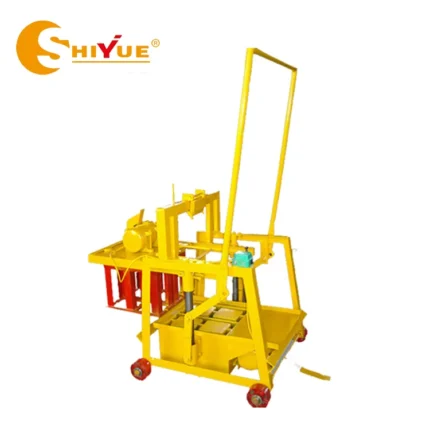
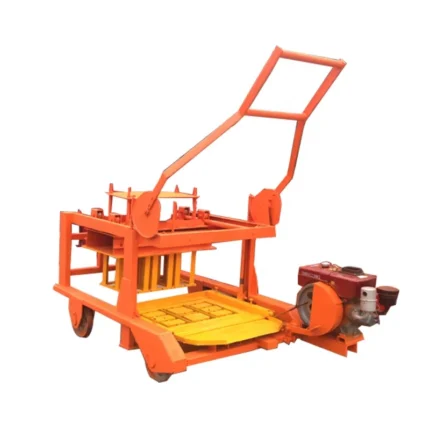
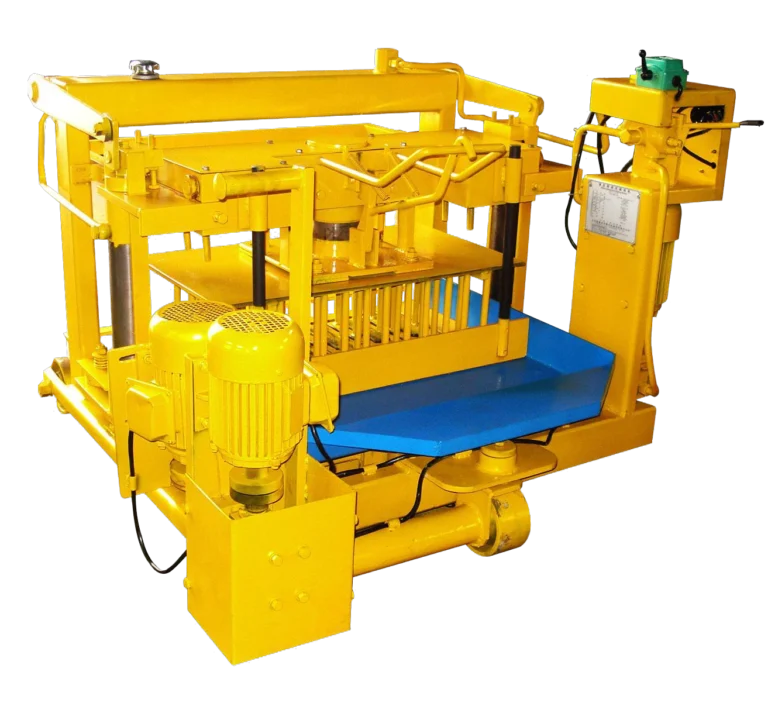
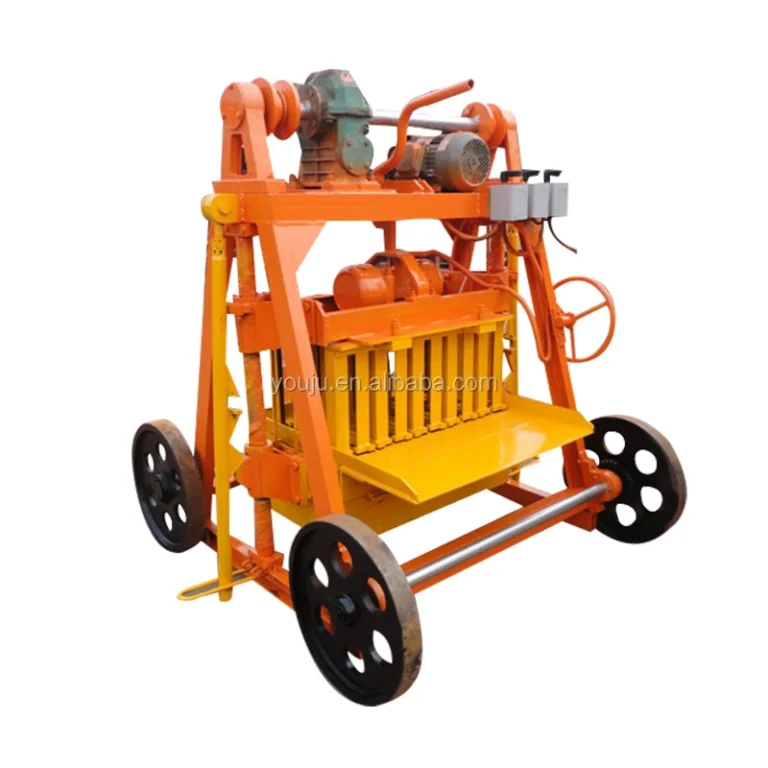
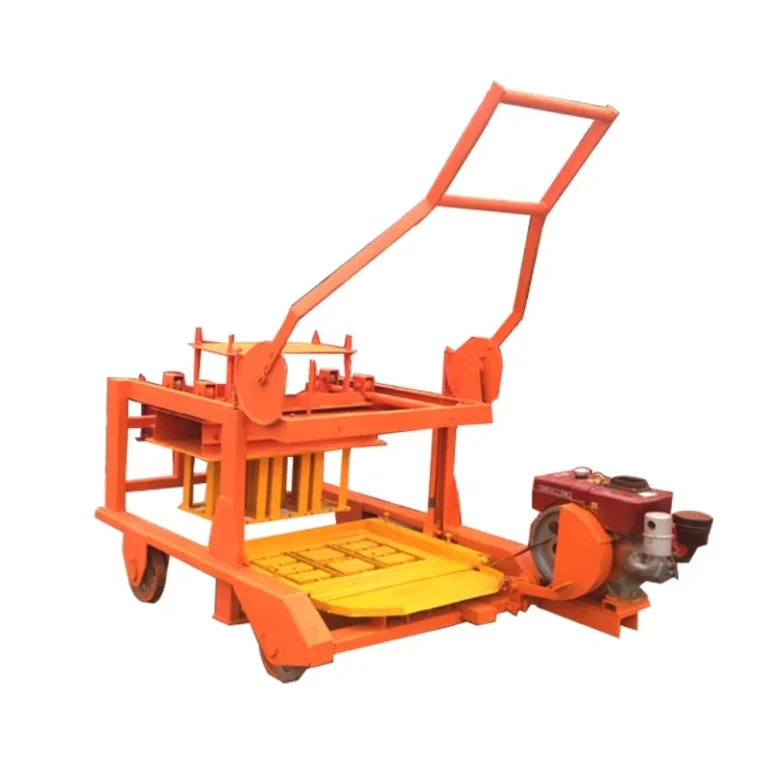
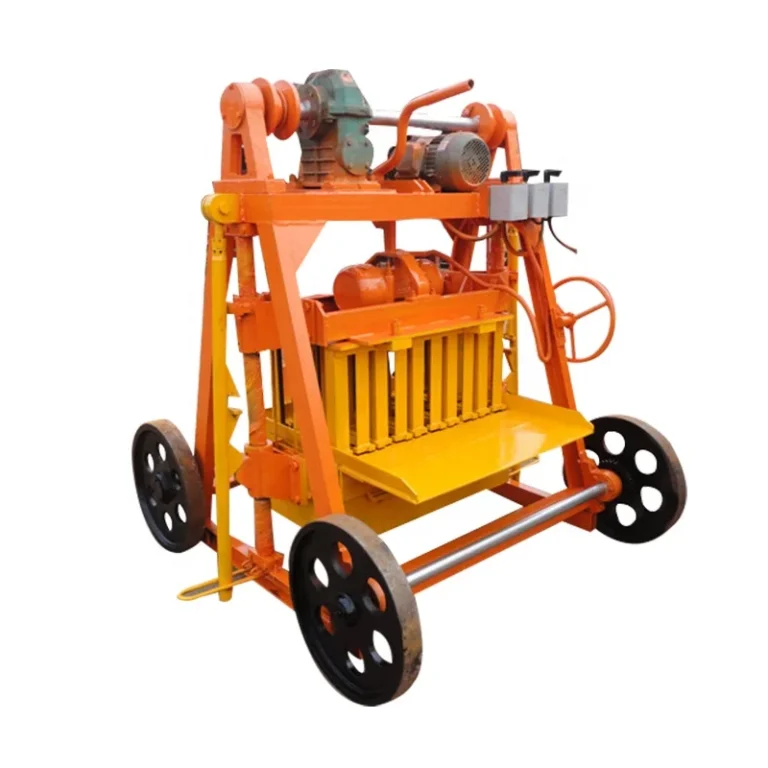
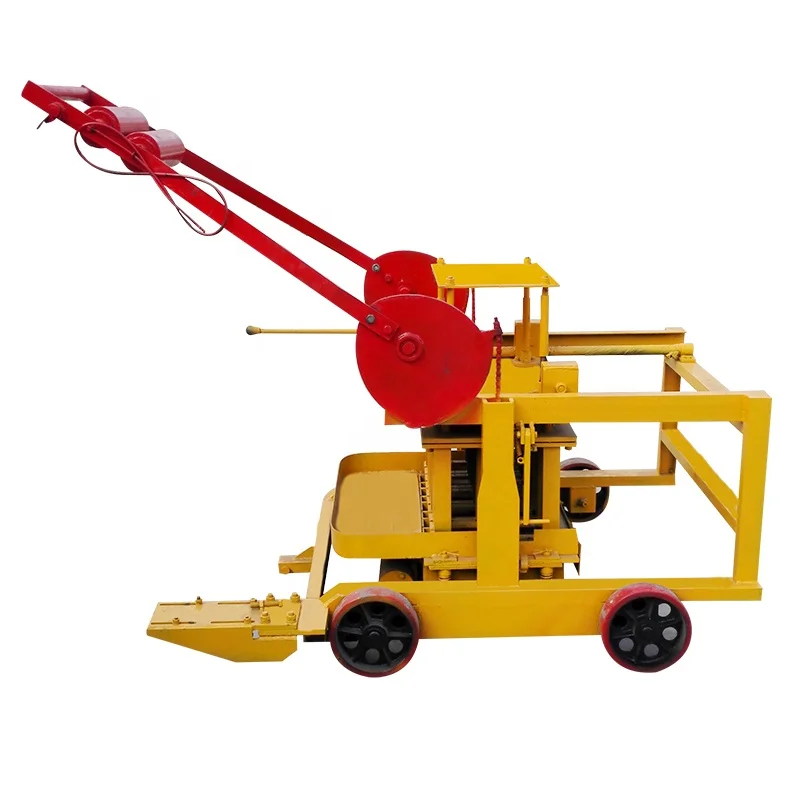
| Product Type | Mobile Egg-laying Concrete Block Making Machine |
| Power Source | Diesel engine or Electric motor (dual option) |
| Molding Cycle | 30–45 s |
| Automation Level | Manual / egg-laying (no pallet required) |
| Pallet Requirement | None (pallet-less egg-laying operation) |
| Floor Requirement | No concrete floor required |
| Output Capacity (Hollow brick 400×200×200 mm) | 4 pcs/mould, 320 pcs/h, 2600 pcs/8 hr |
| Output Capacity (Hollow brick 400×150×200 mm) | 5 pcs/mould, 400 pcs/h, 3200 pcs/8 hr |
| Output Capacity (Hollow brick 400×100×200 mm) | 7 pcs/mould, 560 pcs/h, 4480 pcs/8 hr |
| Mould Change | Interchangeable moulds for different block specifications |
| Block Density Control | Hydraulic pressure forming |
| Site Suitability | Locations with insufficient or unreliable electricity supply |
Application Suitability
| Application | Material or Output |
|---|---|
| On-site production for housing projects | Hollow blocks laid directly on compacted soil or sand beds |
| Remote project sites with unstable grid power | Diesel-driven operation producing interlocking and solid bricks |
| First-time block plant operators | Low-infrastructure hollow block production without pallets |
| Paving and kerbstone formats | Interchangeable moulds for interlocking and paving block specifications |
Why the Mixer Question Decides the Real Daily Output of an Automatic Mobile Block Machine
A press that cycles every 30 seconds becomes a bottleneck when the upstream mixer cannot deliver a consistent feed rate.
I remember a site in Kenya where a contractor bought a mobile egg-laying machine rated for over 300 hollow blocks per hour. The QMR 4-45 cycled fine on its own during the factory test. But on arrival, the local red soil had high clay content and the small pan mixer feeding the line could not keep up with the hydraulic press demand. The crew spent half the day waiting for batches. Capacity on paper meant nothing because the material flow was never matched to the press cycle. [NEED_CITE: material feed rate alignment in block production lines] When buyers focus only on the press specification, they often overlook the fact that an automatic mobile block machine needs a matched batching and mixing setup to reach its stated output consistently.
Dual Power Configuration and Site Independence
The QMR 4-45 is available with either a diesel engine or an electric motor, giving buyers flexibility on sites where grid electricity is unreliable or absent entirely. The diesel-driven hydraulic system powers both the vibration and the pressure forming, so block density remains consistent regardless of which power source is selected. For remote housing projects or infrastructure work far from the grid, the diesel option removes the need for a generator large enough to handle the starting surge of an electric motor.
Pallet-Free Egg-Laying Operation
This automatic mobile block machine lays blocks directly onto a prepared ground surface, eliminating the need for production pallets altogether. That removes a significant consumable cost — pallets wear, warp, and need replacement — and also cuts the labour required to handle, stack, and retrieve them each cycle. The operator simply moves the machine forward after each mould drop. This egg-laying approach is particularly relevant for contractors who want to produce blocks on a construction site without investing in a curing yard full of pallets. [NEED_CITE: egg-laying block machine ground surface requirements]
Reading the Moulding Cycle and Output Figures
The stated cycle of 30–45 seconds covers the full mould drop: hydraulic clamping, vibration, pressure application, and release. The three output tiers — 320, 400, and 560 pieces per hour — each assume a specific hollow brick dimension (400×200×200, 400×150×200, and 400×100×200 mm respectively). A buyer producing the larger 200 mm-wide hollow block will see the lower hourly figure, which directly affects daily planning. The vibration force and hydraulic pressure work together to compact the mix: vibration settles the aggregate into the mould cavity while hydraulic pressure densifies the block from above. If the local aggregate is finer or stickier than the test sample, cycle time may lengthen as the mix requires more vibration to fill the mould completely. The interchangeable mould system allows switching between hollow, interlocking, and paving formats, but each format change involves unbolting and re-aligning the mould box, so the time cost of a switch should be factored into production scheduling.
The Hidden Cost of Overlooking Mixer and Material Compatibility
When the mixer output does not match the press cycle, the machine stands idle between batches and the crew is paid to wait. I have seen sites where the press was rated for a certain throughput but the actual output fell noticeably short because the material was too sticky for the mixer to discharge cleanly. In clay-heavy regions, the mix design needs adjustment — sometimes more coarse sand, sometimes a different water ratio — before the QMR 4-45 can run at its stated cycle. Without a pre-shipment material trial, these problems surface only after the machine is on site and the project deadline is already pressing. [NEED_CITE: impact of local aggregate properties on block machine performance]
Why Sourcing the Complete Line Matters
The QMR 4-45 is configured against the buyer’s actual mix design and target block format rather than shipped as a catalogue default. Mould options are selected based on the formats the buyer’s market actually sells, and custom mould drawings are available for non-standard specifications. The power source — diesel or electric — is confirmed during the inquiry stage to match the site conditions, so there are no surprises at commissioning. Because block machinery is our single focus, the mixer, material feed, and press are specified as one system. Factory testing is done with the buyer’s material sample when available, verifying cycle time and block density before dispatch. Spare parts and hydraulic wear items are listed upfront, so the first replacement order does not become an emergency.
Documentation & Verification
- Capacity calculation sheet stating the block format and mould assumed for each output figure
- Machine specification sheet with confirmed power source and voltage for electric variants
- Mould drawing and format list showing included and optional block specifications
- Factory test record demonstrating cycle time on the buyer’s submitted material sample
- Hydraulic and electrical schematic for the selected diesel or electric configuration
- Operation and maintenance manual covering mould change and daily servicing procedures
Installation, Commissioning & Support
- Ground surface preparation guidance for pallet-less egg-laying on compacted soil
- Power supply verification for electric motor variant matching local voltage and frequency
- Diesel engine start-up procedure and hydraulic pressure calibration on arrival
- Mould installation and alignment training covering the bolt pattern on the QMR 4-45
- Recommended spare parts list for hydraulic seals and vibration components for year one
- Daily maintenance checklist tied to the machine’s hydraulic and vibration systems
Inquiry Direction
To size the QMR 4-45 correctly for your project, share the target block format and dimensions you intend to produce, the daily output you need, and the type of local aggregate available. Let us know whether your site has reliable grid electricity or requires the diesel engine option, and confirm the voltage and frequency if electric. We can then match the mixer capacity and mould configuration to your actual conditions.
Frequently Asked Questions
Q: How is the hourly output calculated, and which block format does each figure assume?
A: Each output figure on the QMR 4-45 is tied to a specific hollow brick size. The 320 pcs/h rate assumes 400×200×200 mm blocks at four per mould, while 400 pcs/h assumes 400×150×200 mm at five per mould. These figures are based on a 30–45 second cycle. Actual throughput depends on material feed rate and site conditions.
Q: What ground surface preparation is required for pallet-free egg-laying operation?
A: The QMR 4-45 lays blocks directly on the ground, so the surface must be flat, compacted, and free of loose debris. A sand bed or compacted soil works well. The area needs enough space for the machine to travel and for blocks to cure in place before collection. [NEED_CITE: ground preparation standards for egg-laying block production]
Q: How does the diesel engine option affect block density and cycle time compared to the electric motor variant?
A: Both power sources drive the same hydraulic system, so block density remains consistent. The diesel engine provides independence from grid power, which is valuable on remote sites. Cycle time is determined by the hydraulic pressure and vibration settings rather than the power source itself.
Q: What is the mould change procedure, and how long does a format switch take on site?
A: Switching moulds on the QMR 4-45 involves unbolting the current mould box, lifting it clear, and bolting the replacement mould into position. Alignment must be checked before the first cycle. The time required depends on operator experience and whether lifting equipment is available on site.
Q: Which spare parts and hydraulic wear items should be ordered with the machine for the first year of operation?
A: We recommend ordering hydraulic seals, vibration motor bearings, and mould wear plates with the initial shipment. The exact list depends on the selected configuration and expected production volume. A recommended spare parts list is provided with every quotation based on your planned usage.