Description
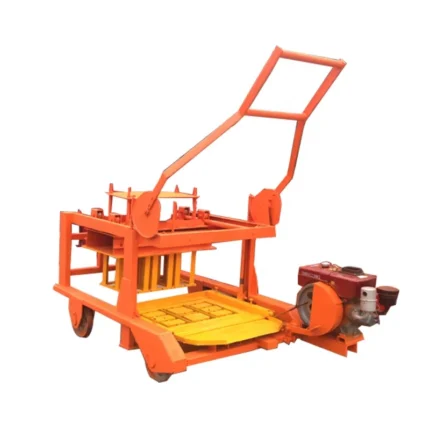
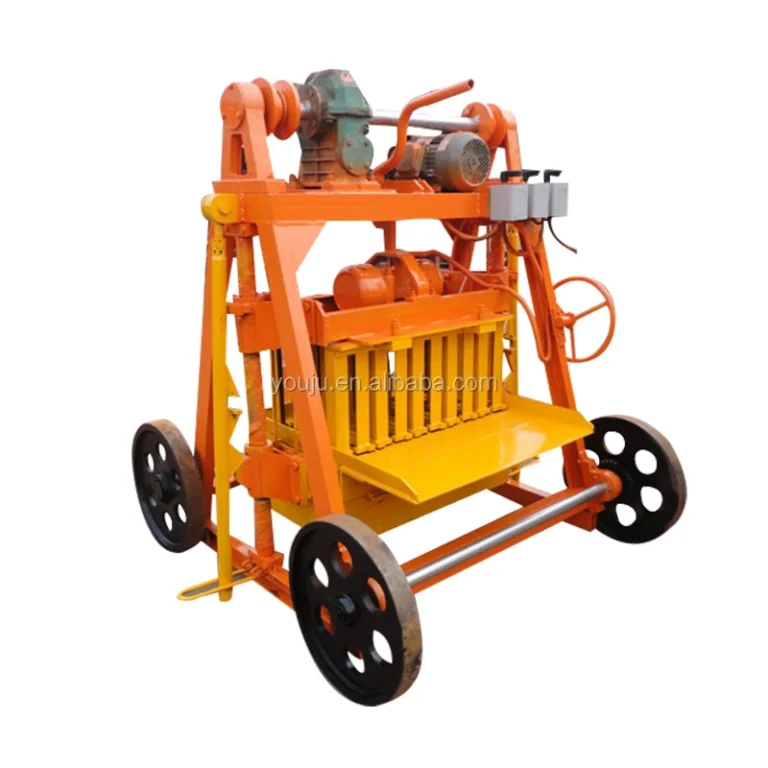
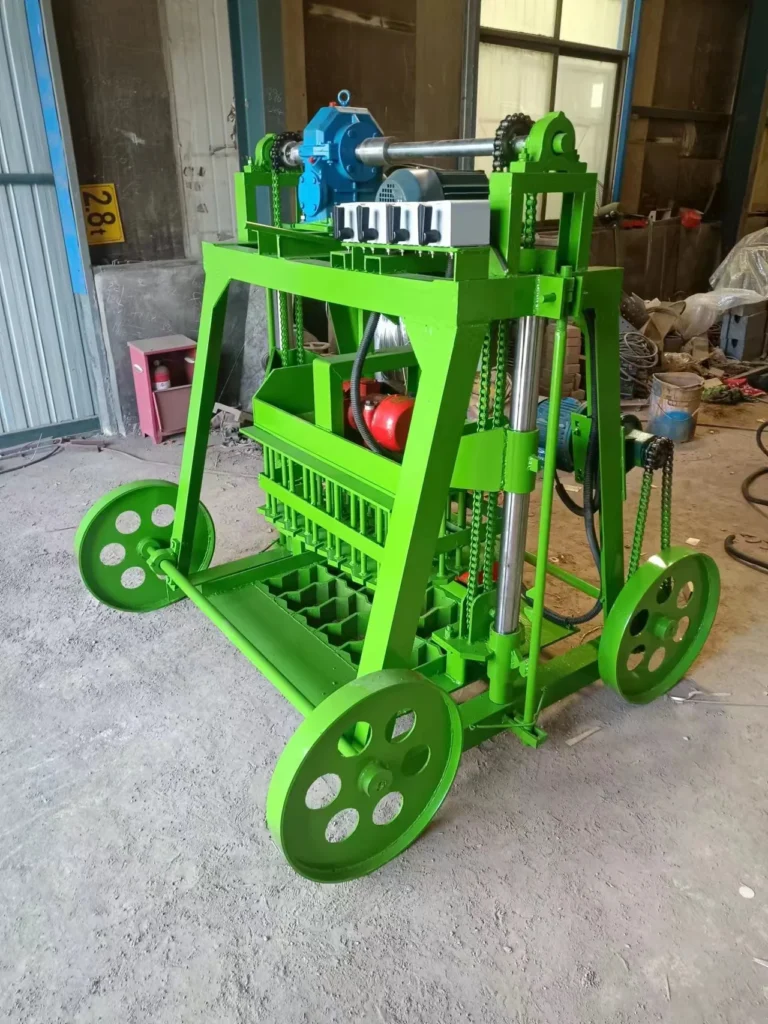
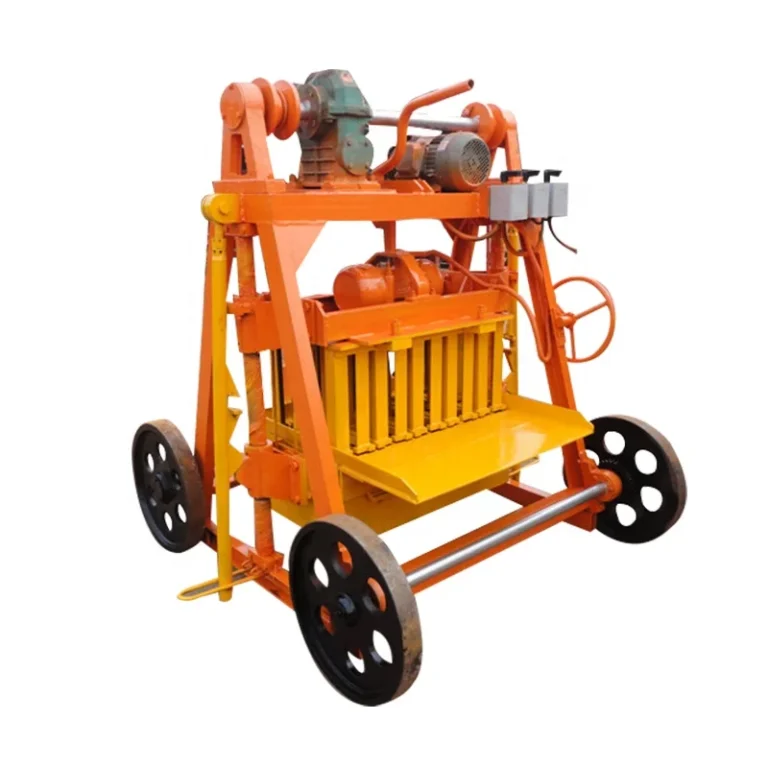
Matched system design — the QMR4-45 hydraulic mobile block machine is specified as one integrated unit with mould, power source and control matched to your site conditions, not assembled from separate catalogue pages.
Technical Specifications
| Parameter | Value |
|---|---|
| Model | QMR4-45 |
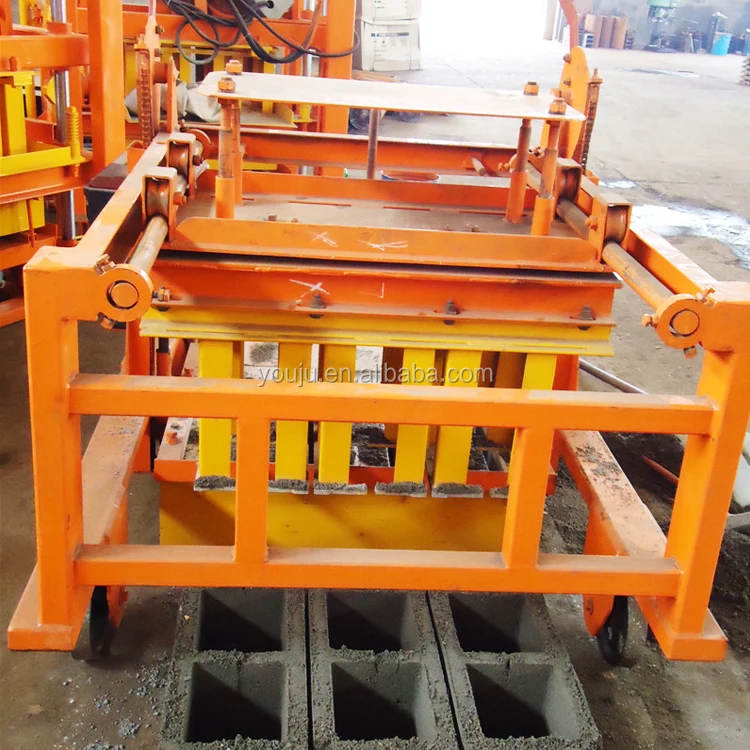
| Product Type | Hydraulic Mobile Egg-Laying Block Making Machine |
| Overall Dimensions (L×W×H) | 2420×1320×1650 mm |
| Net Weight | 810 kg |
| Moulding Cycle | 40–45 s |
| Pallet Size | No pallet required (egg-laying type) |
| Rated Power | 6 kW |
| Power Source Option | Diesel engine, 6 kW or 6–8 HP |
| Voltage | 220 V / 380 V or customized to local supply |
| Mould Format Options | 400×200×200 mm (4 pcs/mould), 400×150×200 mm (5 pcs/mould), 400×120×200 mm (6 pcs/mould) |
| Output Capacity | 3000 pcs/day based on 400×200×200 mm hollow block, 8-hour shift |
| Output Capacity | 3500 pcs/day based on 400×150×200 mm hollow block, 8-hour shift |
| Output Capacity | 4500 pcs/day based on 400×120×200 mm hollow block, 8-hour shift |
| Automation Level | Manual / egg-laying mobile operation, with PLC upgrade path |
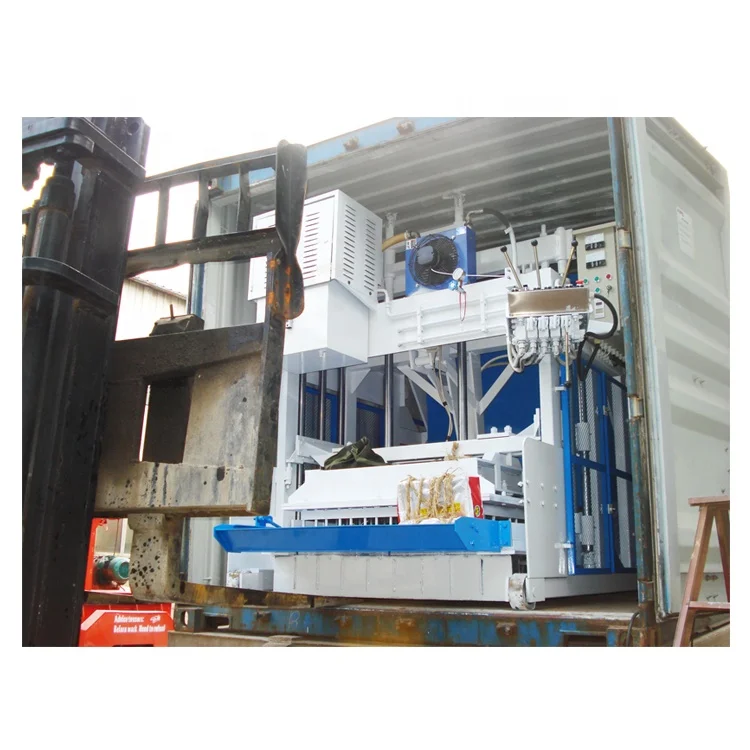
| Assembly State | Shipped as complete unit |
Application Suitability
| Application | Material or Output |
|---|---|
| On-site hollow block production for housing projects | Crushed stone, sand, cement and water mix, laid directly on prepared ground |
| Remote infrastructure sites without grid power | Diesel-powered operation producing 400×200×200 mm blocks at 3000 pcs/day on an 8-hour shift |
| First block plant with limited capital | Egg-laying format eliminating pallet investment, producing multiple hollow block thicknesses by mould change |
| Temporary production for development contractors | Mobile unit relocated between project sites, no fixed factory floor required |
Why "Cycle Time" Means Nothing Without the Block Format Attached
The QMR4-45 automatic egg-laying block machine holds a 40–45 second moulding cycle, but what that cycle actually produces depends entirely on which mould is bolted to the press.
I have watched buyers compare two mobile block machines on cycle time alone, then discover on arrival that one was quoting cycles on a solid paver while the other was quoting on a 200 mm hollow block — completely different volumes per shift. A PLC controlled mobile block machine only delivers predictable output when the capacity document names the exact block format, cavity count and shift length behind every number. Without that, the daily tonnage on your business plan is a guess. [NEED_CITE:]
What the PLC Upgrade Path Actually Changes on a Mobile Press
The base QMR4-45 runs on manual hydraulic control, where the operator judges press time and vibration duration by experience. Adding PLC automation to this class of automatic egg-laying block machine removes that judgement call — the controller holds each cycle to the same pressure dwell and vibration sequence regardless of operator fatigue or shift changes. For a contractor producing blocks across a multi-month housing project, that consistency shows up in uniform wall density from the first block of the morning to the last.
Diesel Power and the Sites the Grid Cannot Reach
A 6–8 HP diesel engine option means the QMR4-45 PLC controlled mobile block machine runs on sites where grid connection is absent or unreliable. This matters for rural housing developments, road-side kerb projects and disaster-rebuild locations where waiting for a temporary power drop would stall the entire construction timeline. The diesel variant trades some noise for complete energy independence, and the engine is a standard industrial unit serviceable by any local diesel mechanic. [NEED_CITE:]
Reading the Specs That Actually Determine Block Strength
The 810 kg net weight of the QMR4-45 is not just a shipping figure — on an egg-laying machine, machine mass contributes directly to vibration damping and ground stability during each moulding cycle. A lighter frame transmits more vibration into the operator and the freshly laid block row beside it, disturbing blocks that have not yet set. The 6 kW rated power must be matched between hydraulic pressure and vibration force: too much vibration without sufficient hydraulic clamp produces a block that looks dense on the outside but fractures under load. The 40–45 second cycle allows adequate compaction time for hollow block formats up to 200 mm thickness, but thicker or denser mixes may require confirmed hydraulic pressure ratings before ordering. Mould format selection — 4, 5 or 6 cavities per cycle — directly determines whether your shift output sits at 3000, 3500 or 4500 pieces on an 8-hour basis.
What Happens When Voltage and Control Language Are Skipped
I once supported a mobile block machine that sat idle for weeks after arrival because the control panel displayed fault codes in a language the local electrician could not read, and the voltage tap was set for a 50 Hz grid while the site ran 60 Hz. The machine was not broken — it was simply configured for a different country. On a PLC controlled mobile block machine, confirming voltage, frequency and display language before production avoids a commissioning delay that no amount of DHL shipping can fix fast enough. [NEED_CITE:]
Why Buyers Choose This Configuration
The QMR4-45 is specified as a single matched system — press, mould, power source and control — rather than a machine body paired with third-party moulds and an unverified hydraulic pack. Configuration starts from the buyer’s actual mix design and local aggregate, not a catalogue default that assumes materials you cannot source. Mould design covers the hollow block formats your market actually buys, with custom drawings available when standard formats do not match local building codes. The automation level is selectable, so a buyer can start on manual control and integrate PLC automation as the plant grows. Installation support includes operator training on mould change procedure and daily maintenance, so the machine is producing acceptable blocks before the technician leaves site.
Documentation & Verification
- Capacity calculation document stating block format, cavity count and shift hours for each output figure
- Voltage, frequency and PLC display language confirmation signed off before production begins
- Hydraulic and electrical schematic for on-site fault diagnosis by local technicians
- Factory test record demonstrating cycle time and block density on buyer’s specified mould format
- Operation and maintenance manual with wear parts list and recommended spare quantities
Installation, Commissioning & Support
- Level compacted ground required; the 2420×1320 mm footprint needs clear access on all sides for mould change
- 6 kW electrical supply on a dedicated circuit, or diesel engine variant for off-grid sites
- Shipped as a complete assembled unit; no foundation bolts required for egg-laying operation
- First-run commissioning includes mould alignment check and hydraulic pressure verification on your mix
- Operator training covers 40–45 s cycle operation, mould change procedure and daily greasing points
- Wear parts list and recommended spares provided to cover the first replacement cycle without downtime
Before You Request a Quote
To configure the QMR4-45 correctly, we need your target block format and wall thickness, the local aggregate type and typical mix proportions you plan to run, your site voltage and frequency, and whether grid power is available or diesel operation is required. If you have an existing curing area or forklift, share those details so the egg-laying layout fits your current handling. Specify the control language your operators need on the panel display.
Frequently Asked Questions
Q: How is the 3000–4500 pcs/day output verified and which block format does each figure assume?
A: Each output figure is tied to a specific mould: 3000 pcs/day assumes the 400×200×200 mm hollow block with 4 cavities per mould, 3500 pcs/day assumes 400×150×200 mm with 5 cavities, and 4500 pcs/day assumes 400×120×200 mm with 6 cavities. All figures are based on an 8-hour shift and a 40–45 second moulding cycle. A capacity document confirming these assumptions ships with every quotation.
Q: What automation upgrades are available from the base QMR4-45 manual configuration?
A: The base machine operates on manual hydraulic control. A PLC upgrade introduces automated cycle sequencing, holding each press cycle to the same pressure dwell and vibration timing regardless of operator input. This reduces block-to-block density variation across a shift and is particularly valuable on multi-month projects where consistency matters more than peak speed.
Q: How is hydraulic pressure matched to my local aggregate and mix design?
A: Before production, we request your typical aggregate type, grading and cement ratio. The hydraulic pressure and vibration force settings are then configured to compact that specific mix to target density without over-pressing, which would fracture the block edges, or under-pressing, which would leave weak cores.
Q: How is voltage and control display language confirmed before shipment?
A: Voltage, frequency and panel language are confirmed in writing during the order stage and verified again at factory test. The electrical schematic ships with the machine so local electricians can trace circuits during commissioning without waiting for remote support.
Q: What mould formats are available and how does mould change work on site?
A: Standard hollow block moulds cover 400×200×200 mm, 400×150×200 mm and 400×120×200 mm. Custom moulds are available to buyer drawings. Mould change involves unbolting the current mould box, lifting it clear and lowering the replacement onto the locating pins — a procedure covered in operator training during commissioning.