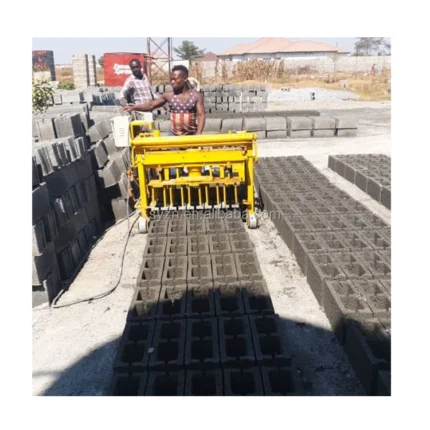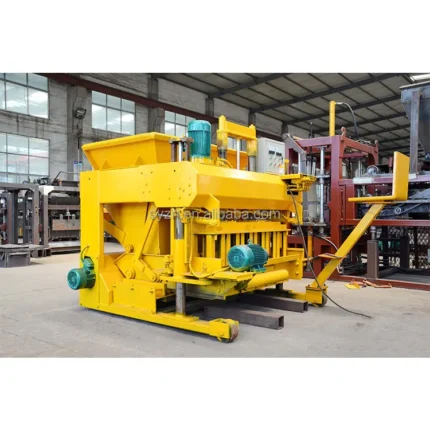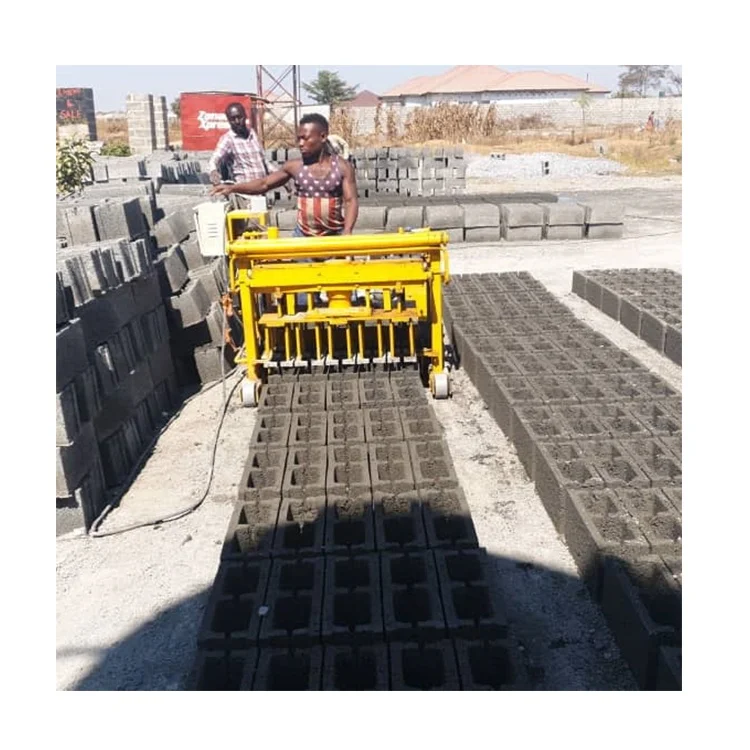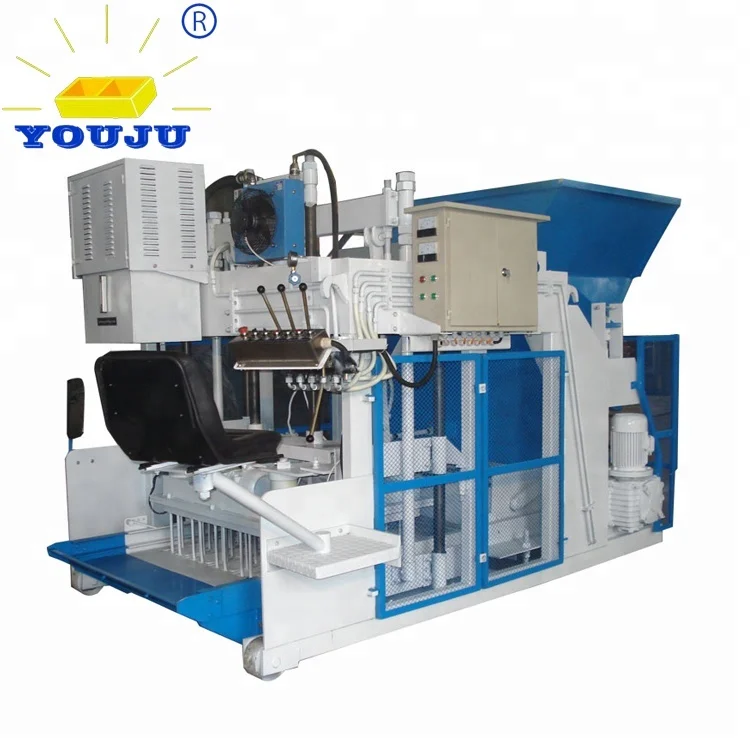
Description
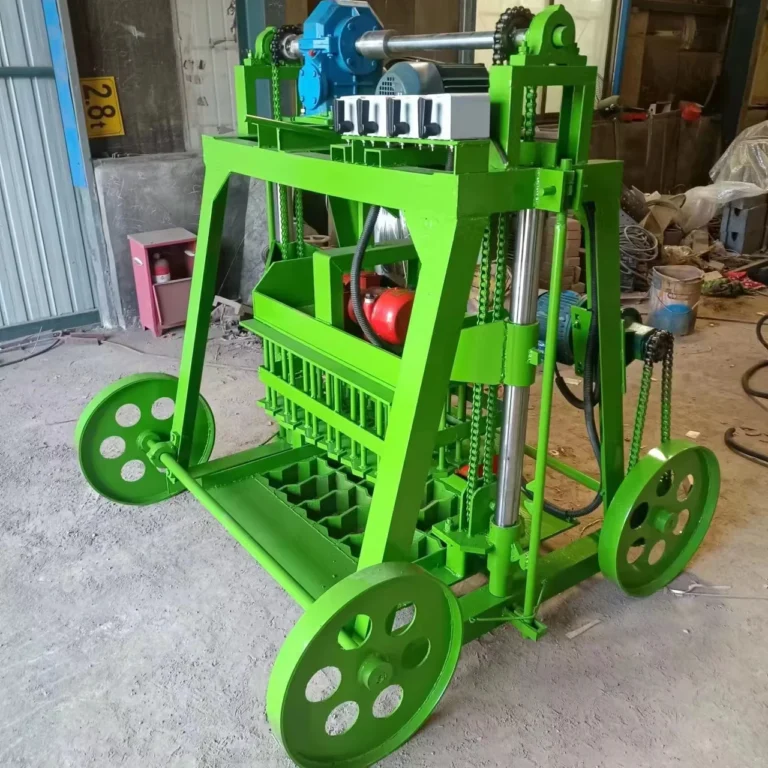
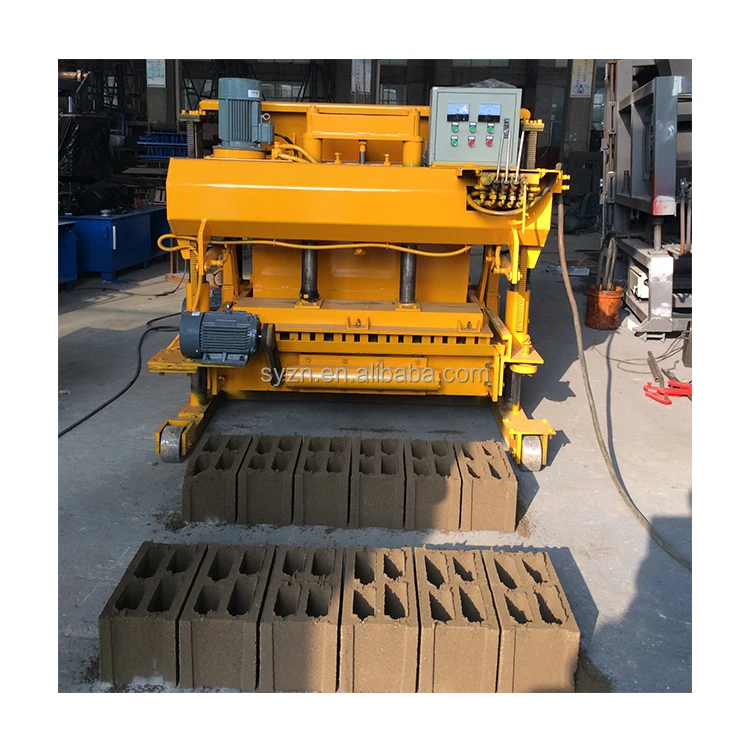
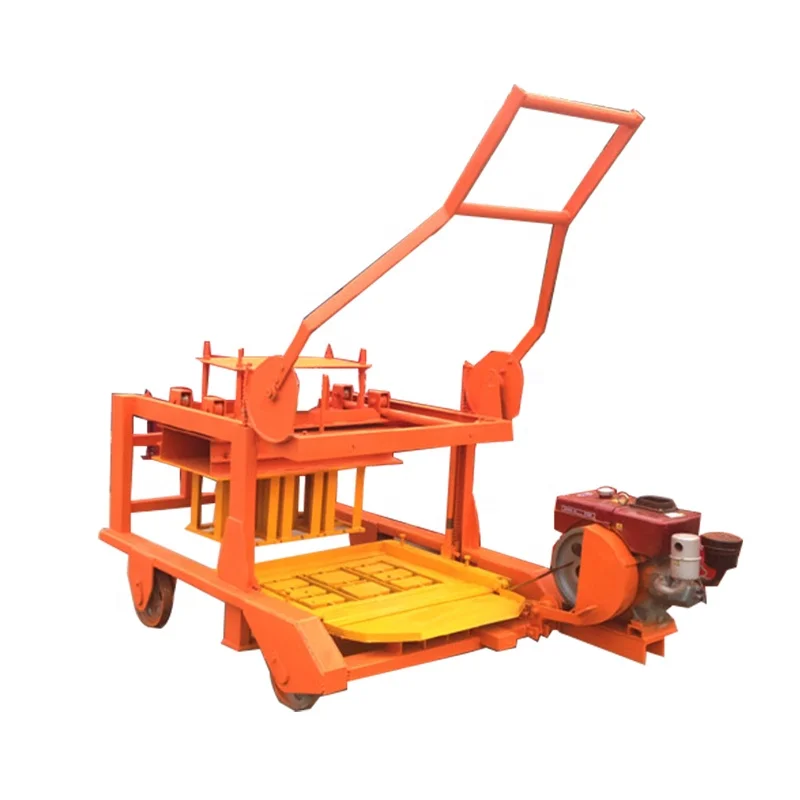
Single-focus machinery — every QMR4-45 diesel mobile block machine is configured as a matched system of press, mixer, and trolley rather than assembled from disconnected suppliers.
Technical Specifications
| Parameter | Value |
|---|---|
| Model | QMR4-45 |
| Product Type | Mobile Concrete Block Making Machine |
| Power Source | Diesel |
| Rated Power | 8 hp |
| Molding Cycle | 45 s (basis not stated in source — confirm block format, material, and thickness) |
| Molding Form | Vibration and Pressure |
| Vibration Force | 60 kN |
| Total Weight | 800 kg |
| Overall Dimensions | 2420 × 1320 × 1650 mm |
| Pallet Requirement | No pallet required (egg-laying / mobile type) |
| Block Formats Supported | Paver brick, hollow block, concrete block, solid brick, fly ash brick |
| Included Equipment | JZC350 or JQ350 Diesel Concrete Mixer with Electric Generating Unit; Trolley |
| Automation Level | Manual / semi-manual operation |
| Key Features | Mobile on-site operation, no fixed plant required, multiple mould formats |
Application Suitability
| Application | Material or Output |
|---|---|
| On-site hollow block production | Crushed stone, sand, cement, and fly ash blends |
| Paver brick manufacturing for walkways and yards | Fine aggregate and cement mixtures |
| Solid concrete block production for load-bearing walls | Coarse aggregate with standard cement ratios |
| Remote housing project block supply | Locally sourced aggregate where grid power is unavailable |
| Small-scale entrepreneur block operations | Multi-format output from a single press with mould changes |
Why the "45-Second Cycle" Figure Demands a Closer Look
The cycle number alone tells you nothing about daily output until the block format and mix design are locked in.
I have watched buyers celebrate a short cycle time on paper, then discover that a 45-second press stroke on a hollow block yields a very different daily count than the same stroke on a dense paver. The QMR4-45 mobile block machine completes its vibration-and-pressure cycle in 45 seconds, but that figure assumes a specific block geometry, aggregate gradation, and moisture content that may not match your yard. Before signing off on capacity expectations, the exact target format and local material must be validated through a sample run. [NEED_CITE: concrete block compressive strength testing standards by region]
Control Upgrades That Remove Operator Guesswork
The base QMR4-45 ships with manual and semi-manual operation, which keeps the initial investment low for a first-time block yard. As volume grows and consistency demands tighten, buyers can explore PLC-controlled batching and cycle management as an automation upgrade path. A controlled system removes the variable of operator timing, meaning the vibration duration and pressure application stay identical from the first block of the morning to the last.
Diesel Independence on Off-Grid Sites
The 8 hp diesel drive paired with the included JZC350 or JQ350 diesel mixer means the entire production island runs without grid electricity. This is critical for remote housing developments and infrastructure projects in Southeast Asia and similar regions where three-phase power is either unavailable or unreliable. The electric generating unit included with the mixer also supplies auxiliary needs on-site, so the PLC controlled mobile block machine setup stays self-contained from delivery to first production run. [NEED_CITE: off-grid construction equipment power requirements in developing regions]
Reading the Specs That Actually Govern Block Quality
The 60 kN vibration force is the single most consequential number on the specification sheet. Combined with hydraulic-style pressure during the molding stroke, this force determines how densely aggregate particles pack inside the mould cavity. If the vibration force is too low for a coarse, angular aggregate, blocks emerge with voids and low compressive strength. If the force is higher than the mix demands, fines segregate and surface finish suffers. The 800 kg machine weight provides the necessary reaction mass so the unit does not walk during vibration — a lighter frame would transmit energy into the ground instead of the block. The egg-laying design eliminates pallet cost and pallet-handling labor entirely, but it also means the ground surface must be level and cured properly to avoid block deformation during the initial set.
The Cost of Skipping the Mix-Design Conversation
When vibration force and local aggregate are never matched before shipment, the result is a machine that technically runs but produces blocks with inconsistent density and strength. Buyers end up adjusting mix ratios by trial and error on-site, wasting cement and aggregate across multiple batches before achieving a sellable product. In some cases, the mould itself wears unevenly because an overly abrasive or improperly graded mix scours one side of the cavity faster. This is not a machine defect — it is a specification gap that surfaces only after production begins. [NEED_CITE: impact of aggregate gradation on concrete block consistency]
Why Buyers Specify Through This Channel
Block machinery is the single focus here, so the press, mixer, moulds, and trolley arrive as one matched set rather than a collection of unrelated purchases. Configuration is built around the buyer’s actual mix design and target block format, not pulled from a generic catalogue default. Mould design and supply cover the formats your local market actually sells, and custom drawings are accommodated when standard options fall short. The automation level is selectable — start with manual operation on the QMR4-45 today, then introduce PLC-controlled consistency later as demand justifies the investment. Installation and commissioning support includes operator training so the crew understands mould changes, cycle parameters, and daily maintenance from the first shift.
Documentation & Verification
- Machine specification sheet confirming vibration force and cycle parameters for your chosen block format
- Mould drawing and format list showing cavity dimensions for each supported block type
- Factory test record run on a mix composition matching your local aggregate and cement source
- Operation and maintenance manual with language confirmed before crate closure
- Wear parts and mould list detailing replacement intervals for high-contact surfaces
Installation, Commissioning & Support
- Level compacted ground required across the full 2420 × 1320 mm machine footprint for stable egg-laying operation
- Diesel fuel supply and storage arranged on-site to support the 8 hp engine and mixer generating unit
- Machine arrives partially assembled with mould mounted; trolley and mixer connect at the yard
- First-run commissioning includes cycle timing validation against your target block format and mix
- Operator training covers manual mould change procedure, vibration duration settings, and daily lubrication points
- Wear parts inventory recommended based on the specific aggregate abrasiveness in your region
What to Share Before Requesting a Quotation
To size the QMR4-45 correctly and confirm whether automation upgrades make sense at your stage, provide the target block format with dimensions, the local aggregate type and source, and the daily output volume you need to hit. If you are operating on a remote site, note the ambient temperature range and ground conditions so curing advice can be included. Specify any existing equipment in your workflow so the mixer and trolley configuration aligns with what is already on the ground.
Frequently Asked Questions
Q: How do I verify real daily output from the 45-second molding cycle?
A: The 45-second cycle is measured under conditions not stated in the source data, so daily output depends entirely on which block format you produce, your mix design, and crew workflow speed. Request a capacity calculation that names the exact block dimensions and assumes your local aggregate. That way, the figure you plan against reflects your actual production scenario, not a laboratory ideal.
Q: What automation upgrades are available beyond manual operation?
A: The QMR4-45 starts as a manual or semi-manual machine, and buyers can explore PLC-controlled batching and cycle management as a future upgrade. This path introduces consistent cycle timing, controlled vibration duration, and reduced operator dependency. The upgrade conversation should happen before purchase so the electrical architecture and control panel layout accommodate future integration.
Q: How do I match vibration force to my local aggregate for consistent block strength?
A: The 60 kN vibration force must be validated against your specific aggregate size, shape, and cement ratio through a sample production run. Coarse, angular aggregate may require longer vibration exposure, while fine sand blends need less. Providing a representative aggregate sample before shipment allows the factory to confirm the force setting matches your material.
Q: What control system language options are supported if I add PLC later?
A: When upgrading to PLC control, the HMI display language must be confirmed before the control panel ships. I have seen machines sit idle on-site because the operator could not read the prompts. Lock down the display language and control logic labels during the order confirmation stage, not after the crate arrives at your yard.
Q: How long does a mould change take, and how many formats can one machine produce per shift?
A: Mould change time depends on the operator’s familiarity with the procedure and the tooling included with the machine. In practice, switching between a hollow block mould and a paver brick mould on a manual machine can consume a meaningful portion of a shift if the crew is not trained. Request the documented change procedure and plan your daily format schedule around realistic transition times.